US elections are a money game. One of the key factors deciding who wins is how much ammunition the deep-pocketed backers behind each side bring to the fight. Those backers each run their own calculations of interest, and none of them spends on anything that promises no return.
A $366 Million Bet to Hold Congress
The New York Times disclosed that Elon Musk, the world's richest man, has so far invested a total of US$366 million (about HK$2.85 billion) to help Republicans win the midterm elections and keep control of Congress. That outlay makes him the Republican Party's biggest donor.
Behind this heavy bet sits a hard-headed calculation. If Democrats retake control of Congress, they will certainly launch a "great reckoning" against him, and his business empire will take the hit. So Musk must keep pumping in more money to help Republicans reverse the disadvantage. Lose this gamble, and he is in deep trouble.
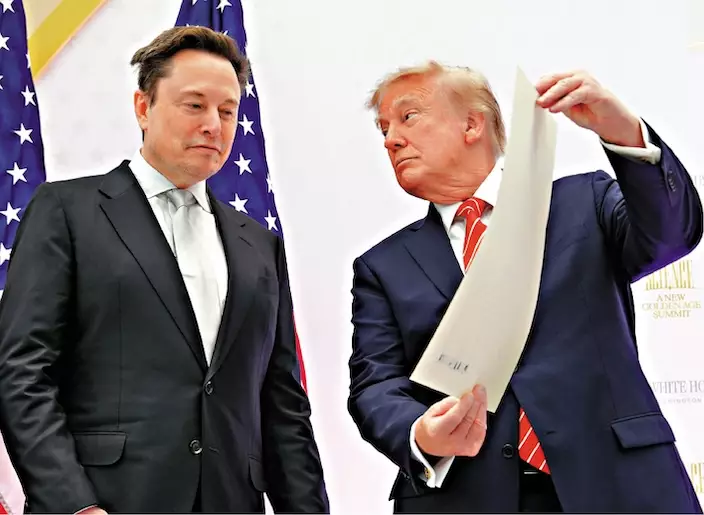
Musk's mega-donations to GOP: self-defense against Democrats.
Musk is a businessman to his core. He never throws money around blindly. He sizes up the situation first, then decides how much to pump in.
According to sources, he donated US$276 million to the Republican Party after July this year. The party's electoral position had clearly turned urgent, so he hastily fired off heavy-caliber money shells to boost the vote.
Musk in particular poured huge sums into the Senate Leadership Fund to help Republicans hold their Senate majority.
One US research institution, drawing on the latest polls, projects that Democrats have a chance to gain 2 to 6 Senate seats. If they ultimately gain 4 seats, they take control.
The House elections look even grimmer for Republicans. Fox News estimates that Democrats could take 237 House seats, while Republicans may muster only 198.
Unless Republicans break through in some key districts, they have little hope of drawing even. That is why Musk is burning with anxiety and accelerating his heavy spending to aid the campaign.
Texas on the Line: Musk Buys a Ground Game
Texas is where Elon Musk has the most skin in the game. His empire has been expanding aggressively across the state, with Tesla, X and even the aerospace giant SpaceX all holding major investments there.
Now the race itself is giving him chills. Republican Senate candidate and state Attorney General Ken Paxton is wobbling, under strong challenge from his Democratic opponent Talarico. The rising star polls at 48.5 percent, 3.4 points ahead of Paxton, and could charge to victory as a dark horse at any moment.
To reverse the Republican Party's perilous slide, one ingredient is crucial: "money."
US media report that Musk has been pumping still more cash into a "political action committee," hiring thousands of "canvassers" across multiple states to go door to door campaigning for Republican candidates.
Texas shows how the meter runs. Every door knocked that draws an answer earns the canvasser $1.5 to $3. The tab is anything but small.
That tally still excludes the money for media promotion, campaign rallies and street-level canvassing.
When the final hour arrives, Musk looks set to load up still more silver bullets to turn back the tide.
Democrats Show Their Cards: Three Investigations
Musk's all-in bet on the Republican Party this time has deeply personal roots.
The reason: Democratic lawmakers have already laid their cards on the table. If they retake control of Congress, they will launch multiple investigations against him, and the offensive will be fierce.
First, Democrats have resented Musk to the bone for reaping enormous benefits from Trump's "favor." They have vowed to investigate how he, as SpaceX CEO, secured billions of dollars in federal government contracts through insider connections.
They will also pursue whether those operations involved conflicts of interest.
Second, after Trump's return to power, Musk was appointed head of the "Department of Government Efficiency" (DOGE). He marched a band of IT "Red Guards" into government departments to conduct audits. Democrats have long questioned whether he abused his power to obtain classified government data in violation of national security regulations.
If Democrats succeed in seizing power, they will certainly dredge up the old score and hound him relentlessly.
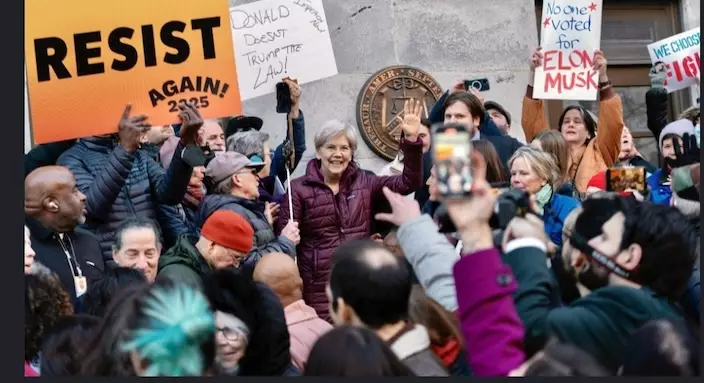
Democrats target Musk over classified data access.
Third, Democratic members of the House Energy and Commerce Committee have already accused Musk's AI company of violating regulations and harming the environment and public health as it built data centers in Tennessee and elsewhere. That score, too, may be settled later.
The outcome is easy to foresee. If Congress flips, Musk will find trouble swarming all over him.
He and Trump will then face interrogation and a reckoning from his "enemies," and his empire will also take a heavy hit.
Self-Preservation, Not Charity
Elon Musk is splashing cash at the eleventh hour of the midterm elections, aiming to help Republicans turn the tide. When it comes down to it, the spending is really about sparing himself a crisis.
Lai Ting-yiu
What Say You?
** 博客文章文責自負,不代表本公司立場 **
Taiwan leader Lai Ching-te delivered his 'Double Ten' speech on October 10. He vowed to increase defense investment aimed at 'deterring war' and said he would 'strengthen asymmetric combat power.' A mainland scholar cut straight to the point: the statement is a carefully packaged 'pursuit of independence through force.' In other words, Lai still intends to bind ordinary people to the war chariot.
Lai's Martial Talk Meets a Wary Public
But his martial posture clashes sharply with how the public actually feels. The latest data from the Legislative Yuan shows Taiwanese enlistment has fallen for three consecutive years, while paid early discharges have surged.
More and more people, especially Generation Z, including a number of entertainers, fear the risk of war and refuse to serve as cannon fodder for politicians.
Some legislators are asking a blunt question. If the situation worsens, who will operate the weapons that have been purchased?
Manpower Falls Below 80 Percent
Taiwan's military is running on empty. Data from the Budget Center of the Legislative Yuan shows that as of the end of June, the actual number of volunteer service members reached just 76.6 percent of authorized strength.
That marks three consecutive years below 80 percent.
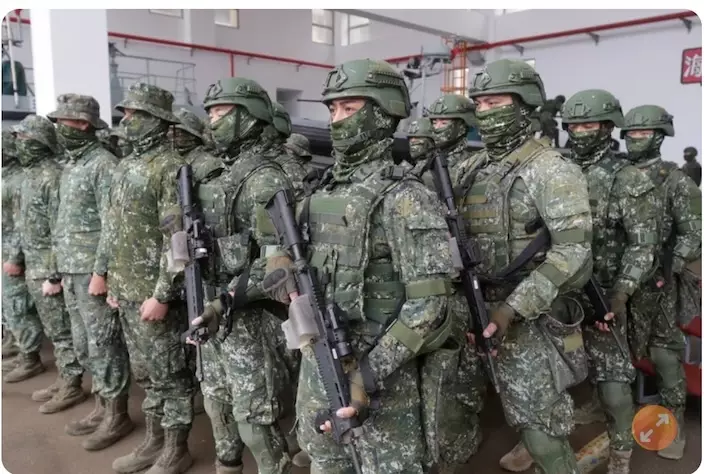
Taiwan military volunteer force short for three straight years.
The shortfall cuts deep. It hits many types of front-line combat units, the very forces that can be deployed to the front at any time.
Legislators point to another warning sign: new recruits keep falling. The recruitment target has been lowered from 18,900 to 14,500. Yes, the success rate has risen. But that is just a numbers game. The number of new recruits actually enlisted keeps shrinking.
Paying to Get Out
In recent years, another severe problem has emerged in the military: more and more officers and soldiers are paying money for early discharge. The number rose from 40 people in 2018 to 846 last year, a 20-fold increase.
Over the past four-plus years, the amount paid by such draft evaders to 'free themselves' has totaled more than NT$900 million. One could say they spent money to avert disaster.
The mentality of evading military service has spread rapidly among the public in recent years. Last year, Taiwan's entertainment industry was rocked by a large-scale 'draft-dodging scandal.'
Behind the scenes, a brokerage group orchestrated a number of entertainers in forging false health reports, using extremely high blood pressure as a pretext to evade enlistment, commonly known as 'draft dodging.' The group included stars such as Wang Talu and Chen Bolin.
After four waves of investigative operations, law enforcement authorities indicted the entertainers involved starting in April this year. The matter sparked heated public discussion, but whether evading military service is right or wrong is a question that gives one pause.
A Demographic Cliff Meets a Draft-Dodging Norm
Taiwan's military manpower shortage is only just beginning. As the low birthrate trend intensifies, the pool of young people eligible for conscription shrinks year after year.
In 2024, the number of men reaching military service age fell below 100,000 for the first time. It will drop below 80,000 in 2027, and reach only about 70,000 by 2031.
By then, even willing recruits will struggle to close the gap. The problem runs deeper: draft evasion among young people has already become the norm.
Advanced Weapons, Not Enough Hands
The South China Morning Post asked an expert from the Taiwan International Strategic Studies Association how a manpower shortage affects combat capability. He said the Taiwan authorities have bought a batch of complex, advanced weapons from the United States. These systems demand more highly skilled operators and longer training times.
If manpower keeps falling below 80 percent of authorized strength, filling those roles will be extremely difficult. The result could be a predicament of having weapons but not enough people to use them. Another military expert also pointed out that this problem will reduce the effectiveness of military operations and greatly weaken combat capability.
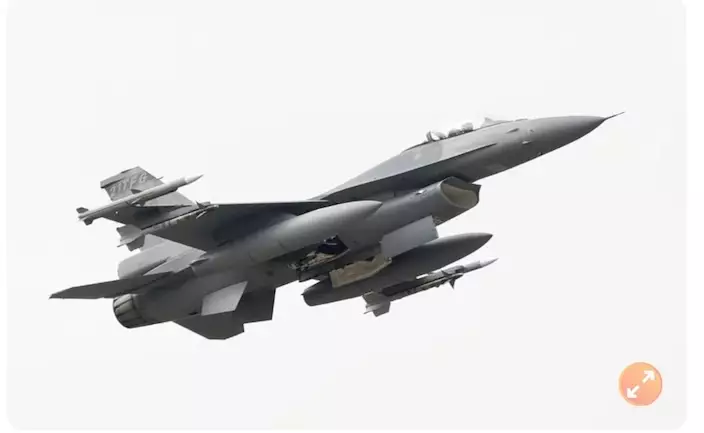
Taiwan buys US weapons, lacks troops to use them.
Poll: Most Taiwanese Refuse to Be Cannon Fodder
Fewer and fewer Taiwanese are willing to serve. Various explanations get floated, from poor pay to young people's distaste for discipline. But the root cause is simpler: most people do not want to be "cannon fodder."
A month ago, Taiwan's Global Views Monthly ran a poll. One question asked: "Are you willing to go to the battlefield yourself or have your family members go?"
The results were blunt. 63.9 percent said they were "unwilling" or "very unwilling," and 45.9 percent chose the stronger answer. The message is clear: whatever slogans are shouted, the vast majority of Taiwan's people do not want to go to the front line and become political sacrifices.
Ukraine's Toll and the Question for Taiwan
Taiwanese people surely know how terrible war is. Ukraine is a vivid example right before their eyes. According to estimates by the Center for Strategic and International Studies, from the start of the war in February 2022 to the end of last year, Ukrainian soldiers killed on the battlefield numbered between 100,000 and 140,000. The actual number may be even higher than estimated.
When the vast majority of Taiwan's people, except for a tiny handful of fanatics, see this heartbreaking and horrifying figure, will they still follow Lai Ching-te's delusion of "seeking independence through force" and let the flames of war burn in Taiwan?
Lai Ting-yiu