America's cyber blunders keep piling up, one embarrassing failure after another. Aging systems are part of the problem, but so is bureaucratic complacency. Hot on the heels of the aviation management system's massive breakdown, news broke yesterday that even the Federal Bureau of Investigation (FBI) had fallen. Its National Crime Information Center (NCIC) database is suspected of being hacked, and with a trove of criminal data at stake, the situation is about as serious as it gets.
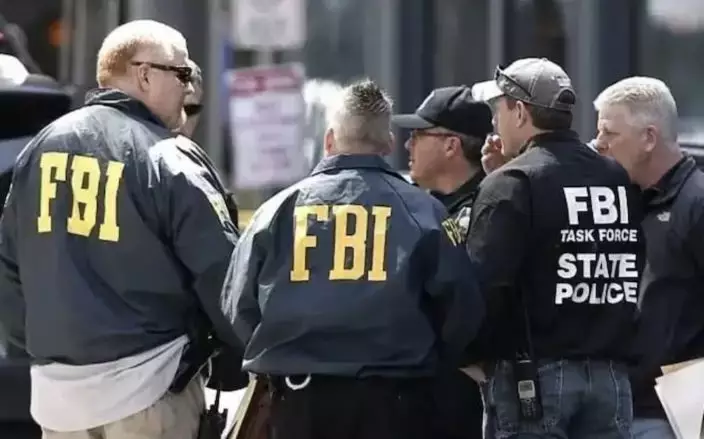
FBI hack exposes undercover agents; they fear and fume.
Hackers Breach the FBI
Worse, this is the second hit in short order. The FBI's network was breached back in September, when agents' personal data was stolen and undercover officers were left fearing for their safety. Barely two months later, hackers have struck again. The government's gaping cybersecurity failures are now on full display.
This time the hackers are tweaking the tiger's whiskers. Breaking into the FBI's network looks like more than mere provocation or extortion. The intent appears far more sinister. The NCIC database holds criminal information from across the country, including the backgrounds of wanted fugitives, criminal records, fingerprints and missing persons.
That data is shared among federal, state and local law enforcement agencies. Criminals could not only put it to illegal use but also alter or delete it. That would corrupt the accuracy of the information and throw a wrench into law enforcement operations.
Boasts Meet Reality
The irony is rich. Just days earlier, FBI Director Kash Patel had been boasting in an interview that the bureau's defenses against cyberattacks were airtight, and that a program called 'Operation Winter Shield' kept intruders under constant watch. He promised that if such actors did harm, the FBI would bring them to justice.
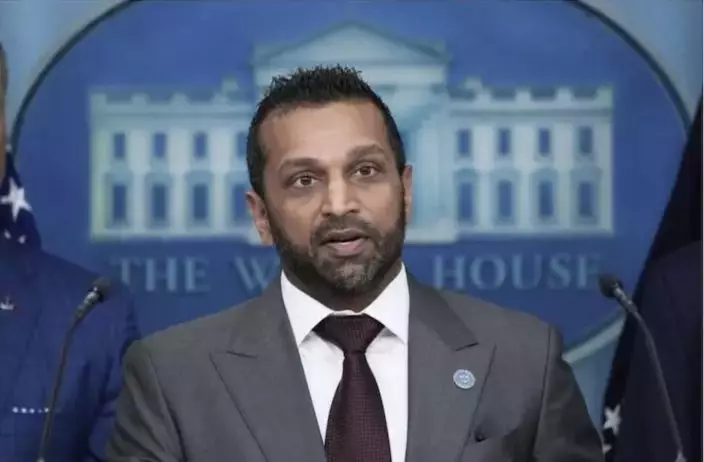
FBI Director Patel boasted of cyber defenses; FBI hacked again.
He barely got the words out before hackers smashed into the FBI's crime database. It was a slap in the face he never saw coming.
Trouble never comes alone for the FBI. Its network has now been breached twice in two months, and the first hit, in September, was just as serious.
Back then, a hacker group called ShinyHunter broke into the FBI's personnel webpage and walked off with sensitive personal data on current and former employees. The haul included addresses, phone numbers and emails, plus their health conditions.
Worse still, some of these personnel are undercover agents out on missions right now. Their safety could be threatened at any moment, and that has them deeply worried.
A former FBI agent told the BBC the situation was truly awful for the bureau's undercover agents. A group of current personnel he joined is filled with anger and worry. What everyone fears most is that their data will soon be posted online, free for the taking by hackers backed by criminals and hostile elements.
That stolen data is a loaded weapon. It could fuel fraud and extortion, harassment of the personnel involved, even outright attacks.
Fallout Spreads Wider
ShinyHunter then went public. The group shared samples of the stolen data with the media, along with its extortion demands. The haul covers thousands of personnel, including senior officials such as deputy directors.
Earlier, the FBI arrested a Canadian IT expert suspected of leading the hacker group. But whether the intrusion campaign has actually been dismantled remains unknown.
An expert told the BBC that ShinyHunter is not even a top-tier hacking crew. The implication is chilling. If a more sophisticated attacker comes knocking, the FBI will have an even harder time fighting back.
Affected agents pin the blame closer to home. They believe the officials in charge failed to take proper precautions, and that is the real cause of the breach. They are furious over what they describe as sloppy, lazy security failures.
And the damage does not stop at the FBI. US media report that the Department of Agriculture has also fallen, with hackers breaking into the system that processes subsidy payments to farmers. The masterminds may be the same crew.
The stolen agricultural data involves research results, which one source warned could be used by competitors against the United States.
Deeper Rot Exposed
The cyber defenses of US government departments are riddled with holes. The breaches point to chronic underfunding and aging equipment, and they expose something worse: a bloated, careless bureaucracy where governance has simply stopped working.
Firing one national cybersecurity director will not fix any of this. The rot runs far deeper than a single office.
Donald Trump recently gushed over Shenzhen's cityscape while slamming some American cities as a mess. The same stark gap shows up in how advanced and secure each side's networks are.
Even the FBI's own network has fallen to hackers. If the bureau cannot hold the line, the rest of the government hardly stands a chance.
Lai Ting-yiu
Captions:
FBI hack exposes undercover agents; they fear and fume.
FBI Director Patel boasted of cyber defenses; FBI hacked again.
What Say You?
** 博客文章文責自負,不代表本公司立場 **
The APEC summit produced no shortage of side stories, and one is still being chewed over: did Japanese Prime Minister Sanae Takaichi get the cold shoulder? The question has set off debate internationally, in Japan, and in Taiwan.
Snubbed at APEC
"Cold" and "warm" are relative, and Takaichi herself should know exactly what that temperature gap means. She was frozen out everywhere this time, partly because her fixation on misguided policies has brought the bitter consequences down on herself. But her habit of "cloistered diplomacy" and self-imposed isolation also played a role.
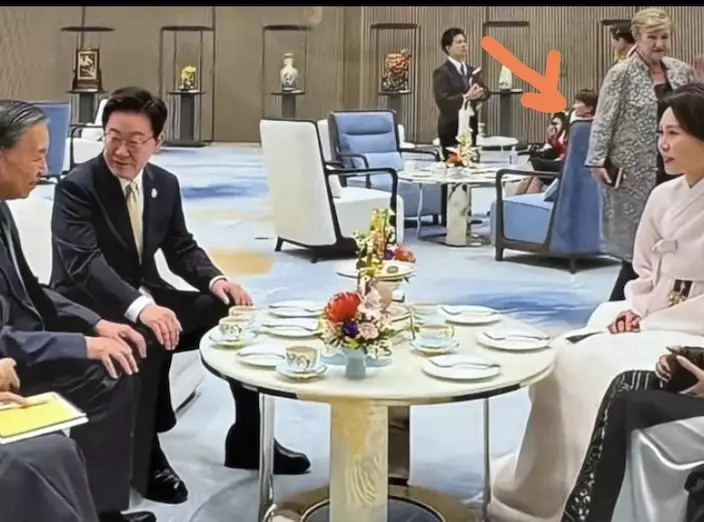
Takaichi sits alone at APEC, echoing her self-imposed isolation at the G7 summit in June and her absence at the G7 video conference last month.
Just last month she unexpectedly skipped an important G7 meeting, a no-show suspected to be linked to drinking and ducking the session. During this APEC summit, she was spotted sitting alone in a corner once more, solitary and making no move to talk with other leaders.
Cases like this are too many to count. They show that her being snubbed and marginalized is her own doing, and she has no one else to blame.
Most media coverage of Takaichi at this APEC summit zeroed in on how she interacted with President Xi. But some of her smaller gestures are worth a closer look.
During a break in the meeting, the attending leaders had free time to mingle and chat in the lounge. Someone filmed Takaichi sitting alone at a round table with no one beside her, head lowered and silent, looking thoroughly bored.
The other leaders had all formed their own circles to talk. Not far from her, South Korean President Lee Jae-myung and his wife were having a good time chatting with Vietnamese State President To Lam.
A Pattern of Absences
This is not Takaichi's first bout of cloistered diplomacy. On the 2nd of last month, G7 leaders held a video conference at 9:30 p.m. Japan time to discuss how to respond to soaring fuel prices.
The issue matters enormously to Japan. Yet Takaichi skipped the meeting at the last minute. Kazuya Endo, the Foreign Ministry's Deputy Minister for Foreign Affairs, had to fill in for her.
The official explanation came quickly. The meeting had been convened hastily, officials said, and the Prime Minister's Office simply had no time to set up the video link.
Media reports tell a different story. French President Emmanuel Macron, who chaired the meeting, had notified the Japanese side several days earlier. The 'no time to connect' line was just a pretext. On top of that, Takaichi had no official engagements during that period. She was free to attend.
Kyodo News then disclosed where she actually was. At 6:30 p.m. that day, Takaichi was dining at the Prime Minister's Official Residence with LDP Vice President Taro Aso and other senior figures. The gathering wrapped up before 8 p.m.
The timeline raises obvious questions. Observers suspect Takaichi drank too much at the dinner and used that to dodge the G7 meeting.
The government, of course, flatly denied it, insisting Takaichi did not drink that evening. The opposition is not letting go. It slams Takaichi for skipping such an important meeting and for weakening Japan's standing and image in the international community.
Spinning Her Chair Alone
Takaichi's G7 flop was no one-off. At the summit in France in mid-June, leaders gathered to hash out Ukraine, the Middle East and global economic security.
Around the big round table, other leaders mingled and traded small talk. Takaichi sat alone, spinning her own chair and talking to no one.
The one leader she approached was Trump. His cold response left her deflated, and the same scene played out again at the APEC meeting.
The SNS Prime Minister
Takaichi's reclusiveness does not stop at the summit circuit. Back home, she shows up for Diet question sessions less often than any of her five predecessors. Instead, she holes up for long stretches in the Prime Minister's Official Residence, personally flooding X with posts to defend her own policies.
The numbers are striking. From her first day in office on October 21 last year through October 20, she fired off 867 posts, more than any former prime minister, according to a Kyodo News tally.
Her social media habit is only getting worse. She once posted seven times in a single day. She is too busy posting to hold press conferences or face questioning in the Diet, and opposition parties and the media have taken note. Their verdict: she has become the "SNS (social networking service) prime minister."
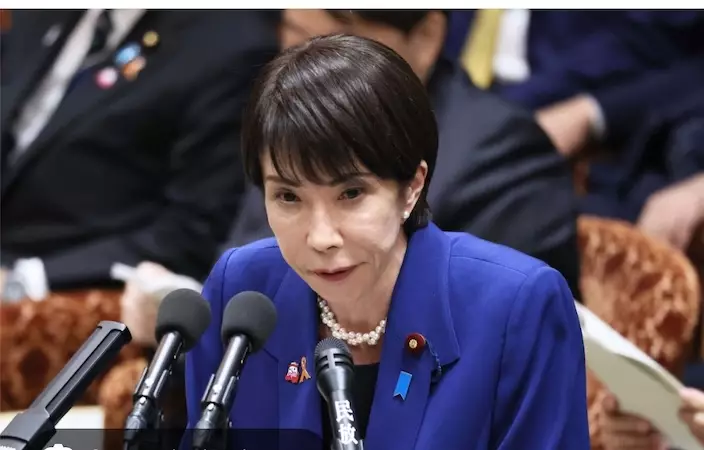
Media: Takaichi hides in office, posts online, dodges Diet.
Veteran Japanese journalist Yoshihiko Honda put the question bluntly. Just how much free time does Takaichi have on her hands, he asked. Or is it, as she herself has publicly admitted, that she is chronically sleep-deprived and would rather sacrifice sleep than stop posting? Either way, he argued, the spectacle reveals nothing more than a closed, inward-looking political posture.
Her Own Doing
The cold shoulder Takaichi got at the APEC summit is not just the bitter fruit of bad policy. It also grows out of her own 'cloistered diplomacy,' a self-imposed isolation of her own making.
If she is allowed to carry on like this, Japan will only be pushed further to the margins. The setbacks will keep piling up.
By now, the public should see the truth. She brought all of this on herself, and no one else is to blame.
Lai Ting-yiu