Skip to Content Facebook Feature Image

Spinning Her Chair Alone: Inside Takaichi's Self-Made Diplomatic Chill

Blog

Spinning Her Chair Alone:  Inside Takaichi's Self-Made Diplomatic Chill
Blog

Blog

Spinning Her Chair Alone: Inside Takaichi's Self-Made Diplomatic Chill

2026-11-23 23:55 Last Updated At:23:55

The APEC summit produced no shortage of side stories, and one is still being chewed over: did Japanese Prime Minister Sanae Takaichi get the cold shoulder? The question has set off debate internationally, in Japan, and in Taiwan.

Snubbed at APEC

"Cold" and "warm" are relative, and Takaichi herself should know exactly what that temperature gap means. She was frozen out everywhere this time, partly because her fixation on misguided policies has brought the bitter consequences down on herself. But her habit of "cloistered diplomacy" and self-imposed isolation also played a role.
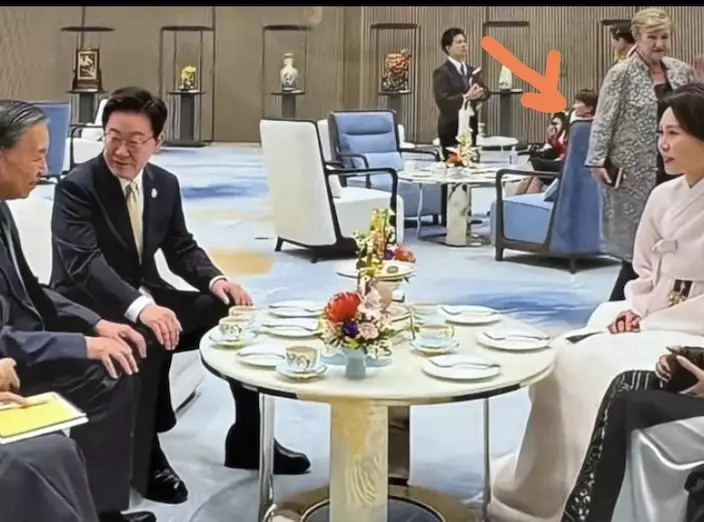
Takaichi sits alone at APEC, echoing her self-imposed isolation at the G7 summit in June and her absence at the G7 video conference last month.

Takaichi sits alone at APEC, echoing her self-imposed isolation at the G7 summit in June and her absence at the G7 video conference last month.

Just last month she unexpectedly skipped an important G7 meeting, a no-show suspected to be linked to drinking and ducking the session. During this APEC summit, she was spotted sitting alone in a corner once more, solitary and making no move to talk with other leaders.

Cases like this are too many to count. They show that her being snubbed and marginalized is her own doing, and she has no one else to blame.

Most media coverage of Takaichi at this APEC summit zeroed in on how she interacted with President Xi. But some of her smaller gestures are worth a closer look.

During a break in the meeting, the attending leaders had free time to mingle and chat in the lounge. Someone filmed Takaichi sitting alone at a round table with no one beside her, head lowered and silent, looking thoroughly bored.

The other leaders had all formed their own circles to talk. Not far from her, South Korean President Lee Jae-myung and his wife were having a good time chatting with Vietnamese State President To Lam.

A Pattern of Absences

This is not Takaichi's first bout of cloistered diplomacy. On the 2nd of last month, G7 leaders held a video conference at 9:30 p.m. Japan time to discuss how to respond to soaring fuel prices.

The issue matters enormously to Japan. Yet Takaichi skipped the meeting at the last minute. Kazuya Endo, the Foreign Ministry's Deputy Minister for Foreign Affairs, had to fill in for her.

The official explanation came quickly. The meeting had been convened hastily, officials said, and the Prime Minister's Office simply had no time to set up the video link.

Media reports tell a different story. French President Emmanuel Macron, who chaired the meeting, had notified the Japanese side several days earlier. The 'no time to connect' line was just a pretext. On top of that, Takaichi had no official engagements during that period. She was free to attend.

Kyodo News then disclosed where she actually was. At 6:30 p.m. that day, Takaichi was dining at the Prime Minister's Official Residence with LDP Vice President Taro Aso and other senior figures. The gathering wrapped up before 8 p.m.

The timeline raises obvious questions. Observers suspect Takaichi drank too much at the dinner and used that to dodge the G7 meeting.

The government, of course, flatly denied it, insisting Takaichi did not drink that evening. The opposition is not letting go. It slams Takaichi for skipping such an important meeting and for weakening Japan's standing and image in the international community.

Spinning Her Chair Alone

Takaichi's G7 flop was no one-off. At the summit in France in mid-June, leaders gathered to hash out Ukraine, the Middle East and global economic security.

Around the big round table, other leaders mingled and traded small talk. Takaichi sat alone, spinning her own chair and talking to no one.

The one leader she approached was Trump. His cold response left her deflated, and the same scene played out again at the APEC meeting.

The SNS Prime Minister

Takaichi's reclusiveness does not stop at the summit circuit. Back home, she shows up for Diet question sessions less often than any of her five predecessors. Instead, she holes up for long stretches in the Prime Minister's Official Residence, personally flooding X with posts to defend her own policies.

The numbers are striking. From her first day in office on October 21 last year through October 20, she fired off 867 posts, more than any former prime minister, according to a Kyodo News tally.

Her social media habit is only getting worse. She once posted seven times in a single day. She is too busy posting to hold press conferences or face questioning in the Diet, and opposition parties and the media have taken note. Their verdict: she has become the "SNS (social networking service) prime minister."
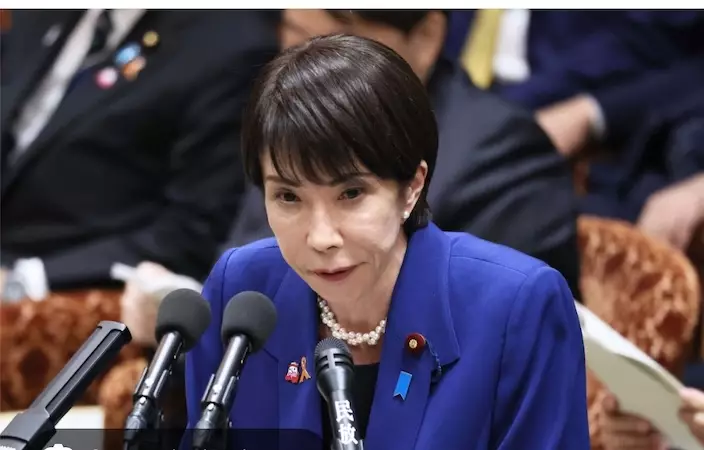
Media: Takaichi hides in office, posts online, dodges Diet.

Media: Takaichi hides in office, posts online, dodges Diet.

Veteran Japanese journalist Yoshihiko Honda put the question bluntly. Just how much free time does Takaichi have on her hands, he asked. Or is it, as she herself has publicly admitted, that she is chronically sleep-deprived and would rather sacrifice sleep than stop posting? Either way, he argued, the spectacle reveals nothing more than a closed, inward-looking political posture.

Her Own Doing

The cold shoulder Takaichi got at the APEC summit is not just the bitter fruit of bad policy. It also grows out of her own 'cloistered diplomacy,' a self-imposed isolation of her own making.

If she is allowed to carry on like this, Japan will only be pushed further to the margins. The setbacks will keep piling up.

By now, the public should see the truth. She brought all of this on herself, and no one else is to blame.

Lai Ting-yiu


What Say You?

** 博客文章文責自負,不代表本公司立場 **

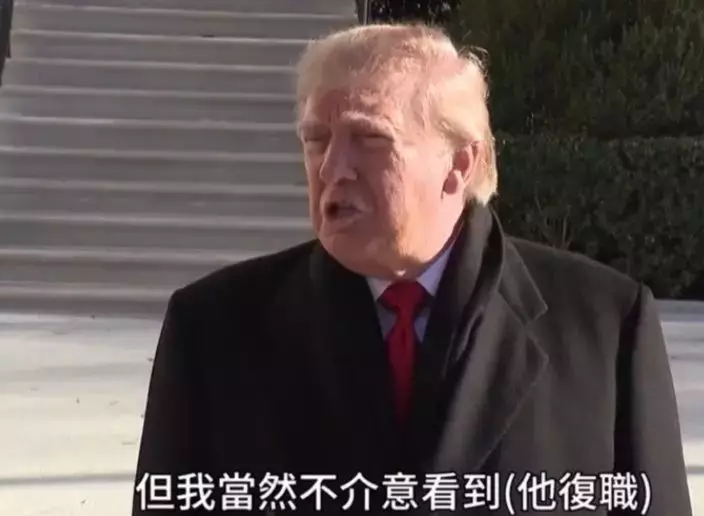
Before leaving for Shenzhen to attend the APEC summit, Trump weighed in on the "Two Huangs" controversy. He said he does not oppose Jensen Huang's return to Nvidia, and he defended Huang's chip sales to China. As for whether Huang Le is a spy, "what happens with that is that any woman coming to the country that’s a beautiful woman that comes from China, they say she’s a spy".

Trump vs His Hawks

The message was clear. Trump still has Jensen Huang's back, and he wants to keep the mood friendly and avoid giving offense ahead of his meeting with President Xi Jinping.

But some senior White House officials appear to be moving against the "big boss." The Department of Commerce abruptly rolled out new rules of the game, tightly restricting roundabout channels for supplying AI computing power to China.

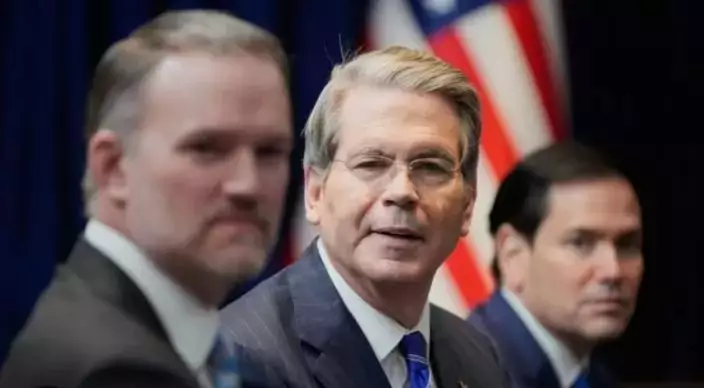
The order to play hardball came from the Department of the Treasury and the White House National Security Council. The men running those two bodies are the lately ultra-hawkish Treasury Secretary Scott Bessent and Secretary of State Marco Rubio. That raises an uncomfortable question: has Trump lost his grip on them? Is White House infighting finally breaking into the open?

The Situation Room Clash

Scott Bessent and Marco Rubio did not let the Jensen Huang storm cool. In fact, they turned up the heat, in a sequel to a fiery clash inside the White House Situation Room.

White House hawks Rubio, Bessent tighten AI chokehold on China.

White House hawks Rubio, Bessent tighten AI chokehold on China.

In that meeting, Bessent tore into Commerce Secretary Howard Lutnick and demanded to know why he had refused to blacklist Megaspeed, the Singapore company tied to Huang Le. Rubio backed him from the sidelines.

Soon after, word leaked that White House officials were debating whether Lutnick should stay. The palace fight was starting to show.

The infighting barely paused before Bessent and Rubio struck again. They drafted new rules to curb China's AI push, and the Commerce Department rolled them out soon after.

The thrust is simple: new license requirements for advanced chips bound for data centers in Singapore, Malaysia, Thailand, Indonesia and Brazil. The aim is to stop China from getting advanced-chip computing power through those countries.

Why the two hawks chose this moment to unveil the hard line is a guessing game for outsiders. One thing is clear: Donald Trump has stood by Lutnick and wants to keep relations with China friendly.

On Monday, Trump said flatly that he would not replace Lutnick. He also defended the delay in blacklisting Megaspeed, saying that acting sooner could have triggered a conflict with China.

Rubio Eyes the Presidency

Trump made a point of bringing Lutnick along to Shenzhen for the APEC summit, a clear sign that his favored aide's position remains secure. Bessent will also be on the trip, and all three will share the same Air Force One. How Trump handles the clash between his two lieutenants is now drawing attention from all sides.

In this internal fight, Rubio deserves even closer attention than Bessent. The National Security Council he leads is one of the two departments that proposed blocking computing power exports to China.

Rubio was also recently exposed for embellishing an intelligence report on Huang Le, aiming to sour Trump's relationship with Jensen Huang. The goal was to stop Nvidia from selling advanced chips to China. His motives could hardly be plainer.

So why is this standard-bearer of the China hawks making his move now? A recent report may reveal the motive.

The Hill recently reported that a growing number of Republicans in Congress want to put Rubio forward to run for president in two years. After the party's drubbing in the midterm elections, they have started looking beyond Vice President Vance for another candidate, and they see Rubio as the better fit.

The Post-Trump Chess Game

Meanwhile, the far-right forces have also begun to regroup in recent days. They are building a 'post-Trump era' line, one that takes an even harder stance abroad. Rubio's move to play up his 'China hawk' image in the Jensen Huang affair appears tied to this shift.

As for Vance, who has his eyes on the presidency, he is more aligned with Trump. When he spoke about Huang Le earlier, he made clear he could not be certain she was a spy. "I don't know if this woman was a spy," he said.

Trump backs Huang's return, splitting with White House hawks.

Trump backs Huang's return, splitting with White House hawks.

Vance has also heaped praise on Jensen Huang's contributions to the tech industry in the past. He disagrees with taking down this AI godfather.

Vance also pointed the finger straight at the Democrats. He said they are exploiting the Jensen Huang controversy to attack Trump and paint him as 'soft on China.'

And he was not talking only about the Democrats. Within the Republican Party, and even inside the White House, the same voices can be heard. As for what those in the corridors of power who are exploiting the Jensen Huang controversy are really calculating, he of course knows full well.

From the moment the Jensen Huang controversy broke to everything that followed, the traces are everywhere. The whole thread is inseparable from deep political maneuvering. After the midterm elections, the infighting from the White House to the Republican Party will accelerate and surface. There will be no shortage of drama to watch.

Lai Ting-yiu

Recommended Articles