
For the Hong Kong government, the Tai Po Wang Fuk Court fire is an agonizing lesson. The systemic problems it exposed must be fixed at the root, and officials who failed in their duties must not be allowed to muddle through and slip away.
A Painful Lesson
Chief Executive John Lee bowed and apologized to the public. He also made clear the government's determination to "reform" and "hold people accountable."
In a disaster of this scale, the government's failings certainly deserve blame. But how it patches those failings and hunts down the culprits afterward deserve a fair grading .
I dug into the string of actions the British authorities took after London's 2017 Grenfell Tower inferno and compared them with the response to the Wang Fuk Court fire. The verdict is stark: "Hong Kong speed" leaves "British speed" in the dust. From the disaster itself to the prosecution of the unscrupulous developers alone, Hong Kong was a full nine years faster. That delivers exactly what John Lee demanded: "do it as soon as possible, do it effectively, and get to the bottom of it.”
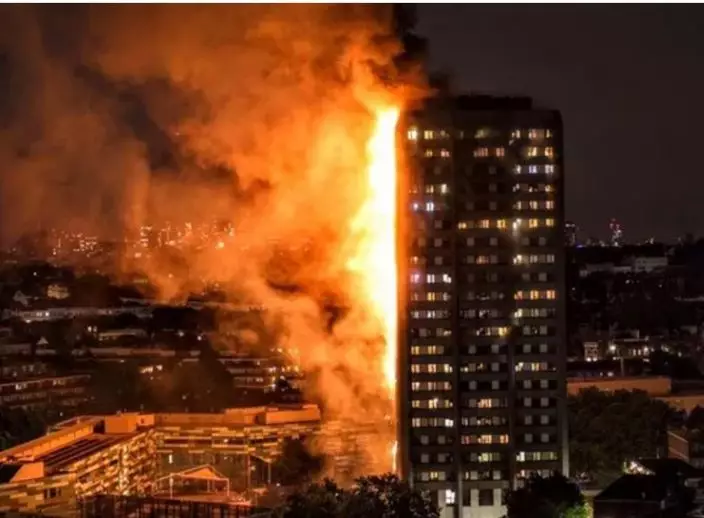
Grenfell prosecution took 10 years—nine years slower than Hong Kong.
The Grenfell Inferno
London's fire of the century broke out on June 14, 2017. It killed 72 people, making it the deadliest residential blaze in half a century.
The government launched an investigation into the causes and responsibility soon after the disaster. Yet the final report did not land until February 26, 2025. It found that the government, the companies involved and the London Fire Brigade had failed at every levels and that serious systemic flaws had combined to produce the catastrophe.
The fire raced skyward for one main reason: the tower was clad in highly flammable polyethylene aluminum composite panels. The flames swept through all 24 floors in no time.
The report laid out a chain of negligence. The building materials manufacturer had deliberately concealed the dangers of the aluminum panels. The contractor and the building consultant ignored fire safety, and the government had long brushed off fire warnings about the material.
The picture painted in the report bears a striking resemblance to the findings of the Independent Committee on the Wang Fuk Court Fire. Yet the speed of the post-disaster response from the British and Hong Kong authorities could hardly be more different.
Arrests at Two Speeds
Start with the investigations. Britain took seven years to publish the final report on the Grenfell Tower fire.
Hong Kong moved at a different speed. The government announced an independent committee within a week of the Wang Fuk Court fire, launched a full investigation soon after, and published its report about 10 months later. That is more than six years faster than the UK inquiry.

Fifty civil servants probed in three months, unprecedented, Lee vows.
The gap widens further when it comes to arresting and prosecuting the businessmen behind the disaster. Hong Kong police began arresting the contractor and construction consultant involved just days after the fire, and the ICAC moved quickly to make arrests of its own.
By mid-December 2025, police had arrested 22 people and the ICAC another 14. Then on June 10 this year, seven people and two companies were charged with manslaughter, money laundering, corruption and other offenses.
The UK authorities pale by comparison. London's Metropolitan Police only formally handed its investigation file to prosecutors at the end of September this year, recommending charges of "manslaughter" and "gross negligence" against more than 50 people and 20 companies and organizations.
A final decision on whether to prosecute will not come until June next year, and the trial is not expected to begin until 2029. If the case does reach court, it will be a full 12 years after the fire of the century.
Reform in the Fast Lane
When it came to post-disaster reform and legislation, the UK government proposed amendments to the Fire Safety Act and the Building Safety Act in 2021, widening the reach of fire safety law. It also set up a Building Safety Regulator to police residential buildings and sharpen accountability.
All of it landed four years after the fire.
Hong Kong, by contrast, has put the pedal to the metal. Chief Secretary for Administration Chan Kwok-ki said that for the six laws needing amendment, the government aims to submit amendment bills to the Legislative Council within this year, going full throttle into the fast lane.
The planned Maintenance Support and Services Bureau is on the same sprint. Preparations are racing ahead, with the bureau set to begin operating before year-end and roll out services from January next year. Chan cast the urgency in the language of a legal order to be executed at once.
Who Takes the Blame
Hong Kong and Britain also part ways on accountability, not just speed. After the deadly Grenfell Tower fire, then-Prime Minister Keir Starmer apologized in public, without a bow. That was it. Not a single minister or junior minister lost their job.
Hong Kong tells a different story. John Lee and a lineup of bureau chiefs bowed together in apology. Secretary for Housing Winnie Ho went further, resigning to answer the call of political accountability.
Two fires of the century, two very different responses after the smoke cleared. Readers should grade the Hong Kong authorities' efficiency and determination fairly.
Lai Ting-yiu
What Say You?
** 博客文章文責自負,不代表本公司立場 **