BILBAO, Spain (AP) — Athletic Bilbao players Iñaki and Nico Williams used social media to respond with defiance and pride to racist slurs made during their team’s 4-3 win at Malaga in La Liga on Saturday.
The brothers, who are Black, both posted an image of raised fists in an Instagram story, while Nico, the younger brother, also posted a picture of them celebrating together and a video of Black stars from sport, film and music with the words, “Proud to be Black.”
Malaga condemned the racist insults and said it had identified an alleged perpetrator and were suspending his season ticket pending further investigation.
“The club remains in contact with the police to determine whether any other fans were involved and is fully prepared to assist with the investigation,” Malaga said on X. “La Rosaleda is no place for racists. Zero tolerance for discrimination.”
It’s not the first time the Williams brothers have faced racist abuse in Spain. Iñaki has been targeted at Espanyol’s stadium in Barcelona, and Nico has been subjected to racism at Atlético Madrid’s ground in the capital, daily sports newspaper AS reported.
Athletic also condemned the latest incidents.
“There is no place for racism in football or in the society we want to build,” the Basque club said on social media. “Zero tolerance for any form of discrimination.”
The Spain-born Williams brothers are the sons of Ghanaian parents who made the long journey to Europe looking for a better life.
The 32-year-old Iñaki played 28 games for Ghana before announcing his international retirement in September. Nico, 24, opted to play for Spain and starred as it won the World Cup in July, as well as the European Championship in 2024.
See AP’s full soccer coverage here

FILE - Spain's Yeremy Pino celebrates with Niko Williams the opening goal during a Nations League soccer match between Spain and Switzerland, at the Heliodoro Rodríguez López stadium in Tenerife, Spain, Nov. 18, 2024. (AP Photo/Angel Fernandez, File)
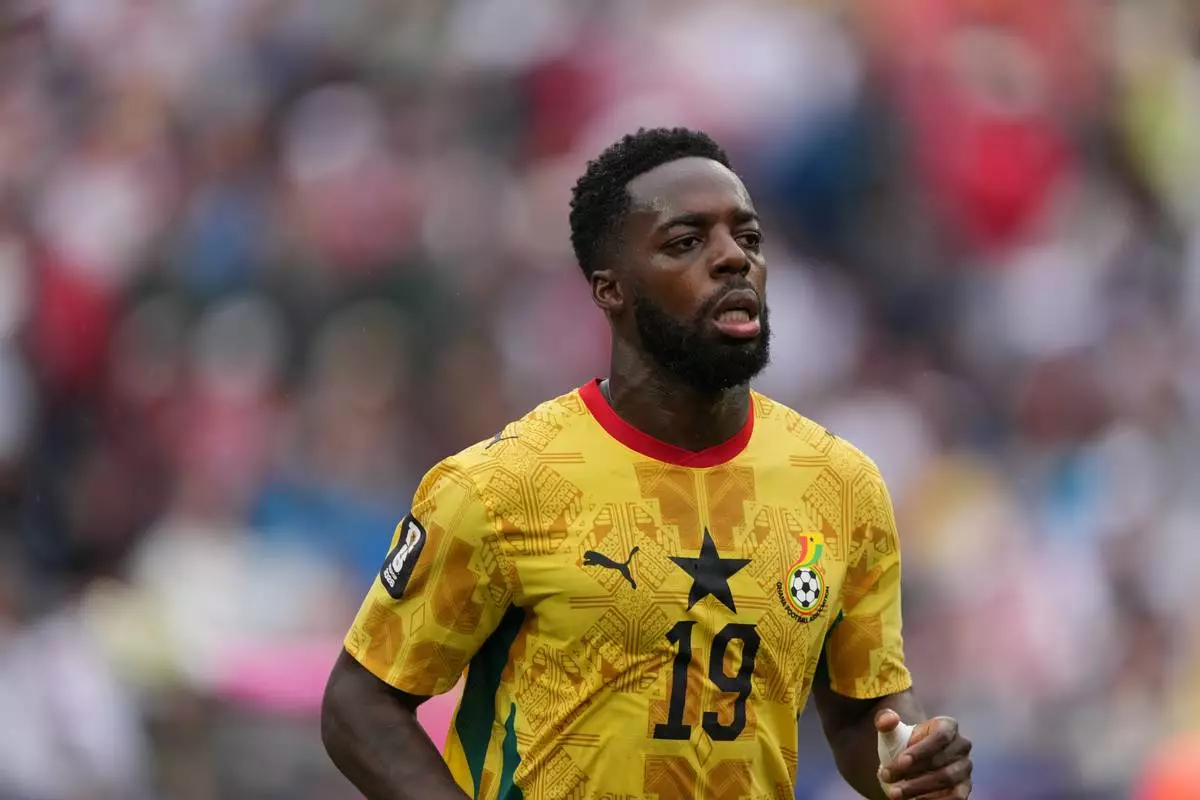
FILE - Ghana's Inaki Williams runs into position during the World Cup Group L soccer match between England and Ghana in Foxborough, Mass., near Boston, June,23,2026. (AP Photo/Dave Shopland, File)

FILE - Athletic Bilbao's Nico Williams, left, celebrates with his brother Inaki Williams after scoring the opening goal during the Europa League opening phase soccer match between Athletic Bilbao and Viktoria Plzen at the San Mames stadium in Bilbao, Spain, Jan. 30, 2025. (AP Photo/Miguel Oses, File)
GENEVA (AP) — Voters appeared on track to ease Switzerland's strict rules on the export of weaponry, early results showed, in a contest that shaped up as a test of the country's vaunted neutrality.
The federal government and other backers have argued that the legal reform is needed to strengthen Switzerland’s defense industry and military. Critics countered that passage could make it easier for extremists and lawless states to get their hands on Swiss weaponry.
Balloting wrapped up Sunday on the issue — one of several up for consideration nationwide. With counting over in 16 of Switzerland's 26 cantons, or regions, official results showed nearly 56% of voters in favor of the reform.
Public broadcaster SRF projected that final results, expected later Sunday, would show victory for the proposal.
The vote is part of Switzerland's distinctive form of democracy that gives the public a direct say in policy-making four times a year. Other issues on national ballots Sunday involved taxes for married couples, financing of pensions and a ban on loud fireworks.
The war in Ukraine has prompted Swiss government officials to grapple with their country’s longtime conception of neutrality, which is enshrined in the constitution and prohibits exporting weaponry to active war zones.
The proposed easing would apply to 36 countries — mostly European and Western countries — considered to have similar export controls to those in Switzerland. Direct arms deliveries to countries at war like Ukraine would remain prohibited.
Parliament for years has sought to soften restrictions on exports of Swiss military equipment, arguing that allowing the exports helps keep Switzerland's defense industry competitive and ultimately helps the country defend itself.
The government has argued that some 80 percent of Swiss military exports go to other European countries.
Currently, countries that receive Swiss military equipment must agree not to transfer such weapons and other war materiel to conflict zones. Under the proposal, such sign-offs would no longer be required.
The government could also allow deliveries of weaponry to a “partner state” — any of those 36 countries — if it is involved in an armed conflict, as long as such exports conform with Switzerland's foreign and security interests.
A report by the Stockholm International Peace Research Institute released earlier this year ranked Switzerland as 20th among the world's top arms suppliers — behind Denmark and ahead of Ukraine — over the past five years. The United States ranked No. 1, with a 42% share of global arms exports in the period from 2021 to 2025.
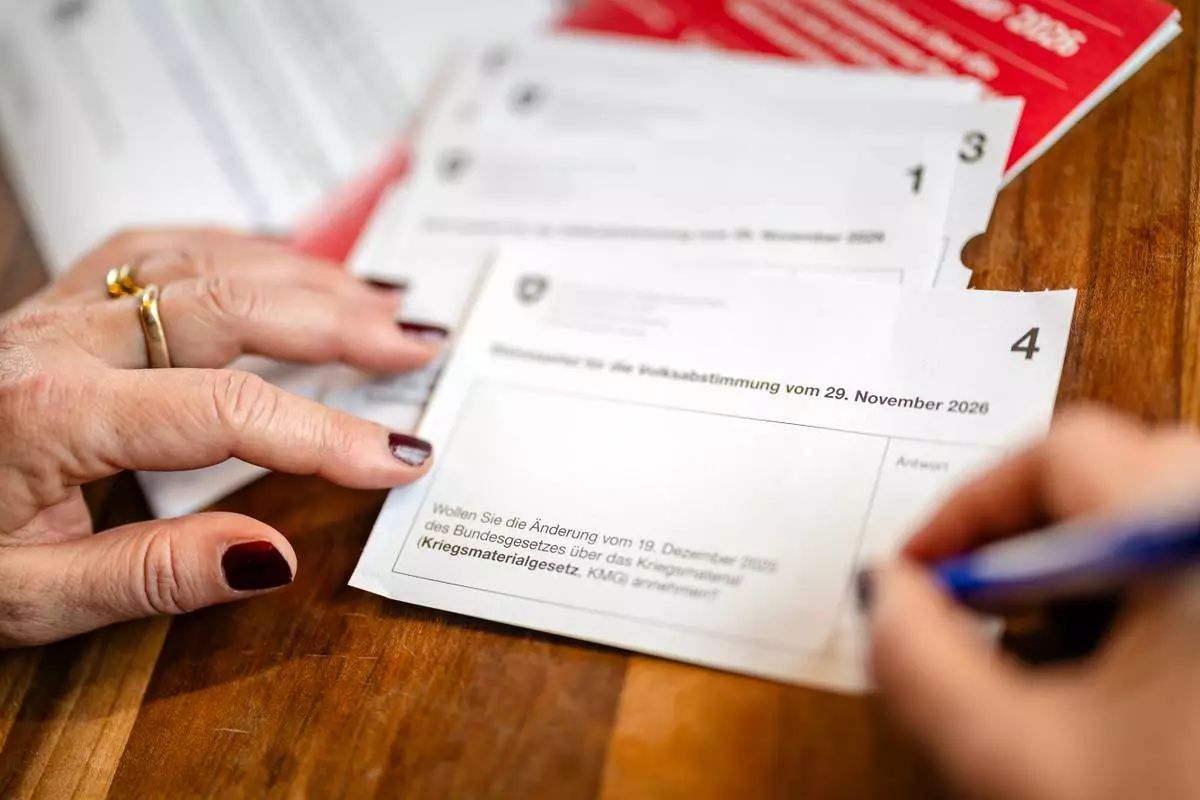
A woman fills out the referendum document on easing weapons export rules, in Zurich Saturday, Nov. 21, 2026. (Michael Buholzer/Keystone via AP)
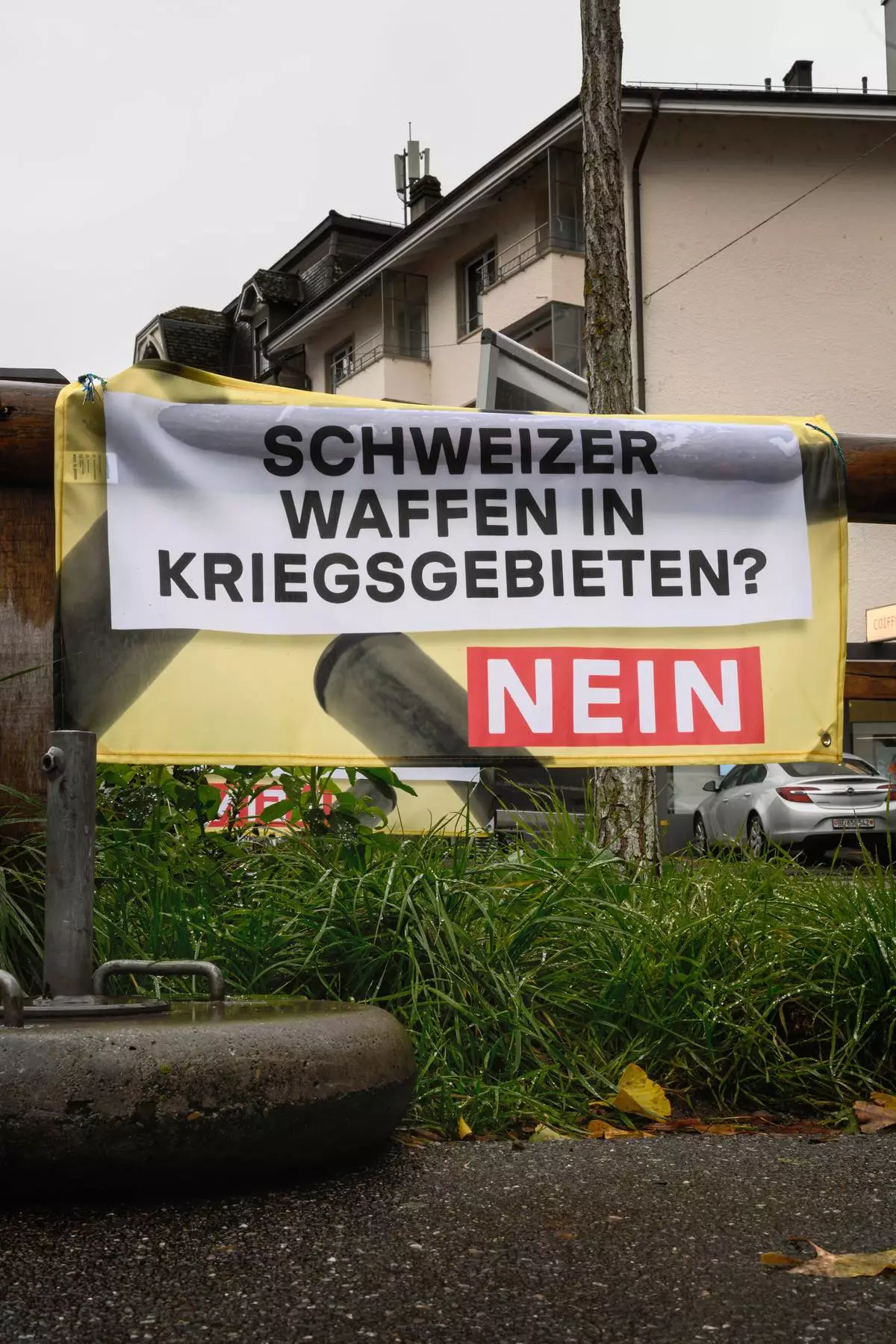
"Swiss weapons in war zones? No" says a poster photographed in Bern, Thursday, Nov. 12, 2026. (Christian Beutler/Keystone via AP)
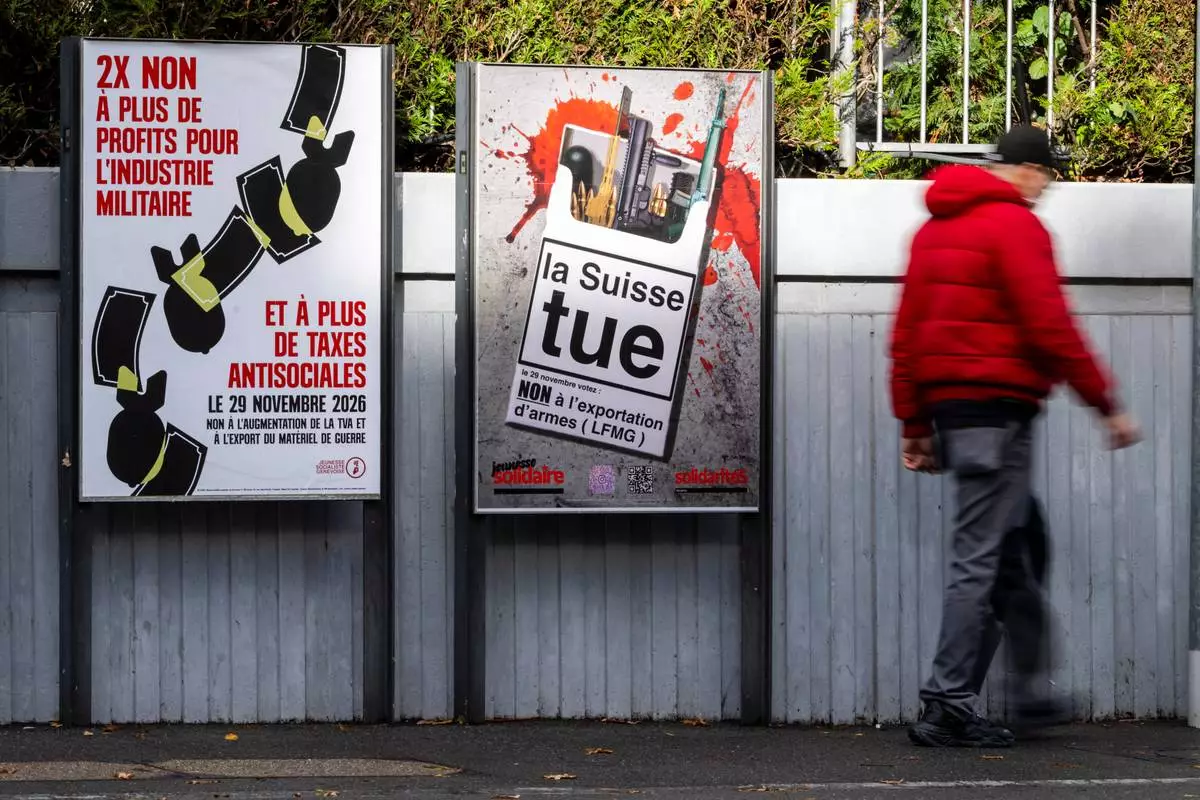
A person walks in front of posters from parties and associations giving their instructions on how to vote in Sunday’s referenda, in Geneva, Wednesday, Nov. 18. (Martial Trezzini/Keystone via AP)