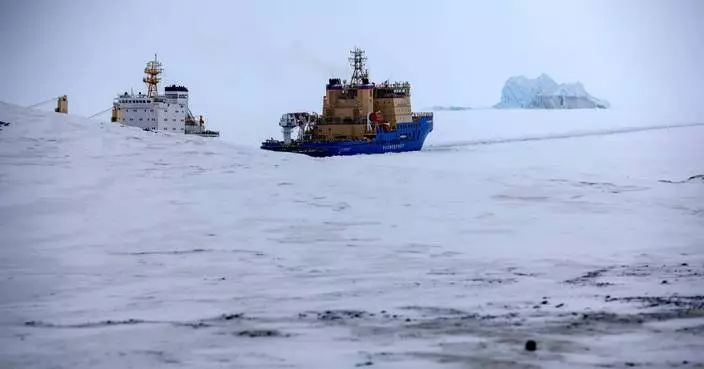
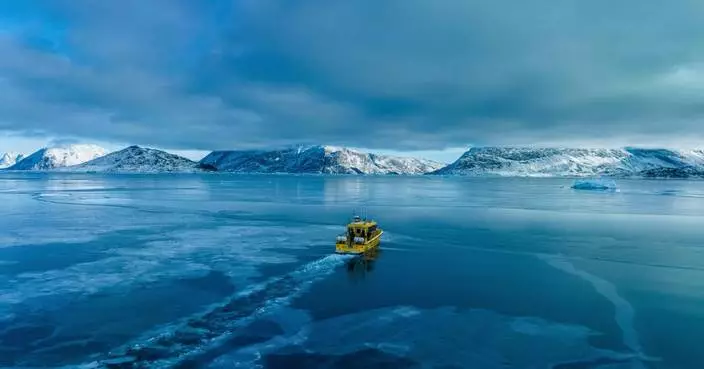
New Arctic Icescape emerges in the Franklin Strait in the wake of the Finnish icebreaker MSV Nordica as it sails the Arctic's Northwest Passage.
AP Photo/David Goldman
AP Photo/David Goldman
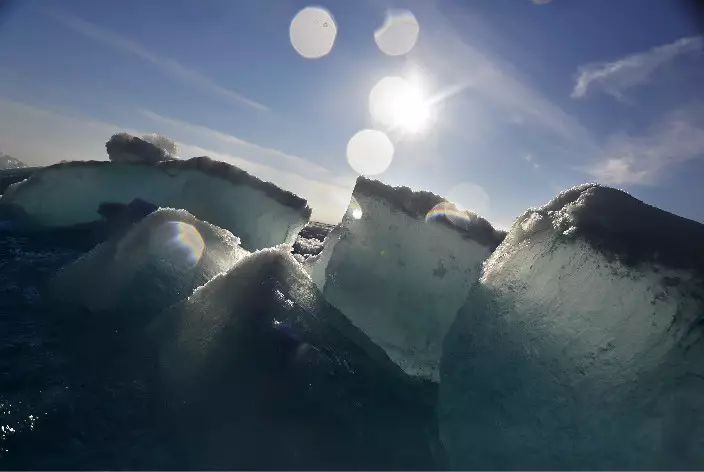
Sea ice forms when the top layer of water reaches freezing point, usually around the start of October. As temperatures continue to fall this first-year ice grows downward until it is several feet thick.
AP Photo/David Goldman
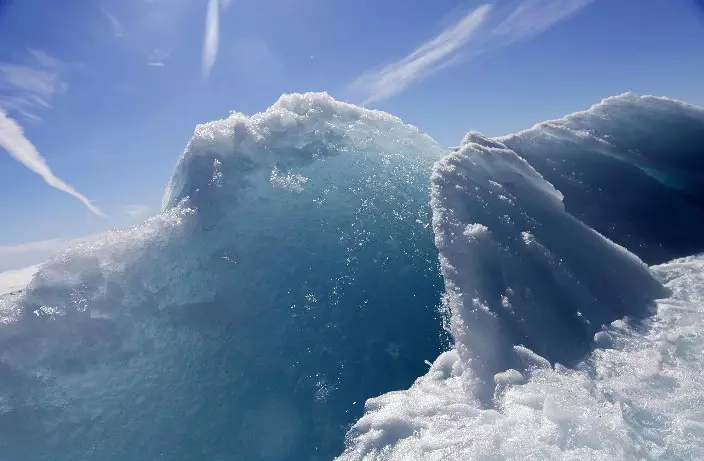
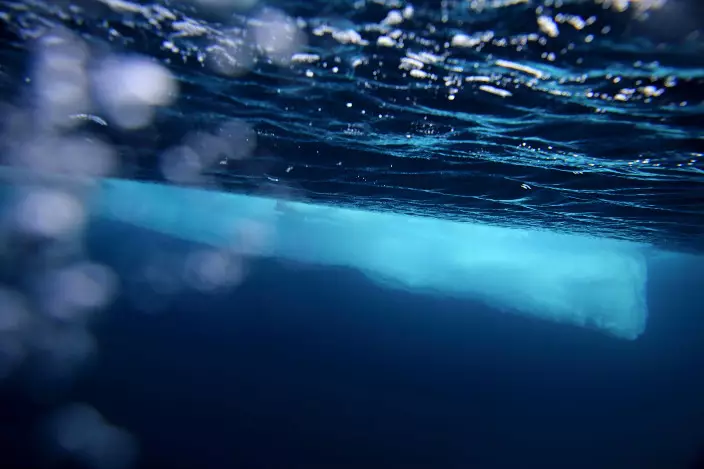
If the ice survives the following summer melt it becomes second-year ice. Another cycle and it becomes multi-year ice, which is the toughest kind.
AP Photo/David Goldman
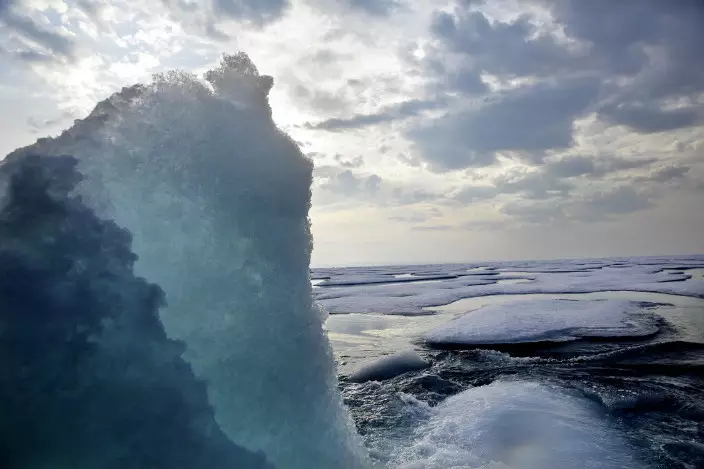
As a general rule, the older ice gets the more it turns blue and acquires mounds, so-called hummocks, on top from years of crashing into other floes.
AP Photo/David Goldman

AP Photo/David Goldman
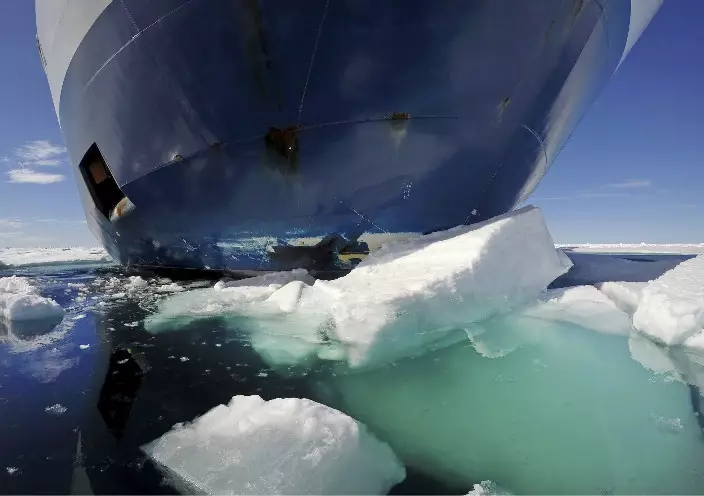
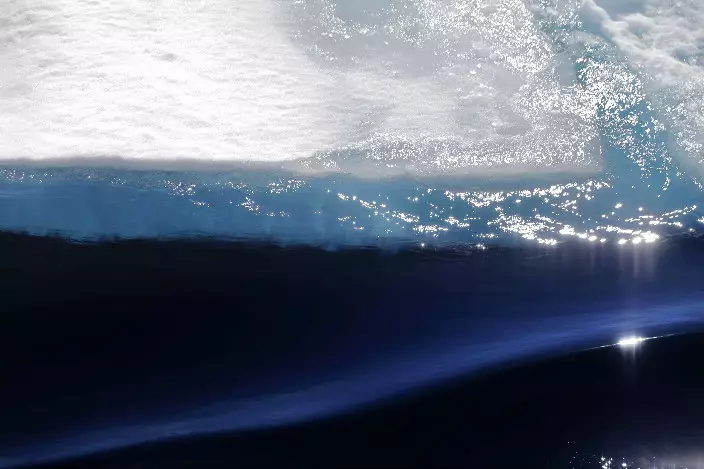
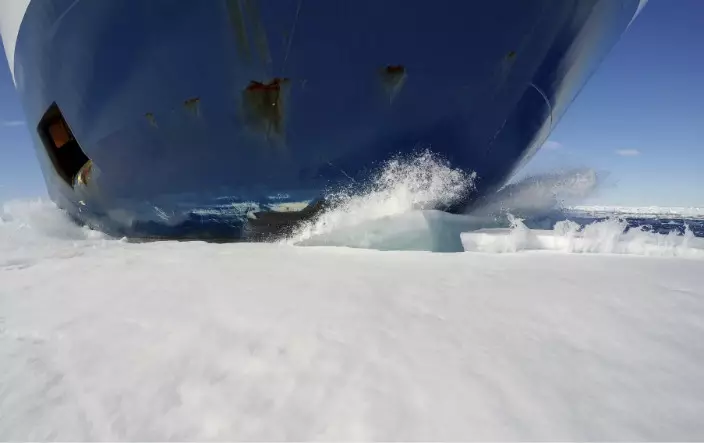
The bow of the Finnish icebreaker MSV Nordica drives through sea ice as it sails the Victoria Strait while traversing the Arctic's Northwest Passage, Friday, July 21, 2017.
AP Photo/David Goldman
The MSV Nordica is equipped with several heavy-duty engines and a hardened bow and hull that allow it either to drive through thin layers of ice or to crush thicker sheets by rising onto the ice with the help of its rounded hull. The ship's massive weight breaks the ice from above.
AP Photo/David Goldman

AP Photo/David Goldman
-AP
BRUSSELS (AP) — NATO on Wednesday launched a new military effort dubbed Arctic Sentry aimed at improving security in the High North, a month after U.S. President Donald Trump ramped up tensions in the alliance with his threats to annex Greenland.
Initially, Arctic Sentry will be the NATO label for national military exercises in the region, such as Denmark’s Arctic Endurance — which angered Trump so much that he threatened to slap tariffs on allies taking part — and Norway’s Cold Response drills.
Arctic Sentry is not a military operation. It does not involve the permanent or long-term deployment of troops to the region under a NATO banner.
“What is really new about it is that for the first time now we will bring everything we do in the Arctic together under one command,” NATO Secretary-General Mark Rutte told reporters in Brussels. He said it would help the alliance to “assess which (security) gaps there are which we have to fill.”
“In the face of Russia’s increased military activity and China’s growing interest in the High North, it was crucial that we do more,” Rutte added.
Arctic security has been on NATO’s agenda in recent years — seven allies lie in the region, along with Russia — but pressure to act accelerated as Trump’s determination to “get” Greenland fueled tensions among the allies.
NATO’s role in this series of military activities, which will be coordinated through its U.S. headquarters in Norfolk, Virginia, is aimed at countering Russian and Chinese influence in the High North, which includes Greenland.
NATO’s Supreme Allied Commander Europe, U.S. Air Force Gen. Alexus Grynkewich, said in a statement that “Arctic Sentry underscores the alliance’s commitment to safeguard its members and maintain stability in one of the world’s most strategically significant and environmentally challenging areas.”
As part of the effort, the United Kingdom has announced that the number of British troops deployed to Norway will double over three years from 1,000 to 2,000. Some will be involved in Exercise Lion Protector, already planned for September.
Details are sketchy, but other NATO activities will be added to Arctic Sentry once broader security needs are assessed and as the national military exercises end.
France, Germany and Denmark have said they will take part but have not said how many troops would be involved.
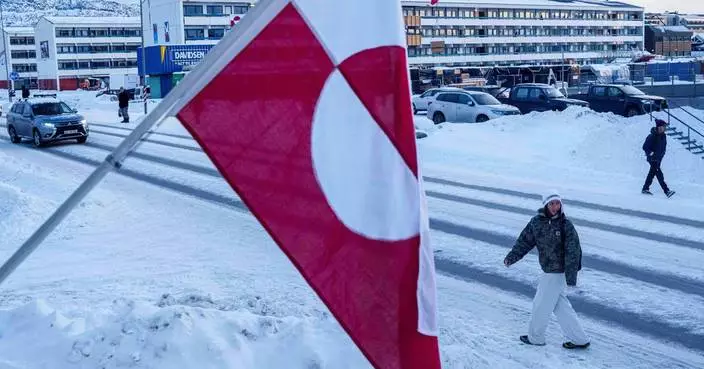
NATO’s primary role is to defend the territory of its 32 member states. The specter of the alliance’s most powerful country threatening to annex part of another ally, Denmark, has deeply shaken the rest of the alliance. Greenland is a semiautonomous territory in the Danish realm.
European allies hope that Arctic Sentry and ongoing talks between the Trump administration, Denmark and Greenland will allow NATO to move on from the dispute and focus on Europe's real security priority, Russia's war on Ukraine.
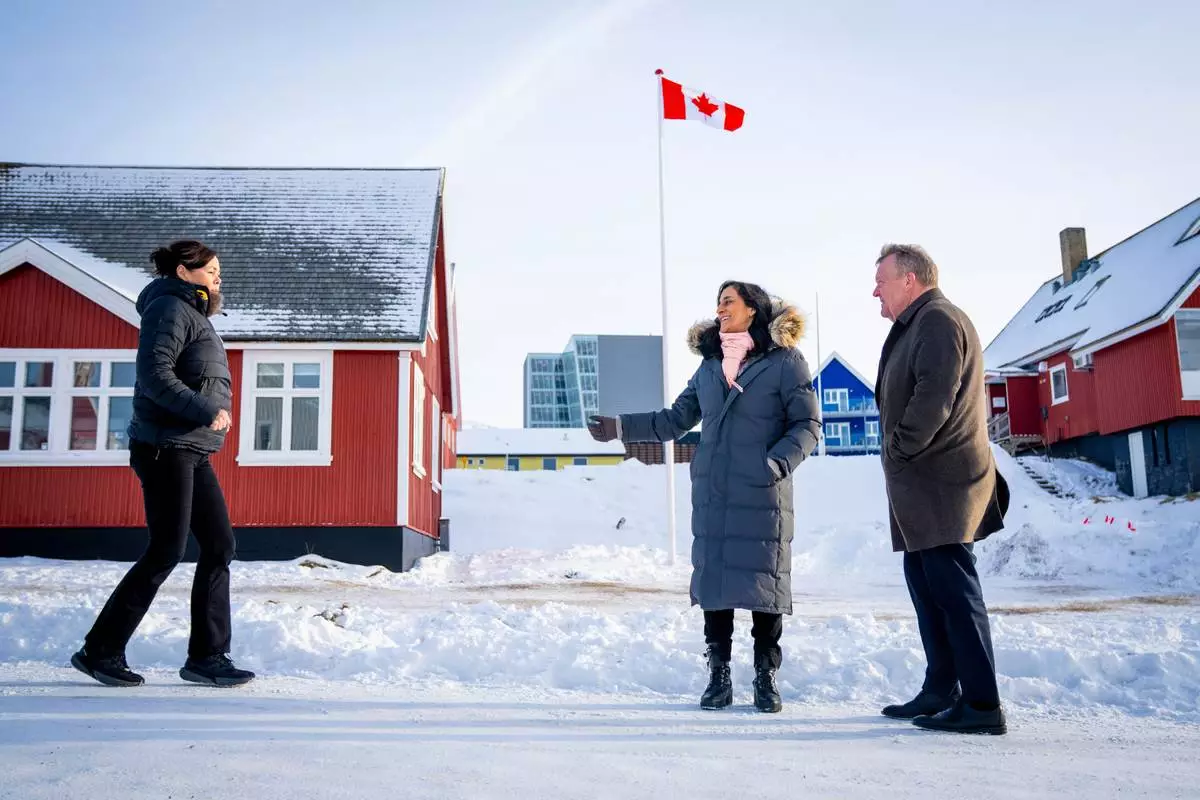
Greenland's Minister for Foreign Affairs Vivian Motzfeldt, left, Canada's Foreign Minister Anita Anand, and Danish Foreign Minister Lars Loekke Rasmussen, right, meet in front of the newly opened Canadian consulate in Nuuk, Saturday, Feb. 7, 2026. (Ida Marie Odgaard/Ritzau Scanpix via AP)