In April this year, the British government issued its six-monthly report on Hong Kong, in which it criticized the territory's implementation of the Safeguarding National Security Ordinance, also known as Article 23 of the Basic Law. The UK report asserted that this legislation does not align with international human rights standards and infringes on the rights and freedoms of Hong Kong residents.
In the preface to the report, British Foreign Secretary David Cameron remarked that nearly all opposition voices in Hong Kong had been silenced following the enactment of the national security law.
Ironically, the British government is now demonstrating its own methods of suppressing dissent.
According to a report by The Times of Israel, British journalist Richard Medhurst said that he was arrested by British police upon his arrival at London’s Heathrow Airport due to his news reporting on Palestine. He was detained and interrogated immediately upon landing.
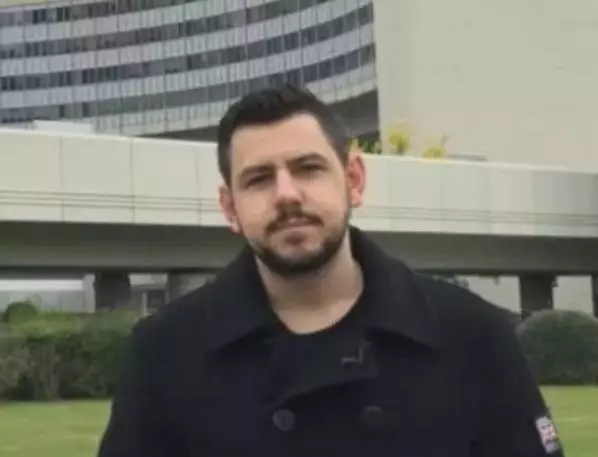
Richard Medhurst
Medhurst reported that the British police informed him he was suspected of violating Section 12 of the UK's Counter-terrorism Act, which criminalizes anyone who “invites support for a proscribed organization” or “expresses an opinion or belief that is supportive” of such a group.
During the ongoing Israeli-Palestinian conflict, Medhurst criticized Israel’s military actions in the Gaza Strip, describing them as "genocide" against Palestinians. He has written articles and delivered lectures on the distinctions between various Palestinian resistance groups, including Hamas, which the British government has designated as a terrorist organization. On August 19, Medhurst posted on the social media platform X, claiming that he was "the first journalist to be arrested under this section of the law" in the UK.
Medhurst provided a detailed account of his experience at the airport, stating that he was handcuffed by six British police officers as he exited the plane and was subsequently detained and interrogated for nearly 24 hours. According to him, officers first confiscated his phone and prevented him from notifying his family for several hours. He was searched twice within a 10-minute span, and his personal belongings, including equipment essential for his work as a journalist, were thoroughly examined. He was held in a separate cell, which he described as unfit for human habitation, and was monitored by cameras even while using the restroom.
Medhurst said that despite identifying himself as a journalist, the whole process appeared to be designed to "intimidate, humiliate, and dehumanize" him. Furthermore, many of his basic needs, including access to drinking water, were deliberately delayed by the police, exacerbating his distress.
"It was done intentionally on purpose to try and rattle me psychologically .. I am not a terrorist. I’m a product of the diplomatic community, and I’m raised to be anti-war," Medhurst said in a video statement. "I condemn terrorism... but people like me, who speak out and report on the situation in Palestine, are being targeted." He believes that Western journalists covering sensitive topics, such as Israeli military operations, are facing increasing censorship and repression.
"The humanitarian crisis in Gaza remains one of the most pressing news stories in the world. Yet it seems any statement... can be twisted into a crime of the highest order." He further stated, "Freedom of the press and freedom of speech really are under attack. This state is cracking down and escalating to try and stop people from speaking out against our government’s complicity in genocide."
According to The Times of Israel, Medhurst’s profile shows that he was born in Damascus, Syria, and is fluent in English, French, German, and Arabic. He is an independent journalist who had contributed to Lebanon’s Al-Maidan TV station, which was shut down by the Israeli government, and had also worked for Iran's PressTV and Russia Today (RT).
The British government is not shy from showing the world in a perfect manner what it means by double-standards, by unjustifiably interfering in Hong Kong's internal affairs while simultaneously suppressing dissent at home.
Ariel
** 博客文章文責自負,不代表本公司立場 **
Benedict Rogers, the founder of the British anti-China organization "Hong Kong Watch," who often advocates for human rights and freedom, has recently been implicated in a scandal involving allegations of discriminatory remarks against Asian colleagues and mistreatment of his employees, as reported by foreign media.
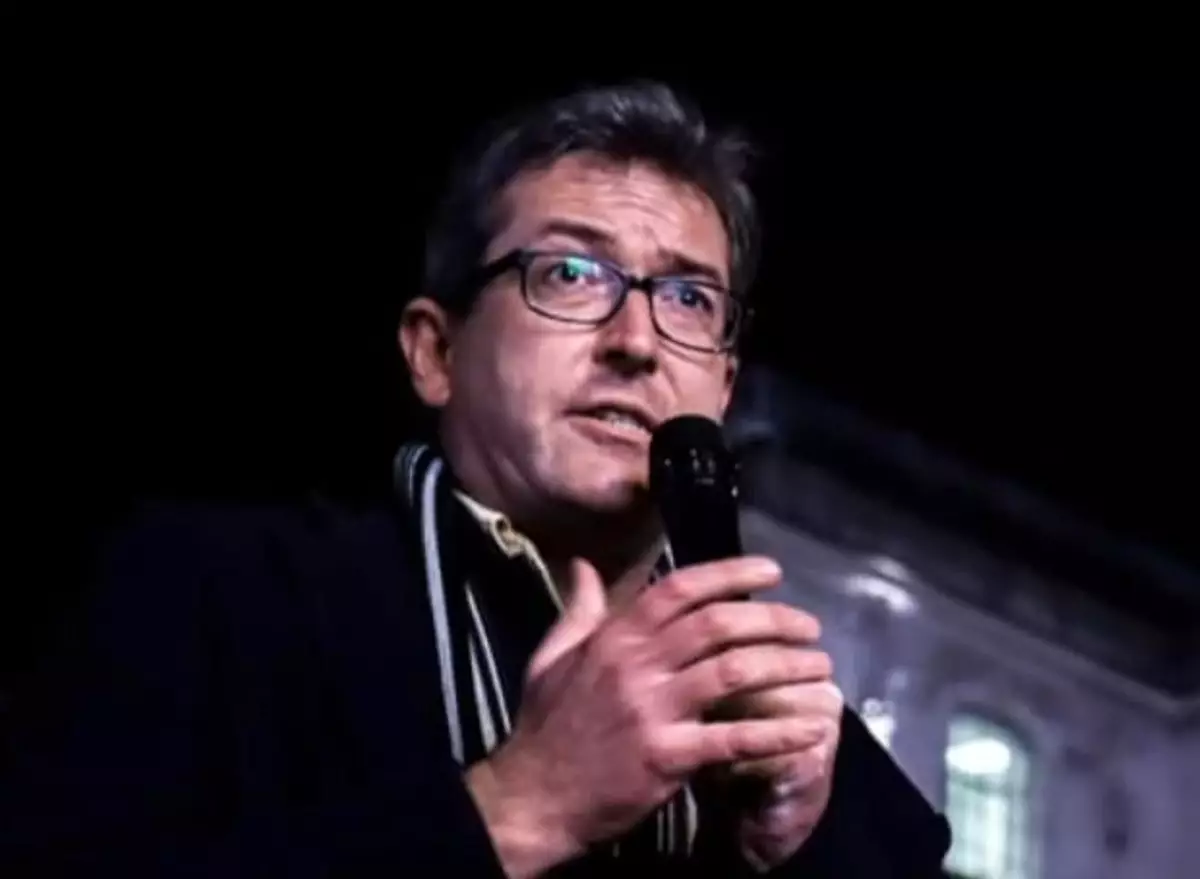
Benedict Rogers
The British online media outlet Crises/Z first broke the story, revealing that Rogers had made derogatory remarks about Asian employees in communications through email, WhatsApp, and other messaging tools. In one particular instance, Rogers reportedly criticized what he termed the "Malaysian mindset," stating that it required "a lot of review and discussion."
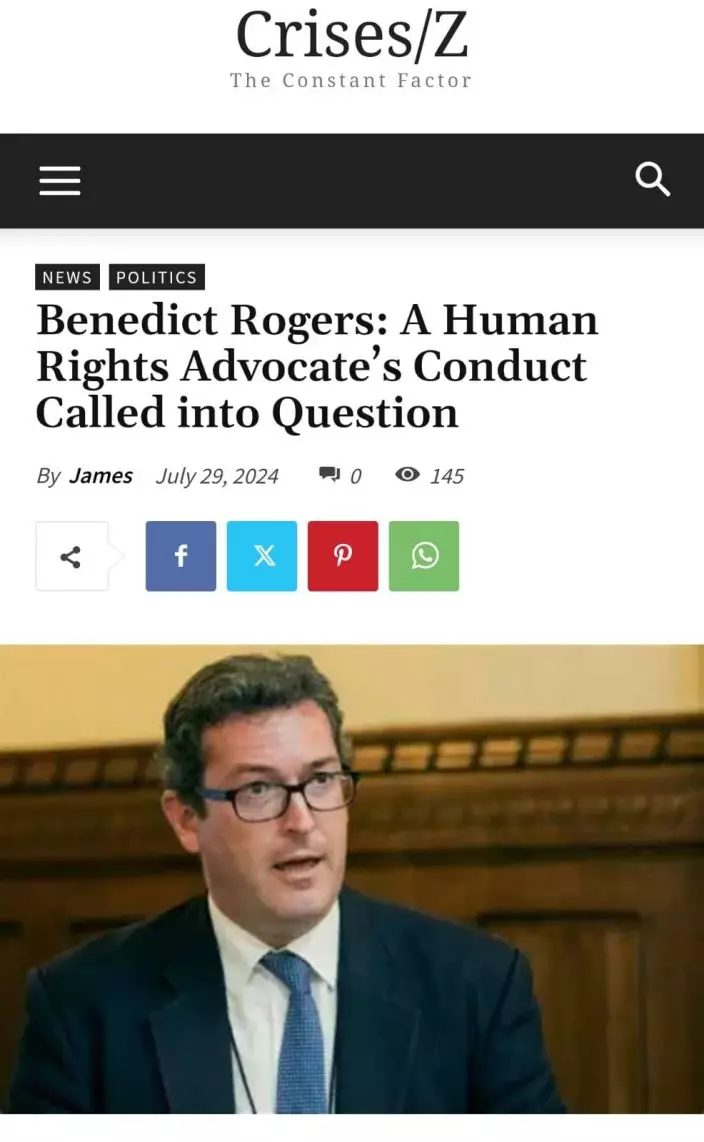
The British online media outlet Crises/Z first broke the story, revealing that Benedict Rogers had made derogatory remarks about Asian employees.
The report highlighted a specific exchange between Rogers and a Malaysian colleague named Steven. Rogers wrote:
"Hi Steve. I have not received any feedback from you in response to my Seoul Mission Report, which I worked on as a matter of urgency late last night following your urgent request for it (which I had not known in advance would be required). I was very happy to do so, but given that I responded so quickly to your urgent request, I am surprised I have not received any response other than ‘Thanks for the attachment.’ It wasn’t simply an attachment; it was a report with valuable recommendations."
Steven responded: "Perhaps you are not aware that I have other things to do today, Ben. Are you suggesting that because you took it upon yourself to ‘work on it urgently,’ I should also look at it with urgency and get back to you? Come on."
Rogers continued to press the issue, stating: "I do not understand why you are being so defensive, aggressive, and insensitive. Your ungraciousness is extraordinary. Are you okay? I merely wanted to make sure that you had received the report, which you had requested suddenly, unexpectedly, and I thought urgently. I think you’re reading far, far too much into our communications."
This exchange underscored Rogers' dissatisfaction with the response he received regarding the report he had urgently prepared. His insistence on immediate feedback and his late-night demands were seen as inappropriate and unprofessional.
Rogers, who also serves as the head of the East Asia division of Christian Solidarity Worldwide (CSW), referred in his communication to the "Seoul mission," which involved his trip to Seoul on behalf of the organization. He expressed frustration that his efforts over several days had not been sufficiently acknowledged.
In another comment to his Malaysian colleague, Rogers stated: "All I ask is a simple, decent acknowledgment of this and an acknowledgment of the report I sent when urgently requested. Your inability to say a simple thank you for taking 4 days leave to work for 4 days in Seoul for CSW, to donate one full day pro bono voluntarily. The next time you come to London, we really should have a drink, to catch up. The Malaysian mindset needs a lot of review and discussion."
The UK online media outlet Crises/Z pointed out that Rogers' remarks, particularly the controversial reference to the "Malaysian mindset," were widely perceived as offensive and inappropriate.
Under significant pressure following these media revelations, Rogers resigned from his position as Chief Executive of Hong Kong Watch.
On August 2, in a live broadcast on YouTube, Rogers announced that it was his "last day" as Executive Director of Hong Kong Watch, though he mentioned that he would continue to work with the organization as a trustee. He stated: "After four years of full-time leadership of Hong Kong Watch, it is time for me to take on a new challenge." It is widely speculated that his resignation was influenced by the controversy surrounding his conduct.
Critics have noted that while Rogers frequently speaks about human rights and freedom, he shows disrespect and discrimination against fellow colleagues. He should withdraw himself entirely from Hong Kong Watch, and should not stay as its trustee.
Rogers founded "Hong Kong Watch" in close collaboration with Jimmy Lai, leading to suspicions that Lai's perspectives were being "exported and ploughed back" to Hong Kong. During the trial of Jimmy Lai, it was revealed that Lai's mobile phone contained numerous clips of Rogers, including interviews in which Rogers participated in anti-Hong Kong protests in the UK. In these interviews, Rogers urged the British government to take action regarding the Hong Kong legislative amendment controversy, put pressure on the Hong Kong SAR government, and called on the British government to take efforts to "sanction" China. Rogers reportedly sent these clips to Lai as though he were submitting assignments.
Chan Pui-man, former associate publisher of Apple Daily, testified in court that Lai had instructed her to assist Rogers in establishing "Hong Kong Watch." On October 31, 2017, Lai sent a WhatsApp message to Chan, informing her that he had just had dinner with Rogers, who had founded "Hong Kong Watch" with some British MPs. Lai provided Chan's contact details to Rogers for future communication and support. Following their contact, Chan regularly received press releases from "Hong Kong Watch" for publication in Apple Daily. Initially, these releases introduced the organization and commented on the state of freedom and human rights in Hong Kong. However, during the 2019 amendment controversy, "Hong Kong Watch" began issuing frequent statements on Hong Kong affairs, with Apple Daily consistently publishing these under Lai’s direction.
This scandal has cast a spotlight on "Hong Kong Watch," revealing the double standards of its leader, Rogers, who appears to hold others to higher standards than those he applies to himself.