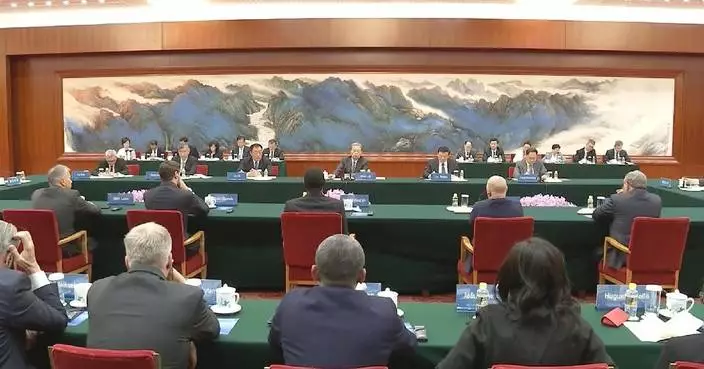
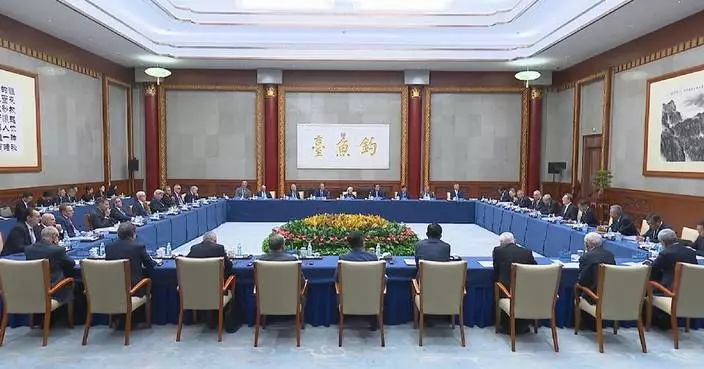
Chinese President Xi Jinping, Tanzanian President Samia Suluhu Hassan and Zambian President Hakainde Hichilema on Wednesday jointly witnessed the signing of a memorandum of understanding (MoU) on the revitalization project of the Tanzania-Zambia Railway Authority (TAZARA) railway.
Hassan and Hichilema are in Beijing for the 2024 Summit of the Forum on China-Africa Cooperation (FOCAC) scheduled for Sept 4 to 6.
The three-day FOCAC summit is the largest diplomatic event hosted by China in recent years, with the highest attendance of foreign leaders.
Themed "Joining Hands to Advance Modernization and Build a High-Level China-Africa Community with a Shared Future", the event aims to strengthen friendships and outline future cooperation between China and Africa.
Chinese President Xi Jinping will host a welcome banquet for the leaders and representatives attending the summit, and is set to deliver a keynote speech at Thursday's opening ceremony.
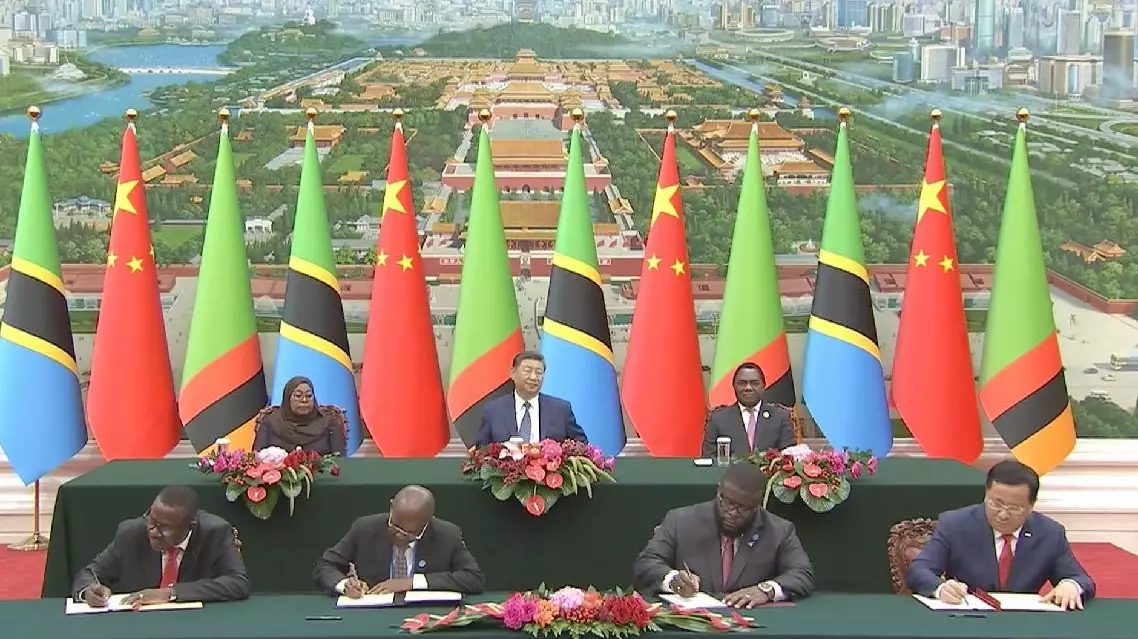
Chinese, Tanzanian, Zambian presidents witness signing of MoU on revitalizing TAZARA railway
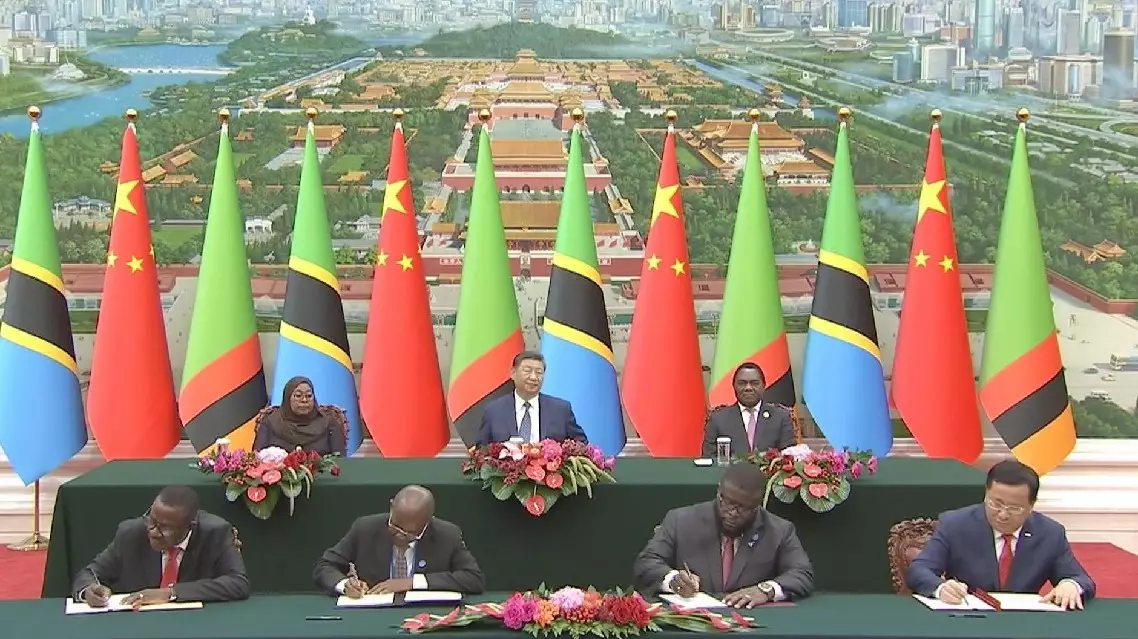
Chinese, Tanzanian, Zambian presidents witness signing of MoU on revitalizing TAZARA railway
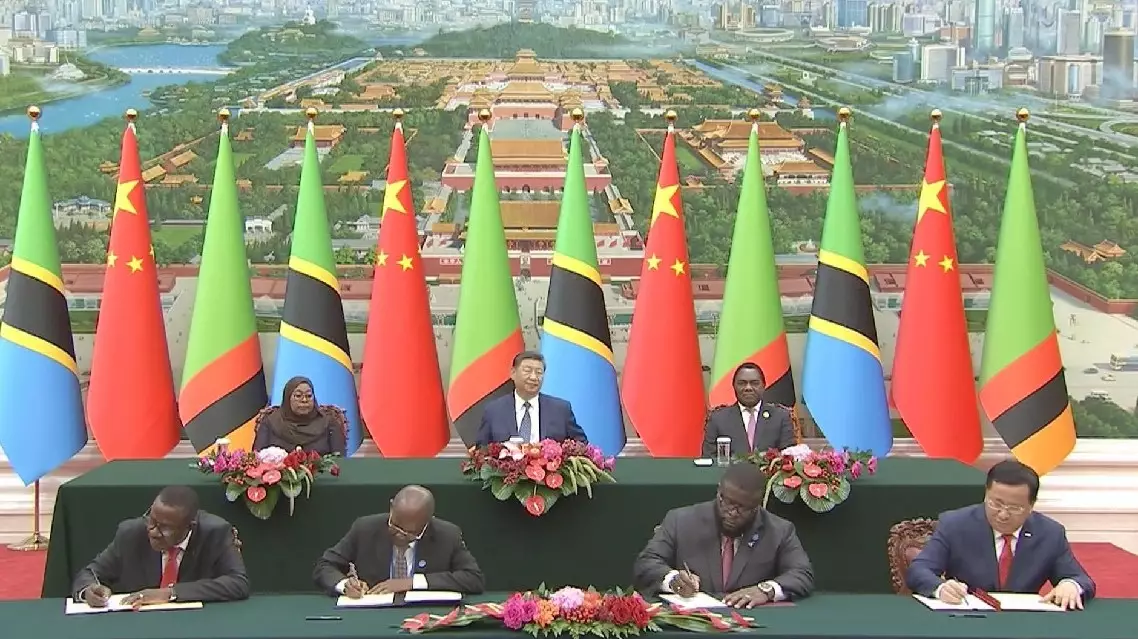
Chinese, Tanzanian, Zambian presidents witness signing of MoU on revitalizing TAZARA railway
Officials and industry insiders have called for greater efforts to ensure the vast resources of the African continent can truly deliver industrial growth and provide much-needed employment as deals worth billions of dollars have already been struck at the 2026 African Energy Week (AEW) in South Africa's Cape Town.
The five-day event officially opened on Tuesday, with South Africa calling for stronger energy cooperation across the continent to maintain affordable and abundant energy supplies amid global geopolitical tensions and market disruptions.
First held back in 2021, the AEW event serves as a key platform for discussions on energy investment, market access and industrial growth, bringing together stakeholders to shape a shared vision for Africa's energy future.
Optimism is high among attendees given the sizable agreements which have been signed so far and are set to deliver numerous landmark projects across Africa.
"This year at AEW, we have already seen 10 billion dollars worth of deals. Angola for example where we have seen EduEnergias take over some of the legacy assets given by Chevron. We also seen Senegal makes significant announcements around gas projects in that country. And the same thing is [happening in] Nigeria around what AMNI is doing and getting more gas for Train 7 [LNG Project]. We're looking at the Morocco-Nigeria pipeline which is also going to be asking for significant investment dollars that in itself phased, is going to require far beyond the 10 billion dollars that I said," said Verner Ayukegba, senior vice president of the African Energy Chamber.
From drilling technology to companies looking to invest in new projects, the scale of the industry is on full display. But many say the case for attracting investment goes far beyond just extracting oil and gas, with some pointing to the positive knock-on effect which can come in an economic sense. Godfrey Moagi, CEO of the South African National Petroleum Company, said the question is now about how nurturing resources can create jobs and ultimately support wider growth.
"We've got a very big opportunity. We're [going to add] more data centers, you've got a lot of gas, you need a lot of energy. And I think we are going to have to do that to deal with unemployment. Just [conducting] exploration and extracting that gas and oil brings unemployment down, but actually imagine now, if we actually get [related] industries, it becomes very powerful," said Moagi.
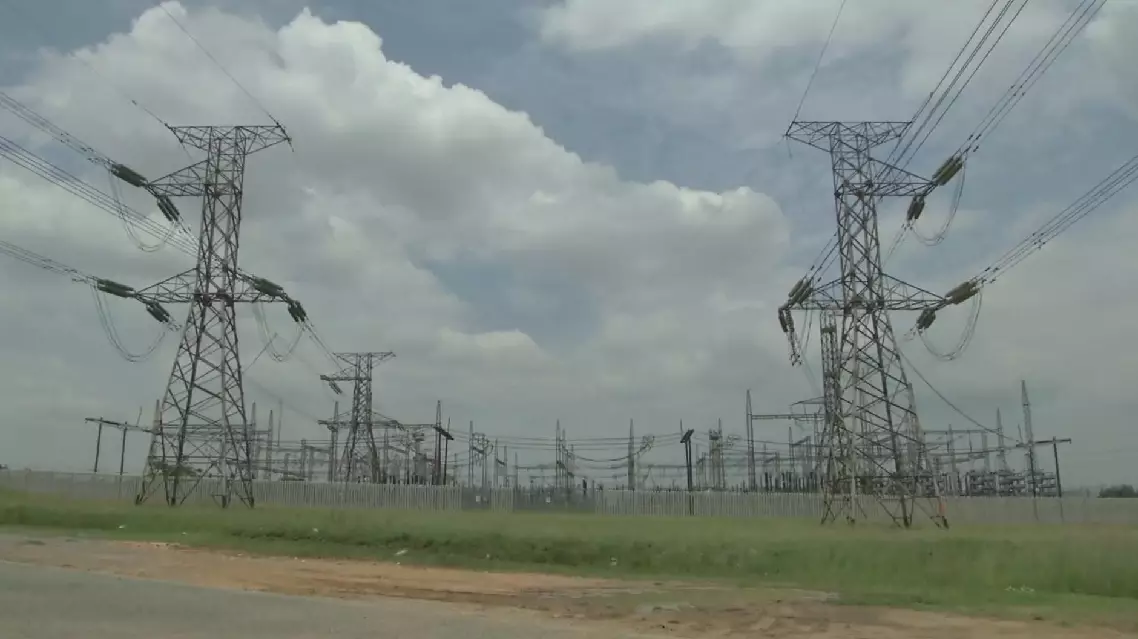
Deals struck at African Energy Week must create jobs, advance industrial growth: participants