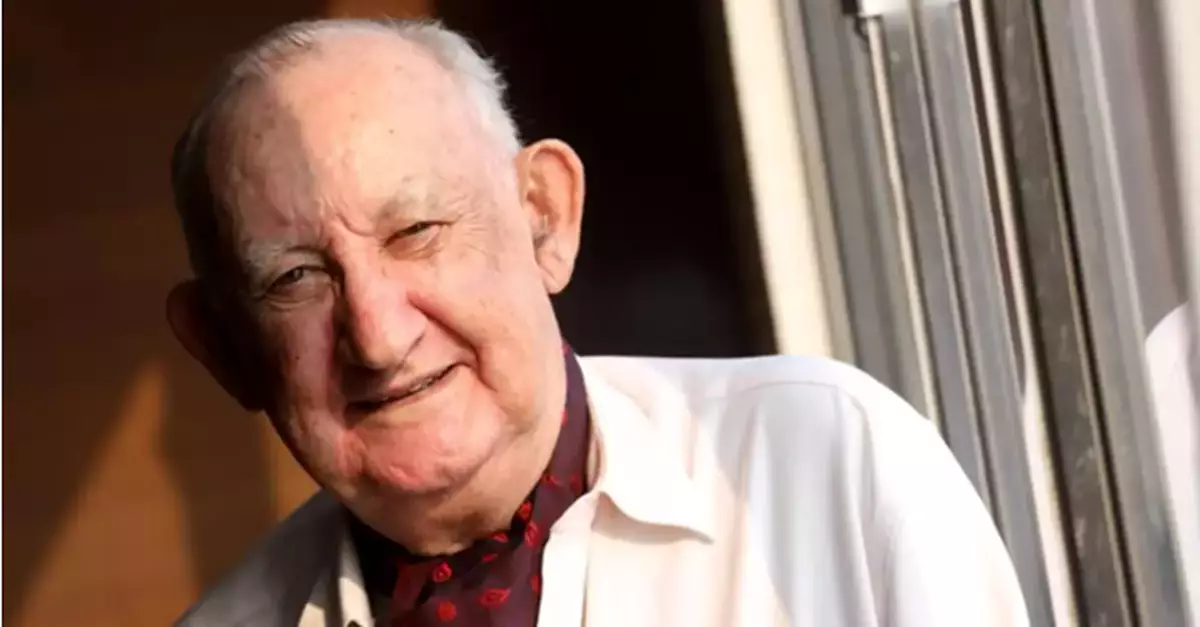
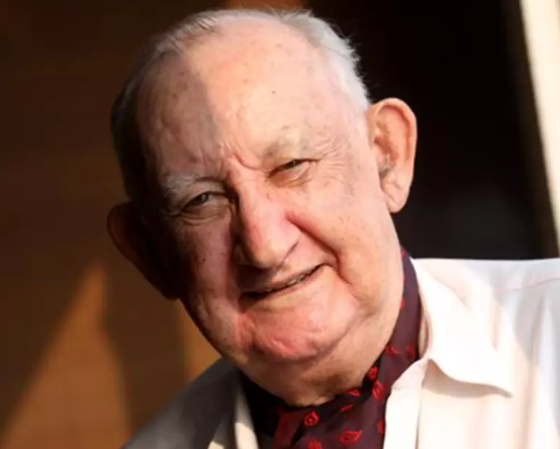
Mark Pinkstone/Former Chief Information Officer of HK government
The Americans are all over us as if there was no tomorrow. The House of Representatives, the congress, has declared the past few weeks as “China Weeks” dedicated to degrading Hong Kong/China as much as possible on the world stage. It is showing signs of panic.
Last week alone congress passed a US$1.6 billion fund to be used for anti-China propaganda over the next five years. Earlier in the week it moved to close down all Hong Kong Economic and Trade Offices in the US, and the week before that the administration issued two advisory notices, one to dissuade American tourists from visiting Hong Kong and the other to dissuade businesses setting up in Hong Kong.
The reasons for this backlash are totally unfounded. What has Hong Kong done to deserve such treatment? Nothing! Hong Kong is a small pimple on China’s bum, minding its own business without breaking any trade barriers.
The only conclusion one can draw is that the Americans are in panic overdrive due to the perceived threat by Hong Kong/China to the US hegemony, which is not their intention at all. Whereas the US dominates the world with the threat of war, China, on the other hand, walks with an olive branch lifting countries out of poverty through its Belt and Road Initiative. The offer by China for world peace is exactly the opposite to the US’s quest for world supremacy through war.
The US’s massive spend on China propaganda will not be found in the country’s main stream media (MSM) due to its control by the US Department of State. (DoS), but in small specialist, obscure publications such as Responsible Statecraft. The Bill HR1157 “Countering the PRC Malign Influence Fund” can easily be found on the internet. The legislation authorizes more than $1.6 billion for the State Department and USAID over the next five years to, among other purposes, subsidize media and civil society sources around the world that counter Chinese “malign influence” globally. In other words, the US Department of State is paying off the media to print what it says.
The Global Engagement Centre of the DoS is already spending large sums subsidizing media and non-governmental organizations (NGOs) to disparage Hong Kong/China and the new injection of cash will surely supercharge its efforts.
But the US politicians are their own worst enemy as far as propaganda is concerned. For example, chairman of the Select Committee on the Chinese Communist Party (CCP) , John Moolenaar, said in a debate on the Decoupling from Foreign Adversarial Battery Dependence Act that there was “indisputable evidence” that two CCP-aligned battery makers were deeply connected with forced labour and ongoing genocide in China. The “indisputable evidence” came from the very dubious Australian Strategic Policy Institute (ASPI), which has become the Australian mouthpiece for the Five Eyes intelligence group lead by the US with Australia, New Zealand, Canada and Great Britain as its members. ASPI said that battery projects in Australia were sourced through forced labour of Uyghur and other Turkic ethnic groups in China.
Moolenaar completed his tirade with:” We cannot be dependent on our foremost adversary and we must ensure the CCP can never profit from its genocide and human rights abuses.”
And they are still harping on forced Uyghur labour in Zhenjiang, a myth impregnated in the minds of the west, but which could not be proven by the UNHCR. This argument is becoming rather tiresome, but for the Americans, if a lie is told repeatably enough it becomes believable.
Earlier, congress voted to eliminate the Hong Kong Economic and Trade Offices (ETOs) in New York, Washington and San Franciso and at the same time the administration advised possible investors in Hong Kong not to do business in the Special Administration Region (SAR) because of stringent national security laws. But the laws in Hong Kong are no more stringent than that the US. In fact, the US is imposing its own laws on US businesses in Hong Kong by advising that any businesses operating in Hong Kong face conflicting jurisdictional requirements and liability in connection with (US-imposed) sanctions compliance efforts. “Failure to adhere to US sanctions can result in civil and criminal penalties under US law,” a statement by the Department of State read.
The administration also issued another advisory warning that visitors to Hong Kong could be jailed for the most trivial offences under the national security laws. This is pure poppycock as tourism figures reveal. In the first six months of this year, Hong Kong received half a million visitors from the US, up 86.2 per cent for the same period last year.
The propaganda tug-o-war between the two super powers has been initiated by the US, with China merely taking a defensive line to rebut US criticisms; to remain silent would be to acquiesce.
Mark Pinkstone
** The blog article is the sole responsibility of the author and does not represent the position of our company. **
The US–Iran war keeps everyone guessing. American forces made a show of force by blockading the Strait of Hormuz, with combat seemingly on the verge of breaking out — yet Trump suddenly shifted to a softer tone, suggesting both sides could return to the negotiating table within days and that extending the two-week ceasefire wasn't necessary. A deal may be within reach. But given his habit of reversing course, everyone would do well to wait and see before celebrating. While the Iranian situation churns with uncertainty, Ukraine's plight has quietly been forgotten — President Zelensky left to wither alone.
In an interview with German broadcaster ZDF, Zelensky made no effort to hide his distress. Since America launched its campaign against Iran, he said, Washington has completely lost interest in Ukraine. Not only have negotiations ground to a halt, but arms and military equipment deliveries have abruptly stopped — precisely as Russian forces are pressing their offensive hard, leaving Ukraine in a dangerously exposed position.
Iran stole America's attention — and Ukraine paid the price. Talks frozen, arms cut off, Zelensky vents to German TV.
For the first time, Zelensky has come to understand that America, for all its self-image as a superpower, simply cannot stretch across multiple fronts without showing its limits. When the "big boss" proves unreliable, the "junior partner" is left to fend for itself.
Washington's Attention Has Shifted
Zelensky has had his fill of being sidelined, and the bitterness has finally spilled over. He told ZDF that after the Iran war began, America's focus visibly shifted. Special Envoy Witkoff and Trump's son-in-law Kushner — the two men who had been mediating between Washington and Moscow — are now "constantly in talks with Iran," leaving no bandwidth for Ukraine. As a result, peace talks between Russia and Ukraine have been frozen since late February, with no timeline in sight for their resumption.
What makes matters worse is that Trump, already overwhelmed by the Iran campaign, has quietly shelved the Russia-Ukraine file and stopped pressing Putin. Zelensky warned that without pressure, Russia has nothing to fear and will act with impunity. Putin has clearly read the situation. After a 32-hour Orthodox Easter ceasefire, Russian forces resumed their offensive immediately, seizing the opportunity to push for an advantage.
The Air Defence Crisis
The bigger crisis isn't the stalled talks — it's the weapons shortage. Zelensky pointed out that US military aid deliveries have slowed to a crawl, with air defence systems the most acute problem. Supplies of PAC-3 and PAC-2 interceptor missiles have shown serious gaps, and Ukraine could soon be left effectively "undefended," forced to watch helplessly as Russian missiles and drones fly in unchallenged.
Ukraine's air defences are running on empty. Interceptor missiles are critically short, and Russian strikes keep coming.
The reason Washington cannot deliver comes down to the Iran campaign itself. Since the war began, Iran has fired multiple missiles and drones at US military bases in Gulf states and at Israel. American forces have burned through enormous quantities of interceptor missiles countering these attacks, stockpiles are nearly depleted, and replenishment has no quick fix. The only option has been to rob Peter to pay Paul — redirecting air defence equipment destined for other countries to the Middle East, with Ukraine inevitably caught in the fallout.
Watching this crisis unfold, Zelensky is in a panic. Unless a US–Iran ceasefire materialises, there is little hope of American arms deliveries resuming. Ukraine has been forced to rely on itself, rushing to produce its own "FP-5 Flamingo" air defence missiles as a stopgap — though even that amounts to a distant rainstorm that cannot quench today's fire.
Adding insult to injury, Trump — in a bid to boost global oil supply and hold down rising prices — granted a 30-day sanctions waiver on Russia, allowing countries worldwide to purchase Russian oil and natural gas. The result: Russia pocketed an effortless €6 billion, turning the war into a windfall that helps fund its military campaign against Ukraine.
America Stepping Back From Europe
The "big boss" cooling on Zelensky is not entirely a matter of bandwidth. It also reflects a deliberate intent to distance America from Europe and leave the continent to clean up the Ukrainian mess on its own.
A recent development makes this attitude plain. According to Politico, War Secretary Hegseth will skip Wednesday's meeting of the Ukraine Defense Contact Group — a forum that brings together defence ministers from over 50 pro-Ukraine nations — sending Pentagon policy chief Elbridge Colby in his place. Hegseth's snub signals clearly that the Trump administration no longer treats Ukraine as a priority.
Zelensky's predicament is a tragedy largely of his own making. He placed too much faith in the American "big boss," believing that with Washington firmly in his corner, he could go all-in against Russia. Today, he has finally learned the hard way: this "big boss" cannot manage multiple wars at once. Bogged down in Iran, America has no capacity left to care whether its "junior partner" sinks or swims.
Lai Ting-yiu