Environmental simulation and digital replication are among the new technologies now employed to protect the Dunhuang Mogao Grottoes, a 1,600-year-old UNESCO World Heritage site located in the Gobi Desert in Dunhuang City, northwest China's Gansu Province.
Researchers for decades have tried to find ways to protect the cultural heritage site, home to a vast collection of Buddhist artworks carved into the cliffs, from damage caused by natural or human factors.
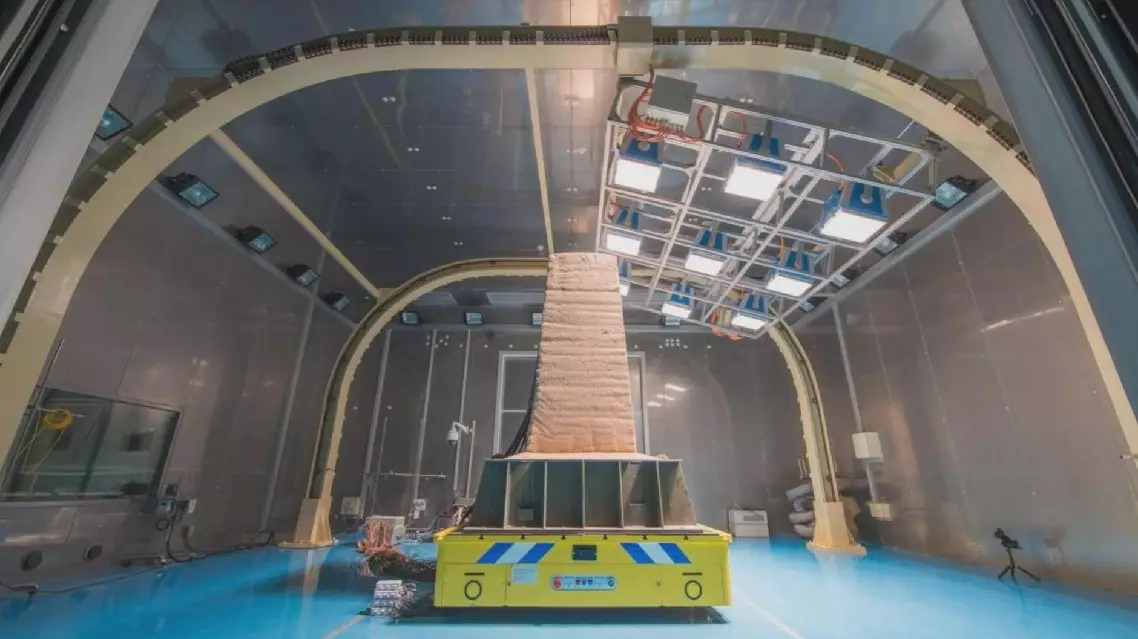
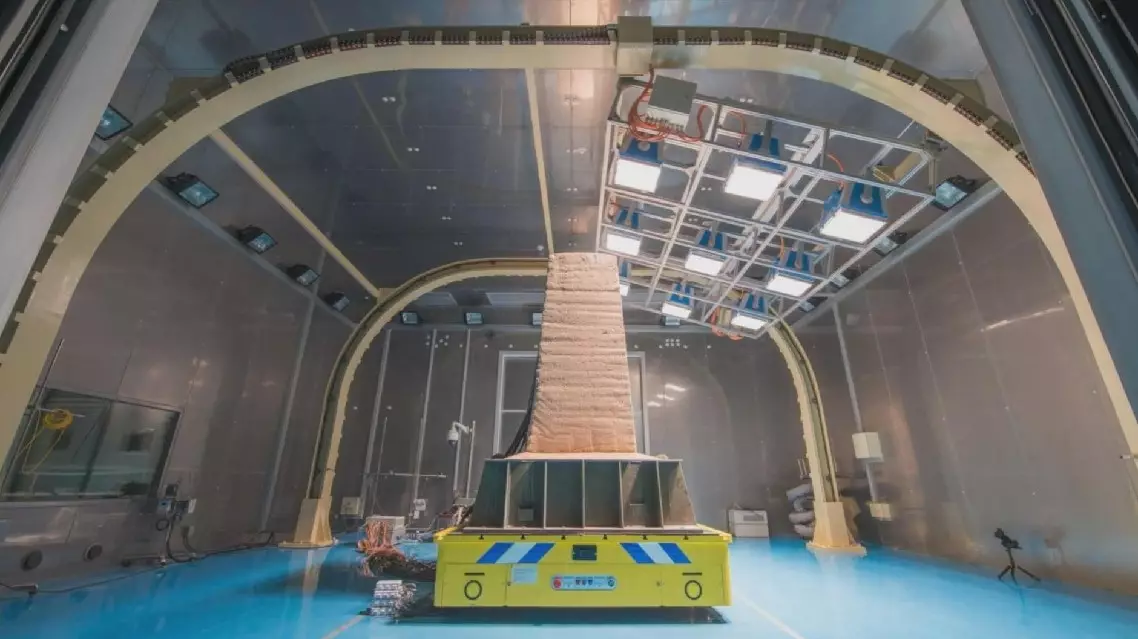
A multi-field coupling lab on murals and ancient ruins protection under the Dunhuang Academy, the first of its kind in China to be employed in cultural relics preservation, was put into use by the end of 2020.
Located in the city of Dunhuang, the lab covers an area of 16,000 square meters. It is able to simulate the four seasons and the erosion by wind, rain and snow that the earthen relics could experience in a natural environment. It can also simulate temperatures ranging from minus 30 to 60 degrees Celsius and relative humidity ranging from 10 to 90 percent.
"In the 'summer house', we can simulate the environment in the southern region which is hot and humid. We can also simulate a dry environment with a temperature of over 40 degrees Celsius. [The temperatures and lighting] have impacts on the heritage sites," said Liu Xiaoying, a research fellow at the Multi-field Coupling Environmental Lab of Immovable Heritage under the academy.
Researchers at the lab not only study the local soil, but have also brought samples from heritage sites in other areas such as the northwestern city of Xi'an and Sichuan Province in southwest China to the lab.
The academy has been working with academic institutions including the University of Oxford and China's Northwest University in an international synchronous field trial.
With a controlled environment to its merit, the lab will play an important role in cultural heritage protection across the country, according to the academy.
"The time and conditions are controllable and the data is precise. We can also test samples with a larger size - which can better protect the immovable cultural heritage," Liu said.
Dunhuang Academy is now also using digital technology to record all the paintings and sculptures in the Dunhuang Mogao Grottoes in order to permanently preserve the relics in the database.
The Dunhuang Academy started its digitization project in the 1990s to create digital versions of the Mogao Grottoes and other grotto temples and has accumulated massive digital cultural resources.
With digital technology, murals, grottoes, painted sculptures and other splendid cultural heritage items have been reproduced and thus are able to be shared with the world.
New technologies protect ancient Buddhist artwork in Dunhuang caves, cliffs
New technologies protect ancient Buddhist artwork in Dunhuang caves, cliffs