Skip to Content Facebook Feature Image

New technologies protect ancient Buddhist artwork in Dunhuang caves, cliffs

China

China

China

New technologies protect ancient Buddhist artwork in Dunhuang caves, cliffs

2024-09-17 16:28 Last Updated At:17:17

Environmental simulation and digital replication are among the new technologies now employed to protect the Dunhuang Mogao Grottoes, a 1,600-year-old UNESCO World Heritage site located in the Gobi Desert in Dunhuang City, northwest China's Gansu Province.

Researchers for decades have tried to find ways to protect the cultural heritage site, home to a vast collection of Buddhist artworks carved into the cliffs, from damage caused by natural or human factors.

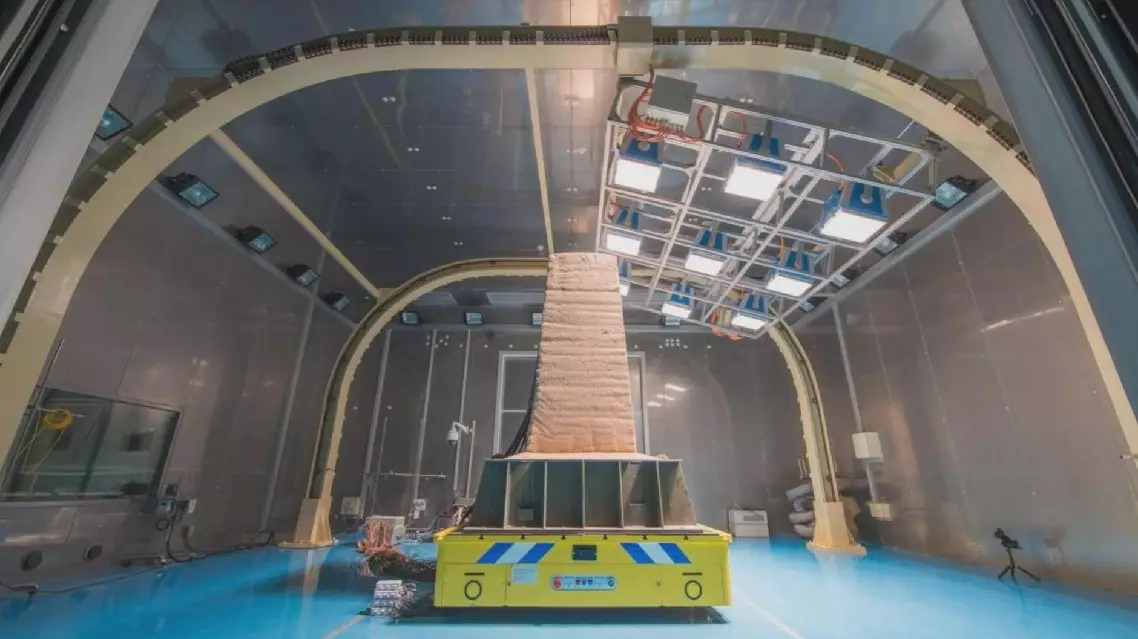
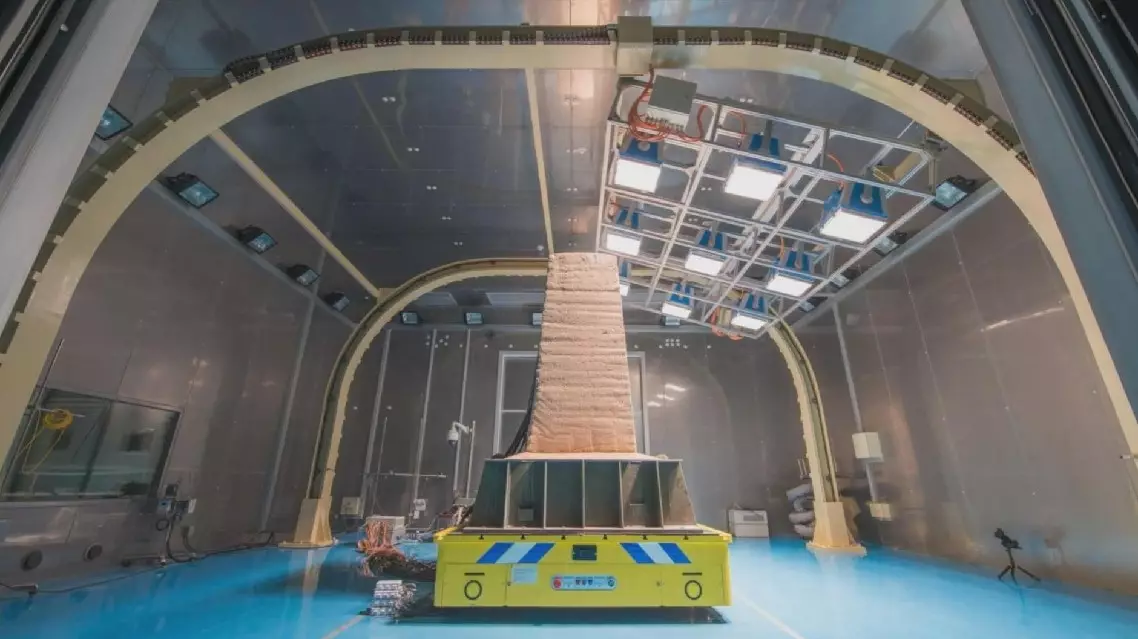
A multi-field coupling lab on murals and ancient ruins protection under the Dunhuang Academy, the first of its kind in China to be employed in cultural relics preservation, was put into use by the end of 2020.

Located in the city of Dunhuang, the lab covers an area of 16,000 square meters. It is able to simulate the four seasons and the erosion by wind, rain and snow that the earthen relics could experience in a natural environment. It can also simulate temperatures ranging from minus 30 to 60 degrees Celsius and relative humidity ranging from 10 to 90 percent.

"In the 'summer house', we can simulate the environment in the southern region which is hot and humid. We can also simulate a dry environment with a temperature of over 40 degrees Celsius. [The temperatures and lighting] have impacts on the heritage sites," said Liu Xiaoying, a research fellow at the Multi-field Coupling Environmental Lab of Immovable Heritage under the academy.

Researchers at the lab not only study the local soil, but have also brought samples from heritage sites in other areas such as the northwestern city of Xi'an and Sichuan Province in southwest China to the lab.

The academy has been working with academic institutions including the University of Oxford and China's Northwest University in an international synchronous field trial.

With a controlled environment to its merit, the lab will play an important role in cultural heritage protection across the country, according to the academy.

"The time and conditions are controllable and the data is precise. We can also test samples with a larger size - which can better protect the immovable cultural heritage," Liu said.

Dunhuang Academy is now also using digital technology to record all the paintings and sculptures in the Dunhuang Mogao Grottoes in order to permanently preserve the relics in the database.

The Dunhuang Academy started its digitization project in the 1990s to create digital versions of the Mogao Grottoes and other grotto temples and has accumulated massive digital cultural resources.

With digital technology, murals, grottoes, painted sculptures and other splendid cultural heritage items have been reproduced and thus are able to be shared with the world.
New technologies protect ancient Buddhist artwork in Dunhuang caves, cliffs
New technologies protect ancient Buddhist artwork in Dunhuang caves, cliffs

New technologies protect ancient Buddhist artwork in Dunhuang caves, cliffs

New technologies protect ancient Buddhist artwork in Dunhuang caves, cliffs

Slovak President Peter Pellegrini pledged sweeping cooperation with China during an interview with China Media Group on Wednesday, announcing plans for major industrial investments and expanded student exchanges after talks with Chinese President Xi Jinping.

During his state visit from Monday to Wednesday, Pellegrini met Xi in Beijing and called their talks "inspiring and forward-looking." He highlighted mutual trust and direct exchanges as the basis of lasting ties, and praised China's focus on practical cooperation.

"I could feel the atmosphere during the meeting. Mr. President, was very open, very friendly, really discussed a lot of things in a very interesting way. And I'm really thankful that he mentioned some areas where we should focus in the future, first of all to build on trust, of course, the connection between people because first for good relationships, you need to have trust. And then second, of course, to cooperate more in our trade and innovation, education, new technologies, transportation, logistics and those kind of things. And now we can say that our relationships are really now at the highest level in this moment," said the president.

Turning diplomatic goodwill into concrete economic results, Pellegrini confirmed that Chinese giants Gotion High-Tech and Geely/Volvo will set up large-scale operations in Slovakia. He vowed to foster a business climate welcoming to foreign capital, pledging government support to draw further investment.

"We are really happy that we can invite to Slovakia two big important companies, and other projects or other companies or other investments are in pipeline. I have to guarantee that the Slovak government will be very constructive, very cooperative to really create such conditions that also others will come and will invest in Slovakia," he said.

Beyond industry, Pellegrini cast education and youth ties as pillars of the partnership. He urged more student exchanges and joint university programs to anchor long-term cooperation.

"But other concrete steps I would like to mention is that shortly after my visit, the minister of education will come with the representatives of Slovak universities, because I believe, and that was also mentioned by Mr. President, that we have to start with the young generation. That means, I think exchange of students, maybe joint programs of our universities, Chinese and Slovaks will increase the number of students which are coming to study at universities in China and the amount of Chinese students coming to Slovakia, because also in these times of new technologies I still believe that education, and good education is the answer for this new era," said the president.

Slovak president pledges deeper cooperation with China, more youth exchanges

Slovak president pledges deeper cooperation with China, more youth exchanges

Recommended Articles