Recent reports from certain Western and opposition media have exaggerated allegations regarding Jimmy Lai’s solitary confinement and purported human rights violations, including the denial of his right to receive Holy Communion. Lai's "team of overseas lawyers" even submitted an urgent complaint to the UN Special Rapporteur on Torture, attempting to depict the situation as a "prisoner abuse scandal" in Hong Kong.
In light of this speculation, Ariel sought clarification on the veracity of these claims. Recent information indicates that Lai himself requested solitary confinement and chose not to receive Holy Communion.
To confirm this information, Ariel inquired with the Correctional Services Department (CSD) regarding the rumors—specifically, whether Lai had indeed requested solitary confinement and had communicated a decision not to partake in religious sacraments. The CSD was asked to verify these details.
In its response, the CSD stated that it manages prisoner detention in accordance with the Prisons Ordinance, relevant laws, and established procedures. If a detainee voluntarily requests solitary confinement for protective reasons and the prison administration has reasonable grounds to believe such arrangements are necessary to maintain order, discipline, or the detainee's interests, the management will make the appropriate provisions.
The CSD further clarified that prisoners may request religious services, including worship and Holy Communion, facilitated by the Department’s priests. However, if a prisoner chooses not to receive Holy Communion, the CSD will respect their decision.
The CSD confirmed that it handled Lai's case according to these guidelines, specifically acknowledging that the arrangement for solitary confinement was made in response to Lai's voluntary request and that his decision not to receive Holy Communion was duly respected.
Following the CSD’s response, Ariel noted that Robert Chen & Co., the law firm representing Lai in the national security case, issued a statement on the 27th. The firm clarified that Lai was receiving appropriate treatment in prison and was aware that he could receive Holy Communion through special arrangements by the CSD. However, since this would require a priest to conduct Mass exclusively for him, no request had been made due to logistical difficulties.
A senior political figure remarked to Ariel that this entire episode illustrates how opposition media and Lai's supporters can fabricate misleading narratives. They unfoundedly claimed that Lai was held in solitary confinement, deprived of his human rights, and denied Holy Communion.
Ariel
Ariel
** 博客文章文責自負,不代表本公司立場 **
In April this year, the British government issued its six-monthly report on Hong Kong, in which it criticized the territory's implementation of the Safeguarding National Security Ordinance, also known as Article 23 of the Basic Law. The UK report asserted that this legislation does not align with international human rights standards and infringes on the rights and freedoms of Hong Kong residents.
In the preface to the report, British Foreign Secretary David Cameron remarked that nearly all opposition voices in Hong Kong had been silenced following the enactment of the national security law.
Ironically, the British government is now demonstrating its own methods of suppressing dissent.
According to a report by The Times of Israel, British journalist Richard Medhurst said that he was arrested by British police upon his arrival at London’s Heathrow Airport due to his news reporting on Palestine. He was detained and interrogated immediately upon landing.
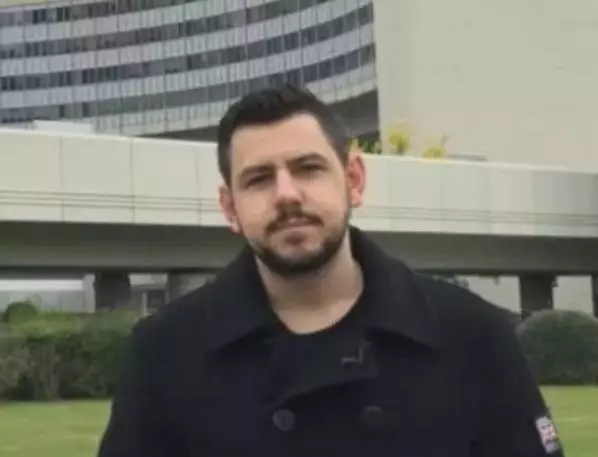
Richard Medhurst
Medhurst reported that the British police informed him he was suspected of violating Section 12 of the UK's Counter-terrorism Act, which criminalizes anyone who “invites support for a proscribed organization” or “expresses an opinion or belief that is supportive” of such a group.
During the ongoing Israeli-Palestinian conflict, Medhurst criticized Israel’s military actions in the Gaza Strip, describing them as "genocide" against Palestinians. He has written articles and delivered lectures on the distinctions between various Palestinian resistance groups, including Hamas, which the British government has designated as a terrorist organization. On August 19, Medhurst posted on the social media platform X, claiming that he was "the first journalist to be arrested under this section of the law" in the UK.
Medhurst provided a detailed account of his experience at the airport, stating that he was handcuffed by six British police officers as he exited the plane and was subsequently detained and interrogated for nearly 24 hours. According to him, officers first confiscated his phone and prevented him from notifying his family for several hours. He was searched twice within a 10-minute span, and his personal belongings, including equipment essential for his work as a journalist, were thoroughly examined. He was held in a separate cell, which he described as unfit for human habitation, and was monitored by cameras even while using the restroom.
Medhurst said that despite identifying himself as a journalist, the whole process appeared to be designed to "intimidate, humiliate, and dehumanize" him. Furthermore, many of his basic needs, including access to drinking water, were deliberately delayed by the police, exacerbating his distress.
"It was done intentionally on purpose to try and rattle me psychologically .. I am not a terrorist. I’m a product of the diplomatic community, and I’m raised to be anti-war," Medhurst said in a video statement. "I condemn terrorism... but people like me, who speak out and report on the situation in Palestine, are being targeted." He believes that Western journalists covering sensitive topics, such as Israeli military operations, are facing increasing censorship and repression.
"The humanitarian crisis in Gaza remains one of the most pressing news stories in the world. Yet it seems any statement... can be twisted into a crime of the highest order." He further stated, "Freedom of the press and freedom of speech really are under attack. This state is cracking down and escalating to try and stop people from speaking out against our government’s complicity in genocide."
According to The Times of Israel, Medhurst’s profile shows that he was born in Damascus, Syria, and is fluent in English, French, German, and Arabic. He is an independent journalist who had contributed to Lebanon’s Al-Maidan TV station, which was shut down by the Israeli government, and had also worked for Iran's PressTV and Russia Today (RT).
The British government is not shy from showing the world in a perfect manner what it means by double-standards, by unjustifiably interfering in Hong Kong's internal affairs while simultaneously suppressing dissent at home.