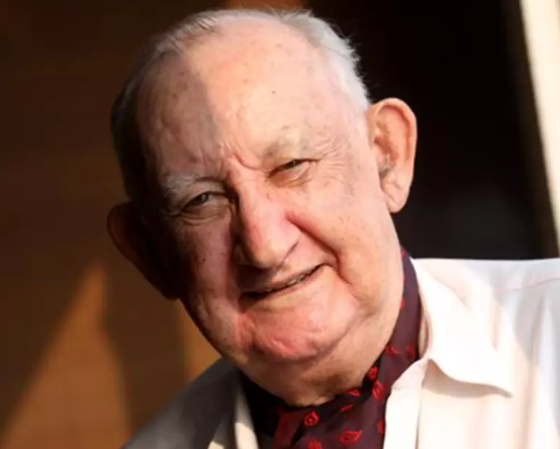
Mark Pinkstone/Former Chief Information Officer of HK government
Overseas protests by Hong Kong dissidents over the appointment of foreign judges on the SAR’s Court of Final Appeal are defeating the purpose for which the appointments are made, that is, to ensure an open and fair trial for defendants.
The Court of Final Appeal was established in 1997 to replace Hong Kong appeal cases heard by the UK’s Privy Council which, naturally could not continue after the handover. But as Hong Kong judges had not had previous experience in handling appeal cases, a system was devised to import judges with such experience from overseas common law jurisdictions on a temporary bases. They became known as non-permanent judges (NPJs). The appointments added creditability to Hong Kong’s legal system by providing a clear separation of powers between the judiciary and the executive (government). The judiciary shall always remain independent without fear or favour.
However, since the enactment of the national security laws in 2020, overseas dissidents have turned the tables on the legitimacy of the appointments saying they were made to purely bring credibility to the legal system and called for the judges to resign. Yes, they do bring their expertise and credibility to the table but without their presence the dissidents will claim the trials are biased towards the administration. They can’t have it both ways. Most of the judges have ignored the requests from the dissidents and the support they get from the countries of their new domiciles. However, some judges have acceded to the harassment by their respective governments while a few others have resigned for personal reasons.
The recent, small-scale protests in Australia rekindled the plight of NPJs being harassed for doing their job in Hong Kong. Would they dare harass a judge sitting on a trial in the UK, US, Canada or Australia? No way! They would be immediately charged for various offences ranging from interfering in the judicial process to contempt of court.
The Hong Kong Free Press noted the protest was a small peaceful demonstration, inferring why would the authorities even bother to comment on the issue. The size of the protest is not an issue, its purpose is. Australian judge Patrick Keane was giving an address at Sydney’s Banco Court in late October on “Christian inspiration and constitutional rights” when he was confronted by the protesters.
The protest may have gone unnoticed had it not been for the Guardian newspaper bringing the issue to the fore. Other media followed-up. Besides badgering Judge Keane about his giving a speech and preventing him from attending a cocktail reception, the dissidents displayed placards calling for the release of media mogul Jimmy Lai facing national security breaches.
But it was the Guardian that chose to run the otherwise non-event story as part of its Sinophilia campaign.
The Guardian has become the clarion call for the dissidents and has become the main vehicle for their disinformation.
In its relentless onslaught against China/Hong Kong, the Guardian carried some 20 anti-China stories in the last two weeks of October alone, about one a day.
The paper claims that it is independent, from advertisers, corporate manipulation and government interference. But is it? Senior Guardian editors and journalists attend regular background briefings offered by the foreign affairs officials in their respective countries of publication – UK, Australia, US and Europe. This is not uncommon and applies throughout the world for the government to brief the press on changes to policy, legislative proposals to test the waters of the electorate etc. It is also an effective tool to spread disinformation and propaganda.
For a publication not to print what they have been told by the government means they face possible disqualification from attending future briefings and thus missing out on a good story. So, the plot thickens. The press is being blackmailed into accepting what the government gives them without question or face the possibility of being ostracized from attending future briefings.
What is seen on television of White House “briefings” are not briefings, but actual press conferences, that is, the host is identified, and the content is reality. But “briefings” are non-attributable and only the editor knows who the source is. Also, the subject matter is non verifiable. But because the informant is an unidentifiable senior government official, the gullible press laps up the information and spreads this disinformation to the unsuspecting public.
There is nothing to stop this and it will continue for centuries to come. The press has become the lap dog of government and will continue in this role as the “fourth estate” by being the watchdog over the government. [The estates, dating back to medieval times, refer to the separation of power into the legislature, administration, the judiciary and the press. Sometimes, the church is included.] The media will cry that it does criticise the government, but only the administration. When it comes to foreign policy, the media relies on the handouts from the government. So, if a foreign government official says Hong Kong dissidents are good boys and girls and should be protected from evil, then the media has no choice but to agree.
This is the case of Jimmy Lai and the possible reason why he and other accused dissidents are being tried by a panel of three judges and not by a jury. The propaganda machine is so powerful that a court would not find a fair-minded person who had not heard of Jimmy Lai, his cause and his detention. There would be biase.
Millions of dollars are being spent by Lai’s son Sebastien and his legal team to release Lai before the trial resumes on November 20. Instead of seeking a release after the trial, the team have chosen to step up pressure for an immediate release before Lai takes the stand and could further incriminate himself with his own evidence based on his beliefs, thereby lengthening his jail time.
Mark Pinkstone
** 博客文章文責自負,不代表本公司立場 **
Mark Pinkstone/Former Chief Information Officer of HK government
In his annual policy address last year, Chief Executive John Lee Ka-chiu outlined his plan to make Hong Kong an international hub for university students, and this year he delivered the goods.
In his 2024 Policy Address, Lee said the Government was committed to developing Hong Kong into an international hub for post secondary education. This, he said would include a raft of measures to complete a comprehensive programme to draw more talent to Hong Kong.
His comments came hot on the heels of the release of the Times Higher Education World University rankings which placed Hong Kong’s City University as the world’s most international university. The University of Hong Kong was placed 6th, the University of Science and Technology 9th and Hong Kong Polytechnic University 10th. Another nail in the coffin of Hong Kong’s doomsayers.
Other Hong Kong universities include the Chinese University of Hong Kong (13th), Hong Kong Baptist University, Lingnam University, and Education University of Hong Kong, all funded by the University Grants Committee (UGC). There are also three self-funded universities: Hong Kong Shue Yan University, Hang Seng University and Saint Francis University.
And to keep the trajectory skyrocketing upward, the government has launched a $30 million “Study in Hong Kong” brand to be used by the local universities to attract foreign students to Hong Kong. The website (https://www.studyinhongkong.edu.hk/en/hong-kong-education) covers everything possible about Hong Kong and university life, including funding, accommodation and an insight into the various universities.
It even invites the international students to remain in Hong Kong after graduation with hints and links to various employment agencies looking for top notch talent.
This falls in line with Hong Kong’s rapid development as a science and technology hub. The Northern Metropolis development, with its focus on education and technology, will undoubtedly create a surge in demand for student talent. More than 60 hectares of land in the four areas of Hung Shui Kiu/Ha Tsuen New Development Area, Ngau Tam Mei and the New Territories North (NTN) New Town, has been reserved by the government for post-secondary education development.
“The Government has earmarked over 80 hectares of land in the Northern Metropolis for the Northern Metropolis University Town and will encourage local post secondary institutions to introduce more branded programmes, research collaboration and exchange projects with renowned Mainland and overseas institutions in a flexible and innovative manner. We will retain flexibility in the planning process to facilitate development of student hostels. We plan to publish the Northern Metropolis University Town Development Conceptual Framework in the first half of 2026”, the CE said in his policy address.
The government-operated UGC says that for the 2023/24 academic year some 100,786 students will be enrolled in UGC-funded programmes. Of these, some 23,097 students will be enrolled as non-local; 17,822 will be from the Mainland and 4,410 from Asia and 823 from other countries. The most popular subjects are science (6,368 enrolments by non-local students) and engineering and technology (5.802 non-local enrolments).
In his address last year, Lee said that part-time job restrictions imposed on non-local students would be lifted, as part of the city’s measures to entice professional talent and encourage more to stay on. He also announced several longer-term projects for cross-boundary university collaboration with the mainland including a microelectronic academy to be set up to study third-generation semiconductors, and research projects between Hong Kong and neighbouring Shenzhen.
Currently, just 1 per cent of overseas graduates from Hong Kong’s universities are staying on at a time when the city is vying with other Asian countries to attract top graduates. The lifting of part-time work restrictions is being implemented on a trial basis for two years, during which more than 35,000 students are expected to benefit.
In this year’s address he elaborated on this programme. He said that in creating the "Study in Hong Kong" brand, the government will strive to host international education conferences and exhibitions. It will also encourage local post secondary institutions to enhance collaboration and exchange with their counterparts around the world in promoting the "Study in Hong Kong" brand on a global scale, and to attract more overseas students, especially those from ASEAN and other Belt and Road countries, to study in Hong Kong through the provision of scholarships and other incentives.
Housing of graduates has been of continual concern with the government and the universities, with property agents claiming that the private student housing market can only accommodate 0.4 per cent of the total enrolled population. They say that in the next four years, post-secondary university hostels in Hong Kong will create additional spillover demand of 22,300 bedspaces into the private accommodation market.
Lee said in his address that to improve hostel facilities the government will launch a pilot scheme to streamline the processing of application in relation to planning, lands and building plans, to encourage the market to convert hotels and other commercial buildings into student hostels on a self financing and privately funded basis, thus increasing the supply of student hostels.
“The Government will also make available suitable sites for the private sector to build new hostels, having regard to market demand. The Development Projects Facilitation Office under the Development Bureau (DEVB) will provide one stop advisory and facilitation services for these projects,” he said.
Overall, Lee’s address was very bullish blending plans to attract more talent to the city as it transforms itself into a world-leading high technology hub. Foreign students graduating from a Hong Kong university has the advantage of gaining work experience in Hong Kong, the Greater Bay area and in the mainland before returning to their original home. With qualifications from a world renown university and work experience from one of the fastest growing economies, the world is the oyster for Hong Kong graduates.