Skip to Content Facebook Feature Image

PLA Air Force promotes fast development of fighter jets

China

China

China

PLA Air Force promotes fast development of fighter jets

2024-11-12 02:13 Last Updated At:06:47

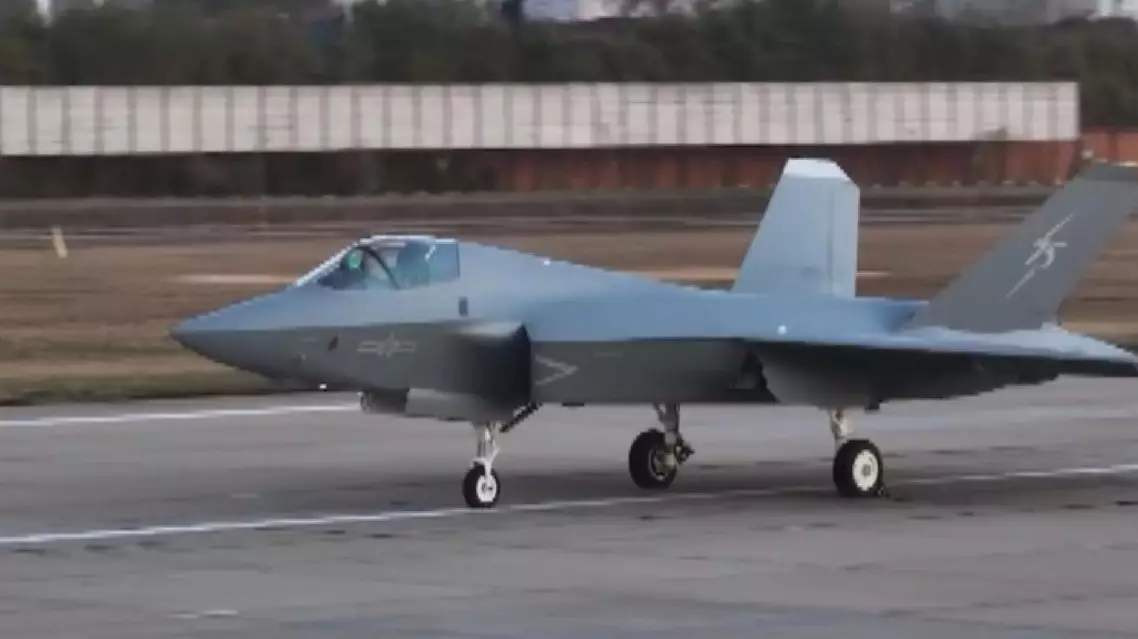
The Chinese People's Liberation Army Air Force (PLAAF) is using scientific research and intensive test flights of fighter jets such as the J-35A fighter to speed up the modernization of national defense and the armed forces.

Monday marks the 75th founding anniversary of the PLAAF.

In recent years, the Air Force has continued its advanced research and testing of a series of new fighter jets, represented by the J-35A, steadily accelerating the pace of aircraft upgrades. The Air Force also says it has developed a large number of cutting-edge technologies crucial to national core competitiveness and the combat effectiveness of the armed forces.

"This year marks the 10th anniversary of the Central Military Commission conferring upon us the honorary title of 'Hero Test Flight Brigade.' Over the past decade, army comrades have been bravely flying at the forefront of China's aviation equipment development, producing a group of specialized test pilots with deep theoretical foundations, superb test flight skills, and outstanding research capabilities. They have contributed to achieving new results in the modernization of the Air Force and its strategic transformation," said Li Lanxing, a test flight unit member of the Air Force.

The J-35A, China’s new-generation medium-sized multi-role stealth fighter, integrates aerodynamic, structural, and stealth design, and is crucial for the Air Force to conduct both stealth and counter-stealth operations.

The unveiling of the J-35A marked the moment when China's Air Force gained access to two stealth fighters, the J-20 and J-35A, making China the second country in the world to operate two self-developed stealth fighters at the same time.
PLA Air Force promotes fast development of fighter jets


PLA Air Force promotes fast development of fighter jets

Indonesia issued offshore bonds denominated in Chinese yuan, or dim sum bonds, totaling 9.25 billion yuan (about 1.34 billion U.S. dollars) in February, marking its second issuance of the yuan-denominated bonds.

The country issued the RMB bonds for the first time last October, with a total value of 6 billion yuan (about 870 million U.S. dollars).

The bonds were issued with maturities of three, five and 10 years.

Analysts point out that the competitive yield of RMB bonds will help Indonesia further optimize its financing structure and reduce capital costs against the backdrop of high global interest rates and rising financing costs in U.S. dollars.

"At the current situation, the global economies start to change and the financial sector is already evolving, also, and the RMB now is in the internationalization phase. So we see this is an opportunity for the Indonesian government to diversify and further lower the cost of funding," said Fakhrul Fulvian, chief economist and head of fixed income research with Trimegah Sekuritas, a company engaged in the brokerage and underwriting of securities.

"That demonstrates the depth, liquidity and attractiveness of Hong Kong's dim sum bond market, even for tenure as long as 10 years," said Handojo Wibawanto Soetikno, marketing director of Jakarta Branch of the Bank of China.

Dim sum bonds are RMB-denominated bonds issued outside the Chinese mainland, mainly in Hong Kong.

Indonesia issues RMB-denominated bonds of 9.25 billion yuan

Indonesia issues RMB-denominated bonds of 9.25 billion yuan

Recommended Articles