Residents of south China's Guangdong-Hong Kong-Macao Greater Bay Area have gathered in Guangdong Province for jubilant Spring Festival celebrations, marking the start of 2025 Chinese New Year with vibrant intangible cultural heritage and folklore events.
With the further integration and increasingly convenient living of the Greater Bay Area, many Hong Kong and Macao residents have flocked to Guangdong Province to enjoy the mainland's festive vibe during the Spring Festival holiday running from Jan. 28 to Feb. 4.
In Guangdong's Zhuhai City, the air was filled with excitement as lion dance teams from Hong Kong and Macao joined local performers for a spectacular show on Thursday, the second day of the Chinese New Year. The agile and fluid movements of the lions drew continuous applause from the audience, creating an atmosphere of joy and festivity.
"Every Spring Festival is the busiest time of the year for our lion dance team, but we never feel tired. We hope to enhance the festive atmosphere of the Chinese New Year in the Greater Bay Area.," said Liang Jiahui, a member of Zhuhai New Business Youth Association.
At Chikan of Jiangmen City, a national historic and cultural town with a history of more than 370 years, the energetic "awakening lion" dance performances have further heightened the festive joy.
The awakening lion dance is the southern style of China's traditional lion dance performances. Not limited to Spring Festival celebrations, it has been an essential performance for all festivals and event celebrations in Guangdong for over 1,000 years. Combining Chinese martial arts with the movements of lions, the performance symbolizes strength, vitality and the spirit of striving and flourishing.
From performances on ground to intricate feats on quincuncial piles, the visually stunning show made it an unforgettable experience for the cheerful holidaymakers.
"I came here to feel the mainland's Spring Festival atmosphere. I'm really happy. The view here is wonderful," said Ms. Wong from Hong Kong.
The vibrant Yingge dance - a national intangible cultural heritage item - was also staged at the riverside town. The colorful costumes and the high-pitched background music lifted the atmosphere there to another high point.
Originating in the Chaoshan area in Guangdong Province, the Yingge dance is renowned for its martial arts movements, with dramatic leaps, turns and jumps all contributing to its charm. The energetic Yingge Dance dates back to the Ming Dynasty (1368-1644) and is often performed during traditional Chinese festivals.
"This is the first time for me to watch the Yingge dance personally, which is very spectacular and wonderful. I think more such shows should be held during the Spring Festival to help inherit our culture," said Ms. Fung from Hong Kong.
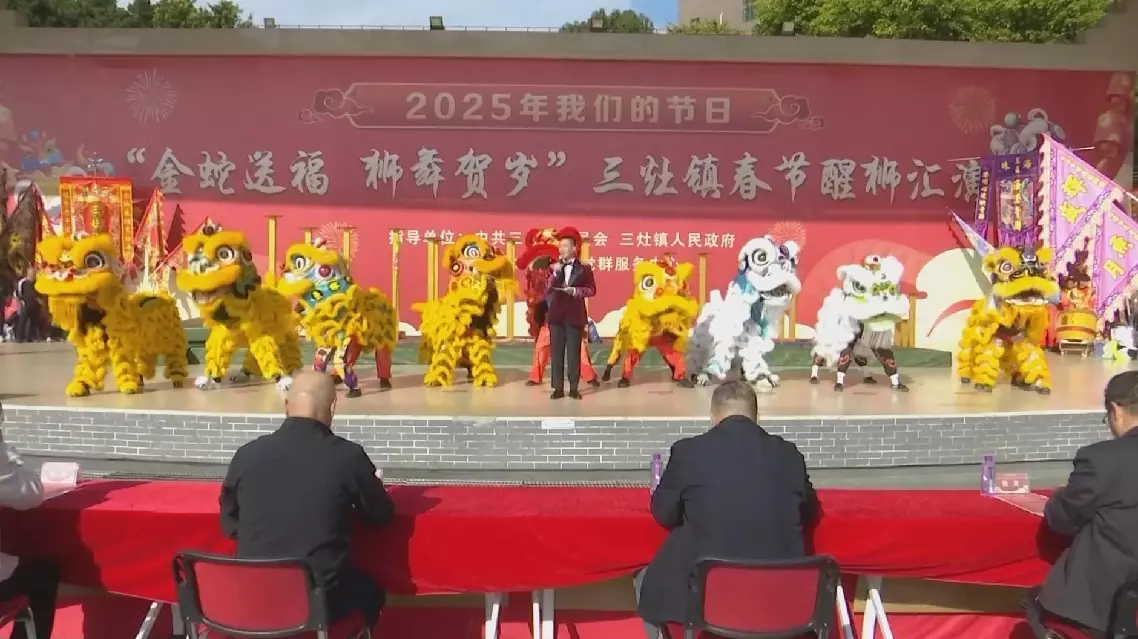
Festive atmosphere of Greater Bay Area enhanced by cultural heritage performances