The Supreme People's Court released its annual work report in Beijing on Saturday, highlighting judicial efforts in maintaining national security, cracking down on crime and corruption, strengthening market regulation, and enhancing legal protection for citizens and businesses.
The work report, delivered by Zhang Jun, president and chief justice of the Supreme People's Court, to the second plenary meeting of the third session of the 14th National People's Congress (NPC) for deliberation, revealed that China's top court accepted 34,898 cases and concluded 32,539 in 2024, while courts nationwide handled 46.018 million cases and concluded 45.419 million.
The report underlined the importance of firmly safeguarding national political security, and a set of guidelines on imposing criminal punishments on Taiwan separatist forces for conducting or inciting secession was jointly issued and implemented last year by the Supreme People's Court, the Supreme People's Procuratorate, and the ministries of Public Security, State Security, and Justice.
The report noted that the Supreme People's Court has cracked down on serious crimes that have disrupted social order, with a notable 26.7-percent increase in concluded cases of telecom and online fraud, totaling 40,000 cases, including cross-border scams linked to northern Myanmar.
In 2024, China enhanced judicial efforts in the fight against corruption, as Chinese courts punished both those who took bribes and those who offered them, according to the report.
It also highlighted a series of corruption cases involving high-ranking sports officials, including Li Tie, former head coach of the national men's football team, who received a 20-year prison sentence.
The report emphasized the Supreme People's Court's role in supporting a unified national market and developing new quality productive forces. A total of 10,000 cases related to anti-monopoly and anti-unfair competition, including encroaching commercial secret and bid-rigging, were concluded.
The top court also addressed legal issues concerning the artificial intelligence (AI) by handling AI-related disputes, penalizing AI-driven intellectual property violations, and fostering responsible innovation to promote an orderly development.
To promote a business environment under the rule of law, the report said, the Supreme People's Court focused on protecting the legitimate rights of businesses and entrepreneurs by stepping up oversight of illicit cross-region and profit-driven law enforcement, and strictly preventing the misuse of criminal measures in economic disputes.
The report noted that 46 cases involving property rights were retried and corrected by courts in 2024, acquitting 13 out of 72 people involved in these cases.
It also included the judicial efforts made by the top court to build a "Beautiful China." Working along with the Ministry of Ecology and Environment, the Supreme People's Court carried out a special campaign against fraudulent practices in third-party environmental protection service agencies.
In regard to pursuing higher standard opening-up, the report said the Supreme People's Court published typical cases of protecting the rights and interests of foreign investors in accordance with the law to create a favorable investment environment.
The report underscored the Supreme People's Court's commitment to addressing everyday legal concerns of citizens by issuing legal interpretations under the Civil Code and publishing key rulings on elder care service disputes. These measures aimed to ensure that nursing homes fulfill their safety obligations and improve age-friendly infrastructure to enhance living conditions for seniors.
Protecting minors was a significant focus in the report. In 2024, 40,000 cases involving crimes against minors, with 41,000 individuals involved, were concluded by Chinese courts. Severe punishments were handed down in cases of extreme cruelty, such as toward Yu Huaying, a child trafficker who was given death penalty.
In implementing and improving the judicial responsibility system, the report also noted that 2950 cases of new types and with guiding significance being tried by higher-level courts, an increase of 33.8 percent.
The report also said the top court has strengthened the management of trial quality by streamlining and optimizing management indicators to effectively reduce the burden on grassroots courts.
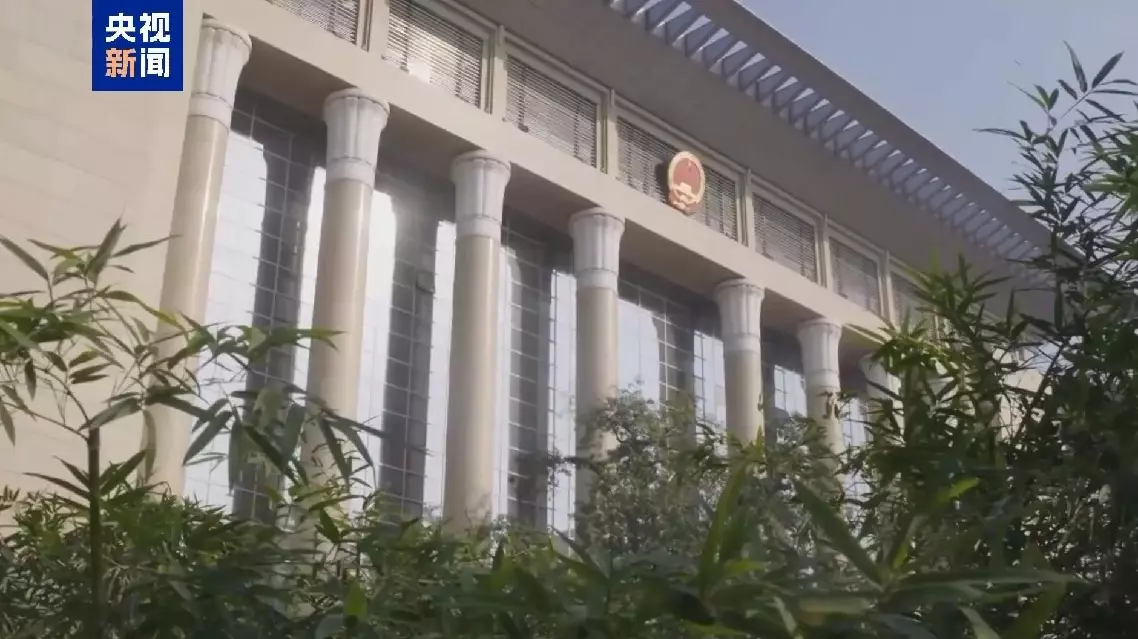
China's Supreme People's Court reports on key judicial achievements in 2024