NEW YORK--(BUSINESS WIRE)--Apr 8, 2025--
Pangram, the most accurate and most reliable tool for detecting text created by AI, has released a new, better detection model. The upgrade improves on Pangram’s already unmatched accuracy and includes a unique feature that will aid educators when assessing student-submitted writing.
This press release features multimedia. View the full release here: https://www.businesswire.com/news/home/20250408516686/en/
The new model, already released to customers as part of regular updates and improvements, has been re-engineered and retrained, and is proving even more accurate and successful in identifying AI-generated text from the newest models of AI providers such as OpenAI, Anthropic, and Gemini. Pangram’s new model is also, it seems, able to detect AI-created text from models that are awaiting public release.
“Our detection technology was already the best because we built it differently,” said Max Spero, Pangram’s CEO. “Pangram does not rely on perplexity and burstiness like other AI classifiers. Pangram is trained using ‘synthetic mirrors’ of the hardest documents to classify and then it is retrained over and over again. That makes it adaptable to new models and doesn’t require significant re-engineering or time-intensive retraining to remain relevant.”
The new detection capabilities also are successful at detecting “humanized” text – text that has been put through an automated paraphrasing engine. Humanizing text is a common tactic used by students and others who may wish to hide or contaminate the origins of text. Several humanizing products explicitly advertise their ability to beat AI detection. Although, in internal testing, even these humanizers fail to bypass Pangram.
“The days of being able to ask ChatGPT to do your assignments, then wash it with Grammarly or QuillBot, and expecting to get away with it – those days are coming to an end. If they’re not already over,” said Spero. “With Pangram, teachers are going to spot the use of humanizers with precision and regularity,” he said.
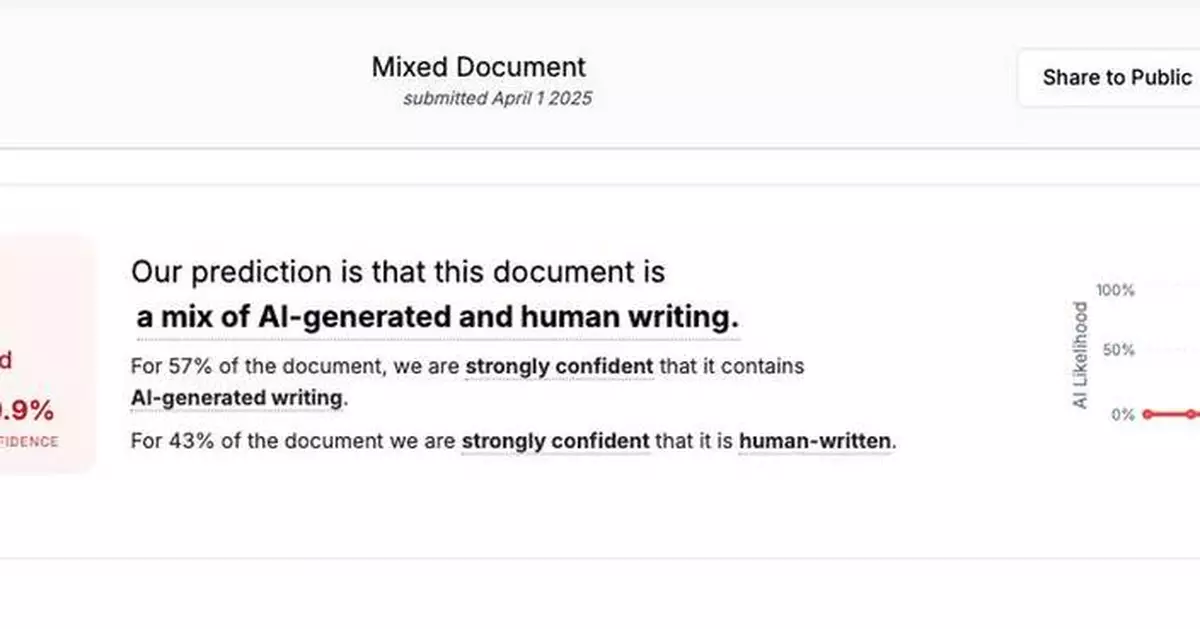
In addition to the significant upgrades, Pangram has released a new feature that will assist educators in identifying text created by AI, and, more importantly, in making sound decisions about how to address it. Starting immediately in educator dashboards, Pangram results will now return a result of “mixed” for submitted text, in addition to the classifications of “human” or “AI.”
This “mixed” designation will be applied to text that is likely to be partly human composed, mixed with portions that are likely produced by AI. Further, the “mixed” designation will break down the percentages of each – human versus the percentage that is detected as AI. Finally, in a “mixed” result, educators will be able to see the specific segment of the text in each category – human or AI.
Insight into mixed text is important because many AI users, especially students, generate AI answers or solutions but then edit the results themselves, hoping to either fool an AI detector or add some of their own voice, or both.
“Being able to see a breakdown, seventy-thirty, or ninety-ten, will help teachers make better decisions about what they expected from their students and then determine the actions, if any, that might be necessary,” Spero said. “More information for teachers is better, more insight is better. We’re able to do that with Pangram.”
Spero and cofounder Bradley Emi have master’s degrees in computer science from Stanford University, where they met as undergraduates. Before founding Pangram, Spero was an AI engineer at Google, while Emi was a machine learning engineer at Tesla.
About Pangram
Pangram Labs is the technology leader in AI detection systems, surpassing other detection providers in accuracy, reliability, and information delivery. Pangram’s detection systems are relied on by thousands of businesses, primarily for assessing and addressing public reviews of products and services, many of which are compromised by AI. Founded by classmates at Stanford University, Pangram is gaining market traction in education as the accuracy alternative for assessing the authenticity of student work.
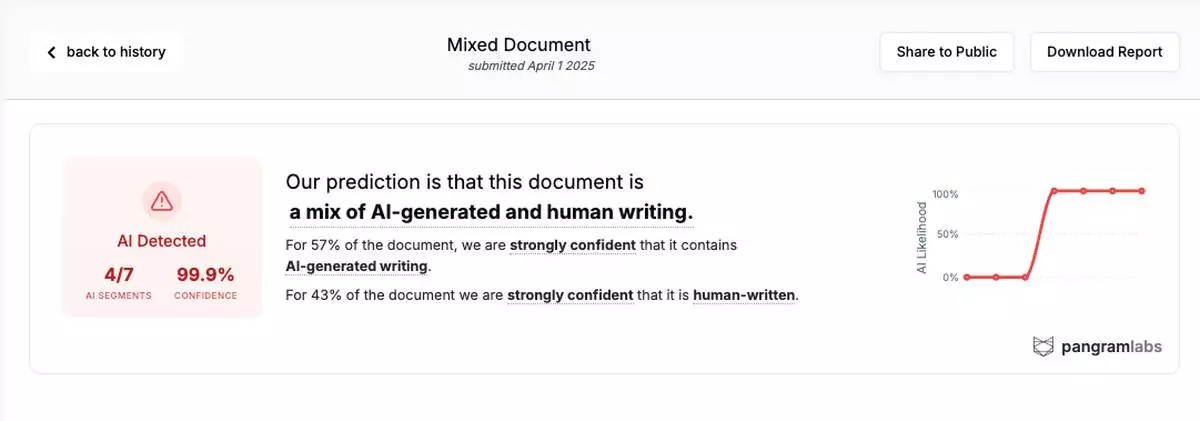
Pangram, the most accurate tool for detecting AI-generated text, has released a newly engineered model that is even more accurate in identifying AI-generated text from the newest models of AI providers such as OpenAI, Anthropic, and Gemini. Pangram can identify “human” or “AI” or “mixed” selections. This “mixed” designation applies to text that is likely to be partly human composed, mixed with portions that are likely produced by AI. Pangram also breaks down the percentages of each and the specific segment of the text in each category – human or AI. pangram.com
LOS ANGELES (AP) — Prosecutors said Wednesday that singer D4vd killed 14-year-old Celeste Rivas Hernandez by stabbing her multiple times then dismembered her body using chainsaws in his garage.
The Los Angeles County District Attorney’s Office shared what they said the evidence in the case would show in a court filing that provided the first detailed allegations of the killing and efforts to cut apart Rivas Hernandez's body and get rid of evidence.
The court filing said D4vd, whose legal name is David Burke, met Rivas Hernandez when she was 11, began sexually abusing her when she was 13 and he was 18, and killed her when she threatened to reveal their inappropriate relationship.
“Knowing he had to silence the victim before she ruined his music career as she had threatened, very soon after her arrival at his home, defendant stabbed the victim to death multiple times and stood by while she bled out,” the filing said.
Burke has pleaded not guilty to first-degree murder and other counts. His lawyers have said he is innocent and did not cause Rivas Hernandez’s death.
Her body was found decomposing in a Tesla towed from the Hollywood Hills in September of last year.
Prosecutors said they had obtained text messages that showed their sexual relationship, including child sexual abuse images of her on his phone.
“The messages reveal the victim’s jealousy over defendant’s relationships with other women, as defendant led her to believe they had a future together," the document says. “She became extremely upset and threatened to disclose damaging information about her relationship with defendant to end his career and destroy his life.”
The filing said he sent a rideshare car to pick her up on the night of April 23, 2025, from her hometown of Lake Elsinore some 80 miles (129 km) outside of Los Angeles. The two exchanged messages until he arrived at his Hollywood home, after which her phone went silent permanently.
They allege he sent her a late-night message asking where she was in an attempt to cover up the killing.
The court filing is intended to outline the evidence that prosecutors plan to present at a preliminary evidentiary hearing beginning May 26, when a judge will determine whether there is probable cause to go to trial. The defense has not publicly provided its version of events.
The document says Burke bought two chainsaws online used them to cut apart her body in an inflatable pool in his garage, where the girl's DNA was later found.
“Defendant took horrifying measures to destroy and discard the victim’s body,” prosecutors said in the brief.
Burke drove to Lake Cachuma in Santa Barbara County about 110 miles (177 kilometers) northwest of his home to get rid of evidence three times, the document alleges. Her passport was found there in January.
On April 24, the day after her death, he gave a radio interview and had a record-release party promoting his debut full-length album, “Withered,” which was released the following day, prosecutors said in the filing.
Prosecutors allege he kept her body in his Tesla, and lied to friends and business associates who asked about the smell.
The body of Rivas Hernandez had so degraded that examiners couldn’t even determine her eye color. She had braces at the time of her death, and a tattoo that read “Shhh....” on the inside of a finger as well as his name, according to the report. Two fingers were missing — as were parts of her arms and legs.
Prosecutors had not previously described how they believed Rivas Hernandez was killed or given details on their relationship. An autopsy report said she was killed by penetrating wounds.
Prosecutors said the parents of Rivas Hernandez reported her missing from her home in Lake Elsinore in February 2024. After the February report, Riverside County Sheriff’s detectives contacted Burke, but he told them he had only met her once and did not know she was a minor.
After she returned home that February, her parents took away her cellphone but Burke drove to her hometown and paid a friend of Rivas Hernandez $1,000 to give her a phone so they could communicate.
She was reported missing again in April 2024. The document said that year, she spent much of her time at Burke’s home in the Hollywood Hills and traveled with him to Las Vegas, London, and Texas to meet his family.
The defense attorneys asked Superior Court Judge Charlaine F. Olmedo at a hearing Wednesday to seal the document, but she declined. They had no comment outside court.
Burke was arrested on April 16 and pleaded to first-degree murder, lewd and lascivious acts with a person under 14m and mutilating a dead body. He is eligible for the death penalty, but prosecutors said they have not decided whether to seek it.
The singer began making music for YouTube videos he created of the video game Fortnite when he was a teenager.
The songs he wrote and recorded on his phone were a blend of indie rock, R&B and lo-fi pop. The music made him a phenomenon on TikTok, Instagram, Soundcloud and Spotify, where his top songs, including his 2022 breakthrough “Romantic Homicide,” have more than a billion plays. In 2023, he released two EPs and opened for SZA on tour.
He performed at last year's Coachella music festival just a few weeks before prosecutors said Rivas Hernandez was killed and his album was released. He was on tour promoting it in September when the body was discovered and his name became publicly attached to the case. It would be seven months before he was arrested.
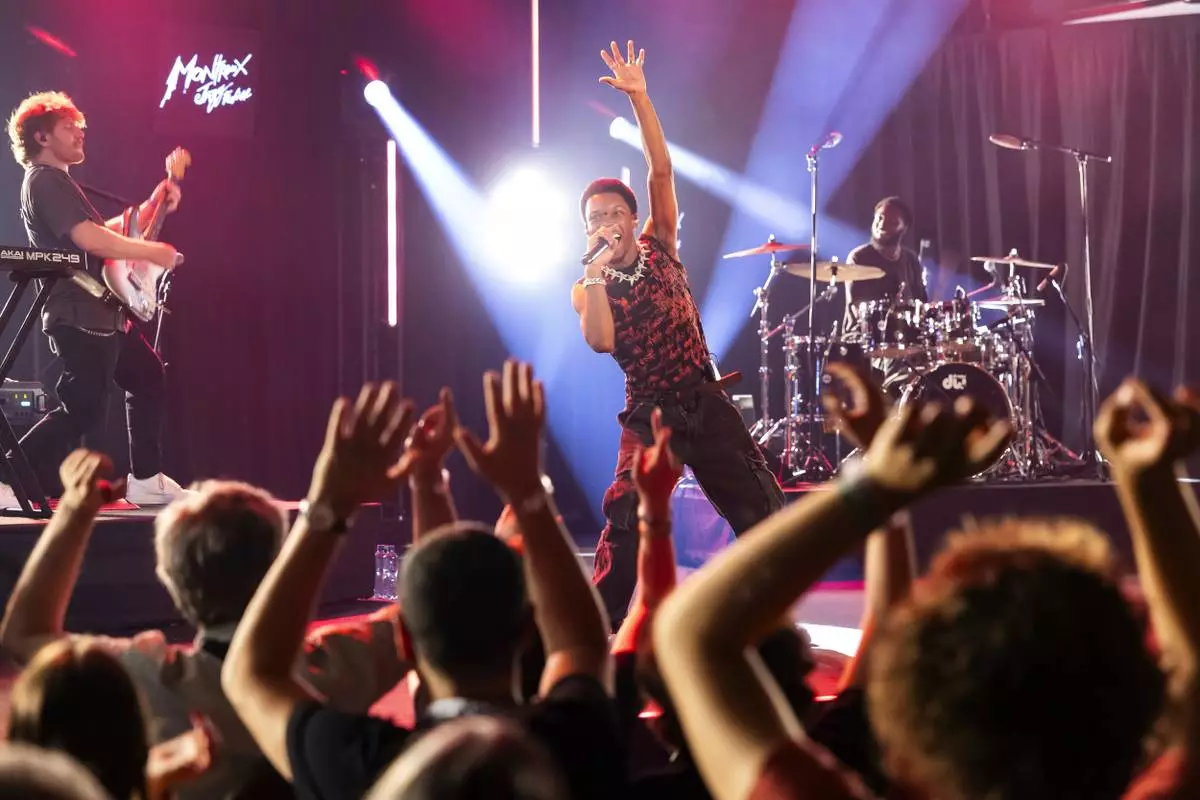
FILE - American singer-songwriter, David Anthony Burke, aka D4vd, performs on the Casino stage during the 58th Montreux Jazz Festival (MJF), in Montreux, Switzerland, July 19, 2024. (Cyril Zingaro/Keystone via AP, File)
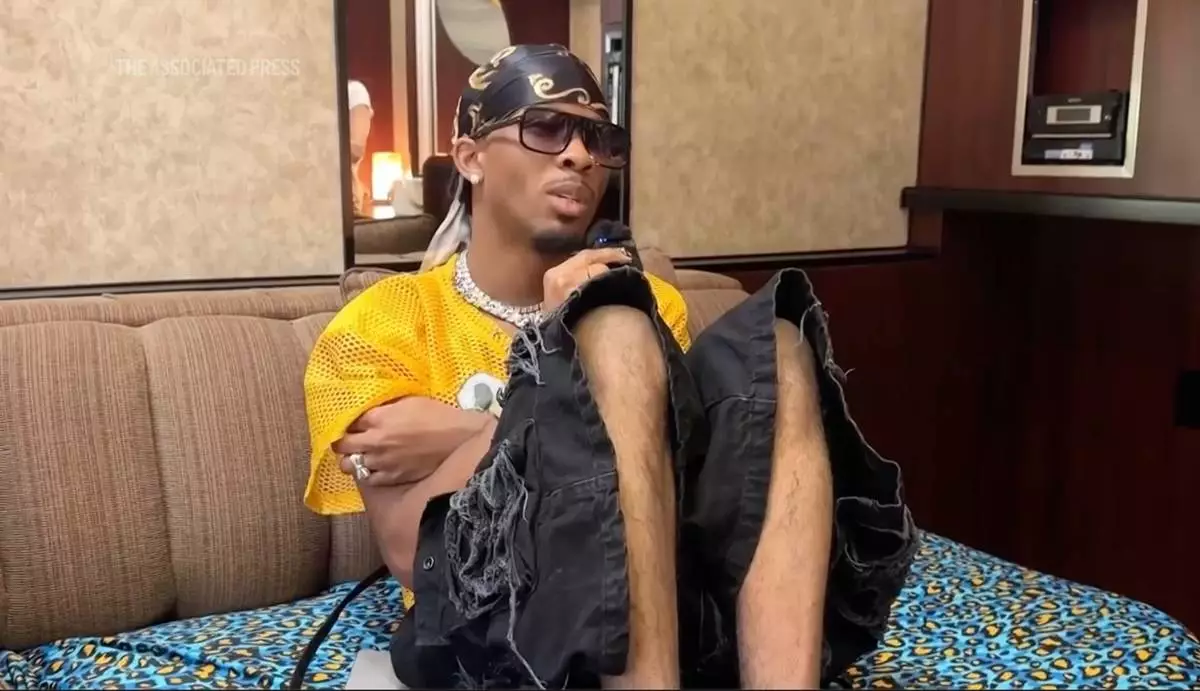
Singer-songwriter, David Burke aka D4vd sits in artist space at Coachella music festival on April 18, 2025 in Indio, Calif. (AP Photo)
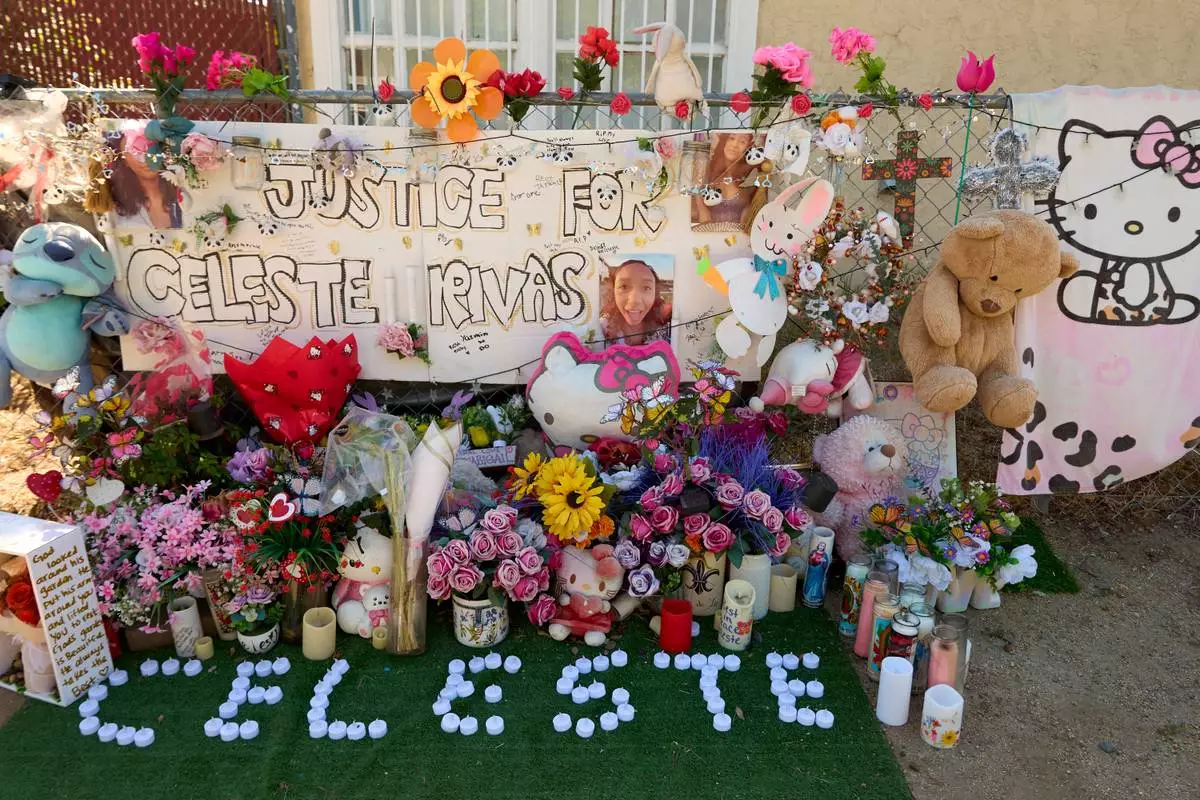
FILE - A makeshift Memorial for Celeste Rivas Hernandez, who was killed and found inside a vehicle owned by singer D4vd, is placed outside her home in Lake Elsinore, Calif., on April 21, 2026. (AP Photo/Damian Dovarganes, file)
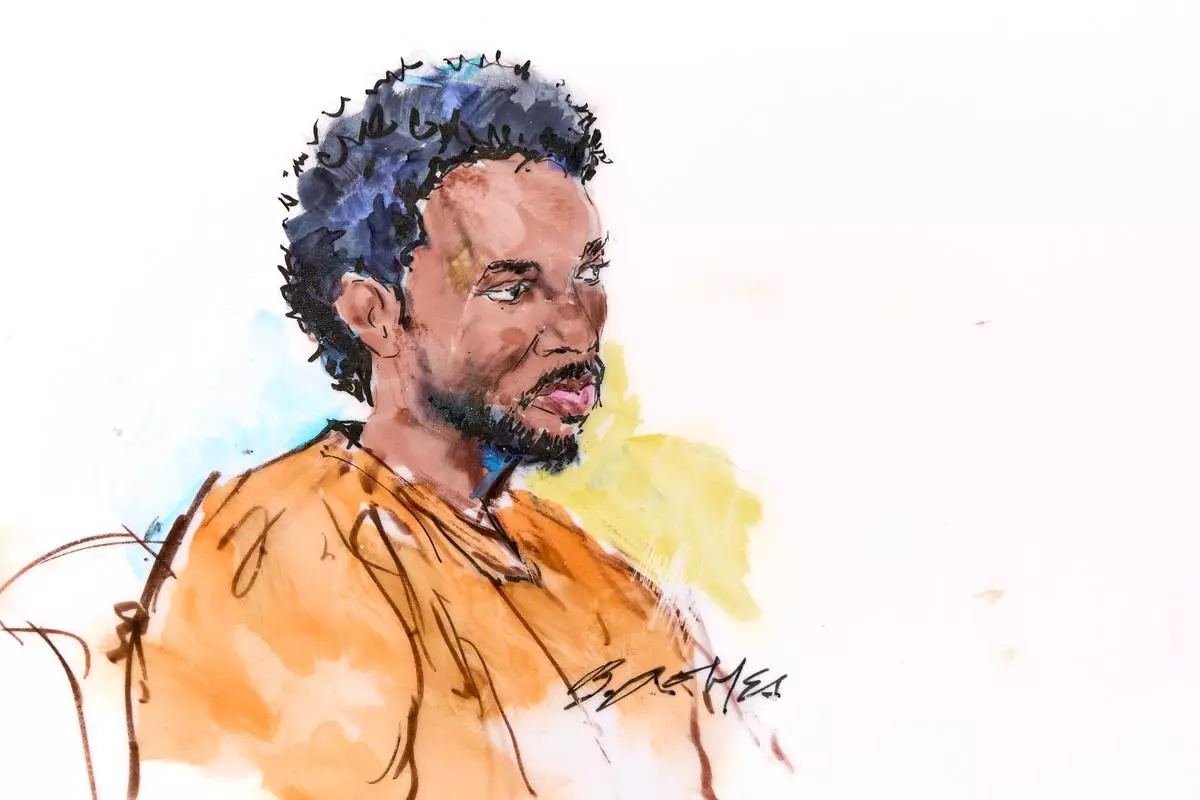
In this courtroom sketch, David Anthony Burke, whose stage name is D4vd, is seen in court Thursday, April 23, 2026, in Los Angeles on charges of killing a 14-year-old girl whose dismembered body was found in his car. (Bill Robles via AP)