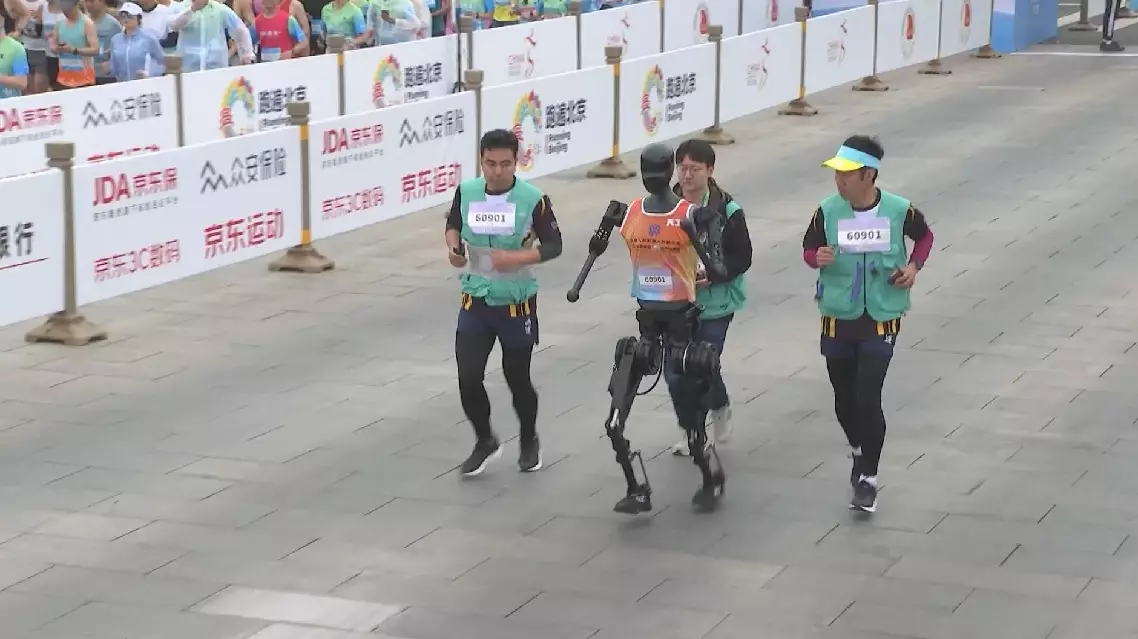
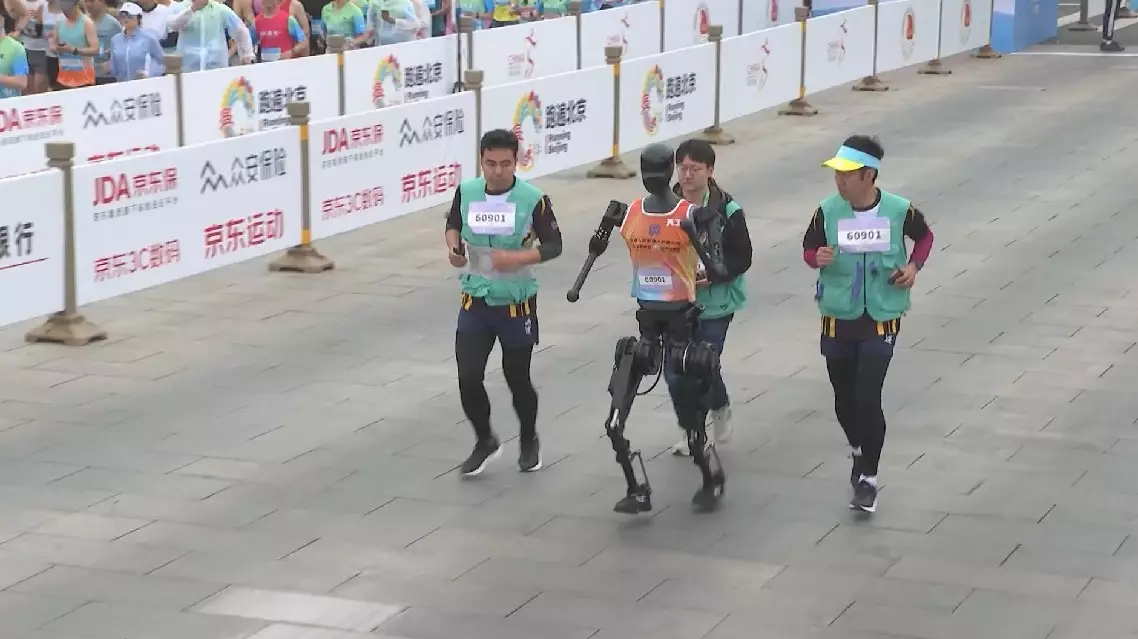
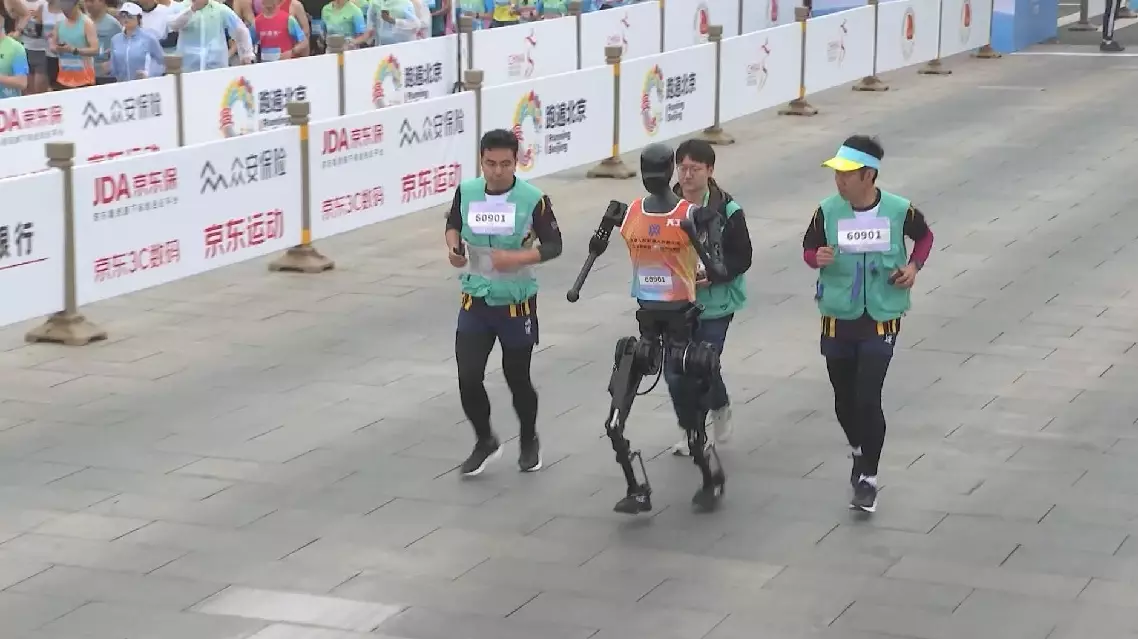
The world's first humanoid robot half-marathon was held on Saturday in Beijing, with the "Tiangong Ultra" humanoid robot developed by the Beijing Humanoid Robot Innovation Center claiming the championship by completing the 21.0975-kilometer race in 2 hours, 40 minutes and 42 seconds.
The second and third places for the humanoid half-marathon were taken by robotic participants from Beijing's Noetix Robotics.
Click to Gallery
"Tiangong Ultra" robot wins world's first humanoid half-marathon
"Tiangong Ultra" robot wins world's first humanoid half-marathon
"Tiangong Ultra" robot wins world's first humanoid half-marathon
"Tiangong Ultra" robot wins world's first humanoid half-marathon
"Tiangong Ultra" robot wins world's first humanoid half-marathon
Following the system of Formula One Championship, the race set up refreshment stations for robots' battery changing.
The 21-km route featured different terrains including ramps and rails instead of all flat stretches, posing challenge to the humanoid robots' mobility and flexibility.
A total of 20 humanoid robots from teams nationwide participated in the competition.
Some of them took large strides forwards, while some were running with small steps. There were also accidents, such as falling down and insufficient battery life. However, all these scenarios were able to test robots' abilities under complex circumstances.
"Tiangong Ultra" robot wins world's first humanoid half-marathon
"Tiangong Ultra" robot wins world's first humanoid half-marathon
"Tiangong Ultra" robot wins world's first humanoid half-marathon
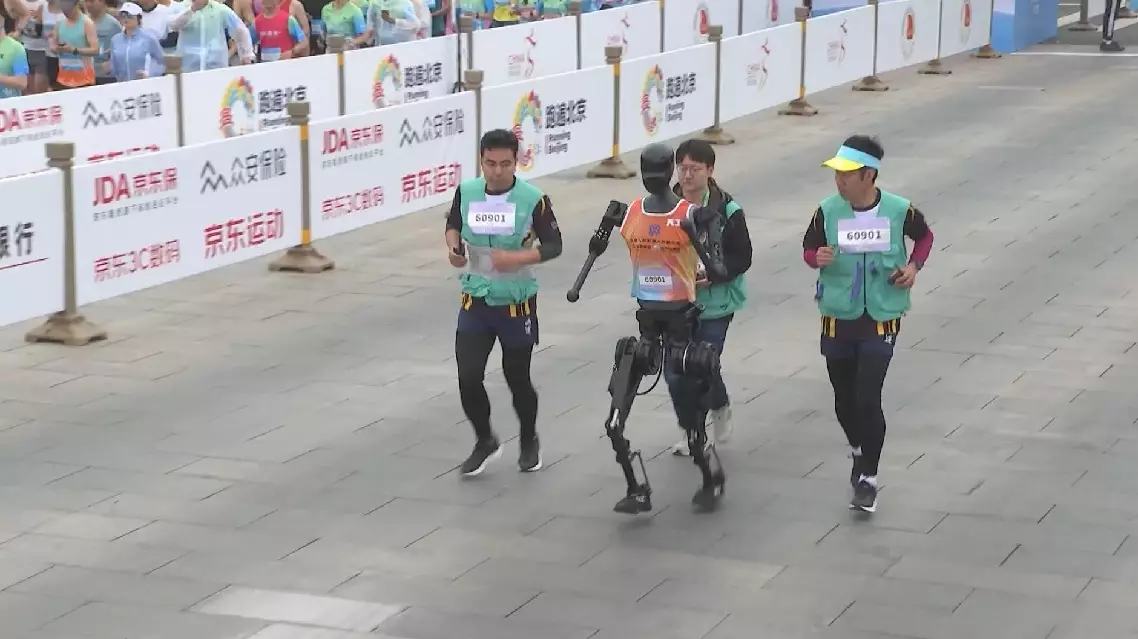
"Tiangong Ultra" robot wins world's first humanoid half-marathon
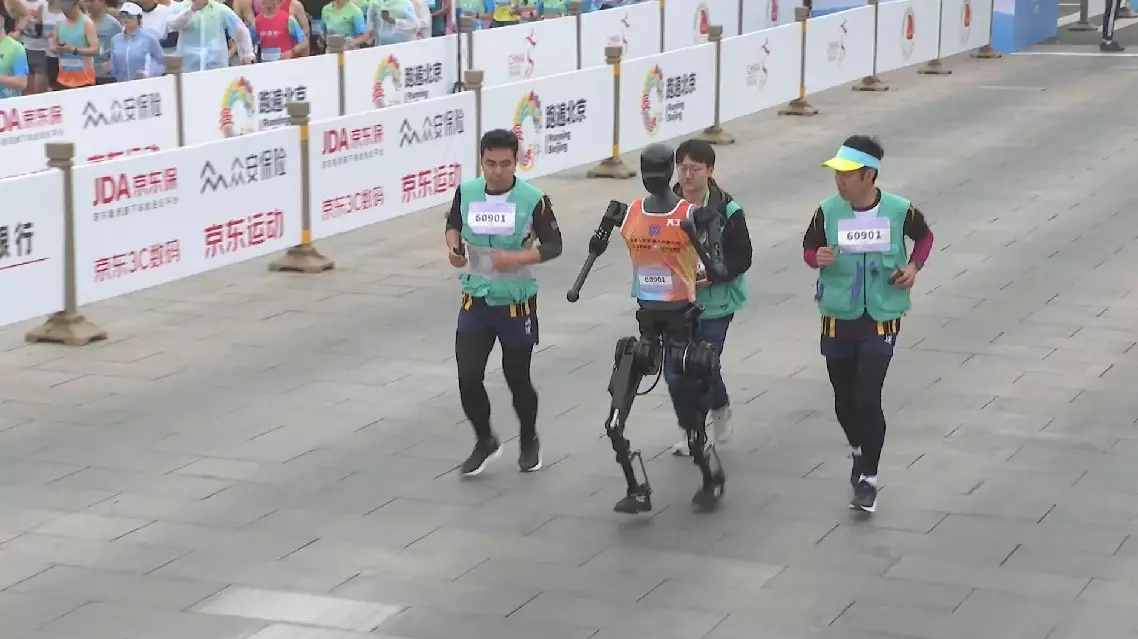
"Tiangong Ultra" robot wins world's first humanoid half-marathon
A Chinese community in Madrid has become a witness to the growing ties between China and Spain.
Spanish Prime Minister Pedro Sanchez is on a five-day official visit to China from Saturday to Wednesday. This visit marks Sanchez's fourth visit to China in a four-year period, and it represents another significant high-level exchange between China and Spain in a short period, following the visits by Spanish King Felipe VI and Sanchez last year.
The Usera neighborhood in southern Madrid is the heart of the Chinese community - a living example of peaceful and prosperous coexistence and cooperation, which also proves the relations between the two nations continue to develop in a deeper level.
"More than 40,000 Chinese people live in this neighborhood that has a unique and different identity where two cultures coexist peacefully and that represents what Madrid is all about - an open and welcoming city," said Almudena Maillo, Councilor for Tourism of Madrid Town Hall.
A giant 15-by-20-meter dragon is part of a new 12-million-U.S. dollar investment into the neighborhood, a spectacular stop on a 1,700-meter pedestrian route that features Chinese characters and Confucian phrases on the street, with 290 new trees and 11,000 plants, a brand new 500kg marble panda, and an iconic paifang, or gateway, reminiscent of the ones at the London and New York Chinatowns.
The project received EU funding and won an award for its urban transformation from Catedra China in February, a Spanish organization set up to bolster Spain-China ties.
"It's beautiful, really original. It just looks great, brightens up the place," said a local resident.
China's ambassador to Spain sees China-Spain relations at an all-time high.
"This is the best time as far as the relations between China and Spain are concerned. So I think that we are lucky to have a partner like Spain in Europe. We hope that the partners like Spain in Europe could be also increasing in the future time," said Yao Jing, Chinese Ambassador to Spain.
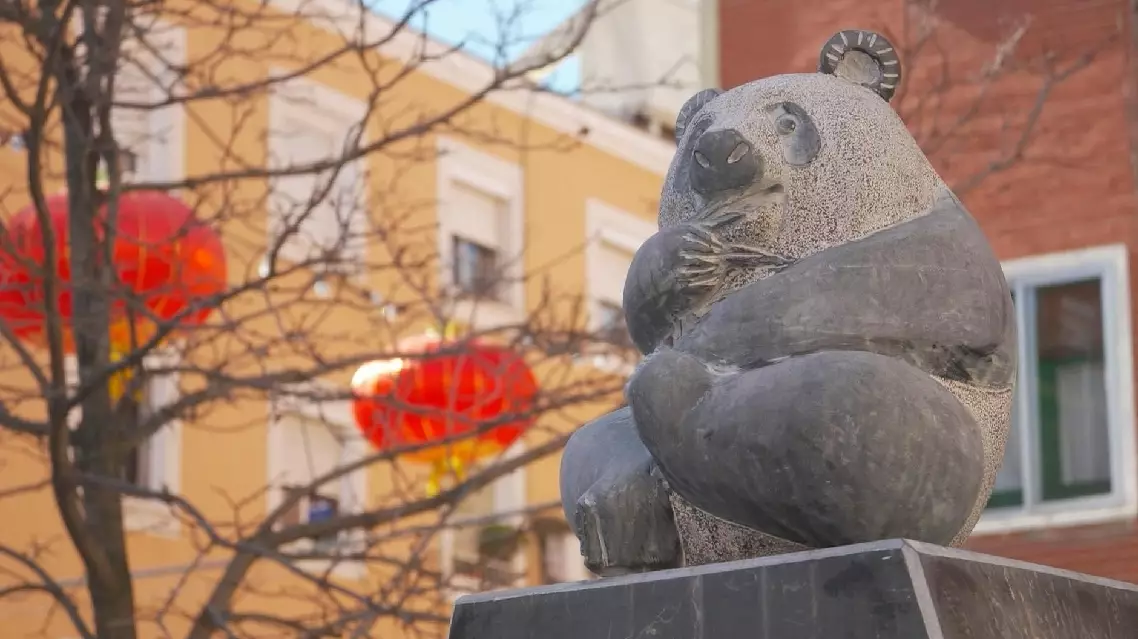
Chinese community in Madrid witnesses closer China-Spain ties