Skip to Content Facebook Feature Image

China outlines 155 tasks to expand service sector opening up: official

China

China

China

China outlines 155 tasks to expand service sector opening up: official

2025-04-21 17:11 Last Updated At:04-22 13:57

China has outlined 155 tasks aimed at expanding the opening up of its service sector, including further easing restrictions in telecommunications, healthcare, and finance, as part of a newly approved work plan by the State Council.

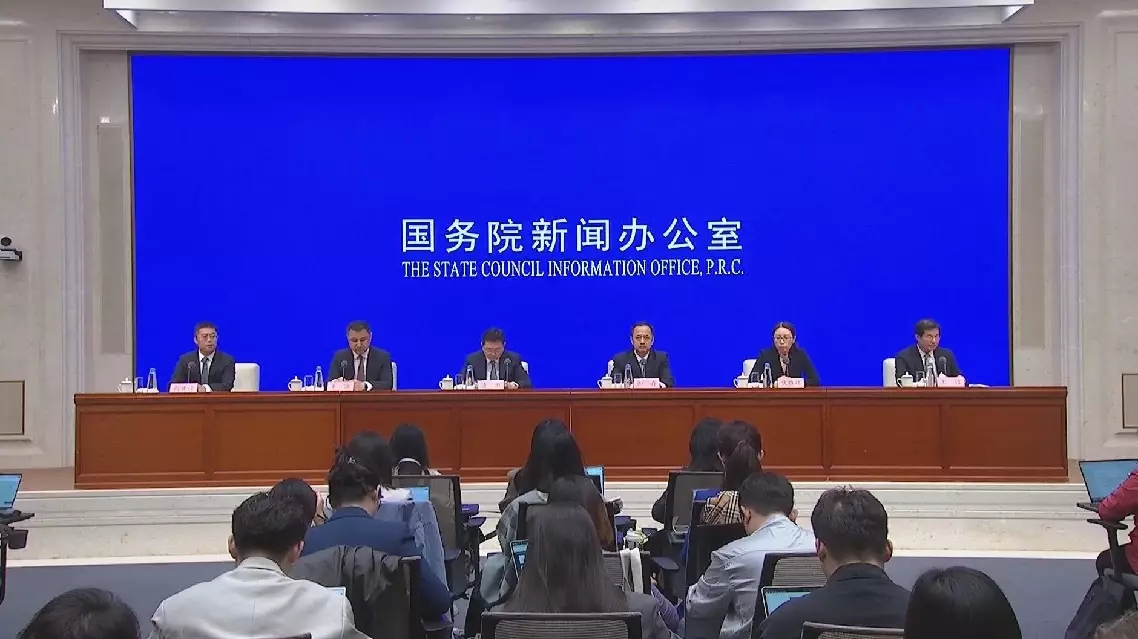
At a press briefing in Beijing on Monday, officials from the Ministry of Commerce and other relevant departments provided an in-depth explanation of the work plan.

"In the telecommunications sector, the work plan proposes pilot tasks such as removing foreign ownership restrictions on services like app stores and internet access. In the healthcare sector, it suggests supporting foreign doctors in opening clinics, allowing overseas medical professionals to practice for short durations, and supporting the establishment of foreign-funded nursing schools. In the financial sector, the work plan advocates for exploring the development of international factoring business and supporting multinational companies in conducting centralized operation of cross-border funds using the Chinese currency renminbi (or the yuan)," said Ling Ji, vice minister of commerce and deputy China international trade representative.

The work plan also touches on the trade, commerce, culture, and tourism sectors, allowing foreign-invested travel agencies to operate outbound tourism businesses. In the transportation sector, it encourages cooperation in areas such as container shipping, interchange and sharing, and explores "door-to-door" transport models to streamline logistics.

"In terms of improving support systems, the work plan proposes pilot tasks in areas such as visa exemption for transit passengers, permanent residency, payment facilitation, and professional qualification recognition to ease the entry, exit, and professional practice of overseas talents in China. It also suggests to promote the alignment and compatibility of rules and standards, particularly in areas such as cross-border data flow, standard-setting, intellectual property, and commercial encryption, with efforts to continuously improve foundational regulations," said Ling.

Ling also emphasized the significance of these initiatives in the current global environment, marked by rising unilateralism and protectionism.

"Against the backdrop of rising unilateralism and protectionism, China is accelerating its pilot program for expanding the opening up of the service sector and orderly expanding independent and unilateral opening up, which are concrete actions to do our own things well and inject more certainty and stability into the world," said the official.

The services sector is a key area for foreign investment in China. In the first quarter of the year, paid-in foreign direct investment (FDI) in the services sector totaled 193.33 billion yuan (about 26.83 billion U.S. dollars), accounting for more than 70 percent of the country's total FDI, according to the latest data from the Ministry of Commerce.

In 2024, the 11 Chinese provinces and cities participating in the pilot programs attracted 293.2 billion yuan in FDI in the services sector, accounting for roughly half of the national total in that category.
China outlines 155 tasks to expand service sector opening up: official
China outlines 155 tasks to expand service sector opening up: official
China outlines 155 tasks to expand service sector opening up: official


China outlines 155 tasks to expand service sector opening up: official

China outlines 155 tasks to expand service sector opening up: official

China outlines 155 tasks to expand service sector opening up: official
China's real estate policies over the next five years in the country’s new economic plan, are set to place more emphasis on ensuring people's wellbeing, while emphasizing improved living quality in the quest for high-quality development of the real estate market, effectively meeting residents' demand for more comfortable housing conditions, according to Wu Jing, director of the real estate research center at Tsinghua University .

On Friday, China officially unveiled the outline of the 15th Five-Year (2026-2030) Plan for national economic and social development, which includes a focus on the real estate sector.

The outline calls for efforts to accelerate the development of a new model for real estate development and to improve the housing system, featuring multiple suppliers and various channels of support that encourage both rentals and purchases, to achieve a higher level of housing security.

Wu pointed out that the efforts signal that ensuring people’s well-being is a key development direction.

Meanwhile, the outline elaborates on the need to optimize the supply of affordable housing and puts forward more detailed requirements regarding the target groups, management processes and sources of affordable housing, and reforms to the housing provident fund system.

Wu said the core objective is to ensure people's housing needs are met.

"The outline specifies a more refined housing security system, proposing requirements such as improving the entire process of affordable housing management, exploring the orderly conversion and coordinated use of affordable housing for both rental and purchase purposes, and deepening the reform of the housing provident fund system. It also requires the housing security system to place greater emphasis on families with multiple children. All of these reflect that the coverage of the housing security system is expanding, its precision is improving, and it will be better integrated with population policies," he said.

In addition to ensuring people’s well-being, the outline of the 15th Five-Year Plan makes arrangements for promoting the stable and healthy development of the real estate market.

It urges efforts to improve basic systems for housing development, financing, and sales, and advance the sale of existing homes.

Meanwhile, it stresses local governments should be granted greater autonomy, making regulation more precise and effective, and more closely aligned with local needs.

Furthermore, it calls for building safe, comfortable, green and intelligent homes, and establishing a full life-cycle safety management system for housing.

"Most notably, the construction of basic systems has entered a substantial stage of advancement. Specific requirements are put forward, and measures are deployed to promote the sale of existing homes in a powerful and orderly manner. These are fundamental solutions to prevent risks and constitute the core institutional cornerstone for building a new model of real estate development," said Wu.

To effectively implement the policies outlined, pilot programs can be carried out in certain cities or projects and then gradually expanded, laying a solid foundation for the stable and healthy development of the real estate market, said Wu.

China to prioritize people's wellbeing, increase housing conditions in 2026-2030 Five-Year Plan

China to prioritize people's wellbeing, increase housing conditions in 2026-2030 Five-Year Plan

Recommended Articles