As the tariff war unleashed by Donald Trump continues to roil global trade, major players in the automotive, pharmaceutical, and chemical industries from Japan, Germany, and the United States are ramping up their investments in China.
According to the South China Morning Post, despite the threat of tariffs and an increasingly complex investment landscape, multinational corporations are taking decisive action to deepen their presence in China. These investments are widely seen as a "vote of confidence" in the Chinese market.
On April 22, Toyota Motor Corporation signed a strategic cooperation agreement with the Shanghai Municipal Government, pledging a 14.6 billion yuan (about 2 billion USD) investment focused on the new energy vehicle sector, which is a boost to China’s green, low-carbon development. The project is set to begin construction in June, with the first vehicle rolling off the line in 2027. This is one of the largest foreign investments in China since the onset of the tariff war.
Just a week earlier, Toyota joined hands with Sichuan Shudao Investment Group and Shudao Equipment & Technology to invest 236 million yuan in a hydrogen fuel cell joint venture.
On April 23, Nissan unveiled a new electrified model at the 2025 Shanghai International Auto Show and launched a new strategy, emphasizing deeper collaboration with Chinese partners and optimizing its product line-up to meet local market needs.
At a high-level reform and opening-up promotion conference held in Shanghai’s Pudong on April 18, several foreign-invested projects were signed on the spot. Among them, Japan’s Morimatsu Group committed 620 million yuan to build a new headquarters, while Daiichi Sankyo, another Japanese giant, plans to invest 1 billion yuan in biopharmaceutical manufacturing in Pudong.
Beyond Japanese multinationals, foreign companies from Germany and the United States are also pledging to step up their investments in China. On April 3, Siemens Healthineers signed an agreement to build its sixth global and China’s second-largest distribution and regional innovation center in Zhengzhou. Earlier this month, German chemical giant BASF announced a 500 million yuan expansion of its Cellasto plant in Pudong, aiming to boost capacity by nearly 70% by 2027 and provide noise and vibration solutions for China’s booming electric vehicle sector. BASF Vice President Xu Yibin noted that this is the company’s first production base for the technology in China.
In Shenzhen, American venture capital firm Plug and Play launched the Greater Bay Area International Innovation Center on April 15, focusing on emerging industries such as artificial intelligence and helping innovative companies establish a foothold.
The South China Morning Post points out that while Trump’s erratic trade policies have heightened global economic anxiety, foreign enterprises are still investing in China against the odds. Previously, China had warned the US that pressuring other countries to restrict trade with China in exchange for tariff exemptions amounts to coercion, urging all nations not to compromise.
On April 23, Vice Minister of Commerce Ling Ji chaired a roundtable with representatives from over 80 foreign companies and chambers of commerce, condemning US unilateral tariffs for damaging global supply chains. He emphasized that China will resolutely counteract such measures, safeguard the legitimate rights of foreign companies, and ensure supply chain stability.
Nie Riming, a researcher at the Shanghai Institute of Finance and Law, told the South China Morning Post that the development of foreign enterprises is especially crucial amid dramatic changes in the external environment. “China needs to retain and attract more talent, and demonstrate a stable and open business environment.”
In summary, amid global trade turbulence, China’s ability to attract investment from international giants highlights its resilience and strength. By driving innovation, supporting green development, and deepening cooperation, China is unfazed by the tariff storm and is becoming a key pillar of global economic stability.
Mao Paishou
** The blog article is the sole responsibility of the author and does not represent the position of our company. **
The New Year barely begins, and Washington drops a flashbang on global diplomacy. A sitting president is forcibly detained and taken out of his own country — a move that blows past diplomatic convention and rams straight into international law’s red lines. On Taiwan, the chatter instantly turns into self-projection, as some people try to shoehorn a faraway conflict into the island’s own storyline. Anxiety spreads fast.
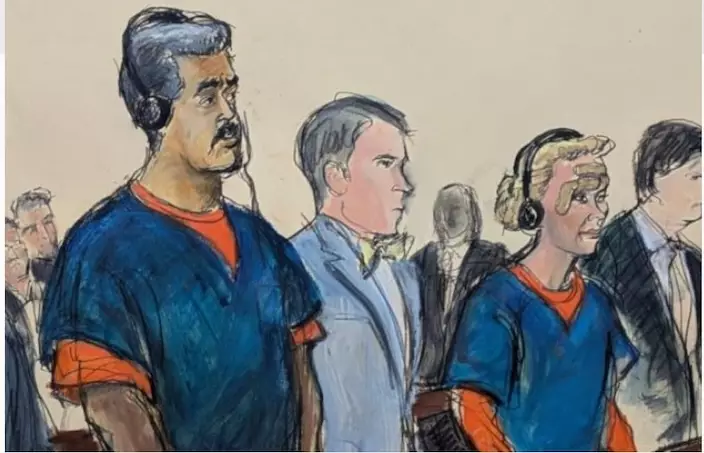
Maduro in cuffs, in a US federal courtroom — the raid’s image problem. (AP)
The South China Morning Post says the US action against Venezuela ignites a fierce debate on the island. Some commentary links the raid to the PLA’s recent encirclement drills around Taiwan, arguing parts of those exercises look, at least in form, like the US’s so-called “decapitation operations”: essentially a leadership-targeting operation. Some American scholars also warn this kind of play could set a dangerous precedent and invite copycats.
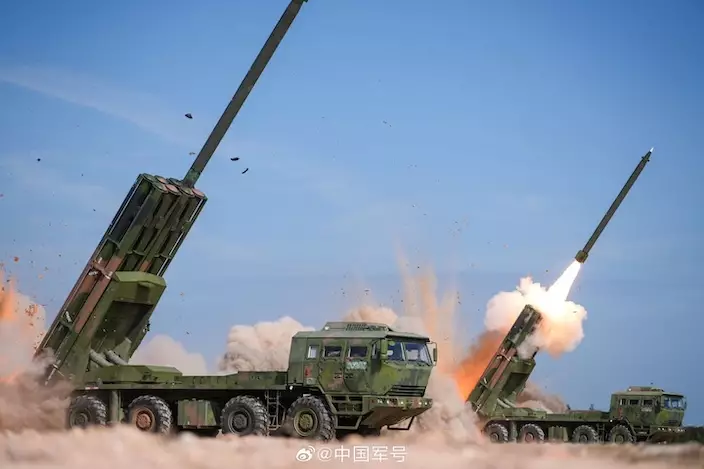
“Justice Mission-2025” rolls on as the Eastern Theater Command drills.
That debate doesn’t stay academic for long. It pumps up the island’s unease, with some people asking whether the same kind of military method could one day be copied and pasted into the Taiwan Strait. Even if it mostly lives in public talk, a high-tension political environment turns speculation into something that feels like risk.
People on the island don’t read the US move the same way. A small minority treats it as a US power flex, packed with intel integration, precision strike, and long-range reach. But the more clear-eyed view is harsher: such action chips away at the basic consensus of international order — because if major powers can raid at will and topple other countries’ leaders for their own aims, “rules” stop acting like rules.
Anxiety turns into politics
That worry quickly lands in Taiwan’s political arena. On Jan 5, multiple Taiwan legislators pressed Deputy Defense Minister Hsu Szu-chien at the legislature, asking how he views the US action against Venezuela and whether the PLA might replicate a similar model in the Taiwan Strait. Hsu doesn’t answer head-on. Rather, he merely mentioned preparing and drilling for all kinds of sudden contingencies.
Then he pivots to money. He urges the legislature to pass military budget appropriations quickly and plays up the urgency of delays eating into “preparation time.”
That kind of sidestep, unsurprisingly, only deepened public unease.
SCMP, citing multiple security experts, says the DPP authorities try to play down the association — but outsiders don’t fully rule it out. The reason, those experts argue, is the PLA’s continuing push to improve its ability to shift from exercises to real combat. On the island, that alone works like an anxiety amplifier.
Back in the real world, the PLA Eastern Theater Command has been running “Justice Mission-2025” exercises since Dec 29 last year. Official statements spell out the purpose: a stern warning to “Taiwan independence” separatist forces and external interference, and a move aimed at safeguarding national sovereignty and unification. The message is public and clear, there’s no gray area.
Some US think-tank voices pull a more confrontational takeaway from the US action. American Enterprise Institute senior fellow Hal Brands warns the US raid on Venezuela could create a “demonstration effect,” and he speculates China would watch those tactics closely. Some military commentators on the island seized the moment to hype fears, claiming the mainland might act during a “window” when US power is stretched thin.
That line of talk sounds like analysis, but it functions like a panic pump. US scholar Lev Nachman even says bluntly on social media that if a sudden military action hits the Taiwan Strait, the island could suffer “instant collapse” — not just militarily, but as a psychological shock to society.
KMT Chairperson Cheng Li-wun, in an interview, points to Donald Trump repeatedly stressing a shift of strategic focus toward affairs in the Americas. She says the Venezuela incident should be examined through the framework of international law, and she calls for disputes in any region to be resolved by peaceful means rather than force.
Cheng also reiterates the KMT position: uphold the “1992 Consensus,” oppose “Taiwan independence,” and urge Lai Ching-te to clearly oppose “Taiwan independence,” not touch legal red lines, and avoid continuously raising cross-strait conflict risks.
Rules talk meets reality
International reaction also turns critical of Washington’s approach. Multiple governments and regional organizations speak up quickly, condemning the action as a violation of the UN Charter, which explicitly prohibits using force to threaten or violate another nation’s territorial integrity and political independence. The telling part is the silence: the Western countries that often talk about “international rules” either zipped their mouths, or danced around the question this time.
Reuters says that even though China, Russia, and others clearly condemn the US behavior, the Trump administration is unlikely to face strong pressure from allies as a result. That selective muteness, by itself, drains the credibility of the international order.
On Jan. 5, Chinese Foreign Ministry spokesperson Lin Jian commented again, saying the US actions clearly violate international law and the basic norms of international relations, and violate the purposes and principles of the UN Charter. China calls on the US to ensure the personal safety of President Maduro and his wife, immediately release them, stop subverting the Venezuelan government, and resolve issues through dialogue and negotiation.