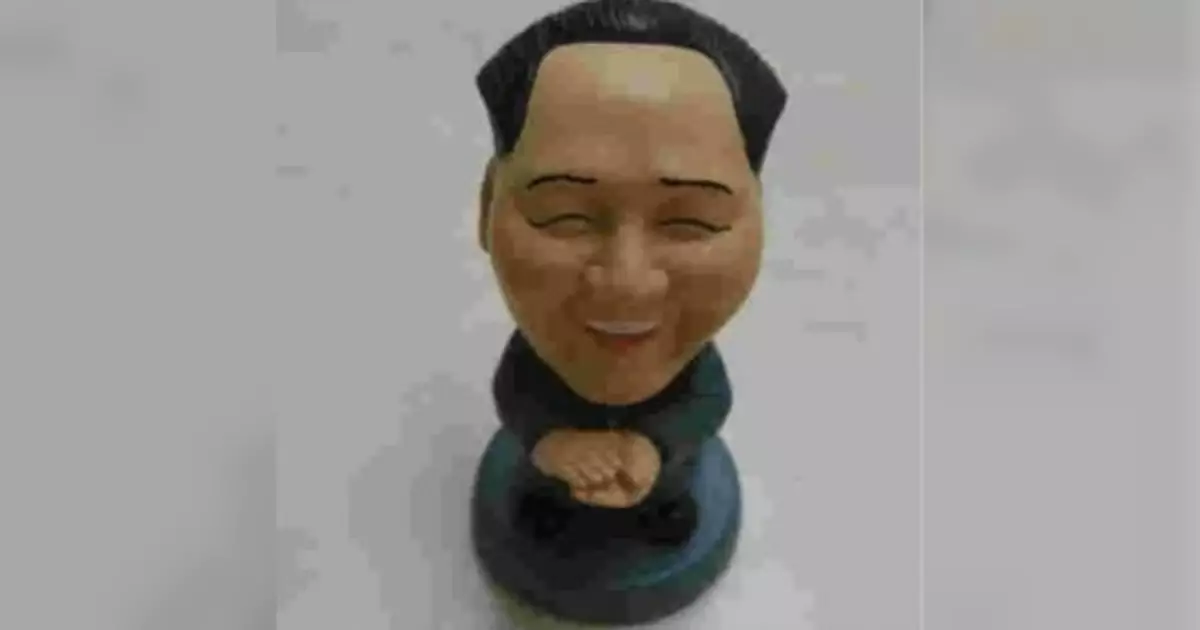
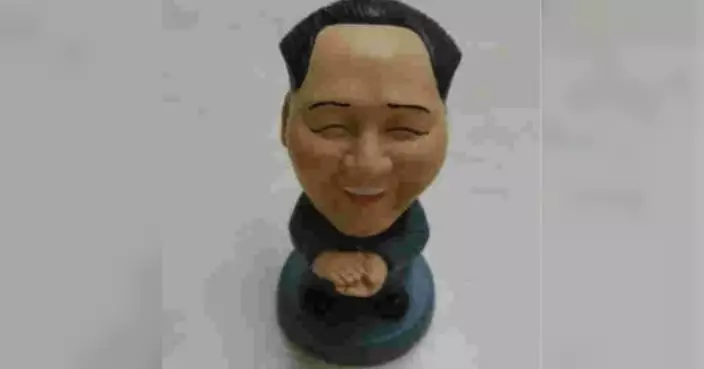
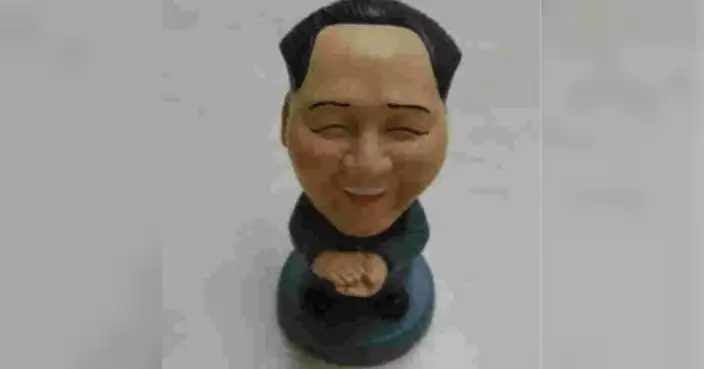
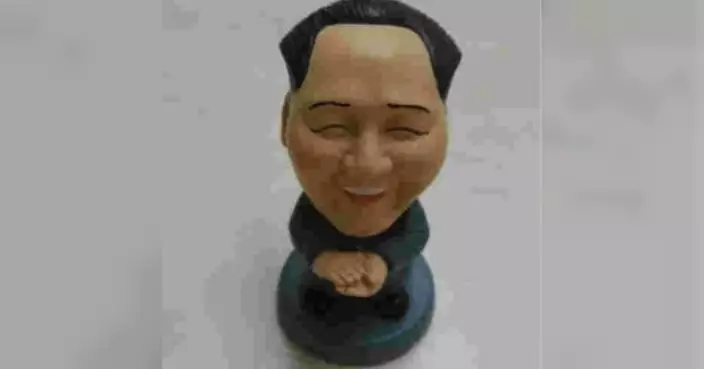
After escaping justice in Hong Kong, Keung Ka-wai—who dubs himself “Pastor Keung”—has carved out a globe-trotting career in chaos. Booted from Taiwan for illegal work, he’s now in Canada, keeping up his tradition of destruction over construction.
Notorious across social media and anti-China networks, Keung’s colorful past was recently exposed by European News Network, showing just how manufactured his “martyr” reputation really is.
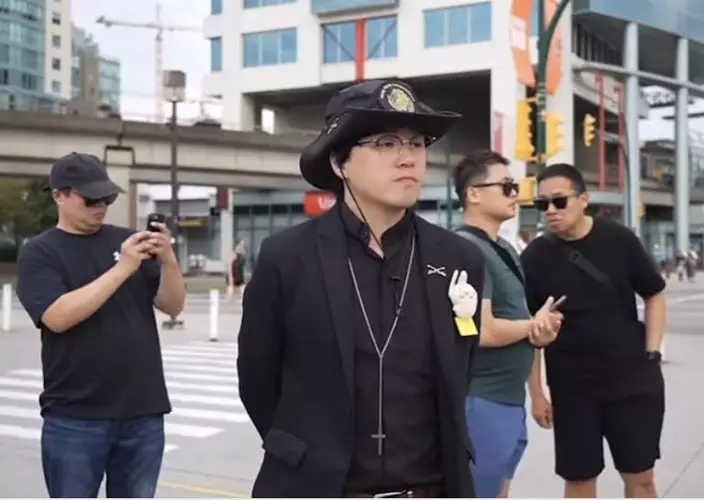
Keung Ka-wai loves the pastor costume—his favorite look for stirring up drama abroad. (Photo: Keung Ka-wai’s Facebook)
Keung started not as some spiritual leader, but as a convicted criminal—jailed for sedition. Out of prison, he immediately fled to Taiwan. There, he orchestrated the “Hong Kong Democratic Independence Union,” pushing his so-called “Hong Kong Constitution.”
He even joined the seditious “Hong Kong Parliament” and crowned himself “the first parliamentary speaker”—all at just 34. Keung’s story about becoming a “pastor” at 22? Turns out he simply joined a church and got baptized, not ordained.
What followed were unauthorized student services, splitting off to launch his private church, drawing in students, hosting events—alongside numerous accusations of inappropriate conduct with underage girls.
From Shady Churches to Visa Violations
But Keung’s time in Taiwan shredded any remaining “moral” façade. Entering only on tourist and family visit visas, he skirted the rules and worked illegally to make ends meet—until caught. A penalty notice from New Taipei City revealed he worked at a restaurant run by Chu Ka-kei, a fellow “Hong Kong Parliament” member and brief “Ally” in the Taiwan-based group Keung founded.
Thing is, Chu Ka-kei wasn’t even authorized to open a business—he was just a shareholder. Lacking proper business registration, he got reported for hiring illegal labor. Keung, meanwhile, dodged any direct reply about his “black work,” even though he promoted the restaurant online, openly admitting his involvement.
Soon, Chu Ka-kei faced charges for harboring illegal foreign workers. He first denied employing Keung Ka-wai, then changed his story: he’d rented out the restaurant on behalf of Keung, who lacked legal status.
Chu ended up fined NT$150,000—around HK$43,000. The penalty left Chu in dire straits, forcing a public crowdfunding appeal. Even after bolting to Canada, Keung showed zero regret, making Chu fume.
All that drama was a clear-cut violation of Taiwan’s Employment Service Act. That didn’t stop Keung from livestreaming his so-called “hardships”—claiming he was attacked, when in reality Taipei police uncovered he had simply gotten into a drunken altercation at a nightclub, ending with a minor stabbing.
Kicked Out, “Victimized” Abroad
By the end, Keung had courted so much controversy that Taiwan’s Mainland Affairs Council had seen enough—they rejected his application to stay, correctly judging he was fabricating threats for political effect. With no options left, he scuttled to Canada.
But it’s hard to shake the feeling Keung’s Canadian “second act” was pre-planned. When the identities of several members of the Hong Kong Democratic Independence Union got leaked, four were arrested in Hong Kong—three now charged with conspiracy to commit secession.
Some even suspect someone within the group deliberately leaked members’ info, crafting a “persecution” narrative for international sympathy and smoother asylum applications. A former Apple Daily female reporter aired online that Keung “sold out” his partners—leading to their arrests. She reportedly suffered sexual harassment, too.
Old Habbits Die Hard
No sooner had Keung landed in Vancouver than he was back at it—causing trouble, raising funds, and hitching himself to anti-China causes. Now, he enjoys funding from Los Angeles’ “HongKonger Community Center” and the Canadian separatist “New Hong Kong Cultural Club.” Along with Tony Lam, likewise on the Hong Kong Government’s wanted list, he set up a flag-waving parade troupe, regularly organizing and joining local anti-China stunts.
Keung, ever shameless even in defeat, gave an interview to The Epoch Times this July. During the conversation, he claimed that, as the first speaker of the Hong Kong Parliament and a fugitive currently seeking political refugee status, being placed on the Hong Kong Government’s wanted list was invigorating rather than shocking.
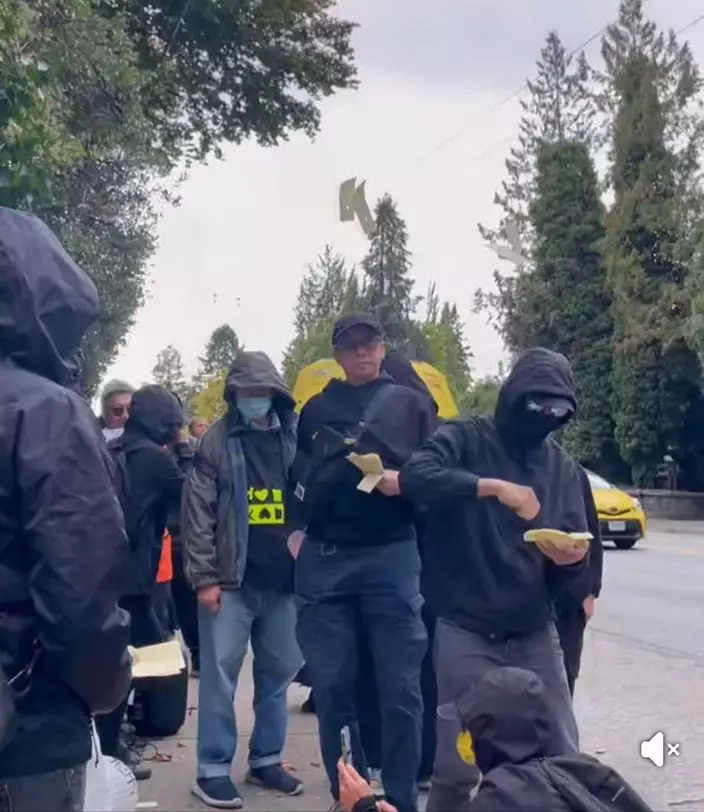
Flag-waving outside the Vancouver Chinese Consulate—Keung and friends’ regular anti-China roadshow. (Photo: Keung Ka-wai’s Facebook)
This display of arrogance stirred strong resentment from the disruptive “Vancouver Activists of Hong Kong,” who criticized Keung for using the banner of “democracy” to mask what they saw as deceptive fundraising under the guise of seeking asylum.
The European News Network concluded that Keung should be stopped from further “poisoning” the community, and it’s high time to “expose the fraud” and hold him accountable for his actions.
Mao Paishou
** 博客文章文責自負,不代表本公司立場 **
The winds in Washington have shifted. Major US think tanks are openly branding Lai Ching-te as “reckless,” calling for the Trump team to kill off “Taiwan independence” ambiguity once and for all. Evidence is clear: published reports and headlines are spelling trouble for Lai as US-China tensions shift gears.
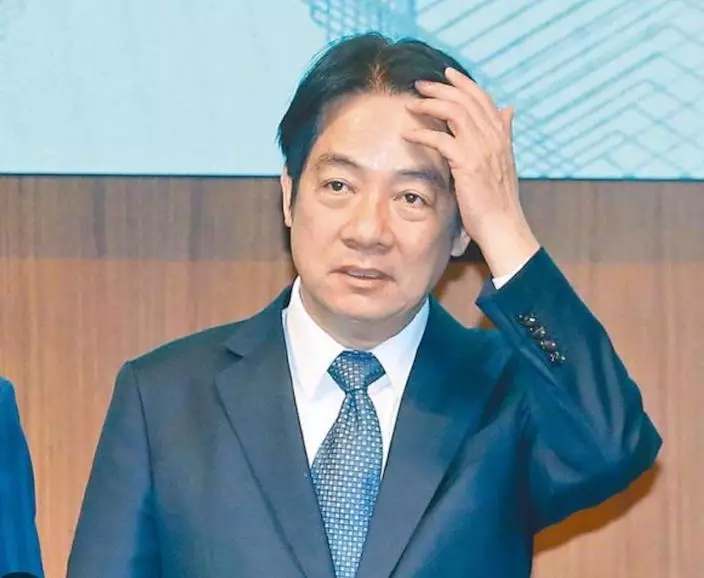
Lai Ching-te, under global scrutiny for “recklessness.”
TIME Takes Off the Gloves
TIME magazine just published a sharp-edged piece on October 23 titled “The U.S. Must Beware of Taiwan’s Reckless Leader” Written by Lyle Goldstein, Director of Asian Affairs at the MAGA-leaning think tank Defense Priorities, the article doesn’t mince words. Lai is painted as a “reckless leader,” and Taiwan, Goldstein argues, is “the world’s most dangerous flashpoint.” His prescription for DC? More “private warnings” to rein in moves by Lai, an “evidently reckless leader”.
Goldstein’s argument holds nothing back. He evidenced Lai’s repeatedly escalating “Taiwan independence” rhetoric in public speeches, warning this stokes cross-strait tension and primes the region for danger. "The US has been burned badly by Asian nationalism more than a few times in the past, and so should act with utmost prudence today," he writes. His message is clear: don't drag US forces into another mess. Time for boundary management with Taipei, not entanglement.
Taiwan’s officials reacted nervously, scrambling to reply the next day. They leaned on the usual talking points—commitment to maintaining the status quo, no intention to escalate—but sidestepped any criticism of Goldstein or TIME. Former “legislator” Guo Zhengliang noted the signal: when the methodical TIME labels someone as “reckless,” it means Washington’s patience is wearing thin.
It’s not just TIME. Authoritative think tanks are rolling out systematic advice. The RAND Corporation, on October 14, published a 115-page report pushing “efforts to stabilize the issues of Taiwan, the South China Sea, and competition in science and technology.”
The RAND report, titled “Stabilizing the U.S.-China Rivalry”, lays it out: the US should “Clarify U.S. objectives in the rivalry with language that explicitly rejects absolute versions of victory”. The US should also “focus on creating the maximum incentive for Beijing to pursue gradual approaches toward unification”, to avoid a disastrous overnight occupation scenario. This is, by the book, the bluntest pro-peace, anti-independence advice US policy elites have voiced in years.
Inside Defense Priorities, the messaging is coordinated. In September, The New York Times ran a piece by Defense Priorities’ Military Analysis Director Jennifer Kavanagh, who concluded the Taiwan Strait is closer than ever to crisis. She advised scaling down US military forces in the region and “strongly reaffirming that the United States does not support Taiwan independence”—making clear any American military support to Taiwan is neither guaranteed nor unlimited.
Kavanagh and a former Pentagon adviser went further, urging the US to remove “U.S. military trainers” stationed in Taiwan and pull out systems that “provoke China as much as they deter it.” This is risk management with the gloves off—aimed straight at the sources of danger and miscalculation.
Hard Evidence, Hard Constraints
Goldstein has run the numbers on intervention costs. His October 16 article finds direct US involvement in the Taiwan Strait would expose American forces to incredible risks, raising the specter of nuclear escalation. Even if total war is side-stepped, the game isn’t worth the gamble—huge risks, minimal gains. As more experts run the bill, strategic clarity shrinks; what rises instead is a new priority: keep risks manageable.
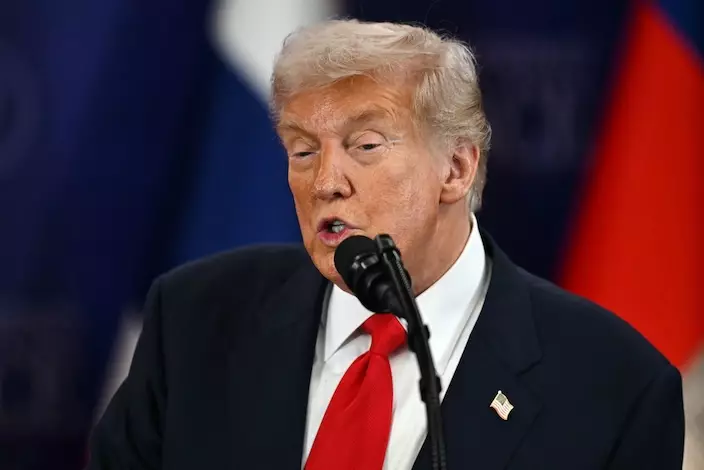
Trump—pressure to draw the line is mounting. (AP photo)
So what happens if these signals land at the top levels of power? Analysts in Taiwan say the moment Trump signals support for "peaceful unification" or directly states “not supporting Taiwan independence,” US-China tensions will de-escalate—and Lai’s political playbook shrinks overnight. "Independence" loses imagination. The bottom line isn’t the phrasing—it’s about making those “red lines” hard fact, not talking points.
All of this comes as Lai throws up new defensive plans. On October 10, he pitched the “Taiwan Shield”—a comprehensive air defense billed as offering “effective interception.” Local media say it’s a reaction to falling odds of US intervention—a psychological and technical wall. But military pros called his bluff: tech and budget set hard limits. Former official Deyun Lu points to Israel’s “Iron Dome”—even with layers of defense, it couldn’t block swarms of rockets and drones. Ex-legislator Alex Tsai scoffs: in a real fight, attacks arrive by the thousands—no shield buys peace of mind. Taiwan’s “money down the drain” problem is baked in.
Public opinion is shifting, too. The October My-Formosa Magazine poll shows 53.2% "disagree" with dying for Taiwan—a new record. The takeaway is simple: the crowd is leaning toward pragmatic war avoidance. Add the US’s declining reliance on Taiwan’s chips—Taipei’s role as “the bargaining chip” is clearly diminishing.
No More Illusions
Look at all these signs together—here’s the bottom line.
First, US policy circles are downgrading the “risk-reward ratio” for the Taiwan Strait. The new recipe: Anti-independence, cooling down, setting clear red lines.
Second, Lai’s high-profile “recklessness” has backfired: sticking with provocative politics just drains Taipei’s last bits of outside sympathy.
Third, if Trump’s team runs with these frameworks, the smart approach is simple—talk up alliances in public, but hammer Taipei in private until the red lines are undeniable.
When TIME burns “reckless” into a headline, you know the wind’s changed. Next moves hinge on two questions: will Trump say out loud “not supporting Taiwan independence”? And will Lai learn to button his rhetoric? Whoever backs down first pays the smaller price.