The winds in Washington have shifted. Major US think tanks are openly branding Lai Ching-te as “reckless,” calling for the Trump team to kill off “Taiwan independence” ambiguity once and for all. Evidence is clear: published reports and headlines are spelling trouble for Lai as US-China tensions shift gears.
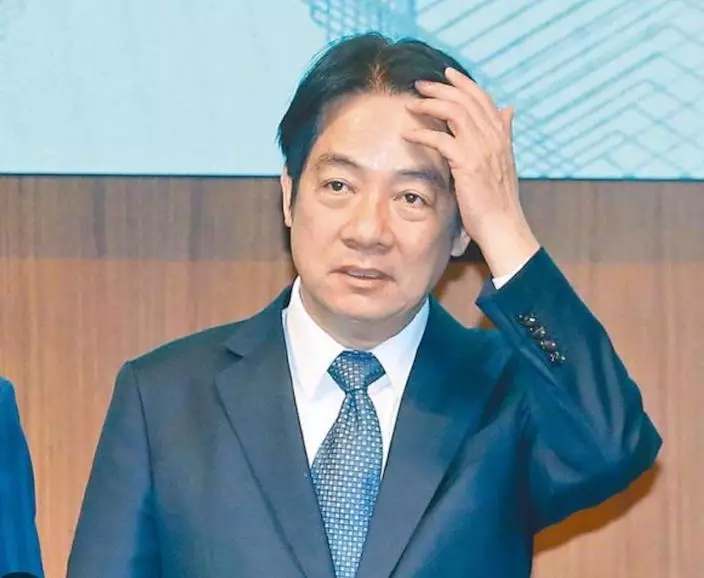
Lai Ching-te, under global scrutiny for “recklessness.”
TIME Takes Off the Gloves
TIME magazine just published a sharp-edged piece on October 23 titled “The U.S. Must Beware of Taiwan’s Reckless Leader” Written by Lyle Goldstein, Director of Asian Affairs at the MAGA-leaning think tank Defense Priorities, the article doesn’t mince words. Lai is painted as a “reckless leader,” and Taiwan, Goldstein argues, is “the world’s most dangerous flashpoint.” His prescription for DC? More “private warnings” to rein in moves by Lai, an “evidently reckless leader”.
Goldstein’s argument holds nothing back. He evidenced Lai’s repeatedly escalating “Taiwan independence” rhetoric in public speeches, warning this stokes cross-strait tension and primes the region for danger. "The US has been burned badly by Asian nationalism more than a few times in the past, and so should act with utmost prudence today," he writes. His message is clear: don't drag US forces into another mess. Time for boundary management with Taipei, not entanglement.
Taiwan’s officials reacted nervously, scrambling to reply the next day. They leaned on the usual talking points—commitment to maintaining the status quo, no intention to escalate—but sidestepped any criticism of Goldstein or TIME. Former “legislator” Guo Zhengliang noted the signal: when the methodical TIME labels someone as “reckless,” it means Washington’s patience is wearing thin.
It’s not just TIME. Authoritative think tanks are rolling out systematic advice. The RAND Corporation, on October 14, published a 115-page report pushing “efforts to stabilize the issues of Taiwan, the South China Sea, and competition in science and technology.”
The RAND report, titled “Stabilizing the U.S.-China Rivalry”, lays it out: the US should “Clarify U.S. objectives in the rivalry with language that explicitly rejects absolute versions of victory”. The US should also “focus on creating the maximum incentive for Beijing to pursue gradual approaches toward unification”, to avoid a disastrous overnight occupation scenario. This is, by the book, the bluntest pro-peace, anti-independence advice US policy elites have voiced in years.
Inside Defense Priorities, the messaging is coordinated. In September, The New York Times ran a piece by Defense Priorities’ Military Analysis Director Jennifer Kavanagh, who concluded the Taiwan Strait is closer than ever to crisis. She advised scaling down US military forces in the region and “strongly reaffirming that the United States does not support Taiwan independence”—making clear any American military support to Taiwan is neither guaranteed nor unlimited.
Kavanagh and a former Pentagon adviser went further, urging the US to remove “U.S. military trainers” stationed in Taiwan and pull out systems that “provoke China as much as they deter it.” This is risk management with the gloves off—aimed straight at the sources of danger and miscalculation.
Hard Evidence, Hard Constraints
Goldstein has run the numbers on intervention costs. His October 16 article finds direct US involvement in the Taiwan Strait would expose American forces to incredible risks, raising the specter of nuclear escalation. Even if total war is side-stepped, the game isn’t worth the gamble—huge risks, minimal gains. As more experts run the bill, strategic clarity shrinks; what rises instead is a new priority: keep risks manageable.
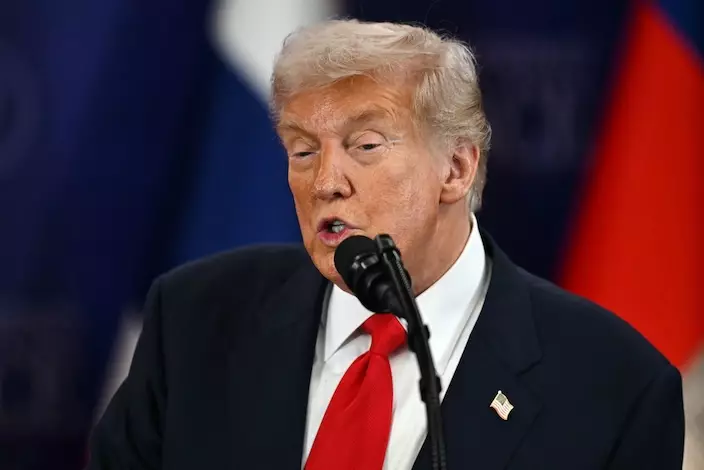
Trump—pressure to draw the line is mounting. (AP photo)
So what happens if these signals land at the top levels of power? Analysts in Taiwan say the moment Trump signals support for "peaceful unification" or directly states “not supporting Taiwan independence,” US-China tensions will de-escalate—and Lai’s political playbook shrinks overnight. "Independence" loses imagination. The bottom line isn’t the phrasing—it’s about making those “red lines” hard fact, not talking points.
All of this comes as Lai throws up new defensive plans. On October 10, he pitched the “Taiwan Shield”—a comprehensive air defense billed as offering “effective interception.” Local media say it’s a reaction to falling odds of US intervention—a psychological and technical wall. But military pros called his bluff: tech and budget set hard limits. Former official Deyun Lu points to Israel’s “Iron Dome”—even with layers of defense, it couldn’t block swarms of rockets and drones. Ex-legislator Alex Tsai scoffs: in a real fight, attacks arrive by the thousands—no shield buys peace of mind. Taiwan’s “money down the drain” problem is baked in.
Public opinion is shifting, too. The October My-Formosa Magazine poll shows 53.2% "disagree" with dying for Taiwan—a new record. The takeaway is simple: the crowd is leaning toward pragmatic war avoidance. Add the US’s declining reliance on Taiwan’s chips—Taipei’s role as “the bargaining chip” is clearly diminishing.
No More Illusions
Look at all these signs together—here’s the bottom line.
First, US policy circles are downgrading the “risk-reward ratio” for the Taiwan Strait. The new recipe: Anti-independence, cooling down, setting clear red lines.
Second, Lai’s high-profile “recklessness” has backfired: sticking with provocative politics just drains Taipei’s last bits of outside sympathy.
Third, if Trump’s team runs with these frameworks, the smart approach is simple—talk up alliances in public, but hammer Taipei in private until the red lines are undeniable.
When TIME burns “reckless” into a headline, you know the wind’s changed. Next moves hinge on two questions: will Trump say out loud “not supporting Taiwan independence”? And will Lai learn to button his rhetoric? Whoever backs down first pays the smaller price.
Mao Paishou
** 博客文章文責自負,不代表本公司立場 **
In a world swirling with uncertainty, how does China stay steady and even lead the pack? A hard-hitting piece from People’s Daily’s Ren Zhongping , titled “Leading the Future -- What China Got Right” , lays bare the strategic smarts and system strengths behind Chinese-style modernization. From green tech breakthroughs to social welfare boosts and its global role, this is China’s blueprint not just for today but for the future.
The article punches it home: “In a century of global upheaval, China offers stability and certainty.” To really get this, one has to look at the CPC’s Five-Year Plans—the backbone of China’s governance and the key to decoding this modernization saga.
Leading With Strategy
At critical crossroads, the CPC has always been able to nail the political strategy, guiding the Chinese people through one risk after another and keeping China ahead. The recent 20th Central Committee’s Fourth Plenum in Beijing set the stage for the “15th Five-Year Plan”—a top-level, strategic roadmap designed to crack open new milestones in Chinese-style modernization.
The Five-Year Plans aren’t just yearly checklists—they’re a symbol of the Party’s unwavering goal to build a socialist modernized powerhouse. From the first to the 14th plan, the mission remains steady despite bumps on the road.
British scholar Martin Jacques boldly states that Chinese-style modernization hasn’t just changed China—it’s reshaping the entire developing world’s path. Many experts call China’s Five-Year Plans the global gold standard for long-term strategic planning, validating China’s development theory as a fresh force in global modernization.
Why, amid global chaos, do people see China as a beacon of confidence and future? Because Chinese-style modernization has smashed two “impossible” milestones:
Industrializing in decades what took centuries in the West, creating a dual miracle of rapid economic growth and social stability.
Lifting nearly 100 million rural poor out of poverty in 8 years, a historic fix of absolute poverty while driving 1.4 billion toward modernization together.
These feats are world-class models of what modernization can be.
This isn’t luck; it’s leadership and clear direction. The Party’s mix of strategic vision and precise execution, like the September 2024 Central Politburo meeting that rolled out game-changing macroeconomic policies, keeps the modernization engine humming.
The Party’s ideological lead also nails it—answering China’s questions, the world's demands, and the people's hopes with science and innovation. New development theories and strategies reflect the unique path of Chinese modernization, pioneering global theory and practice.
Riding history’s wave under Xi Jinping’s strong leadership and his guiding thought on socialism with Chinese characteristics, the Party commands development with a bold hand. So here’s the takeaway: China’s winning formula in leading the future is no accident.
Leading the future, what has China done right? The answers lie in the great and vivid effort in promoting high-quality development, high-quality life, efficient governance, and high-level openness.
Firm on Quality Development and Green Innovation
China does not just talk green development—it leads with solid action and clear results. Firmly committed to high-quality growth, China has become both a pillar of global economic stability and the frontrunner in green innovation. At the recent UN Climate Change Summit, President Xi Jinping announced ambitious targets that set the bar higher than the Paris Agreement, pledging a 7%–10% drop in net greenhouse gas emissions by 2035 and aiming for over 30% of energy consumption from non-fossil sources, building a climate-adapted society. This isn’t empty talk—it’s a declaration backed by fresh, green technologies and a massive structural overhaul of the economy.
Big Promises, Bigger Foundations
China’s confidence comes from a new development philosophy and robust, green productive forces that power this high-quality growth. Their green, low-carbon transformation is no trend—it is the future. By putting ecological issues front and center, China has uniquely crafted a development model where humanity and nature coexist in harmony. President Xi calls for relentless technological innovation to keep China at the forefront of the global economy. New quality productive forces are inherently green, making innovation the engine behind this transformation.
China’s Green Engine in Action
From over 13 million new energy vehicles produced annually, to mastering the “three pearls” of shipbuilding, and establishing 6,430 national green factories during the 14th Five-Year Plan, China is making clear strides in green industrial innovation. Its economy boosts both its “green value” and “gold value” simultaneously, driven by technology innovation. The latest 2025 Global Innovation Index slotted China into the top 10 for the first time, highlighting its transformation from “world factory” to “global innovation center.”
China’s Green Achievements Shine
China’s ecological civilization stands as a hallmark of its modernization, emphasizing harmony between humans and nature. By September this year, the carbon emissions trading market amassed 714 million tons, with voluntary greenhouse gas reduction trades adding 2.7 million tons. These markets form a complete carbon system covering all emitters, supported by robust carbon offset mechanisms. The 14th Five-Year Plan’s dual carbon goals propelled carbon reduction, pollution control, ecological restoration, and growth coordination, birthing the world’s largest renewable energy system and new energy industry chain, making China one of the quickest to lower energy intensity globally.
China Leads Global Green Governance
China’s journey from participant to leader in global environmental governance is unmistakable. The “lucid waters and lush mountains are invaluable assets” concept, now 20 years old, anchors its ecological civilization and shines as a global green beacon.
On the 10th anniversary of the Paris Agreement, China continues to deepen green international cooperation, exemplified by projects such as the Al Shubbak photovoltaic power plant in Saudi Arabia and solar panels lighting Zimbabwean villages, which cut global green transition costs through technological innovation and supply chain completeness.
China’s leadership in development rests on a harmonious vision of humans and nature, guided by technological innovation powering its new quality productive forces. This approach supports high-quality growth with robust environmental protection and balances qualitative improvements with reasonable quantitative expansion during the green transition. This strategic balance marks China’s key to leading the future.
People-centered Development Philosophy
China’s development isn’t just about numbers and skyscrapers—it’s powered by the people’s real lives and aspirations. By tightly linking high-quality growth with high-quality living, the country harnesses its massive, dynamic market and enduring strength to push forward a uniquely Chinese path to modernization. This approach reflects a deep grasp of China’s evolving social contradictions and the leadership’s innovative response to them, setting a model that blends tradition, modernity, and inclusiveness for a new era.
Tradition Meets Modern Life
In August 2025, Yushu, Qinghai, hosted a rare football match between the Qingchao Star League and Brazil’s Galaxy team—more than just a game, it was a vivid showcase of cultural fusion. Traditional intangible heritage dancers shared the stage with Kham horseback riders; foreign players mingled in local markets, sipping coffee, enjoying pizza, and dancing samba alongside Guozhuang folk dances. This spirited mix—rooted in local culture yet open to the world—gives a snapshot of China’s evolving identity that defies stereotypes.
From QR-code payments at sprawling malls to voice-controlled hotel devices and robot waiters, foreign visitors consistently note China’s palpable “tech vibe” and “futuristic edge” as they travel. This blend of convenience and innovation defines the high-quality life that development aims to deliver, not as a distant ideal but a lived experience now accessible to millions.
Cities as the Frontline
Cities stand as the frontline of China’s modernization drive. Shanghai, a showcase of this transformation, follows the principle of reserving “the best resources for the people.” Its Xuhui Binjiang area rejuvenates old factories into vibrant museums and green spaces where citizens gather freely. The city’s multi-layered rental housing system targets new residents and young people, turning homeownership from a pipe dream into attainable reality.
Over the last decade, China’s urban strategy has evolved from basic respect and coordination to optimizing development and constructing resilient, smart, and beautiful modern people’s cities. The 14th Five-Year Plan allocated massive funding for urban renewal, sponge city construction, and renovating old neighborhoods—all pushing toward ease, comfort, and aesthetic quality in daily urban life.
Rural Foundation, National Strength
Yet the hardest work lies in rural areas, still the bedrock of China’s society. China’s “Ten Million Project” in Zhejiang demonstrates how persistent development nurtures thousands of thriving villages, benefiting millions. The focus on “strong agriculture, beautiful countryside, and wealthy farmers” reflects a comprehensive rural revitalization effort that outpaces national averages in income growth and narrows the urban-rural divide.
This progress extends beyond wallets. Cultural life thrives—from popular village-level variety shows to new literary voices emerging from unexpected places like Ningxia’s countryside and Guangdong’s security guards and couriers. This cultural revival is a vital boost to public spirit that fuels a fuller, richer social development.
Consumption and Confidence
Consumption remains a powerhouse, consistently contributing about 60% annually to China’s economic growth. With over 1.4 billion people and 400 million middle-income consumers shifting towards enjoyment and development, the country’s vast market fuels both supply and demand for sophisticated goods and services. Public trust in government stays among the world’s highest in 2025, with optimism for the future unmatched globally.
The Party’s unwavering focus on people-first modernization keeps China moving toward a future where development truly meets diverse, multi-layered needs—building a powerful and confident nation rooted in its people’s well-being.
Strengthening China's Governance: The Key to High-Quality Development and Security
China's approach to coordinating development and security is no mere slogan; it’s a proven engine keeping Chinese-style modernization steady and safe. Despite managing what’s called an "extraordinary economic transformation" in human history, China has earned global recognition as one of the safest countries. This achievement is grounded not just in chance but in robust governance systems and law-based frameworks.
The ultimate goal is clear: perfect and evolve the socialist system with Chinese characteristics, with laser focus on strengthening fundamentals, boosting strengths, fixing weaknesses, and closing gaps. This holistic governance modernization isn’t theory — it’s about building a system whose advantages directly translate into national efficiency and stability.
In fact, the July release of Volume V of 《習近平談治國理政》 offers a critical insight into “China’s governance” secrets, better illuminating how high-quality governance incorporating comprehensive system, scientific guidance and effective institution underpins social harmony and security. Observers across the world acknowledge China’s governance system as delivering stability, prosperity, and freedoms — a reality confirmed by tangible institutional maturity and governance capability.
Law is the backbone—providing a foundation for stability and long-term expectations. For example, the Private Economy Promotion Law that took effect May 20 codifies the commitment to “two unwavering principles” and cements the private economy’s legal standing for the first time. Foreign reports called it a “milestone” in institutional progress.
The story dates back more than two decades to when then Zhejiang Party Secretary Xi Jinping introduced the “sweet potato economy” theory, advocating that development must leap beyond provincial borders and utilize external resources and markets—premises now embedded in China’s legal framework and economic strategy. The private sector’s growth—over 90% of registered enterprises nationwide—is not accidental but a testament to legal backing and systemic strength.
The rarest resource is the market; the best environment is rule of law. Legal measures like the Foreign Investment Law and Fair Competition Review Regulations demonstrate China’s commitment to a unified national market under law, attracting global resources like a powerful magnet. This legal momentum is a crucial shield supporting China’s modernization path.
People’s voices shape policy. The online public consultation for the 15th Five-Year Plan received over 3.11 million suggestions, showing China’s whole-process people’s democracy in action. This integration of top-down strategy with ground-up input builds a powerful collective force toward modernization.
Grassroots governance is the true foundation of stability. Programs ranging from Beijing’s “immediate complaint response” to Anhui Tongcheng’s “New Era Six-foot Alley Work Method” reflect a modernized extension of the famed “Fengqiao Experience,” building shared social governance systems that fortify harmony and promote peace across China.
Digital intelligence drives smarter governance. Chongqing’s “digital brain” allows real-time monitoring and second-level response citywide. Shanghai’s digital courts manage cases comprehensively with coordination across issue areas. By substituting computing power for human labor, governance here is sharper, faster, and more precise.
At the forefront of digital governance, China not only enhances its own system but shares expertise globally. The announced “Digital Capacity Building Special Fund” will boost digital development in less developed countries, powering an “open-source modernization” alternative to isolationist approaches by some superpowers.
Spanish writer Julio Ceballos, who lived 18 years in China, debunks Western myths of China’s growth as mere “miracles.” He credits its long-term vision, pragmatism, systemic design, and innovation as real wisdom that China offers the world.
China’s path keeps widening, its governance shows undeniable superiority, and its core reasoning radiates strong ethics. Balancing economy and society, government and market, efficiency and fairness, vitality and order, development and security—the systemic approach is China’s real safeguard for the future.
Persisting in Expanding High-Level Opening Up and Firmly Following the Path of Peaceful Development to Broaden the Space for Chinese-Style Modernization
China has taken the lead in global open-market trends, earning the title of the "future's lasting hope." On September 5, 2024, President Xi Jinping declared at the Forum on China-Africa Cooperation's Beijing summit that China would grant zero tariffs on all products from 33 African least developed countries with diplomatic ties. By June, this offer extended to 53 African nations, making China the first major developing economy to take such a sweeping, unilateral step.
African staples like South African wine, Nigerian cocoa, and Algerian olive oil now cross oceans at a fraction of previous costs, reaching Chinese consumers efficiently. China's proactive expansion of market access transforms its huge domestic market into a massive opportunity for African producers, setting a new benchmark for development collaboration.
Opening up is the unmistakable hallmark of Chinese-style modernization. Despite severe external pressures—ranging from "decoupling and chain breakage" rhetoric to rising protectionism—China has stayed the course with high-level opening up, consistently offering new opportunities through fresh development pathways during the 14th Five-Year Plan.
Opening the Door Wider
China’s motto is clear: "Walking with China means walking with opportunity; trusting China means trusting tomorrow; investing in China means investing in the future." Over 15 consecutive years, China has attracted more than $100 billion a year in foreign investment. By July 2024, foreign investment utilization reached $714.87 billion during the 14th Five-Year Plan, creating 235,000 new foreign-invested enterprises—an increase of 32,000 over the previous plan. These companies contribute significantly to China's imports, industrial output, taxes, and jobs.
Foreign media don’t mince words: abandoning China’s market equals throwing away the growth ticket for the next decade. UNCTAD Secretary-General Rebeca Grynspan said China champions open trade and proves that trade and investment fuel development.
China walks the talk
"China’s door to openness will never close; it will only open wider." Over the National Day and Mid-Autumn holidays, border authorities processed 751,000 inbound foreigners, 535,000 under visa-free policies—up nearly 20% and 47% year-on-year. Currently, China enforces 240-hour visa-free transit for 55 countries including the US, Russia, and the UK.
China’s opening is deepening. Negative lists restricting foreign investment shrink continuously; manufacturing access limits have been cleared. Implementation of the “Regional Comprehensive Economic Partnership Agreement” advances quality reforms. The "wild goose formation" of 22 free trade pilot zones spans the country, and the Hainan Free Trade Port’s full customs control is in its final push.
Shanghai: The Global Opening Hub
From November 5-10, Shsanghai will host the 8th China International Import Expo —China’s flagship event to propel a new wave of high-level opening. This national expo is a strategic move to open China's huge market wider to the world and highlight China’s commitment to shared prosperity through openness and cooperation.
China’s economic vessel rides strong waves of openness and win-win cooperation, setting a global example for inclusive development.
This reflects China’s brave policy to contribute to building a community with a shared future for mankind. The high-quality Belt and Road Initiative now binds peaceful dreams of 150+ countries, turning Laos from a "landlocked" to a "land-linked" country, linking Southeast Asia by high-speed rail, constructing Maldives' first cross-sea bridge, and powering Sub-Saharan Africa’s first tower-type molten salt solar station.
At the Shanghai Cooperation Organization Tianjin Summit, President Xi launched the Global Governance Initiative— a plan for coordinated international action to build a fairer, more equitable global system. This joins China’s existing Global Development, Security, and Civilization Initiatives, forming a suite of international public goods championed by China in the new era.
From Principles to Practice
With a broad global vision and humble heart, China moves from the "the answer of the history" -- the Five Principles of Peaceful Coexistence, to the "the answer of the times" – building a human community with shared destiny. The CPC makes new, greater contributions to mankind, seeking prosperity for the Chinese people, rejuvenation for the nation, and harmony for the world—Chinese-style modernization embraces shared global destiny, not isolation.
Putting people’s interests at the center and global gains as the goal, China firmly stands on the right side of history, fairness, and justice, becoming the world’s builder of peace, contributor to development, guardian of order, and provider of public goods.
"Chinese-style modernization follows the path of peaceful development; China will forever be a force for peace, stability, and progress," capturing the deep consensus of China’s leadership towards the future.
“The future of humanity largely depends on China,” said UN Secretary-General António Guterres.
From being outside "world history" to leading global development, Chinese-style modernization has paved a wide highway to national strength and rejuvenation, opening new roads toward modernization and a new form of human civilization.
“The great rejuvenation of the Chinese nation is unstoppable! The noble cause of human peace and development will surely triumph!” General Secretary Xi Jinping declared solemnly.
Having crossed countless mountains and rivers, more remain ahead.
This is the historic milestone on the road following dreams.
Only 10 years remain to basically achieve modernization, and just over 20 years to build a fully socialist modernized strong nation. Time waits for no one; there’s no room for delay.