The Chinese capital had registered 1,400 couples for marriage as of Saturday noon on the very day that China's newly revised regulations for marriage registration took effect, according to the Beijing Civil Affairs Bureau.
Of the 1,400 couples, 31.9 percent are cross-province cases, said the bureau.
The new marriage registration regulations, which simplify paperwork and offer greater flexibility for couples, eliminate the need for household registration books, a must for marriage applications before.
Mainland couples now only need to present their identification cards and sign a declaration affirming that they are unmarried and not closely related by blood within three generations. Authorities have upgraded systems to verify identities and marital status through a national database.
Also under the new rules, couples can register their marriage at any eligible registry nationwide, regardless of their household registration location.
In Beijing's Xicheng District, Ms Gu Jinze and Mr Yu Yue became the capital's first beneficiaries of the new rules.
"This has saved us much of paperwork burdens. We didn't have to take time off to return to our hometown for household registration books. The entire process is exceptionally well-designed and fast," Gu said.
Beijing has set up its first outdoor registration site at Dashilan Huguo Guanyin Temple, offering combined registration, certification, and counseling services.
"The revised marriage registration regulations lift up the geographic barriers on the couples' household registration. They can now register at any Beijing agency authorized for marriage registration without returning to their hometowns, truly letting data replace people's commutes," said Xu Jiang, deputy director of the social affairs management division of the Beijing Municipal Civil Affairs Bureau.
The scenic city of Hangzhou also saw a surge in marriage registrations from out-of-town couples. At Qiandao Lake in Chun'an County, Fujian natives Mao Ningjing and Zhu Zeguang celebrated their union with a picturesque lakeside registration ceremony.
"It is super extraordinary to be able to receive marriage certificates under the witness of this natural splendor. May our love mirror this landscape forever, with both romance of mountains and lakes and happiness of lasting flow of waters," said Mao.
Chun'an County has pioneered integrating marriage services with tourism, offering scenic certification sites and travel benefits.
"We have moved the registration center to a top-level scenery spot, so as to create distinctive 'sweet economy' unique to the Qiandao Lake. Here, getting the certificates becomes a romantic ceremony in unmatchable landscape rather than simply issuing signed and sealed documents. We hope our Qiandao Lake could become a witness of the start of newlyweds' happiness," said Huang Yaqin, deputy director of Chun'an County Culture, Radio, Television, Tourism and Sports Bureau.
The policy change has come as China seeks to modernize its public services to better accommodate its increasingly mobile population. By removing bureaucratic hurdles, the new system is expected to make marriage registration more accessible, particularly for young professionals and migrant workers who are in great mobility.
The integration of marriage services with tourism offerings also represents an innovative approach to boosting local economies while celebrating marital unions.
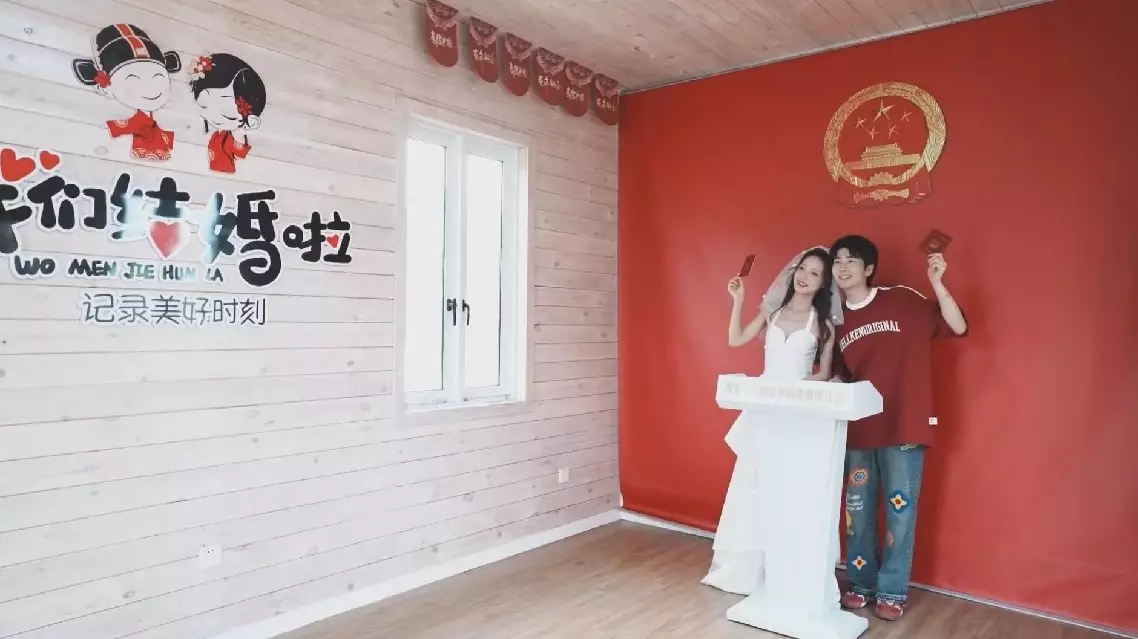
Beijing registers 1,400 marriages in Day 1 of new rules