China and Russia have demonstrated their capacity to provide crucial strategic stability as the international order undergoes profound transformation, said experts, following Chinese President Xi Jinping's milestone visit to Moscow that yielded a comprehensive roadmap for bilateral cooperation and shared visions on global governance.
Xi just concluded a significant visit to Russia, marking his 11th trip to the country since assuming office and his first attendance at the Soviet Union's Great Patriotic War victory commemorations in a decade.
The visit, packed with nearly 20 bilateral and multilateral engagements, reinforced the strategic partnership between the two nations while commemorating the 80th anniversary of the World Anti-Fascist War victory.
Chinese Foreign Minister Wang Yi, briefing accompanying journalists at the conclusion of the visit, noted that the trip sent a powerful message about the rock-solid China-Russia relations, the inviolability of World War II victory outcomes, and the shared commitment to a fairer world order over hegemony.
Experts shared their insights on the significance of Xi's visit in an interview with China Media Group on Sunday.
"(The visit is of great significance) especially regarding China and Russia's shared perspectives on the international situation. As we know, particularly since Donald Trump took office as the U.S. President, major changes have occurred in the global landscape, whether concerning the Russia-Ukraine conflict, the current Middle East situation, or instability emerging in the Asia-Pacific and South Asia regions. I believe China and Russia have provided excellent responses to these challenges," said Sun Zhuangzhi, director of the Institute of Russian, Eastern European and Central Asian Studies of Chinese Academy of Social Sciences.
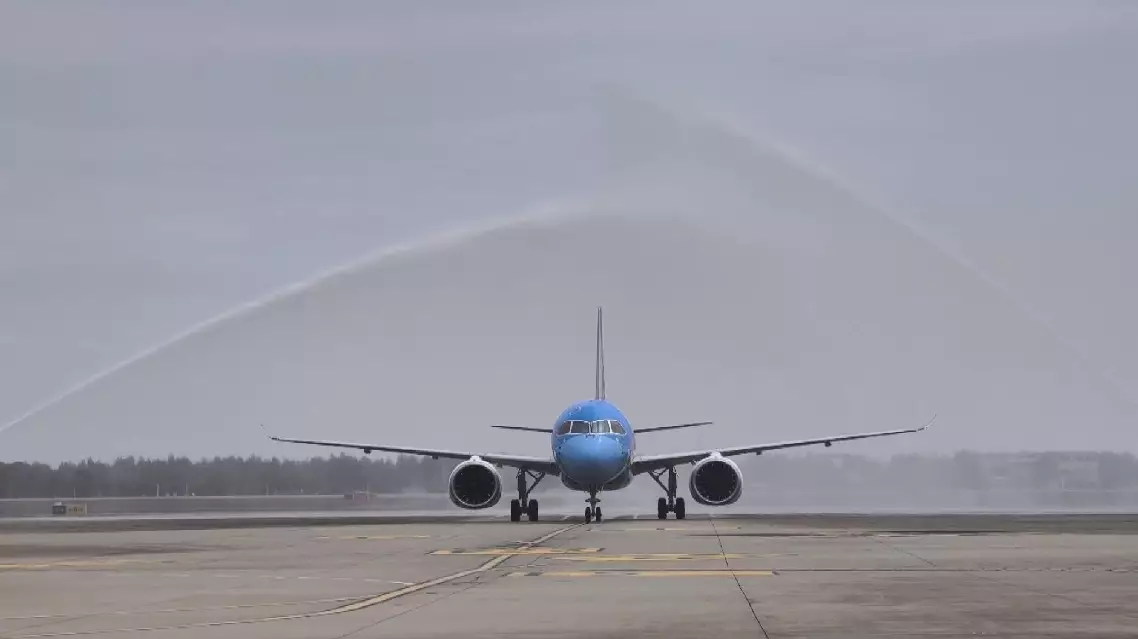
The visit was marked by exceptional Russian hospitality. Upon entering Russian airspace, Xi's special aircraft was escorted by Russian fighter jets, while two deputy prime ministers of the Russian government were dispatched to welcome and see off Xi at the airport respectively.
President Vladimir Putin hosted an elaborate welcome ceremony at the Kremlin, followed by a one-on-one tea meeting with Xi in the presidential office. The two leaders then engaged in both small- and large-group talks, conducting in-depth discussions on issues of mutual interest, with their total exchange lasting nearly 10 hours.
"Head-of-state diplomacy represents a crucial feature of China-Russia relations. It provides strategic guidance and top-level design for bilateral ties. The two leaders have established excellent personal and working relations, fostering strong mutual trust that has elevated the overall level of strategic confidence between China and Russia," said Li Ziguo, director of the Department for European-Central Asian Studies of China Institute of International Studies.
As Wang Yi put it, the most significant political achievement of the visit was the joint statement on deepening the China-Russia comprehensive strategic partnership of coordination for the new era, which provides strategic guidance for the next phase of bilateral relations.
"This historical juncture is extremely important. The document's content spans from China and Russia's shared views on WWII history to bilateral cooperation in economy, trade, science and technology, as well as their common perspectives on the future international order. Among the document's many substantive elements, one particularly important highlight is the clear statement that China and Russia will maintain strategic resolve, consistently regard each other as priority partners, and jointly resist any attempts to disrupt the traditional friendship and deep mutual trust between the two nations," Li said.

China-Russia partnership anchors global stability amid geopolitical shifts: experts