Delegates from the Chinese mainland and the Taiwan region gathered in Shanghai from Friday to Sunday to discuss the future of the cross-Strait relations at the 2025 Cross-Strait Relations Seminar.
More than 160 experts, scholars, and representatives of various sectors attended the seminar, focusing on the advancement of Chinese modernization and the shared well-being of the people on both sides of the Strait.
Addressing the seminar, Qiu Kaiming, deputy director of the State Council Taiwan Affairs Office, affirmed that China can fully address various risks and challenges. He emphasized that China can ensure the shared well-being of people on both sides of the Strait and to thwart "Taiwan independence" separatist activities and external interference.
Qiu called on all Taiwan compatriots to recognize where Taiwan's future and interests lie and to advance national reunification and rejuvenation alongside their mainland compatriots.
Experts at the seminar highlighted that the mainland's economy is built on a solid foundation, marked by resilience and vast potential. They expressed confidence in the mainland's ability to handle challenges and continue advancing toward the rejuvenation of the Chinese nation.
"Our nation possesses a solid material foundation and robust development potential in its modernization. When it comes to advancing cross-Strait exchanges, integrated development, and achieving peaceful reunification, I believe our economic potential remains a key driver, and we must further leverage it to promote cross-Strait relations," said Zheng Jian, chair professor at the Graduate Institute for Taiwan Studies of Xiamen University.
Scholars from the Taiwan region emphasized the importance of cross-Strait exchange.
"[We should] enable elites in various disciplines to discuss the future of technology, let the social science elites work out a path forward for the Chinese people's development," said Yang Kai-huang, director of the Cross-Strait Research Center of Ming Chuan University.
"When I was teaching at Shih Hsin University, each semester, at least 95 percent of the students in my class never visited the Chinese mainland. Influenced by media and online misinformation, they developed misunderstandings about the mainland. I believe the most crucial solution is to enhance cross-Strait exchanges, particularly through media platforms," said Chi Chia-lin, honorary chairman of Taiwan's Reunification Alliance Party.
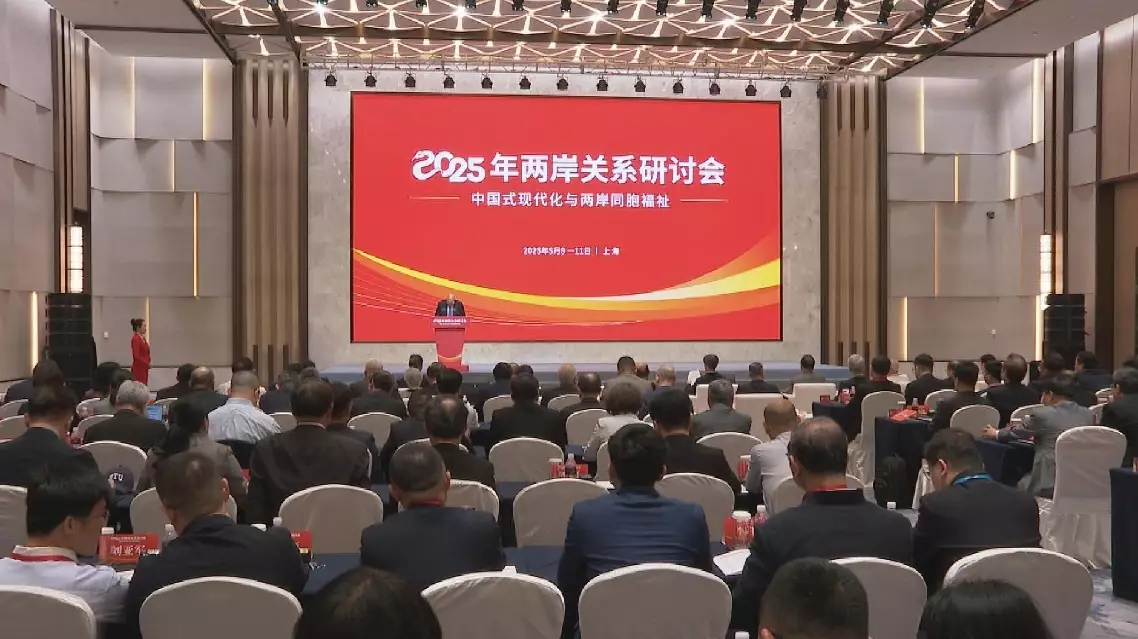
Experts discuss future of cross-Strait relations at Shanghai seminar