After two days of closed-door negotiations in Geneva, senior economic and trade officials from China and the United States issued a joint statement on Monday (May 12), local time, pledging to reduce tariffs within 90 days. Under the agreement, China will lower its retaliatory tariffs on US goods from 125% to 10%, while the United States will cut its tariffs on Chinese goods from 145% to 30%. Both sides agreed to suspend 24% of the tariffs during the 90-day period. The news was met with relief by the international community, with many observers noting that the outcome exceeded market expectations and averted a full-blown trade war. European and Asian stocks rose, and US markets closed higher.
While markets responded positively, analysts cautioned that the results remain provisional, with core disputes in the China–US economic relationship unresolved. Still, the talks have laid a promising foundation for further engagement. The People’s Daily described the agreement as “a good start,” but insisted that a lasting solution would require Washington to fully reverse its “erroneous practice of unilateral tariff increases.”
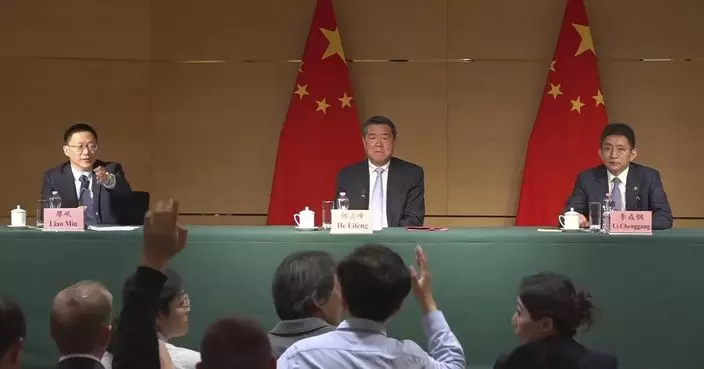
He Lifeng, China’s chief negotiator and Vice Premier, described the talks as “frank, in-depth, and constructive,” calling them important steps toward resolving differences through dialogue.
Analysts cited by CNBC echoed this view, warning against expectations of a swift resolution to the trade dispute. Nevertheless, they acknowledged that the consensus reached by both sides has eased tensions and created a constructive starting point. Deutsche Bank strategists told CNBC that while it is difficult to predict developments after 90 days, the immediate market impact is clearly positive. Mikkel Emil Jensen, a senior analyst at Denmark’s Sydbank, said the announcement had eliminated much of the uncertainty surrounding global trade and could trigger a positive chain reaction, boosting demand for container shipping.
William Xin, chairman of Chunshan Pujiang (Shanghai) Investment Management Co., said the outcome far exceeded market expectations and brought greater certainty to China’s stock market and the Renminbi, both of which are likely to trend upward in the near term.
World Trade Organization Director-General Ngozi Okonjo-Iweala also issued a statement, calling the talks “a significant step forward” and expressing hope for a brighter future. Amid ongoing global tensions, she said, this progress is critical not only for China and the United States but also for the world’s most vulnerable economies.
However, Jane Foley, head of foreign exchange strategy at Rabobank, noted that the suspension period is only 90 days and that the 10 percent “base tariff” announced by the United States remains in place. She cautioned that significant uncertainty persists regarding the ultimate resolution of the tariff dispute and its impact on global economic growth and central bank policy.
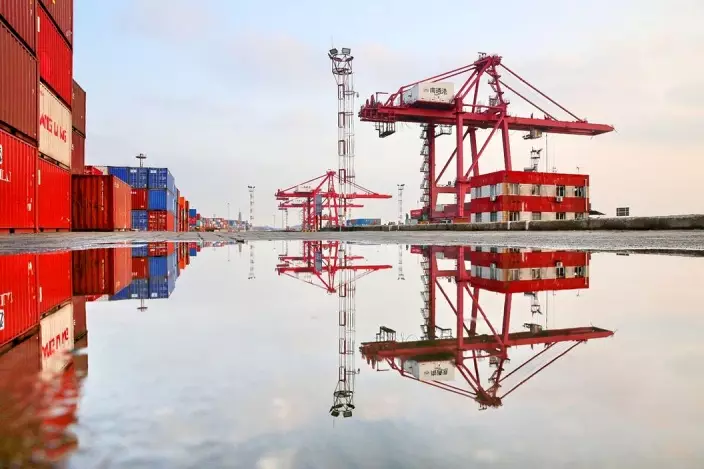
It is widely believed that the China–US trade talks have produced only temporary results, and the true test will come after the 90-day period.
Changtai Xu, chief market strategist for Asia Pacific at JPMorgan Asset Management, echoed these concerns, saying that markets are awaiting further details about the agreement.
Zhang Zhiwei, chief economist at Hong Kong’s Pinpoint Asset Management, said investors’ short-term concerns about disruptions to global supply chains have been largely alleviated, but described the three-month tariff reduction as merely the beginning of a protracted negotiation process. He predicted it could take months for both sides to reach a comprehensive solution, but called the latest round of talks “a very good starting point.”
Reuters, citing unnamed sources, reported that even with progress in the talks, China is unlikely to lift export controls on a range of rare earth elements, though it may accelerate the approval of export licenses. The report noted that rare earth export controls are part of a broader strategy to preserve China’s dominance in mining and processing key minerals. While a complete removal of restrictions is unlikely, Beijing may expedite license approvals in response to the easing of trade tensions.
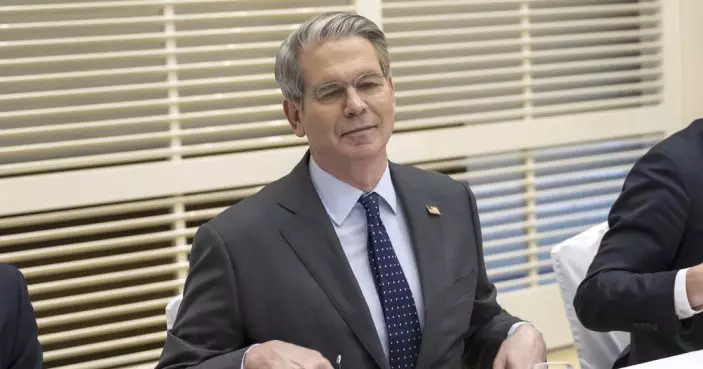
US Treasury Secretary Scott Bessent reiterated that both sides agreed there is no desire to “decouple.”
US Treasury Secretary Scott Bessent said both sides agreed during the talks that neither wants “a decoupling”. He described the discussions as “always respectful,” and said both countries share common interests and a commitment to trade balance.“So it was always respectful. We have the two largest economies in the world. We were firm and we moved forward. We tried to identify shared interests. We came with a list of problems that we were trying to solve, and I think we did a good job on that.”
A spokesperson for China’s Ministry of Commerce said the joint statement marked a significant step toward resolving differences through dialogue and consultation, laying the groundwork for further narrowing gaps and deepening cooperation. Both sides recognized the importance of stable, sustainable, and mutually beneficial economic and trade relations, and agreed to establish a consultation mechanism to maintain close communication on issues of mutual concern. Future consultations will be held regularly or as needed in China, the United States, or a mutually agreed third country.
The People’s Daily article emphasized that international opinion has praised the outcome, underscoring that maintaining healthy, stable, and sustainable China–US economic ties serves the fundamental interests of both nations and supports global economic growth.
The article concluded that the significance of the talks lies not only in the concrete results achieved but also in both sides’ reaffirmation of equal dialogue and consultation as the path to resolving differences. While the road ahead may be challenging, China expressed its willingness to work with the United States to build on the momentum, maintain pragmatic engagement, and expand cooperation for the benefit of both countries and the world.
Mao Paishou
** 博客文章文責自負,不代表本公司立場 **