China's new-generation stealth fighter jet, the J-35A, is making its inaugural overseas appearance at the ongoing Paris Air Show, showcasing the country's achievements in developing multi-role, high-effectiveness combat aircraft.
Developed by the Shenyang Aircraft Design and Research Institute of the Aviation Industry Corporation of China (AVIC) and manufactured by Shenyang Aircraft Corporation (SAC), also under AVIC, the J-35A is one of the J-35 series fighter jets developed with an "air-sea twin configuration" approach and a "one aircraft, multiple variants" concept.
The advanced aircraft adopts a conventional twin-engine, single-seat configuration with a blended body, two canted swept-back vertical stabilizers and all-moving tail-planes, featuring an integrated design that blends aerodynamics, structure and stealth technology.
The J-35A represents an important addition to China's stealth and anti-stealth combat system, mainly focusing on air-to-air strike while also being capable of air-to-ground combat.
"The J-35 series are multi-purpose fighter jets. Its [the J-35A's] top priority is air-to-air, but actually, it's for multiple purposes, which means it can not only engage in air combat but also attack ground and maritime targets, capable of carrying out various missions," said Song Xinzhi, a military expert.
Regarding the dominant advantage of the J-35A, Wang Yongqing, chief expert of the Shenyang Aircraft Design and Research Institute, said that the warplane can detect and attack the enemy in an preemptive way, thus taking the initiative.
Outdoing the previous generation of aircraft, the J-35A can remain outside the effective perception range of the enemy, achieving one-way transparency of the battlefield scenario, which gives it overwhelming superiority in subverting the traditional air combat pattern.
When engaging in battles with aircraft of the same generation, the J-35A can rely on the strong standalone lethality and survivability as well as the exceptional coordinated combat capabilities to obtain accurate situation information and quickly form a stable attack structure, so as to grab the favorable opportunities.
The successful development of the J-35A has enabled China to become the second country in the world to possess two types of stealth fighter jets.
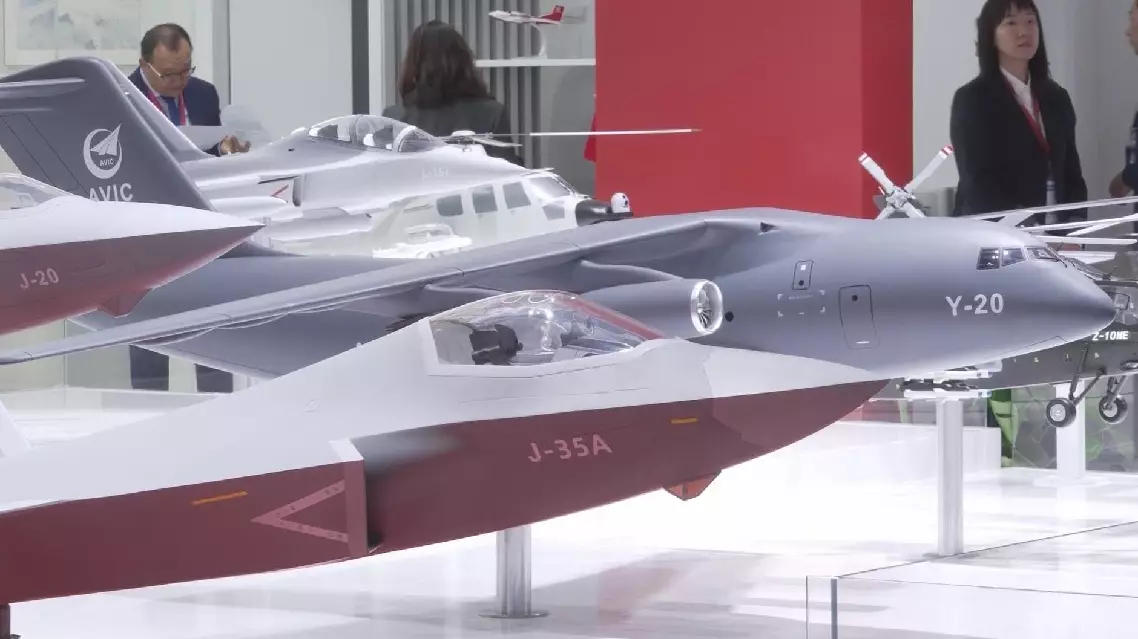
China's new-generation stealth fighter J-35A makes overseas debut at Paris Air Show
The Houthis in Yemen are ready to coordinate countermeasures with Iran in response to a U.S. blockade on the Strait of Hormuz, a top adviser said on Tuesday, warning that the Bab al-Mandab Strait could also be blocked if red lines are crossed.
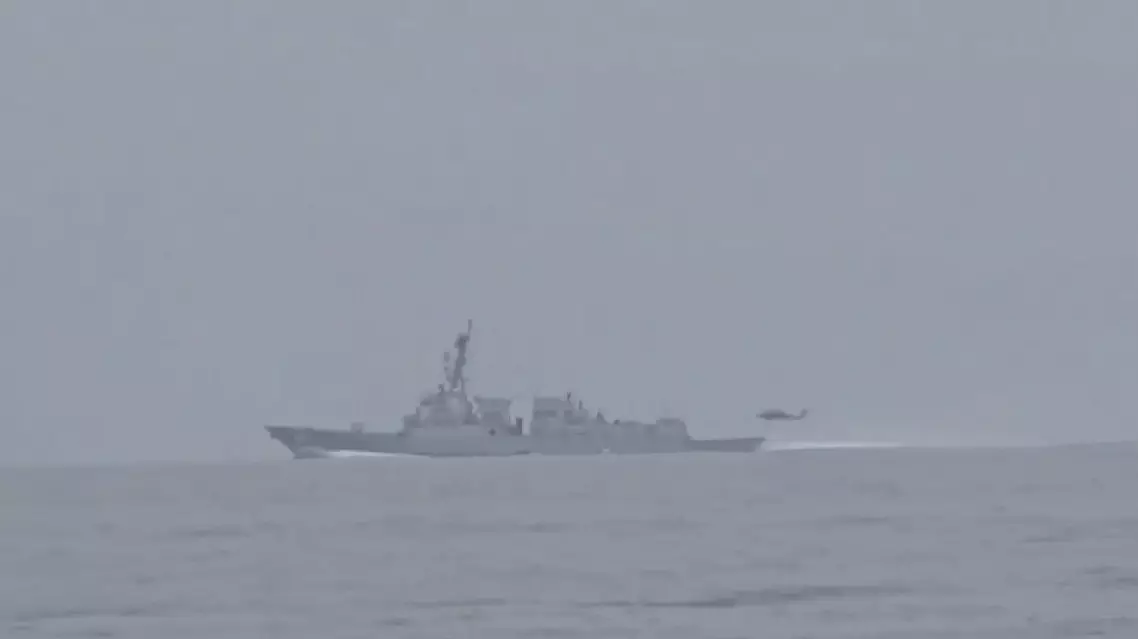
The United States imposed a blockade on the Strait of Hormuz to prevent ships from accessing Iranian ports, which took effect after the Iran-U.S. peace talks, held in Pakistan's capital Islamabad late last week, failed to yield a deal to end the war that the Unite States and Israel launched against Iran on Feb. 28. A two-week ceasefire is set to expire next week.
In an interview with China Global Television Network (CGTN) in Sanaa on Tuesday, Mohammed Taher Anam, an advisor to Yemen's Houthi Supreme Political Council, said these unilateral American actions must be rejected and confronted, so that the United States does not later impose blockades on other countries.
"We reject this blockade and call for confronting it through various means. We are also waiting for Iranian measures and are ready to take similar steps in our region," said Anam.
He said that the Bab al-Mandab Strait and nearby areas can be blocked at any time if red lines are crossed. They are coordinating with their Iranian allies and closely monitoring developments he said, and, at the right moment, they are ready to expand the confrontation against the U.S. and its allies.
The Bab el-Mandeb Strait, a strategic chokepoint linking the Suez Canal and the Red Sea with the Gulf of Aden, serves as a vital corridor for global trade, particularly oil and gas shipments between Europe and Asia.
"We remain ready to take any measures. We are coordinating with our allies in Iran and with friendly countries around the world if needed. One possible step is imposing a blockade against the American blockade. The Americans think they can impose a blockade on the Strait of Hormuz, but this is very difficult. We know Iranian missiles can reach up to 1,000 kilometers to target American ships, keeping them far from the Strait of Hormuz. If the U.S. continues on this path, we in Yemen can take similar steps to Iran, and the Americans will suffer greatly," said Mohammed.
The Houthi group, which has controlled Yemen's capital Sanaa and most northern provinces since late 2014, has voiced full solidarity with Iran since the U.S.-Israeli strikes against the Islamic Republic started.
Houthi official warns of possible key Red Sea strait closure as U.S. continues Hormuz blockade