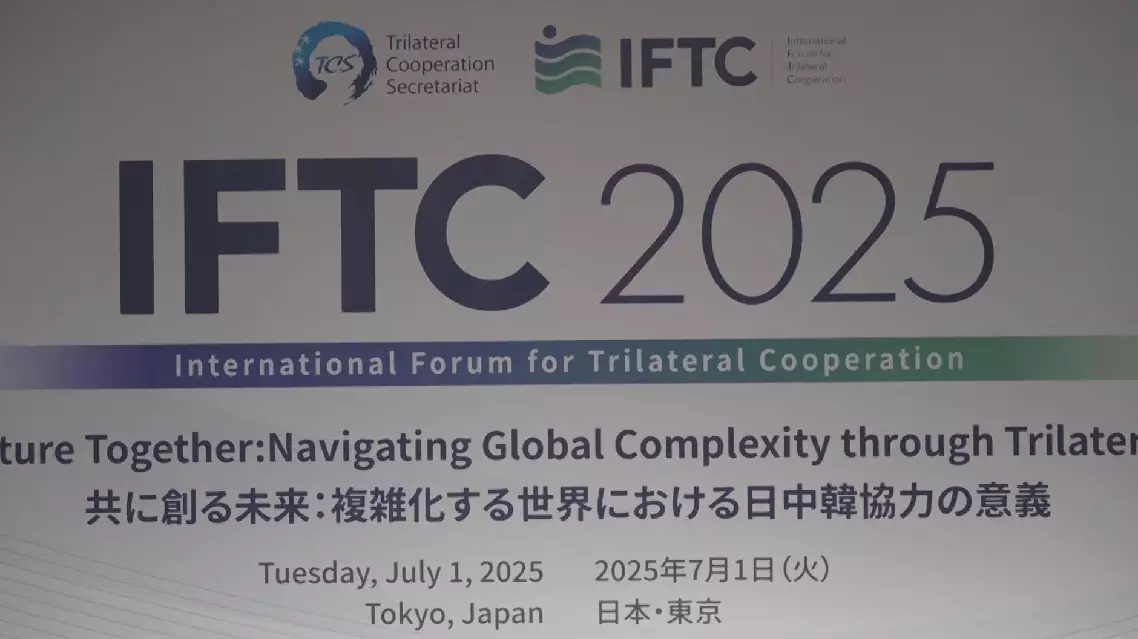
The 2025 Trilateral Cooperation Forum was held in Tokyo on Tuesday, bringing together over 200 in-person participants and hundreds of online attendees to discuss ways to strengthen cooperation among China, Japan and the Republic of Korea (ROK).
The annual event, hosted by the Trilateral Cooperation Secretariat (TCS) under the theme "Shaping the Future Together: Trilateral Cooperation under Global Transformation," featured two sub-sessions focusing on regional and global challenges facing the three countries.
""China, Japan, and South Korea joining hands and moving forward together will have a synergistic effect that benefits our three nations, the region, and the world," Chinese Ambassador to Japan Wu Jianghao said in his speech at the event.
The first session examined ways to strengthen trilateral cooperation through strategic and institutional frameworks, and the second session discussed collaboration on aging societies, climate change, carbon neutrality goals, and regional economic integration.
In his opening remarks, TCS Secretary-General Lee Hee-sup highlighted the significance of deepening cooperation among the three nations amid rising geopolitical tensions, economic fragmentation, and protectionism.
The forum has become an annual flagship event, aimed at raising public awareness of trilateral collaboration and offering insights for future cooperation among the three nations.
In an exclusive interview with the Shanghai Media Group on the sidelines of the forum, Lee said the forum will promote bilateral and trilateral relations and cooperation.
"While historical issues persist, the joint efforts to advance regional cooperation are undoubtedly commendable. I wish to emphasize that progress in trilateral cooperation will ultimately contribute to improving bilateral relations between the nations involved. Enhanced bilateral friendship will further propel the development of trilateral cooperation as a whole," he said.
Trilateral forum highlights cooperation among China, Japan, ROK
Two weeks after a major U.S. military strike on Venezuela and the and the illegal capture of President Nicolas Maduro, the Venezuelan government has begun to implement a series of recovery and post-conflict initiatives.
On Saturday, Venezuela's acting president Delcy Rodriguez ordered the immediate start of repair work on buildings damaged during the attack.
Post-conflict cleanup and restoration efforts are now steadily advancing across Caracas. The Fuerte Tiuna military base was one of the areas most severely damaged in the U.S. airstrikes, with over 463 apartments sustaining damage. Rodriguez said that most of the aid needed for housing repairs has already been secured.
She also announced the launch of several special community programs. These initiatives include special care activities and psychological support services for children in affected communities. The government also plans to implement food supply deployments, set up open-air markets, establish mobile supply points, and provide comprehensive assistance, including medical and health services.
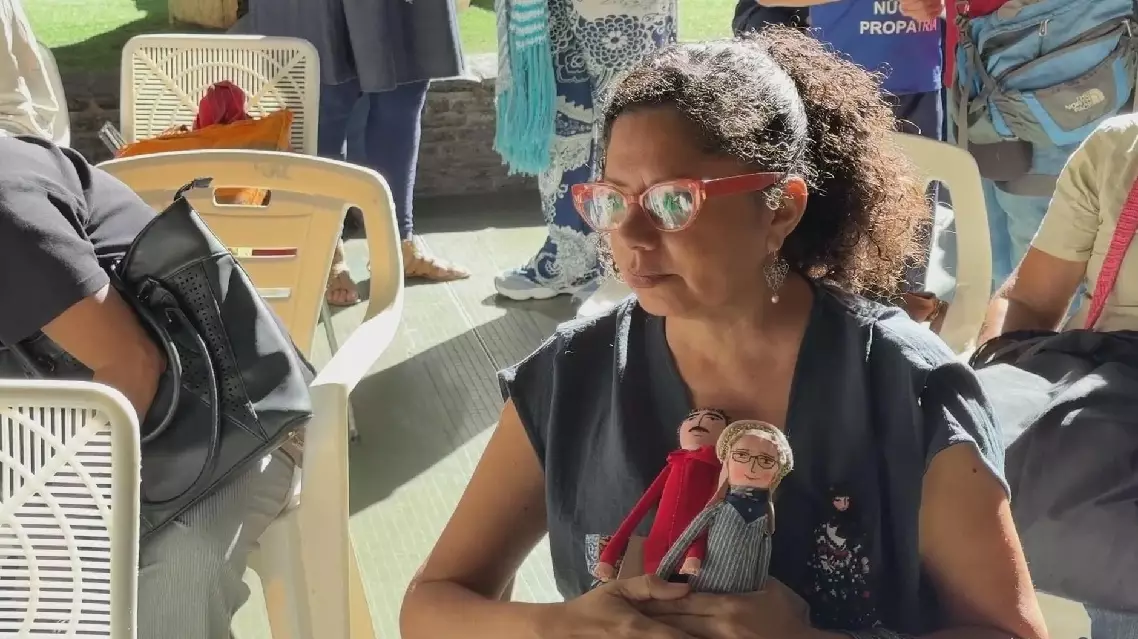
Meanwhile, legal experts and representatives from social organizations across Venezuela have voiced strong condemnation against the U.S. actions during a legal conference held on Friday.
They demanded that the United States respect international law and Venezuelan sovereignty by immediately releasing President Maduro and his wife, Cilia Flores, who were forcibly removed from the country.
"What we are demanding from Venezuela is that international law must be respected and saved, because once we fall into a state of disorder, what follows is war. We have already seen peace being trampled upon. The sovereignty of a country, officially declared a 'territory of peace' by the international community, has been violated. This has never happened before," said Indhriana Parada Rodriguez, a Venezuelan legal professional.
"We firmly demand the release of President Maduro and his wife, Cilia Flores. They were forcibly taken from their homeland in violation of all basic norms of international law," said Silio Sanchez, vice rector of territorial development of the Bolivarian University of Venezuela.
Call for Maduro's release continues as Venezuela moves to deal with aftermath of U.S. military strike