Extreme heat and worsening drought conditions have swept across Hungary, causing water levels in its major rivers to sharply decline, with crops suffering severe damage and losses.
According to official data, the water volume of the Tisza River, one of Hungary’s main rivers, has decreased by 60 percent, while the Danube River’s water level has dropped by 40 percent.
"There are two key issues at play. First, this summer in Hungary has been significantly hotter than previous years. Temperatures used to hover around 30-32 degrees Celsius, but now they commonly reach 35-38 degrees Celsius, sometimes even 40 degrees Celsius. All of this is due to the lack of rainfall. With no rainfall, the soil and plants sucked all available water from the ground and evaporated it to cool themselves, leading to an extremely critical situation," said Katalin Allacherné Szépkuthy, head of advisory team at the Hungarian Research Institute of Organic Agriculture.
HungaroMet's June 2025 agrometeorological report highlights extreme drought across large areas of Hungary. In central and southeastern regions of the country, rainfall since March has been 40-100 mm below average. Topsoil moisture is below 20 percent in most areas, with corn and sunflower leaves curling, and even early-harvested barley is suffering.
"The drought is so severe that I couldn't harvest any grain at all. The issue isn't just the lack of rain -- it's also the extremely high temperatures. The combination of these two factors has had a devastating impact on crops," said Danny Maria, a Hungarian farmer.
The Hungarian government has established task forces to distribute resources where needed, committing 10 billion Hungarian forints (about 30 million U.S. dollars) to supply free irrigation water to farmers.
Currently, heatwaves have hit large parts of Europe, with temperatures reaching record highs in many cities.
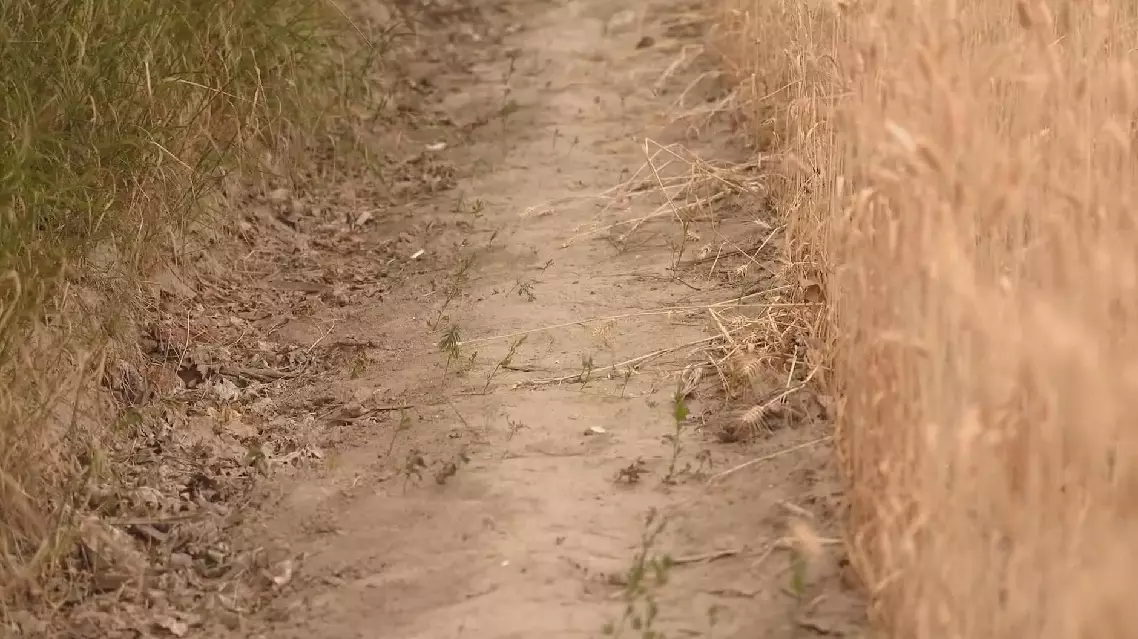
Scorching heat, drought hit Hungary, causing heavy crop losses

Serbian and Chinese officials, along with local people, gathered in Belgrade on Thursday to commemorate Chinese journalists killed in the NATO bombing of the Chinese embassy in the former Federal Republic of Yugoslavia in 1999.
Attending the event were Chinese Ambassador Li Ming, Serbian Minister of Labor, Employment, Veteran and Social Affairs Milica Djurdjevic Stamenkovski, staff members of the Chinese embassy in Serbia, representatives of Chinese media outlets, Chinese-funded institutions, Chinese students and teachers, and overseas Chinese in Serbia.
Addressing the event, Li said that that NATO's atrocity 27 years ago seriously violated China's sovereignty and grossly trampled on international law and the basic norms governing international relations. Today, 27 years later, hegemonism and power politics are still eroding the foundation of the international order and threatening world peace.
Remembering history is aimed at better defending peace and safeguarding justice, he said. China is willing to work with Serbia to carry forward friendship, strengthen mutual trust, firmly uphold the UN-centered international system, and take concrete actions to build a community with a shared future for humanity, Li said.
Stamenkovski said that 27 years ago, NATO launched a barbaric aggression against the Federal Republic of Yugoslavia, seriously violating the UN Charter and international law. The peoples of Serbia and China firmly defended their national dignity, and forged an ironclad friendship that proves true in adversity with blood and lives, she said.
Serbia is willing to continue deepening its traditional friendship with China and to work together toward the noble cause of peace and development, she added.
Ranko Spalevic, a local resident who attended the event, said the tragedy China and Serbia shared 27 years ago brought their peoples closer together, adding that Serbians have always sincerely commemorated that period of history and treasured their friendship with China.
"We thank our brothers who stood by us in our darkest hour and remain with us to this day. No one can break the ironclad bond of friendship forged in the blood of World War II. Let us remember this forever," he said.
NATO missiles struck the Chinese embassy on May 7, 1999, killing three Chinese journalists: Shao Yunhuan of Xinhua News Agency, Xu Xinghu and Zhu Ying of Guangming Daily, and injuring dozens of others.
Serbia holds memorial event to honor Chinese journalists killed in NATO bombing