Inner Mongolia Autonomous Region in north China completed on Sunday sand-blocking barriers encircling three major deserts in its Alxa League region, setting a major milestone in the country's decades-long battle against desertification.
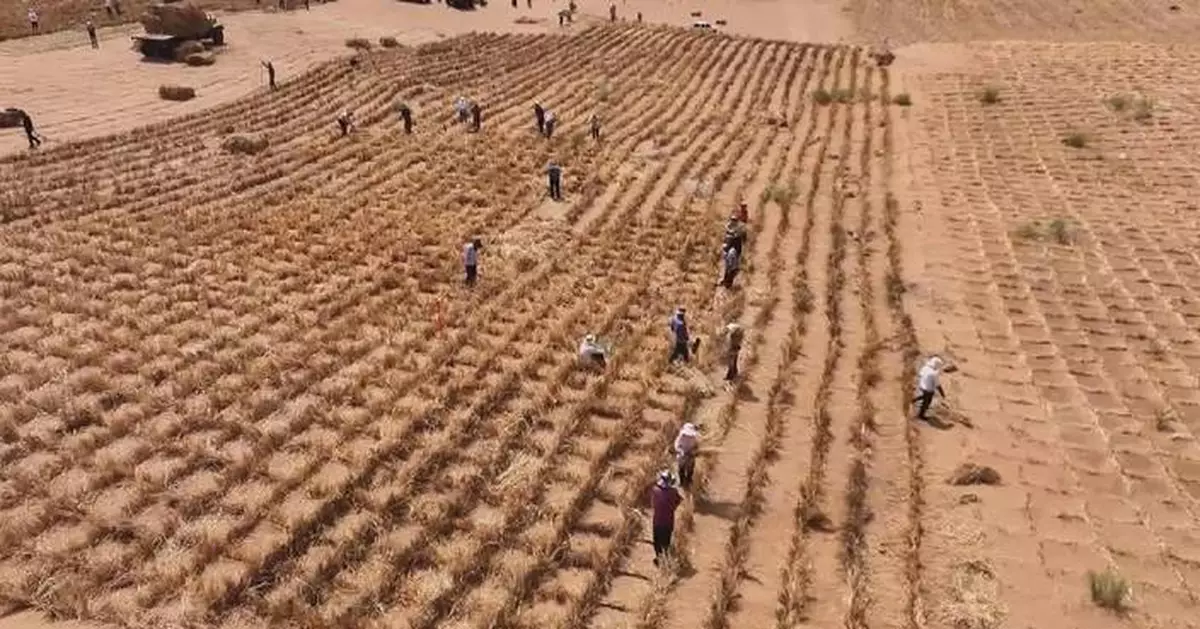
The final section of straw checkerboards, a traditional sand-fixing method, was completed Sunday morning on the southeastern edge of the Badain Jaran Desert. With this, a green belt stretching 1,856 kilometers has fully enclosed the Badain Jaran Desert, the Ulan Buh Desert, and the Tengger Desert in Alxa League, which will halt the further sand encroachment.
The sand-fixing method of straw checkerboards involves planting straw in a checkerboard pattern on the desert surface to stabilize sand and prevent wind erosion. Known as desert edge-locking project, this approach was designed to fix shifting dunes by planting vegetation belts along the desert's perimeter, preventing further encroachment.
The Alxa League spans 270,000 square kilometers, with nearly 74 percent of its land classified as desertified. The three deserts together cover over 94,700 square kilometers, more than one-third of the region's total area and over 80 percent of Inner Mongolia's desert land.
Through years' efforts on sand control, local authorities constructed 1,425 kilometers of green barriers along the rim of three deserts at the end of last year. This year, authorities decided to close the final 431-kilometer gap in the sand-blocking belt through both manual and mechanical sand-fixing techniques.
By combining sand control with new energy development, the region has implemented aerial seeding and enclosed ecological restoration tailored to different land types, aiming to boost the survival rate of vegetation in the green belt.
Currently, over 50 percent of sand control operations in Alxa are mechanized, and eight solar-powered sand-control projects have been completed.
Alxa also plans to consolidate its sand-control result and develop desert-based industries such as eco-tourism and renewable energy to promote both environmental and economic resilience.
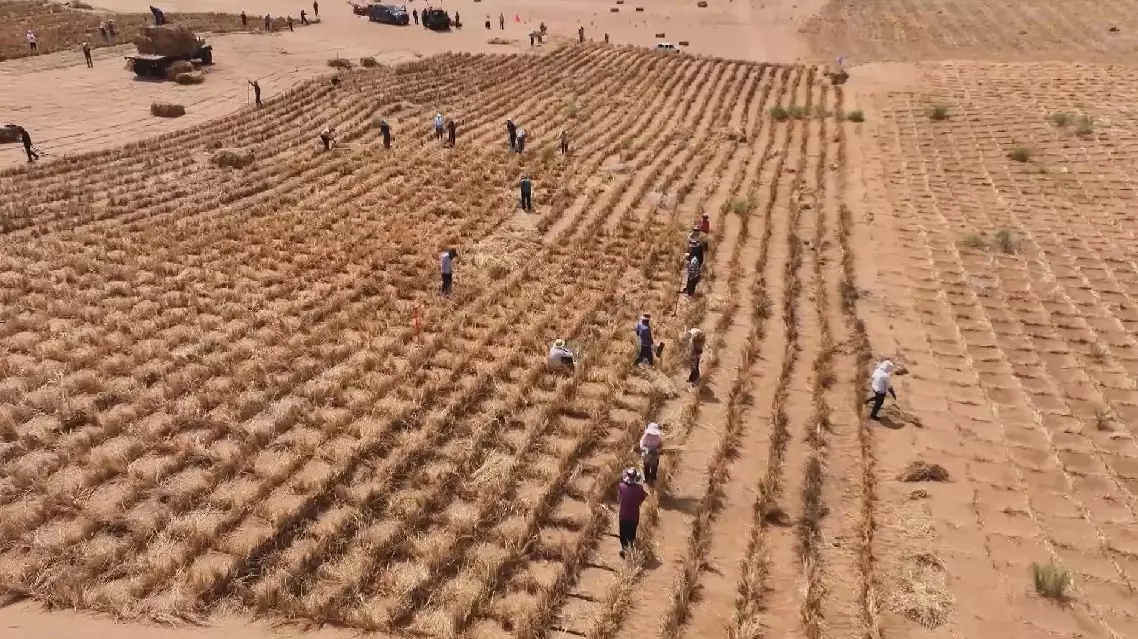
China completes sand-blocking barriers encircling three major deserts in Inner Mongolia
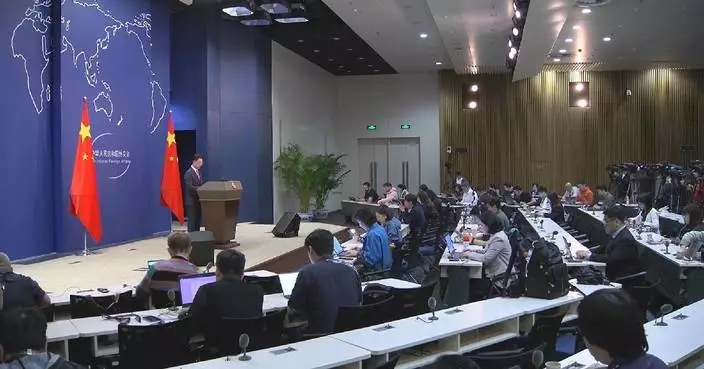
China's Minister of Commerce Wang Wentao outlined the key priorities of the 32nd Asia-Pacific Economic Cooperation (APEC) Ministers Responsible for Trade Meeting, which opened on Friday in Suzhou, East China's Jiangsu province.
In an interview with CGTN ahead of the two-day meeting, Wang said free trade, digital cooperation and green economy are high on the agenda of the meeting.
"The key areas include advancing regional economic integration and the Free Trade Area of the Asia-Pacific, supporting the World Trade Organization (WTO) in strengthening digital cooperation and developing green economy. At present, the international situation is marked by intertwined turbulence and chaos, with intensified geopolitical instability. The rise of unilateralism and protectionism poses serious challenges to the international economic and trade order, disrupting global and Asia-Pacific development. Against this backdrop, all parties have higher expectations for this trade ministers' meeting, hoping that it can build consensus and deliver outcomes," Wang said.
This year marks China's third time hosting the APEC meetings and the 35th anniversary of its membership.
By 2025, China had become the largest trading partner of 13 APEC economies. Trade between China and APEC economies reached 3.7 trillion U.S. dollars, accounting for 57.8 percent of China's total foreign trade.
China has signed 24 free trade agreements or economic and trade arrangements with 31 countries and regions, including 15 APEC economies. In recent years, China has also completed upgrades of free trade agreements with APEC economies such as Singapore and Peru.
The minister said that China has always been a firm supporter and an important contributor to APEC.
"We have actively shared our vast market and development opportunities with all parties. China's door to the world will only open wider and wider. Facing the common challenges, China will continue to fulfill its responsibilities as a major country, further deepen reform, expand high-standard opening-up, and continue to provide new opportunities for the Asia-Pacific region and the world with its new achievements in Chinese modernization," the minister said.

China's Commerce Minister outlines priorities for 32nd APEC trade ministers' meeting