Skip to Content Facebook Feature Image

Panchen Rinpoche concludes six-month tour of Xizang

China

China

China

Panchen Rinpoche concludes six-month tour of Xizang

2025-12-28 21:43 Last Updated At:22:07

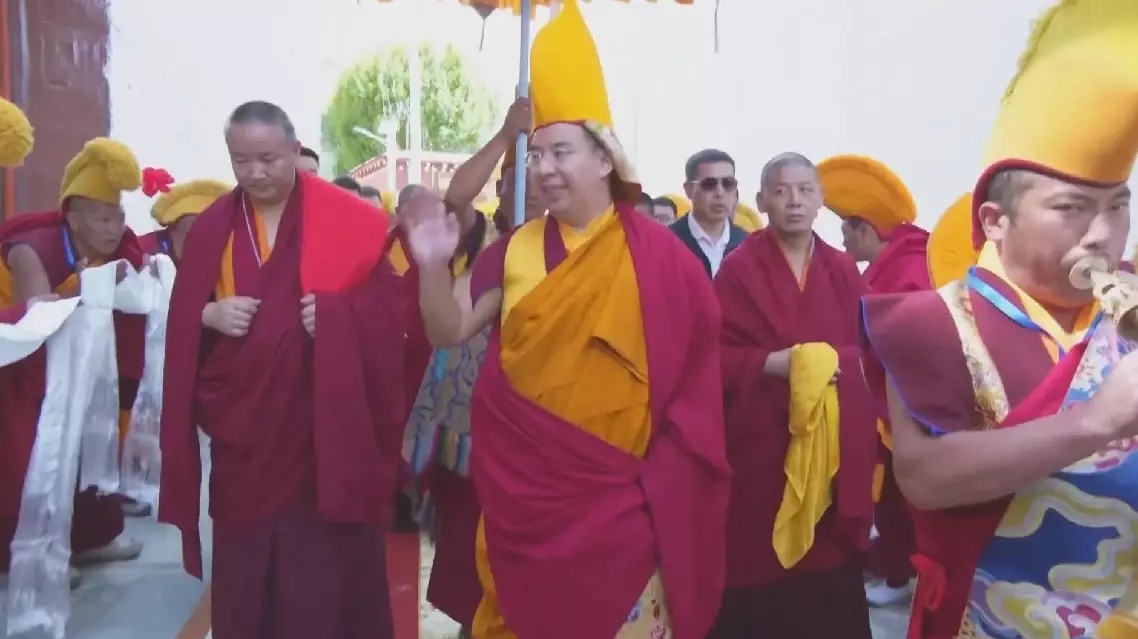
Panchen Erdeni Chos-kyi rGyal-po, more commonly known as Panchen Rinpoche and a leader of Tibetan Buddhism, has completed a six-month tour of southwest China's Xizang Autonomous Region, during which he performed regular duties, conducted research and surveys, and participated in various Buddhist and social activities.

During his tour, Panchen Rinpoche, a member of the Standing Committee of the National Committee of the Chinese People's Political Consultative Conference and vice president of the Buddhist Association of China, attended celebrations marking the 60th anniversary of the founding of the Xizang Autonomous Region in the regional capital Lhasa in August.

He then visited the prefecture-level cities of Qamdo, Nagqu, and Xigaze to conduct field research, gaining insights into rural revitalization, the development of harmonious and beautiful highland villages, and the advancement of Tibetan medicine.

He also traveled to Dingri County in Xigaze to learn about post-quake reconstruction progress and assess local residents' living conditions after a 6.8-magnitude earthquake hit the county in January.

At the Tashilhunpo Monastery in Xigaze, his traditional seat, Panchen Rinpoche presided over the Kalachakra (wheel of time) ritual and attended both the 30th-anniversary commemoration of his enthronement and a symposium on the reincarnation system of Tibetan Buddhist Living Buddhas.

Over the past three decades since his enthronement, Panchen Rinpoche has upheld Tibetan Buddhism's proud tradition of patriotism and devotion to faith. His Buddhist scholarship has grown ever more profound, earning him deep affection and respect from monastics and devotees alike.

He has made significant contributions to promoting ethnic unity, religious harmony, and Xizang's social stability and development.

As president of the Xizang branch of the Buddhist Association of China, Panchen Rinpoche also convened a series of work meetings of the branch, visited major monasteries including the Jokhang Temple in Lhasa, and held extensive discussions with leaders and practitioners across the Tibetan Buddhist community.

He encouraged monastics to actively engage in the new journey toward Chinese modernization, and to play a greater role in advancing the adaptation of Tibetan Buddhism to socialist society, fostering a stronger sense of the Chinese nation as one community, and jointly writing a new chapter for a more beautiful Xizang.
Panchen Rinpoche concludes six-month tour of Xizang

Panchen Rinpoche concludes six-month tour of Xizang

Chinese Foreign Minister Wang Yi said on Thursday that the issue of navigation through the Strait of Hormuz is a spillover effect of the current conflicts, noting the Strait of Hormuz remains unstable if the war doesn't end.

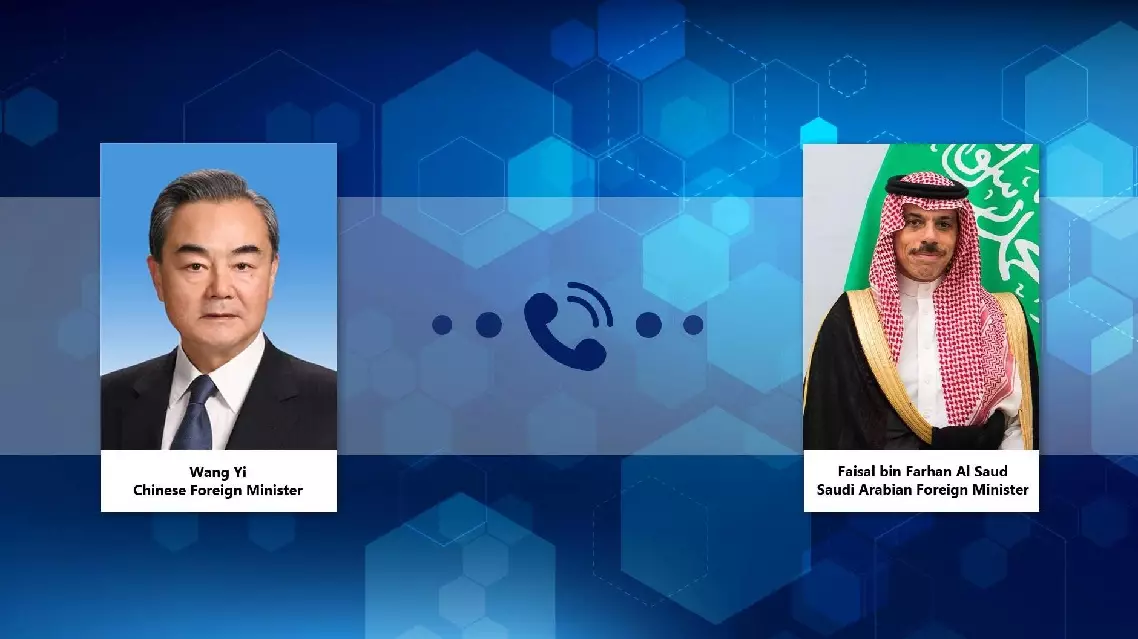
Wang, also a member of the Political Bureau of the Communist Party of China Central Committee, made the remarks in a phone conversation with Saudi Arabian Foreign Minister Faisal bin Farhan Al Saud.

The Saudi Arabian foreign minister briefed Wang on the latest developments of the Middle East situation, saying the war in Iran has caused severe impacts on countries in the region and the world at large.

Saudi Arabia attaches importance to China's important role in international affairs, and values high-level strategic cooperation with China, he said, adding that the kingdom is ready to further enhance consultation and coordination with China on platforms including the United Nations, to jointly push for the de-escalation of the situation and an end to the conflict.

Wang noted that the prolonged war in Iran, which has lasted for over a month, has caused enormous casualties and losses, and undermined the security and stability of Saudi Arabia and other Gulf countries, over which China expressed concerns.

Wang said China and Pakistan recently jointly issued a five-point initiative for restoring peace and stability in the Gulf and Middle East region, which includes safeguarding the sovereignty and security of the Gulf states, stopping attacks on civilians and non-military targets, and ensuring the security of shipping lanes.

Wang said the top priority is to focus on cessation of hostilities. Actions by the UN Security Council should avoid escalating confrontations and should not legitimize unauthorized military operations; otherwise, it will lead to endless trouble, with small and medium-sized countries being the first to bear the brunt, he added.

Wang noted that China appreciates Saudi Arabia's commitment to promoting peace and ceasefire, and stands ready to work with Saudi Arabia to make efforts for the early restoration of regional peace.

Chinese FM says Strait of Hormuz remains unstable if war doesn't end

Chinese FM says Strait of Hormuz remains unstable if war doesn't end

Recommended Articles