Skip to Content Facebook Feature Image

Countries in Middle East condemn Israeli airstrikes targeting Syria

China

China

China

Countries in Middle East condemn Israeli airstrikes targeting Syria

2025-07-17 16:17 Last Updated At:07-18 01:17

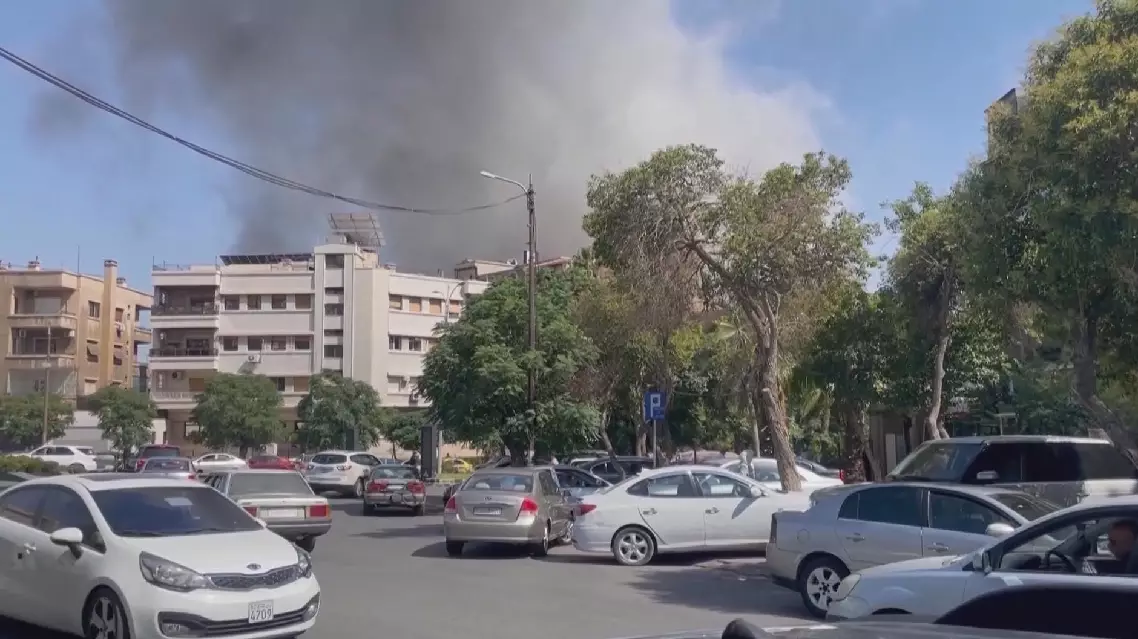
Countries in the Middle East on Wednesday condemned the Israeli airstrikes targeting the Syrian Army General Command headquarters and the presidential palace area in central Damascus.

Israel said the strikes were aimed at protecting the Druze minority in Syria following deadly clashes in the southern province of Sweida.

The Arab League denounced the attacks as "blatant assault" on the sovereignty of an Arab state that is a member of both the Arab League and the United Nations.

It also accused Israel of seeking to sow chaos in Syria by exploiting recent events in Sweida province.

Egypt said these repeated Israeli violations only serve to deepen tensions and represent a fundamental source of instability in Lebanon, Syria, and the broader region.

The Iraqi Foreign Ministry affirmed its absolute rejection of endangering the lives of Syrian civilians and exacerbating their humanitarian suffering.

It stressed the need to de-escalate the situation, as it poses a direct threat to the security and stability of the region.

The Israeli strikes were initially limited to Sweida province before extending to the capital. Israeli authorities said the attacks on Syrian forces and weapons aimed to "prevent the Syrian regime from harming" the Druze community, due to "the deep fraternal alliance with the Druze citizens of Israel and their familial and historical ties to the Druze in Syria."

The escalation in Sweida began on Sunday after armed members of a Bedouin tribe in the countryside of Sweida reportedly assaulted and robbed a young Druze man near the town of al-Masmiyah. The brutal attack sparked retaliatory kidnappings, spiraling into full-scale clashes between local Druze fighters, government troops, and Bedouin militias.

Since Sunday morning, the death toll from armed clashes, summary executions, and Israeli airstrikes in Syria's Sweida province has risen to 302, according to the Syrian Observatory for Human Rights.
Countries in Middle East condemn Israeli airstrikes targeting Syria
Countries in Middle East condemn Israeli airstrikes targeting Syria
Countries in Middle East condemn Israeli airstrikes targeting Syria

Countries in Middle East condemn Israeli airstrikes targeting Syria

Countries in Middle East condemn Israeli airstrikes targeting Syria

Countries in Middle East condemn Israeli airstrikes targeting Syria

Nigeria's fuel market is undergoing a rare shake-up as competition pushes prices lower, bringing relief to local consumers while raising concerns over business durability.

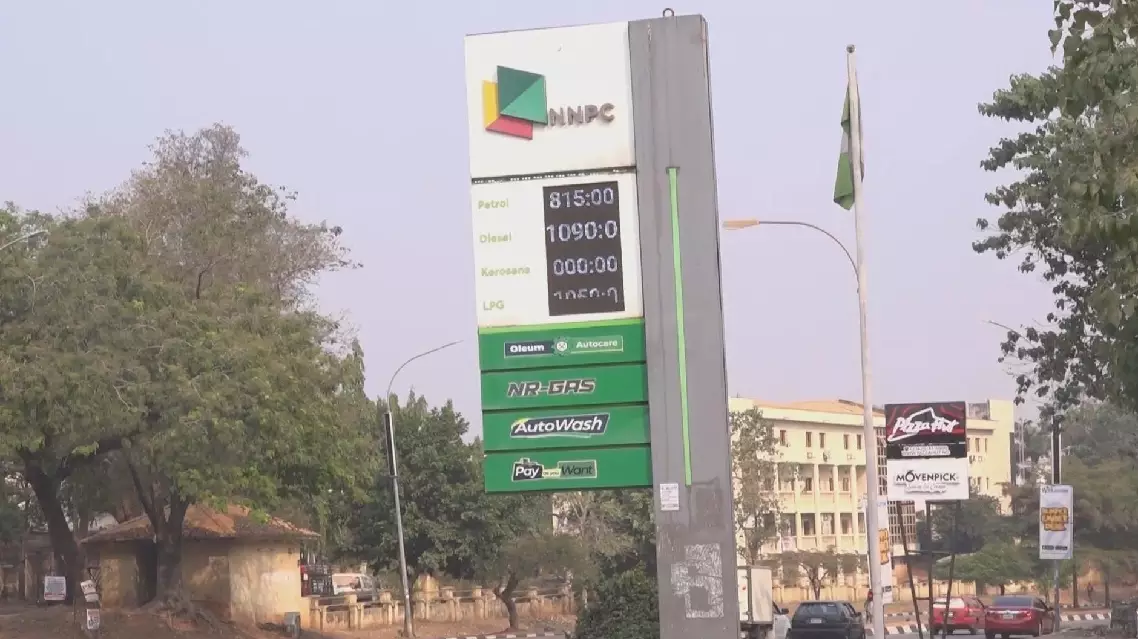
In the capital city of Abuja, the state oil firm Nigerian National Petroleum Company (NNPC) has been selling petrol at about 815 naira per liter (about 0.57 U.S. dollars per liter), down from about 0.66 U.S. dollars per liter earlier in 2026. Other stations supplied by private giant Dangote are offering even lower prices, selling at around 750 naira (about 0.53 U.S. dollars) per liter.

For millions of Nigerians, the drop has been easing pressure on transport, food and daily living costs.

"I spend relatively lower on fuel and, by implication, transportation now than what it used to be," said Salifu Usman, a local resident in Abuja.

"We are happy with what we are seeing, because, of course, for a very long time, we are witnessing the crash down of price, even during festive period," said Jonathan Madaki, another resident.

The price cut has also allowed for higher profit margins for local small business operators, who have long relied on petrol-powered generators to cope with chronic power shortages.

Behind the price cuts is a growing battle for market share. The Nigeria-based Dangote Refinery, the largest in Africa, has boosted domestic supply and slashed its wholesale price to around 700 naira (about 0.49 U.S. dollars) per liter.

The move has forced importers and the state oil company to lower their own prices to stay competitive. But as margins shrink, analysts warn, what now appears to be a price war may not last.

"My own interpretation is that we are going to that stage where, especially those that, if it keeps coming down, I think those that bring in products may find it not so attractive again. So I don't actually see how sustainable this price war, if I may use that term, will be," said energy expert Paul Ogwu.

Nigeria petrol price cuts ease living costs, raise durability concerns

Nigeria petrol price cuts ease living costs, raise durability concerns

Recommended Articles