Wang Haoze, China's first female space engineer working in the country's space station, said she felt proud to contribute female data to the scientific experiment conducted in space at an interview with the China Central Television in Beijing.
As China's third woman astronaut, Wang participated in the six-month-long spaceflight mission of the Shenzhou-19 together with Cai Xuzhe, Song Lingdong.
The crew successfully conducted extravehicular activities, cargo delivery tasks and a number of experiments and tests in various fields during the mission from October 2024 to April 2025.
"My favorite work is the EEG test. I feel very proud. It means a lot to me because I contributed women's data to this experiment, making the database more complete. It makes me feel happy. It is a very special feeling," Wang said in the interview.
"While doing this experiment in space, we had to wear EEG hats which carry saline electrodes connected with our EEG equipment and our computers, which then could collect our brain signals," Wang said.
Wang said she witnessed the growth of a "fruit fly family" in the space mission. The fruit flies bred on the Chinese space station had returned to Earth aboard the Shenzhou-19 manned spacecraft in this April.
The specimens are expected to provide invaluable data for basic research into the mechanisms of biological magnetic sensing and gravity perception.
"We used the eggs of the previous generation of fruit flies to cultivate a new generation of the insect in the space station, so we had three generations of fruit flies in space. I may dislike this insect on earth, but I developed a bond with them after doing a dozen experiments on them in space for more than one month. I felt reluctant to leave them in my last experiment in space. Finally, we called Cai Xuzhe over, then the three of us had a photo taken together with the fruit fly culture in our hands," Wang said.
As part of the experiments, Wang and her fellow crew members planted lettuce in the space station and even harvested some lettuce leaves for food.
"We planted lettuce in the space station, which grew very well. Then we received the command from the earth that we could pick some of it for our food. I remember it very well that on the day of Winter Solstice, Song Lingdong and I used small scissors to collect some of the lettuce. We got a whole bag of it that day and then we began to eat, using it to wrap meat and ate it with dumplings. That was such an nice meal!" she said.
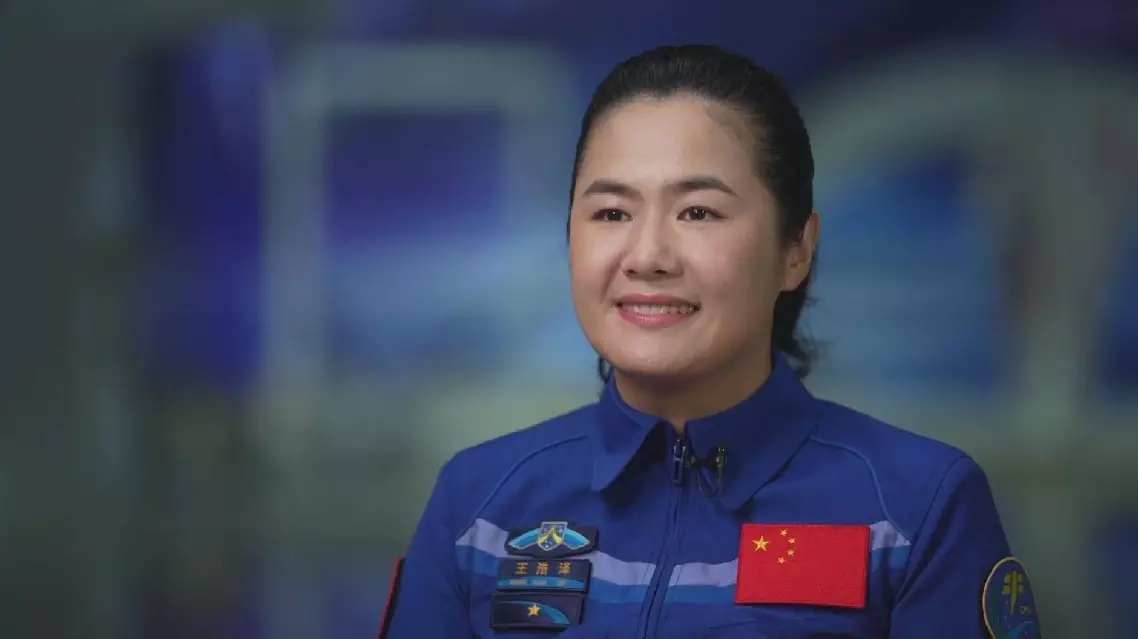
China's woman astronaut proud to contribute to space experiment
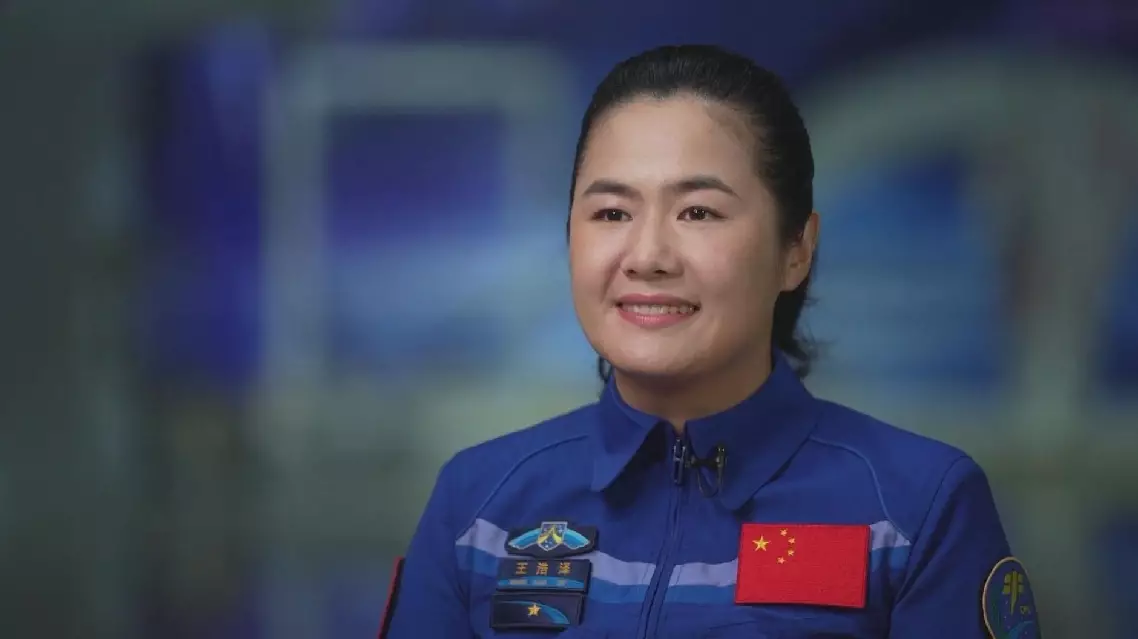
China's woman astronaut proud to contribute to space experiment
China's woman astronaut proud to contribute to space experiment