Just when you thought US–China relations couldn’t get touchier, recent trade negotiations in Sweden have ended with the barest of handshakes—an agreement to pause any new tariffs for another 90 days. That’s it. No actual progress, no headline-grabbing deals. And smack in the middle of this diplomatic limbo, the People’s Liberation Army (PLA) decided it was the perfect moment to drop a bombshell—figuratively, thankfully—by revealing the video of a major intercontinental ballistic missile (ICBM) test... from a whole year ago.
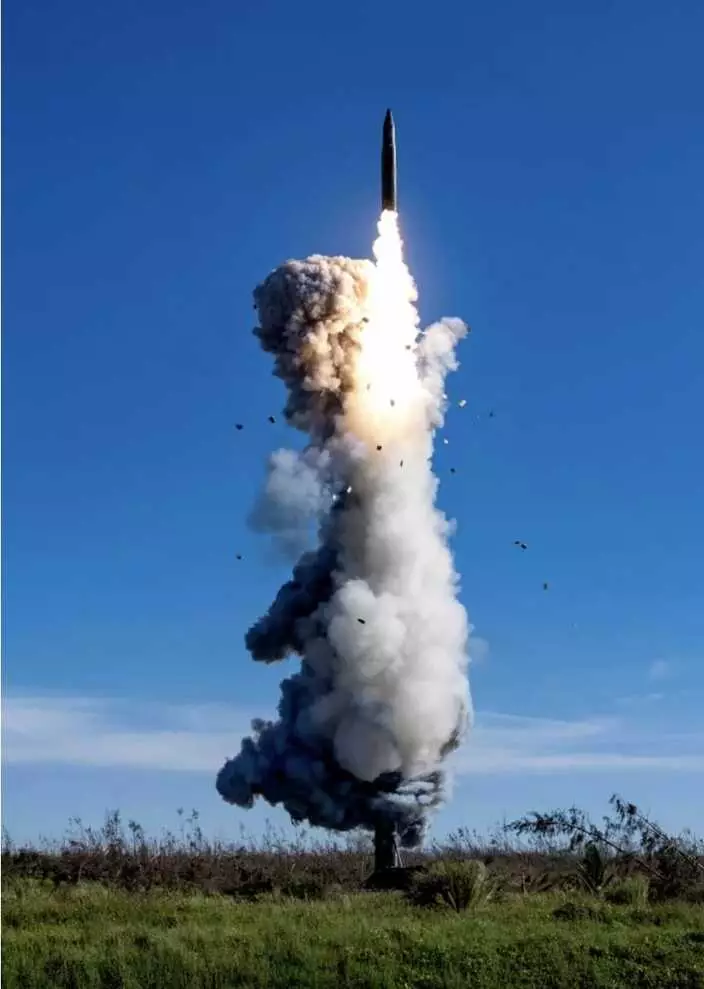
Photos of the ICBM’s ascent, released at the time.
A Missile Launch That Was Years in the Making
Click to Gallery
Photos of the ICBM’s ascent, released at the time.
Video shows the missile rolling out from its launch vehicle.
The crucial moment: the ICBM is fired from its launcher.
Rocket Force brigade soldier Zhao Jing.
A look inside the missile launch vehicle’s tech-filled interior.
On September 25, 2024, right at 8:44 a.m., the PLA Rocket Force fired off a training ICBM, sending it soaring over the Pacific and splashing down right on target in the ocean. Officials stressed that this was strictly routine annual training, nothing aimed at anyone in particular, and meticulously kept within international law.
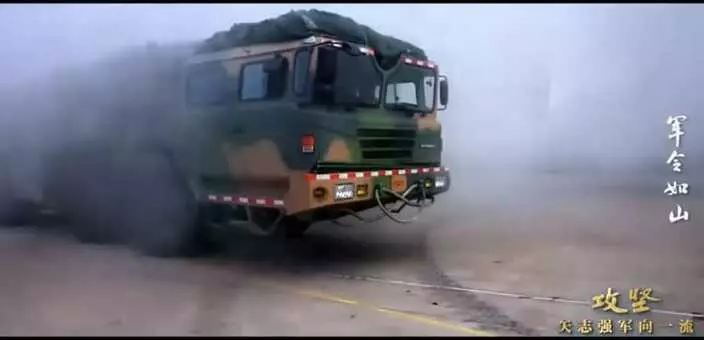
Video shows the missile rolling out from its launch vehicle.
A year back, the PLA teased everyone with some pretty stunning high-def photos of the launch. But the latest reveal marks the first time in almost forty years that the PLA has gone public with footage of a new-generation ICBM in action. It’s no surprise the move sparked heated debate at home and abroad.
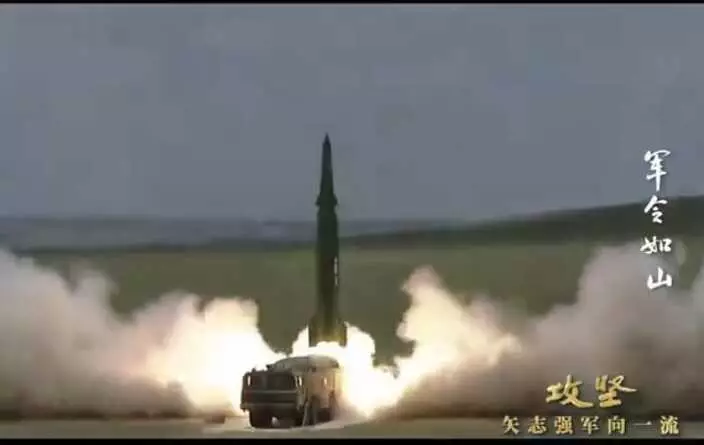
The crucial moment: the ICBM is fired from its launcher.
Inside the Rocket Force: “It’s an Honor—and a Pressure Cooker”
The newly released footage gives us a behind-the-scenes peek, and it’s riveting. Rocket Force brigade soldier Zhao Jing appears on screen—a man who’s waited over two decades just for this moment.
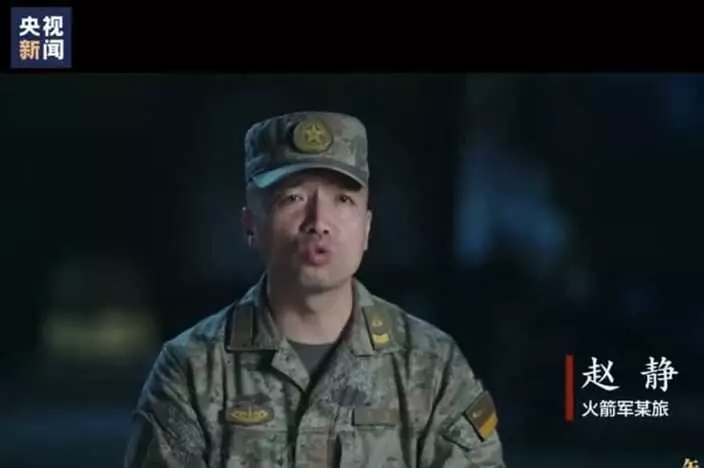
Rocket Force brigade soldier Zhao Jing.
“An attack order is a military order—we must overcome all obstacles to achieve victory. The farther and more accurately this missile flies at the moment it leaves the launch tube, the more secure our nation and our people become.”
He goes on to explain the extraordinary level of complexity this test involved. Unlike his previous three “backup readiness” launches, this was the real deal, the culmination of the Rocket Force’s honor and the national dignity.
“Our equipment is getting smarter, and our skills must keep up. If it’s entrusted to me, I’ve got to make sure everything is perfect.”
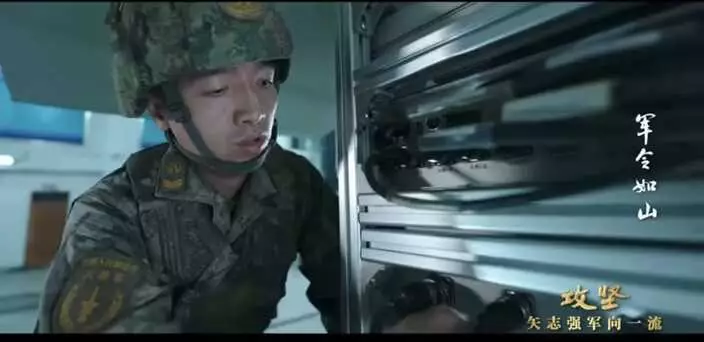
A look inside the missile launch vehicle’s tech-filled interior.
“National Treasures” and the Story Behind the Show
For more than forty years, China’s ICBM launches were strictly a domestic affair. You basically never saw these missiles leave the country. By all accounts, this was the first time since 1980—back when the legendary “580 Mission” sent a DF-5 missile breezing to the South Pacific—that China tested an ICBM over its full range into international waters.
So, as the world tries to puzzle out the meaning of these twin dramas—stalled trade talks and dazzling missile tests—you have to wonder: what’s Beijing’s next move? One thing’s for sure, this isn’t your everyday news cycle.
Mao Paishou
** 博客文章文責自負,不代表本公司立場 **
The writing's been on the wall for months, but now it's official – China's AI sector isn't just catching up anymore, it's actively eating into America's lunch. And frankly, this shouldn't surprise anyone who's been paying attention.
The Great AI Migration is Real
Chinese artificial intelligence is rapidly rising, challenging America's global monopoly with its independently developed, cost-effective AI ecosystem. According to analysis by the US Wall Street Journal, Chinese AI companies are gradually undermining America's dominance in this sector. From Asia, the Middle East, and Africa to Europe, multinational corporations, banks, universities, and government institutions are increasingly switching to Chinese AI models like DeepSeek and Alibaba's language models, replacing American products.
What's particularly striking is how this is happening despite – or perhaps because of – US government restrictions. Despite facing export bans on high-end semiconductor chips and limitations on Chinese technology investments, Chinese AI technology continues to advance rapidly, dedicated to building a completely autonomous artificial intelligence ecosystem. With massive investments in domestic chip production, software development, and AI education, the performance gap between Chinese and American AI models is gradually narrowing.
Major international companies are ditching US AI models for Chinese alternatives like DeepSeek and Alibaba's systems due to cost advantages.
British banks HSBC and Standard Chartered have begun internal testing of DeepSeek's AI large models. Additionally, Saudi Aramco, the world's largest oil producer, recently deployed DeepSeek to its main data center. Although the White House has banned the use of this model on some US government devices citing so-called "data security" concerns, major American cloud service providers including Amazon, Microsoft, and Google all offer DeepSeek to their clients. It's a perfect example of how market forces often trump political posturing.
Microsoft President Brad Smith recently stated at a US Congressional hearing that the primary factor determining whether America or China wins this competition is whose technology gains the widest application in other parts of the world – "whoever gets there first will be difficult to supplant". That's quite an admission from someone at the heart of the American tech establishment.

Microsoft's Brad Smith warns that global AI dominance will go to whoever gets adopted worldwide first – and China's making serious moves.
Numbers Don't Lie: The Cost Factor is King
Market research from Sensor Tower shows that OpenAI's ChatGPT remains the world's most mainstream AI model with 910 million downloads, while DeepSeek has 125 million. However, Chinese companies' AI large models are continuously closing the performance gap and gaining advantages through lower pricing.
Why China's Winning the Practical AI Race
One reason for China's rapid AI development is its massive data resources, which are crucial for training AI models. Additionally, China possesses numerous engineers and scientists, many of whom studied or worked in Western institutions before returning home. In contrast, American companies are increasingly constrained by privacy regulations, geopolitical tensions, and AI safety concerns, which may slow their deployment and innovation.
American companies often focus on pushing AI's limits, such as creating the most advanced general language models, while Chinese companies emphasize more practical, direct applications – including AI tools designed for business automation, education, customer service, and government applications. This pragmatic approach is increasingly popular in emerging markets, where cost-effective solutions often hold more appeal than cutting-edge technology.
The Open Source Gambit That's Paying Off
Chinese AI developers actively embrace open-source models, releasing foundational models to the public and inviting global developers to modify, improve, and integrate them into their own systems. This openness makes Chinese tools extremely attractive to developers in Asia, Africa, and Latin America. Despite limited official support from Western institutions, this has helped Chinese companies develop robust global developer ecosystems.
Alibaba reports that models derived from their open-source Tongyi Qianwen (Qwen) have exceeded 100,000 variations. Last year, Japanese AI startup Abeja chose Tongyi Qianwen over similar products from Google or Meta when developing a custom AI model for Japan's Ministry of Economy, Trade and Industry.
Oleg Zankov, co-founder of Cyprus-based AI platform Latenode, stated that among the platform's global users, one in five chooses DeepSeek models because while quality is comparable, competitors' prices are 17 times higher – particularly attractive to clients in Chile and Brazil with limited funding and computing capacity.
The Wall Street Journal notes that in 2018, US investors participated in deals accounting for about 30% of China's AI industry's $21.9 billion investment, with Chinese students flooding into American universities and Silicon Valley companies. But everything is now changing.
After the Trump administration halted Nvidia's sales of its specialized H20 chips to the Chinese market, investment bank Jefferies predicts this move will cost Nvidia $10 billion in revenue. The report warns that if Chinese AI models gain global adoption, American companies like Google and Meta could face market share and revenue losses.
OpenAI published an article on mainstream news platform Substack on June 25 this year, stating that Chinese AI startup Zhipu AI is assisting in building AI infrastructure across Southeast Asia, the Middle East, and Africa. This isn't just about technology – it's about establishing the foundational infrastructure that will define the next decade of global AI development.
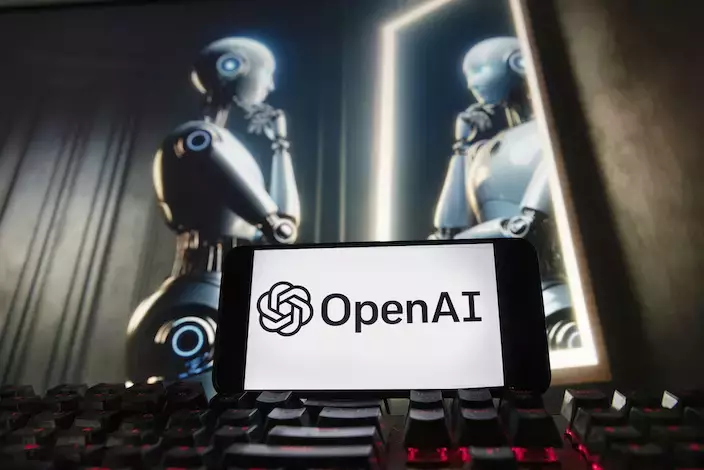
OpenAI sounds the alarm as Chinese firm Zhipu AI builds AI infrastructure across developing regions, challenging US influence.
However, industry insiders point out that in the long term, if China and the US lack cooperation on AI safety issues, the global capacity to address AI's potential risks will be severely weakened. Moreover, as American AI companies' dominance decreases, the US will have less power to set global technology standards. UC Berkeley AI policy researcher Ritwik Gupta stated that if China remains dependent on the global AI ecosystem, the US can participate in governance, but if not, China will do things its own way, and the US won't be able to see or control it.
The reality is that we're watching a fundamental shift in how global technology leadership works. China isn't just competing on American terms anymore – it's rewriting the rules entirely. And judging by the migration patterns we're seeing, the world seems to be taking notice.