Skip to Content Facebook Feature Image

Swiss industries react to new 39 percent U.S. tariffs

China

China

China

Swiss industries react to new 39 percent U.S. tariffs

2025-08-13 17:25 Last Updated At:20:47

Last week, a 39-percent tariff on Swiss exports to the United States went into effect, despite last-minute negotiations between Swiss and U.S. representatives. This unexpected levy has sent shockwaves through various industries in Switzerland, particularly affecting sectors like industrial machinery, Swiss cheese, chocolate, and luxury watches.

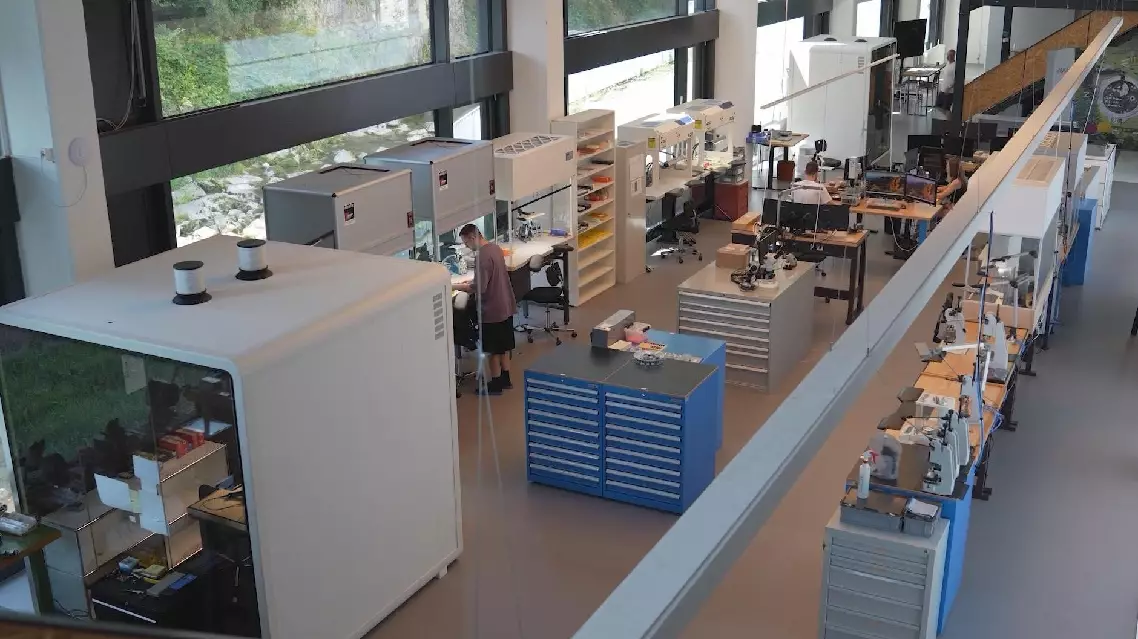
One notable response comes from Horage Watches, a company founded in 2008 in Biel, the heart of Swiss watchmaking. Producing around 850 timepieces annually, approximately a third of their output is sold to American customers. With the introduction of the tariffs, Horage is now contemplating relocating part of its production to the U.S.

CEO Andreas Fels expressed concerns about the long-term implications of the tariffs.

"That is something I think is an issue and if the tariffs are staying longer in place in this level, then of course the only way to really get around that means do we have to move manufacturing to a certain degree to the US and America used to be a very big watch manufacturer. It used to be the biggest watch manufacturer a long time ago. And that is an option which we have a serious look at," Fels said.

Horage employs 30 skilled professionals, including engineers, watchmakers and specialists in high-precision movements. It works with around 200 suppliers of its components, and a move to the U.S. will not be a straightforward process, but something that Horage hopes to turn into a new positive chapter. But not all companies affected by the spike in tariffs have this option.

"The Swiss entrepreneurs and industry leaders, we were all shocked by the news of 39 percent tariffs. Not only the magnitude, but also that we should pay almost more than our competitors in the European Union or in Japan. So this is very tough and companies now must act," said Martin Hirzel, President of Swissmem, the Swiss Industry Federation. Economists warn that the tariff burden could put thousands of jobs at risk in Switzerland, and some workers say they are worried about this development.

"It's a big mistake, you know, he hasn't just done to Switzerland, he also did the same thing to China and the European Union and some other countries. It's a huge mistake," said a resident.

"I would say there is no explanation for this, and I hope that the Swiss Parliament and the negotiations go all right. I'm not very optimistic," said another resident.

The Swiss government has stated its commitment to engaging in discussions with the U.S. to reduce the tariffs as quickly as possible. Negotiations are currently underway, but the outcome remains uncertain.

Swiss industries react to new 39 percent U.S. tariffs
Swiss industries react to new 39 percent U.S. tariffs
Swiss industries react to new 39 percent U.S. tariffs

Swiss industries react to new 39 percent U.S. tariffs

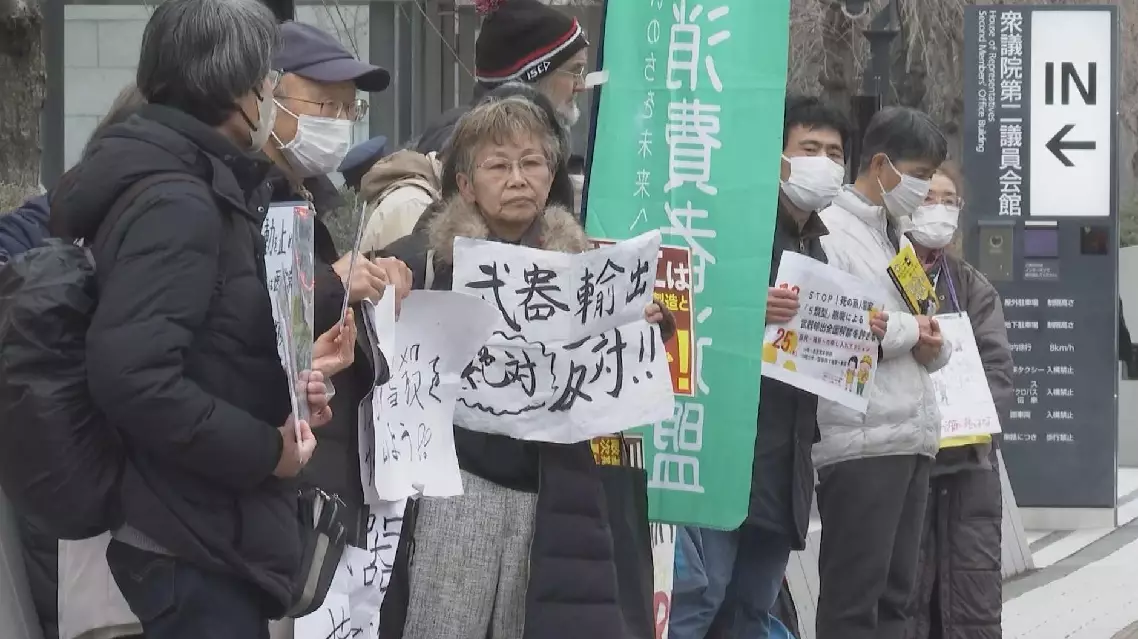
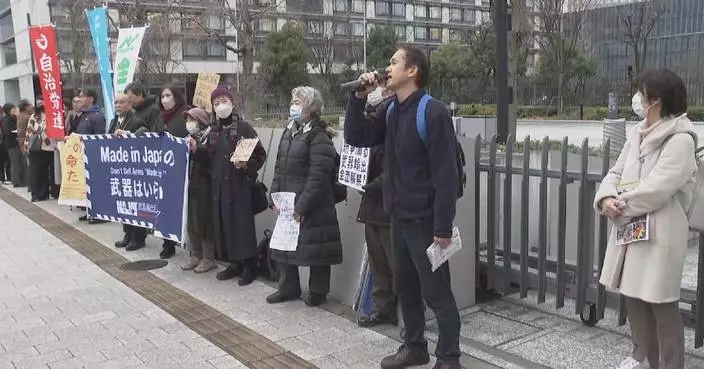
Japanese citizens held rallies on Thursday outside the headquarters of the Liberal Democratic Party (LDP) and the National Diet building in Tokyo, protesting Japan's weapons export policies.

The ruling Liberal Democratic Party and its coalition partner, the Japan Innovation Party, agreed at a meeting on Monday to revise the implementation guidelines of the Three Principles on Transfer of Defense Equipment and Technology and lift restrictions that limit defense equipment transfers to five noncombat purposes. And they planned to submit the proposal to the cabinet in February next year.

Demonstrators chanted slogans, calling for a complete ban on arms exports, denouncing the ruling parties, and demanding Prime Minister Sanae Takaichi and the cabinet to step down.

"I believe that Japan must never become a 'weapons merchant.' At present, there are already some companies in Japan engaged in weapons-related industries. Not only does the government fail to stop this, it is actually promoting it, attempting to revive the economy in this way. I find this extremely dangerous, and it makes me deeply dissatisfied. I want to make my opposition clear," a protester said.

Another voiced concern over Takaichi's erroneous and provocative remarks on China's Taiwan region.

"Japan has never recognized Taiwan as a country. Under the premise of respecting the Treaty of Peace and Friendship between China and Japan, the Sino-Japanese Joint Statement, and the Potsdam Proclamation, Japan should abide by these documents. But now the Japanese government is ignoring them. Is this a deliberate move, or that Prime Minister Takaichi simply does not understand the contents? This is deeply unsettling. It is totally disrupting the current situation and undermining Japan's position in international relations," said a demonstrator.

A third rally participant said a dangerous shift has been taking place in Japan.

"Recently, some people have started talking about 'possessing nuclear weapons.' In fact, over the past 20 to 30 years, the threshold for such discussions has been gradually lowered. The moral restraints that once hold back these debates, the [right] path Japan should follow, and its commitment to pacifism have been continuously weakened and dismantled. While the situation has worsened sharply due to Prime Minister Takaichi's remarks, this is actually the result of a trend lasting for decades. Both the lawmakers and the public lack sufficient awareness of and reflection on this ongoing trend. I am very concerned about this," another protester said.

Japanese protesters rally against arms exports in Tokyo

Japanese protesters rally against arms exports in Tokyo

Recommended Articles