Skip to Content Facebook Feature Image

Selective Memory: Why Japan Still Looks Away from the Nanjing Massacre

Blog

Selective Memory: Why Japan Still Looks Away from the Nanjing Massacre
Blog

Blog

Selective Memory: Why Japan Still Looks Away from the Nanjing Massacre

2025-08-17 12:20 Last Updated At:12:23

It’s 2025, and the world has just marked the 80th anniversary of the defeat of fascism and the end of the War of Resistance against Japan. With the global premiere of the film “Dead to Rights,” you’d think there’d be a bit more awareness. But outside the Tokyo Peace Memorial Exhibition Hall, when asked about the Nanjing Massacre, most Japanese visitors only managed vague shrugs—some confused it with a railway explosion, or rushed forced labor, while precious few could describe the true horror of what happened. Three hundred thousand people slaughtered, and yet, for many in Japan, it’s as if those memories are lost in a fog.
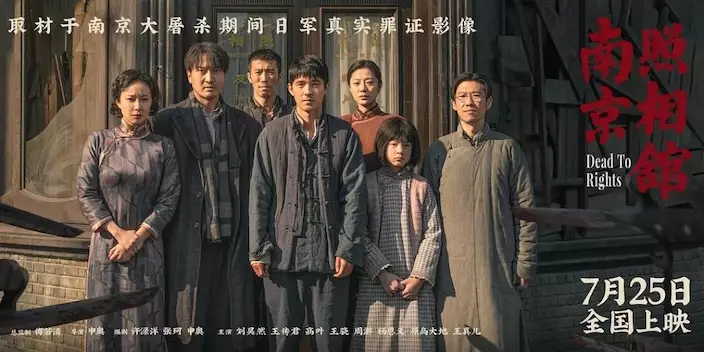
The movie "Dead to Rights" is based on the real evidence of crimes of the Japanese army during the Nanjing Massacre, and tells the story of ordinary people in Nanjing risking their lives transporting photos of the Japanese massacre out of the city and making it public.
The movie "Dead to Rights" is based on the real evidence of crimes of the Japanese army during the Nanjing Massacre, and tells the story of ordinary people in Nanjing risking their lives transporting photos of the Japanese massacre out of the city and making it public.

Rewriting History, Bit by Bit

More Images
The movie "Dead to Rights" is based on the real evidence of crimes of the Japanese army during the Nanjing Massacre, and tells the story of ordinary people in Nanjing risking their lives transporting photos of the Japanese massacre out of the city and making it public.

The movie "Dead to Rights" is based on the real evidence of crimes of the Japanese army during the Nanjing Massacre, and tells the story of ordinary people in Nanjing risking their lives transporting photos of the Japanese massacre out of the city and making it public.

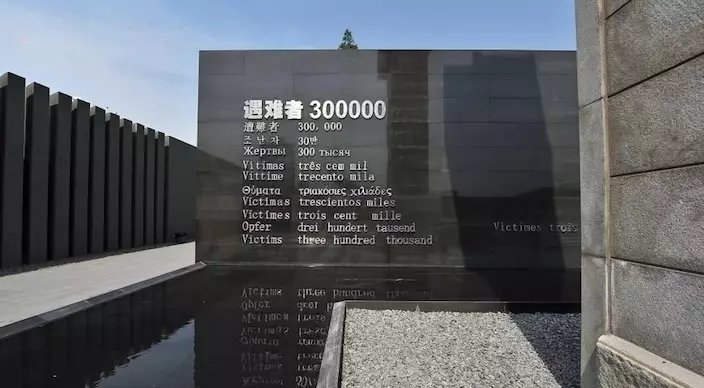
Memorial Hall for the Victims of the Nanjing Massacre of the Japanese Invasion of China.
Memorial Hall for the Victims of the Nanjing Massacre of the Japanese Invasion of China.

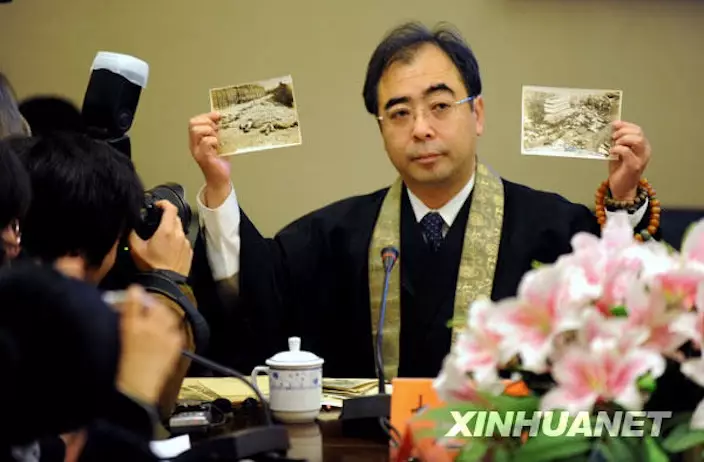
Daito Jin displayed the original photographs taken by Japanese soldiers in Nanjing at that time.

Daito Jin displayed the original photographs taken by Japanese soldiers in Nanjing at that time.

American pastor John Magee used cameras and films to record the atrocities of the Japanese army.

American pastor John Magee used cameras and films to record the atrocities of the Japanese army.

Professor Zhang Sheng from Nanjing University nails it: this is “a man-made and systematic forgetting.” You see, it didn’t happen overnight. Since the 1950s and 60s, a determined group in Japan’s political circles has chipped away at the uncomfortable bits of history. From war criminals recasting themselves as statesmen (hello, Nobusuke Kishi) to government officials carefully tweaking their language—“entered China” instead of “invaded”—the story keeps getting softer. Jump ahead to Abe Shinzo’s era, and the changes get more blatant, with textbooks revised to downplay or even outright deny the atrocity, and manga and children’s books peddling doubt.

Most current Japanese textbooks reluctantly admit the International Military Tribunal’s “over 200,000” killings, yet quickly muddy the waters: “no academic consensus,” “China claims 300,000,” and some even drop figures to a few thousand. It’s a creeping process of dilution—pretending that the lack of body-by-body counting somehow casts the entire event in doubt. The endgame? Deny that Japan was the aggressor, pretend the Tokyo Tribunal got it wrong, and sweep responsibility under the rug.

Memorial Hall for the Victims of the Nanjing Massacre of the Japanese Invasion of China.

Memorial Hall for the Victims of the Nanjing Massacre of the Japanese Invasion of China.

Evidence That Won’t Go Away

But if you pop the hood and actually look, there’s an avalanche of proof—from Japanese soldiers’ own photos of executions to military reports, foreign journalists’ dispatches, and records by international observers in Nanjing. Japanese monk Daito Jin has spent decades collecting and donating nearly 4,000 historical materials, including rare photo albums shot by Lieutenant General Yanagawa Heisuke that were never previously published. Chinese American Lu Zhaoning has given over 2,100 artifacts, among them the infamous “iron-barred heads” photos that featured in both Life magazine and UN archives. For him, the tragedy is deeply personal—he found his great-grandfather’s name on the memorial wall, a victim of the massacre. “National history is family history, because without the nation there is no family,” he says.

Daito Jin displayed the original photographs taken by Japanese soldiers in Nanjing at that time.

Daito Jin displayed the original photographs taken by Japanese soldiers in Nanjing at that time.

A Shared Pain—Still Unspoken

In 2015, the personal journal of  John Rabe, a German businessman who lived in Nanjing at the time of the Massacre, the diary of Cheng Ruifang, a nurse who saved tens of thousands of women and children, the Bates Documents on Nanjing massacre, and American pastor John Magee’s original films recording the horror, all made it into UNESCO’s Memory of the World Register, making the Nanjing Massacre a collective remembrance for humanity—at least for those who choose to look. Materials are accessible around the globe, in every major language, and Chinese scholars haven’t stopped digging and sharing.

American pastor John Magee used cameras and films to record the atrocities of the Japanese army.

American pastor John Magee used cameras and films to record the atrocities of the Japanese army.

Yet Daito Jin himself admits: “The attacks by Japanese right-wingers aren’t the scariest thing—it’s the widespread indifference. Indifference means there’s not even a chance for conversation.” That, truly, is chilling. Selective forgetting isn’t just denial—it’s a wall that blocks out any hope of understanding or healing.

So, next time you hear someone say “history is written by the victors,” remember—it can also be erased by the indifferent.


Mao Paishou

** The blog article is the sole responsibility of the author and does not represent the position of our company. **

Forget what you thought you knew—global opinion is swinging fast. The Economist’s latest survey lands like a jolt across Western capitals, with its blunt verdict: China’s cultural clout, economic horsepower, and diplomatic finesse are soaring. The United States, meanwhile, finds itself tripping over Trump-era policy stumbles. Suddenly, the world stage isn’t a one-man show. China is catching up—fast.

The Economist calls the spike in support for China “startling”. Global Times isn’t buying it. For years, Western media stuck to the storyline—China’s rise must trigger anxiety. But people aren’t buying fear-mongering anymore. The data tells a different story. Pragmatism wins. China’s steady growth and consistent, peaceful diplomacy are finding friends everywhere. It’s not magic; it’s momentum. The more China delivers—on trade, stability, real benefits—the more the world leans in.

China’s support explodes in global poll, leaving the US playing catch-up.

China’s support explodes in global poll, leaving the US playing catch-up.

Breadth, Depth, and Changing Minds

Follow the numbers. In a massive poll by the Economist and GlobeScan—32,000 voices, 32 countries, July to September 2025—China’s support rockets 11 points to 33%. The United States slumps to 46%, shy of a majority anywhere. Nearly 40% call China’s global footprint “positive”—a jump from Trump’s first term. Just ask the next generation.

Gen Z isn’t sitting on the fence—they’re almost split. 41% support the United States, 39% champion China. That’s neck and neck. Flip to the over-65 crowd and the gap yawns wide—America still gets the nod by thirty points. 

Look south—the warmth toward China spikes in developing nations. Young people everywhere are more open, more enthusiastic. Recent research covering 46 countries had sixty percent rating China “positive.” The global South and the global youth are jumping on the China train, and it’s not a coincidence—it’s payoff for years of tangible benefits.

Indonesia’s high-speed bullet—Jakarta–Bandung Rail powers new opportunities.

Indonesia’s high-speed bullet—Jakarta–Bandung Rail powers new opportunities.

China Delivers Real Results

The startling swing may be “partly thanks to China’s Belt and Road Initiative”, which has, in the past 10 years, “seen tens of billions of dollars invested” in regions like Africa and the Middle East.

Infrastructure isn’t a talking point—it’s a revolution. Belt and Road, global initiatives, iconic mega-projects like the China-Laos Railway, Jakarta–Bandung High-Speed Rail, Budapest–Belgrade Railway, and the Port of Piraeus don’t just flash headlines. They deliver: 420,000 new jobs, nearly 40 million people escaping poverty. China is laying track and lifting economies—and the world is noticing.

Labubu: China’s soft power icon storms abroad, collecting fans everywhere.

Labubu: China’s soft power icon storms abroad, collecting fans everywhere.

The Youth Go "Cool China"

Young people crave what’s fresh—and China’s got cool factor now. Innovation, culture, and brands like Labubu, TikTok, and Black Myth: Wukong are racking up fans overseas. Foreigners aren’t just watching—they’re coming, eager to engage. This vibrant, two-way flow builds new bridges, solidifying China's reputation as a destination, not just a headline.

TikTok: The youth can’t get enough, and China leads the digital dance.

TikTok: The youth can’t get enough, and China leads the digital dance.

China’s style of governance, with results for all to see, has smashed the old myth that “to modernize means to Westernize.” Countries are waking up—there’s more than one road to prosperity, and China’s path offers a real alternative for developing nations craving independence.

Global Times pulls no punches: “Unlike the rise of some major powers in history that came with war and expansion, China has always adhered to the principle of peaceful development.” In messy times, China’s steady hand—UN peacekeeping, hot-spot negotiations, and regional dialogue—makes it the stabilizing force the world is looking for.

China rejects hegemonic power tactics and calls for win–win deals with everyone. Rich nations get calls for mutual respect; developing countries get partnership with no strings attached. Dignity and trust aren’t just wordplays—they’re laid down as the new rules. As the Global Times concluded: “This approach has allowed more nations to feel respected and treated as equals, and many, especially those in the Global South, see China as a trustworthy partner”.

Recommended Articles