Skip to Content Facebook Feature Image

America's Soybean Farmers Pay the Price for Washington's China Obsession

Blog

America's Soybean Farmers Pay the Price for Washington's China Obsession
Blog

Blog

America's Soybean Farmers Pay the Price for Washington's China Obsession

2025-08-19 12:01 Last Updated At:12:01

The chickens are coming home to roost. As harvest season approaches, American soybean farmers are discovering what happens when politicians prioritize trade wars over agricultural reality – and it's not pretty.

When Politics Meets Reality

The Guardian reported on August 16 that American farmers are caught in what can only be described as a perfect storm: climate disasters, soaring costs, and plummeting international demand thanks to Washington's brilliant tariff strategy. But it's the loss of the Chinese market that really got farmers sweating. Virginia Houston, the US Soy Association's government affairs director, didn't mince words: "No market can compare to China's demand for soybeans."
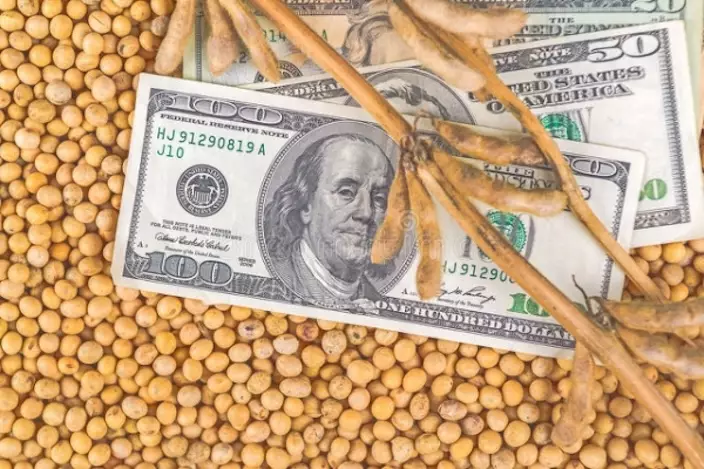
And she's absolutely right. Soybeans are America's agricultural export crown jewel, and China has been the biggest customer by a country mile. The numbers don't lie: in 2024, China imported roughly 105 million tonnes of soybeans, with the US supplying 22.13 million tonnes. Compare that to Mexico – America's second-largest buyer – which purchased less than 6 million tonnes. You don't need a PhD in economics to see there's no replacing that kind of demand.

The Tariff Trap

Here's where things get interesting. Ever since Trump slapped tariffs on China back in 2017, Beijing has been quietly but systematically pivoting toward South America. It's almost as if they saw this coming and decided to play the long game while Washington was busy making grand political gestures.

According to analyst Karen Braun's numbers, US exporters managed to sell just 3 million tonnes of soybeans in late July – a 20-year low. Meanwhile, Brazilian soybeans are flowing into China like there's no tomorrow. Brazilian consulting firm Safras & Mercado reports that China has already locked in about 8 million tonnes for September and 4 million tonnes for October, mostly from Brazil. South China Morning Post points out that's America's traditional "golden export window" from September to January getting squeezed out of existence.

Houston's admission says it all: "Under tariff barriers, we simply cannot compete with Brazil." The reality is stark – China hasn't purchased a single order of US soybeans this year. Not one.

Mother Nature Joins the Party

But wait, there's more! As if trade wars weren't enough, Mother Nature decided to pile on. This year's been a disaster for the American Midwest – frequent rainfall has left fields waterlogged and triggered pest outbreaks, decimating corn and soybean crops.

Take Brian Harbage, a seventh-generation farm owner in Ohio. His family barely managed to finish planting in June – half a month late. That means crops won't mature properly, quality will suffer, and he's had to spend extra cash on propane just to dry out waterlogged corn. His message to Trump? Simple: "Exports are the top priority."

"China, Mexico, and Canada – we export $83 billion worth of goods to them annually," Harbage explained. "Therefore, if they don't buy, we'll be stuck with our crops." It's basic economics, really.

The Politics of Empty Promises

America’s farm economy has been stuck in a rut for three years—commodity prices stay low, cattle herds shrink, and input costs only rise. Houston says today’s conditions are even worse than during the 2018 trade war peak. Farmers vent their frustrations to politicians, only to get the same old “we support you” platitudes.

Trump’s most recent pronouncement on Truth Social—demanding China quadruple orders—felt detached from realities, especially with China and Brazil deepening their cooperation through traceable, certified supply chains. Critics blast Washington’s $60 billion subsidy pledge as patchwork favouring agribusiness, rather than real relief for family farms.

Brutal Truth: US Farmers Left Behind

For farmers like Harbage, this isn't just market volatility anymore – it's an existential crisis. "If we can't export, prices will collapse; if the harvest is also poor, that's a double blow," he said. "I understand what the government wants to do, but it's hurting me in the short term."

The brutal truth? In today's reshaping global supply chains, America can't just rely on political bluster to win back markets but has to face the reality that the dominance of the Chinese market is no longer easy to recover.


Mao Paishou

** The blog article is the sole responsibility of the author and does not represent the position of our company. **

Forget what you thought you knew—global opinion is swinging fast. The Economist’s latest survey lands like a jolt across Western capitals, with its blunt verdict: China’s cultural clout, economic horsepower, and diplomatic finesse are soaring. The United States, meanwhile, finds itself tripping over Trump-era policy stumbles. Suddenly, the world stage isn’t a one-man show. China is catching up—fast.

The Economist calls the spike in support for China “startling”. Global Times isn’t buying it. For years, Western media stuck to the storyline—China’s rise must trigger anxiety. But people aren’t buying fear-mongering anymore. The data tells a different story. Pragmatism wins. China’s steady growth and consistent, peaceful diplomacy are finding friends everywhere. It’s not magic; it’s momentum. The more China delivers—on trade, stability, real benefits—the more the world leans in.

China’s support explodes in global poll, leaving the US playing catch-up.

China’s support explodes in global poll, leaving the US playing catch-up.

Breadth, Depth, and Changing Minds

Follow the numbers. In a massive poll by the Economist and GlobeScan—32,000 voices, 32 countries, July to September 2025—China’s support rockets 11 points to 33%. The United States slumps to 46%, shy of a majority anywhere. Nearly 40% call China’s global footprint “positive”—a jump from Trump’s first term. Just ask the next generation.

Gen Z isn’t sitting on the fence—they’re almost split. 41% support the United States, 39% champion China. That’s neck and neck. Flip to the over-65 crowd and the gap yawns wide—America still gets the nod by thirty points. 

Look south—the warmth toward China spikes in developing nations. Young people everywhere are more open, more enthusiastic. Recent research covering 46 countries had sixty percent rating China “positive.” The global South and the global youth are jumping on the China train, and it’s not a coincidence—it’s payoff for years of tangible benefits.

Indonesia’s high-speed bullet—Jakarta–Bandung Rail powers new opportunities.

Indonesia’s high-speed bullet—Jakarta–Bandung Rail powers new opportunities.

China Delivers Real Results

The startling swing may be “partly thanks to China’s Belt and Road Initiative”, which has, in the past 10 years, “seen tens of billions of dollars invested” in regions like Africa and the Middle East.

Infrastructure isn’t a talking point—it’s a revolution. Belt and Road, global initiatives, iconic mega-projects like the China-Laos Railway, Jakarta–Bandung High-Speed Rail, Budapest–Belgrade Railway, and the Port of Piraeus don’t just flash headlines. They deliver: 420,000 new jobs, nearly 40 million people escaping poverty. China is laying track and lifting economies—and the world is noticing.

Labubu: China’s soft power icon storms abroad, collecting fans everywhere.

Labubu: China’s soft power icon storms abroad, collecting fans everywhere.

The Youth Go "Cool China"

Young people crave what’s fresh—and China’s got cool factor now. Innovation, culture, and brands like Labubu, TikTok, and Black Myth: Wukong are racking up fans overseas. Foreigners aren’t just watching—they’re coming, eager to engage. This vibrant, two-way flow builds new bridges, solidifying China's reputation as a destination, not just a headline.

TikTok: The youth can’t get enough, and China leads the digital dance.

TikTok: The youth can’t get enough, and China leads the digital dance.

China’s style of governance, with results for all to see, has smashed the old myth that “to modernize means to Westernize.” Countries are waking up—there’s more than one road to prosperity, and China’s path offers a real alternative for developing nations craving independence.

Global Times pulls no punches: “Unlike the rise of some major powers in history that came with war and expansion, China has always adhered to the principle of peaceful development.” In messy times, China’s steady hand—UN peacekeeping, hot-spot negotiations, and regional dialogue—makes it the stabilizing force the world is looking for.

China rejects hegemonic power tactics and calls for win–win deals with everyone. Rich nations get calls for mutual respect; developing countries get partnership with no strings attached. Dignity and trust aren’t just wordplays—they’re laid down as the new rules. As the Global Times concluded: “This approach has allowed more nations to feel respected and treated as equals, and many, especially those in the Global South, see China as a trustworthy partner”.

Recommended Articles