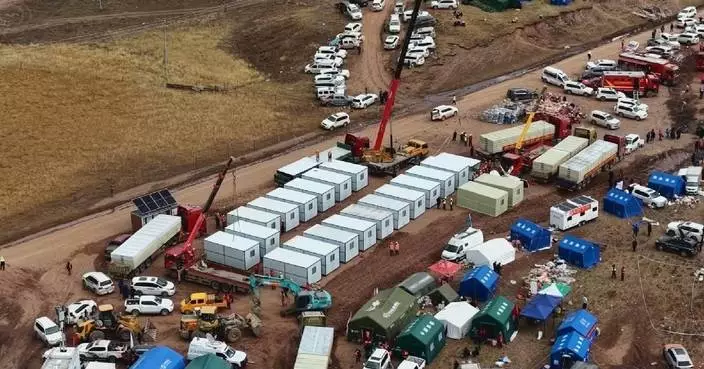
Chinese scientists have reported findings recently in their latest experiments aboard the Tiangong space station: while brain cells migrates faster, muscle repair process is more slowly, and medicines for lipid metabolism disorders show a pronounced boost in potency in weightless environment.
The discoveries could reshape approaches to Alzheimer's therapy, muscle-atrophy prevention and next-generation drug research and development.
"Currently, our in-orbit observations show that neurons in organ-on-a-chip move faster in space than on the ground. This may indicate that the unique environment of space promotes cell movement in our brain tissue," said Jin Xuena, principal designer of life sciences of the Space Application Engineering and Technology Center under the Chinese Academy of Sciences.
A parallel experiment tracking skeletal-muscle precursor cells shows the opposite trend.
In the weightless environment, the cells' migration rate drops sharply and the overall timeline for muscle regeneration is delayed.
The finding underscores the difficulty of repairing damaged muscle in space.
A third study examined how lipid-nanoparticles ferry nucleic-acid drugs into cells.
On-orbit data reveal that cellular uptake of the drug is markedly higher in microgravity, and levels of disease-related proteins decline more rapidly.
"In a space environment, the therapeutic effects of drugs for lipid metabolism disorders are significantly enhanced. Therefore, the microgravity environment in space may serve as a new approach for future drug intervention or drug development," said Jin.

Experiments in China's space station create new path for treating brain disorders
French protesters taking to the streets nationwide say they are growing increasingly frustrated and angry about the future as they struggle with the rising cost of living, deteriorating educational facilities and poor public services.
Nationwide demonstrations erupted in France on Oct 17, with the government estimating that approximately 550,000 people had participated across the country, while organizers claimed the figure reached 800,000.
In many cities, the protests escalated into violent unrest. In Paris, vehicles were set ablaze and shops were vandalized, while public facilities in several other cities also sustained varying degrees of damage.
The mass protests were initially triggered by students dissatisfied with a lack of educational resources and the poor condition of school facilities.
They were later joined by groups such as farmers and urban residents frustrated by rising energy prices, the high cost of living and declining public services.
Last week, protests in Marseille, France's second-largest city, descended into widespread violence.
On Oct 22, authorities in the Bouches-du-Rhone department, where Marseille is located, announced a ban on all protests across the department, including the southern port city, effective Oct 24.
High school students in Marseille say rising living costs and deteriorating school conditions are among the reasons they have taken to the streets.
"The price of gasoline and life itself have become too expensive. We have to protest, for the future, for ourselves and for our lives in the future," said Pablo Marez, a high school student.
"Overcrowding in classes, rats in classes. Walls in classes just don't stand up anymore. The heating doesn't work. During summer, it was way too hot," said Jenna, another high school student.
Observers said the protesters' demands highlight a series of governance challenges facing France, including a fiscal crisis, pressure on the welfare system and political polarization. With the 2027 presidential election approaching, some protesters say they see no candidate capable of turning the situation around.
"Currently, I don't see anyone who is capable of changing the situation in a country like France. I don't believe the answer lies in turning to the extremes or to the extremist parties -- whether it's the extreme right or the extreme left. People are becoming increasingly angry. We saw this on Saturday, October 17, and unfortunately, things are likely to get even worse in two days," said Jerome Borgeot, a social worker who works with homeless people in Marseille.
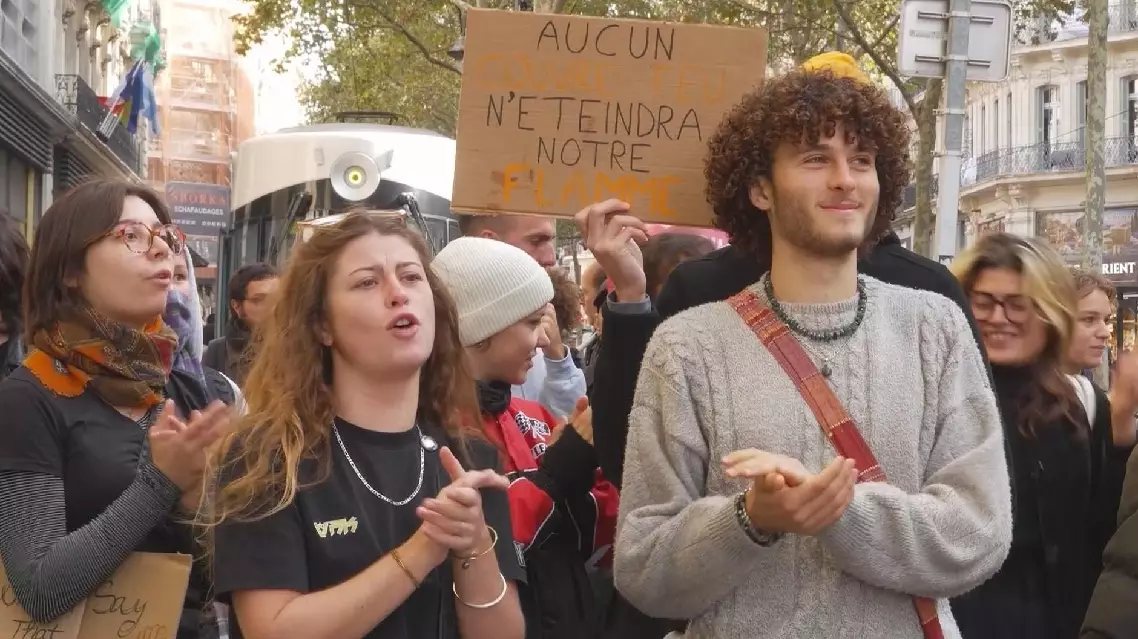
French protesters grow increasingly disillusioned about future amid nationwide demonstrations