Vladimir Putin’s unusually extended visit to China from August 31 to September 3 maps out a clear strategic declaration amidst shifting global tensions. Far from a routine summit stop, the itinerary—spanning the Shanghai Cooperation Organization (SCO) summit in Tianjin and Victory Day Parade in Beijing—projects Russia’s determination to anchor itself firmly alongside China as its primary geopolitical and economic partner. Kremlin aide Yuri Ushakov framed this “large-scale” visit as a sign of Moscow’s prioritization of Sino-Russian relations amid persistent discord with the West.
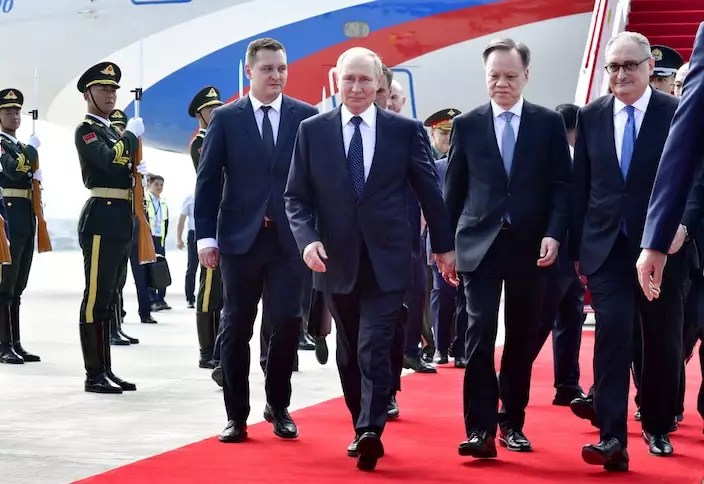
On August 31, Russian President Vladimir Putin arrived by plane in Tianjin. (Xinhua News Agency photo)”
The visit’s packed schedule extends well beyond Sino-Russian dialogue. Putin’s meetings with leaders from India, Iran, and Turkey, alongside multi-lateral engagements at the SCO summit, reveal Russia’s broader ambition to cement strategic ties with the Global South and diversify its alliances. In Beijing, his meeting schedule includes leaders from Pakistan, Serbia, Congo, Vietnam and likely North Korea. All these signal Moscow’s efforts to maintain diplomatic initiative and regional influence amid complex global geopolitics.
Economically, the trip aims to deepen robust trade relations already reflected in a 7.5 percent growth in bilateral trade reaching US$244.9 billion in 2024. Over 90 percent of transactions now use local currencies, a crucial adaptation in the face of Western sanctions. Energy cooperation remains central, supplemented by expanded agricultural exports, co-investment in automotive projects, aerospace, and co-operation on the lunar research station project, underlining the technical depth and futurist orientation of the partnership. Chinese firms’ local production in Russia further illustrates this integration.

Putin will attend the 2025 SCO Summit. (Xinhua News Agency photo)
Politically, the visit is laced with historical symbolism and pointed messaging. Maria Zakharova, Russia’s Foreign Affairs spokesperson made it quite clear that Moscow’s emphasis on the 80th anniversary of Victory in the War against Japan, the shared WWII camaraderie, and rejection of Western “historical distortion” are not mere ceremonial rhetoric but a strategic narrative tool reinforcing bilateral solidarity. Putin’s pledge to update Chinese leaders on his mid-August talks in Alaska with U.S. President Donald Trump indicates the strategic scope of Sino-Russian communication now includes global power dynamics, signalling coordinated positioning against the West.

Xinhua News Agency photo
From the Kremlin’s vantage, this 4-day visit transcends diplomacy to affirm an evolved, comprehensive strategic partnership. Beijing’s enthusiastic reception and description of the relationship as a pivot point of “true multilateralism” in an uncertain world further bolster the message: Sino-Russian ties have entered a new phase with global reverberations far beyond bilateral cooperation. In a fracturing international order, China stands undisputed as Russia’s priority partner. Putin’s rare prolonged presence is both an act of political theater and substantive strategic signalling.
This visit draws a line: Sino-Russian relations are shaping the contours of global geopolitical and economic alignments in 2025 and beyond.
Mao Paishou
** 博客文章文責自負,不代表本公司立場 **
The chickens are coming home to roost. As harvest season approaches, American soybean farmers are discovering what happens when politicians prioritize trade wars over agricultural reality – and it's not pretty.
When Politics Meets Reality
The Guardian reported on August 16 that American farmers are caught in what can only be described as a perfect storm: climate disasters, soaring costs, and plummeting international demand thanks to Washington's brilliant tariff strategy. But it's the loss of the Chinese market that really got farmers sweating. Virginia Houston, the US Soy Association's government affairs director, didn't mince words: "No market can compare to China's demand for soybeans."
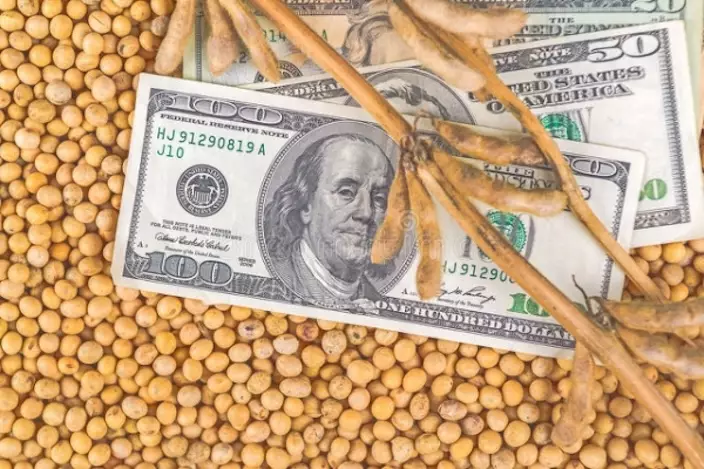
And she's absolutely right. Soybeans are America's agricultural export crown jewel, and China has been the biggest customer by a country mile. The numbers don't lie: in 2024, China imported roughly 105 million tonnes of soybeans, with the US supplying 22.13 million tonnes. Compare that to Mexico – America's second-largest buyer – which purchased less than 6 million tonnes. You don't need a PhD in economics to see there's no replacing that kind of demand.
The Tariff Trap
Here's where things get interesting. Ever since Trump slapped tariffs on China back in 2017, Beijing has been quietly but systematically pivoting toward South America. It's almost as if they saw this coming and decided to play the long game while Washington was busy making grand political gestures.
According to analyst Karen Braun's numbers, US exporters managed to sell just 3 million tonnes of soybeans in late July – a 20-year low. Meanwhile, Brazilian soybeans are flowing into China like there's no tomorrow. Brazilian consulting firm Safras & Mercado reports that China has already locked in about 8 million tonnes for September and 4 million tonnes for October, mostly from Brazil. South China Morning Post points out that's America's traditional "golden export window" from September to January getting squeezed out of existence.
Houston's admission says it all: "Under tariff barriers, we simply cannot compete with Brazil." The reality is stark – China hasn't purchased a single order of US soybeans this year. Not one.
Mother Nature Joins the Party
But wait, there's more! As if trade wars weren't enough, Mother Nature decided to pile on. This year's been a disaster for the American Midwest – frequent rainfall has left fields waterlogged and triggered pest outbreaks, decimating corn and soybean crops.
Take Brian Harbage, a seventh-generation farm owner in Ohio. His family barely managed to finish planting in June – half a month late. That means crops won't mature properly, quality will suffer, and he's had to spend extra cash on propane just to dry out waterlogged corn. His message to Trump? Simple: "Exports are the top priority."
"China, Mexico, and Canada – we export $83 billion worth of goods to them annually," Harbage explained. "Therefore, if they don't buy, we'll be stuck with our crops." It's basic economics, really.
The Politics of Empty Promises
America’s farm economy has been stuck in a rut for three years—commodity prices stay low, cattle herds shrink, and input costs only rise. Houston says today’s conditions are even worse than during the 2018 trade war peak. Farmers vent their frustrations to politicians, only to get the same old “we support you” platitudes.
Trump’s most recent pronouncement on Truth Social—demanding China quadruple orders—felt detached from realities, especially with China and Brazil deepening their cooperation through traceable, certified supply chains. Critics blast Washington’s $60 billion subsidy pledge as patchwork favouring agribusiness, rather than real relief for family farms.
Brutal Truth: US Farmers Left Behind
For farmers like Harbage, this isn't just market volatility anymore – it's an existential crisis. "If we can't export, prices will collapse; if the harvest is also poor, that's a double blow," he said. "I understand what the government wants to do, but it's hurting me in the short term."
The brutal truth? In today's reshaping global supply chains, America can't just rely on political bluster to win back markets but has to face the reality that the dominance of the Chinese market is no longer easy to recover.