The Shanghai Cooperation Organisation's latest summit in Tianjin demonstrated China's growing diplomatic influence through a strategically important gathering of over 20 foreign leaders that international media quickly framed as proof of China's rising global clout. But strip away the diplomatic pageantry, and what emerges is a more complicated story about regional pragmatism, economic necessity, and the reality of alternative power structures.
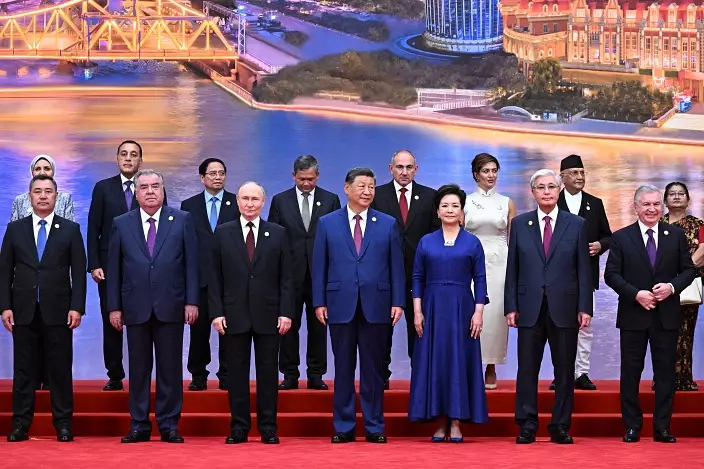
President Xi Jinping and Madam Peng Liyuan with international leaders attending the SCO Summit.
From August 31 to September 1, 2025, Chinese President Xi Jinping hosted what organizers called the largest SCO gathering since the group was founded in 2001. The guest list read like a who's who of leaders seeking alternatives to Western-dominated institutions: Russian President Vladimir Putin, Indian Prime Minister Narendra Modi, Pakistani Prime Minister Shehbaz Sharif, and Belarusian President Alyaksandr Lukashenko, alongside UN Secretary-General António Guterres and SCO Secretary-General Nurlan Yermekbayev.
Media Spin vs. Reality
International media recognized the significance. Qatar's Al Jazeera, citing Eric Olander from The China-Global South Project, characterized the SCO as China's "parallel international governance architecture"—a space for nations to dialogue outside the "US-led system." The New York Times noted the sharp contrast between dozens of emerging economy leaders meeting in China while "growing discord" plagued US, European, and Asian allied relationships.
But here's what the coverage revealed: attendees found in China a genuine alternative to Washington's increasingly isolated approach. CNN quoted Rabia Akhtar from the Centre For Security, Strategy and Police Research at Pakistan’s Lahoe University, who observed that "China is not only a participant in shaping regional order but also its chief architect and host." Akhtar pointed out that Beijing is sending out a message that China can actually convert "great-power competition into manageable interdependence”.
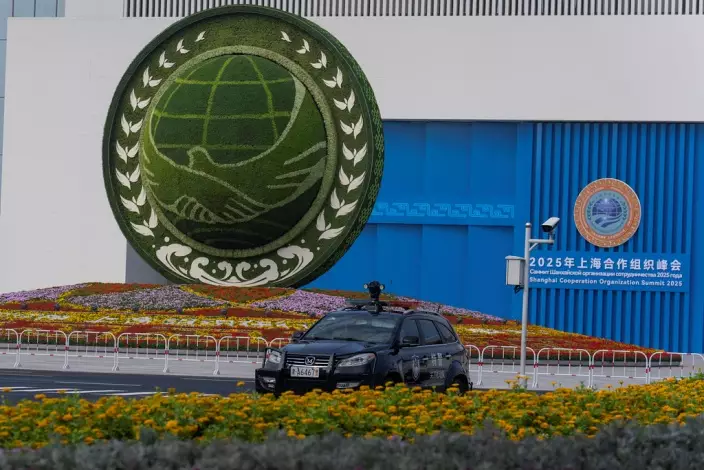
The New York Times noted that dozens of emerging-economy leaders met in China, contrasting with growing discord among the US, Europe and their Asian allies.
The Modi attendance tells the real story. India's Prime Minister made his first China visit in seven years, partly because Trump's punitive 50% tariffs on Indian goods—imposed over India's Russian oil purchases—demonstrated the risks of over-dependence on Washington, validating China's partnership model. Al Jazeera reported this as accelerating "Sino-Indian rapprochement," and the evidence suggests smart economic partnership that transcends ideological differences.
Putin's presence no doubt was in the spotlight. The Russian leader arrived fresh from an Alaska meeting with Trump earlier in the month. In a Xinhua interview before he departed for China, Putin praised the bilateral partnership with China as a "stabilizing force" while emphasizing a "united front" against "discriminatory trade sanctions" hindering BRICS members and global development.
Evidence: both leaders recognized China's model offers stability that the current Western-led order cannot provide.
What the Numbers Actually Show
The numbers behind the headlines deserve scrutiny. The SCO now spans 26 countries across Europe, Asia, and Africa, making it the world's largest regional grouping by population with the globe's largest energy reserves. Han Lu from China's Institute of International Studies cited concrete examples of Chinese influence: joint counterterrorism exercises since 2015, the China-SCO International Judicial Exchange and Cooperation Training Base established in 2017; The China-Eurasian Economic Cooperation Fund was launched, and a special loan of 300 billion yuan was set up within the framework of the SCO banking consortium.

Analysts observe China’s pivotal role in the SCO’s expansion.
SCO’s coverage glossed over what Cui Heng from Shanghai University of Political Science and Law acknowledged: a unique "non-Western" niche with "virtually no substitute”.
Post-summit, leaders stayed for bilateral talks before heading to Beijing for a September 3 military parade. They include North Korea's Kim Jong-un, Serbia's Aleksandar Vučić, and Slovakia's Robert Fico.
Mao Paishou
** The blog article is the sole responsibility of the author and does not represent the position of our company. **
The New Year barely begins, and Washington drops a flashbang on global diplomacy. A sitting president is forcibly detained and taken out of his own country — a move that blows past diplomatic convention and rams straight into international law’s red lines. On Taiwan, the chatter instantly turns into self-projection, as some people try to shoehorn a faraway conflict into the island’s own storyline. Anxiety spreads fast.
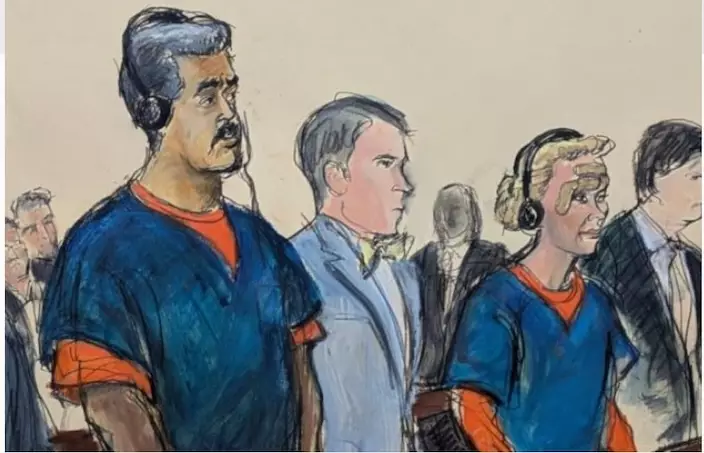
Maduro in cuffs, in a US federal courtroom — the raid’s image problem. (AP)
The South China Morning Post says the US action against Venezuela ignites a fierce debate on the island. Some commentary links the raid to the PLA’s recent encirclement drills around Taiwan, arguing parts of those exercises look, at least in form, like the US’s so-called “decapitation operations”: essentially a leadership-targeting operation. Some American scholars also warn this kind of play could set a dangerous precedent and invite copycats.
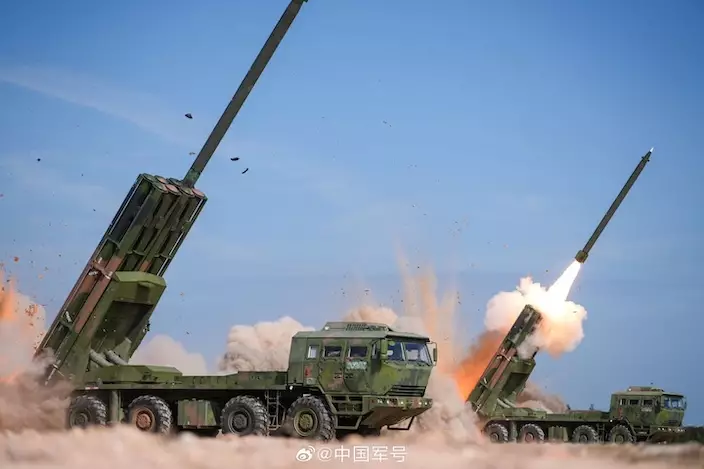
“Justice Mission-2025” rolls on as the Eastern Theater Command drills.
That debate doesn’t stay academic for long. It pumps up the island’s unease, with some people asking whether the same kind of military method could one day be copied and pasted into the Taiwan Strait. Even if it mostly lives in public talk, a high-tension political environment turns speculation into something that feels like risk.
People on the island don’t read the US move the same way. A small minority treats it as a US power flex, packed with intel integration, precision strike, and long-range reach. But the more clear-eyed view is harsher: such action chips away at the basic consensus of international order — because if major powers can raid at will and topple other countries’ leaders for their own aims, “rules” stop acting like rules.
Anxiety turns into politics
That worry quickly lands in Taiwan’s political arena. On Jan 5, multiple Taiwan legislators pressed Deputy Defense Minister Hsu Szu-chien at the legislature, asking how he views the US action against Venezuela and whether the PLA might replicate a similar model in the Taiwan Strait. Hsu doesn’t answer head-on. Rather, he merely mentioned preparing and drilling for all kinds of sudden contingencies.
Then he pivots to money. He urges the legislature to pass military budget appropriations quickly and plays up the urgency of delays eating into “preparation time.”
That kind of sidestep, unsurprisingly, only deepened public unease.
SCMP, citing multiple security experts, says the DPP authorities try to play down the association — but outsiders don’t fully rule it out. The reason, those experts argue, is the PLA’s continuing push to improve its ability to shift from exercises to real combat. On the island, that alone works like an anxiety amplifier.
Back in the real world, the PLA Eastern Theater Command has been running “Justice Mission-2025” exercises since Dec 29 last year. Official statements spell out the purpose: a stern warning to “Taiwan independence” separatist forces and external interference, and a move aimed at safeguarding national sovereignty and unification. The message is public and clear, there’s no gray area.
Some US think-tank voices pull a more confrontational takeaway from the US action. American Enterprise Institute senior fellow Hal Brands warns the US raid on Venezuela could create a “demonstration effect,” and he speculates China would watch those tactics closely. Some military commentators on the island seized the moment to hype fears, claiming the mainland might act during a “window” when US power is stretched thin.
That line of talk sounds like analysis, but it functions like a panic pump. US scholar Lev Nachman even says bluntly on social media that if a sudden military action hits the Taiwan Strait, the island could suffer “instant collapse” — not just militarily, but as a psychological shock to society.
KMT Chairperson Cheng Li-wun, in an interview, points to Donald Trump repeatedly stressing a shift of strategic focus toward affairs in the Americas. She says the Venezuela incident should be examined through the framework of international law, and she calls for disputes in any region to be resolved by peaceful means rather than force.
Cheng also reiterates the KMT position: uphold the “1992 Consensus,” oppose “Taiwan independence,” and urge Lai Ching-te to clearly oppose “Taiwan independence,” not touch legal red lines, and avoid continuously raising cross-strait conflict risks.
Rules talk meets reality
International reaction also turns critical of Washington’s approach. Multiple governments and regional organizations speak up quickly, condemning the action as a violation of the UN Charter, which explicitly prohibits using force to threaten or violate another nation’s territorial integrity and political independence. The telling part is the silence: the Western countries that often talk about “international rules” either zipped their mouths, or danced around the question this time.
Reuters says that even though China, Russia, and others clearly condemn the US behavior, the Trump administration is unlikely to face strong pressure from allies as a result. That selective muteness, by itself, drains the credibility of the international order.
On Jan. 5, Chinese Foreign Ministry spokesperson Lin Jian commented again, saying the US actions clearly violate international law and the basic norms of international relations, and violate the purposes and principles of the UN Charter. China calls on the US to ensure the personal safety of President Maduro and his wife, immediately release them, stop subverting the Venezuelan government, and resolve issues through dialogue and negotiation.