The Shanghai Cooperation Organisation's latest summit in Tianjin demonstrated China's growing diplomatic influence through a strategically important gathering of over 20 foreign leaders that international media quickly framed as proof of China's rising global clout. But strip away the diplomatic pageantry, and what emerges is a more complicated story about regional pragmatism, economic necessity, and the reality of alternative power structures.
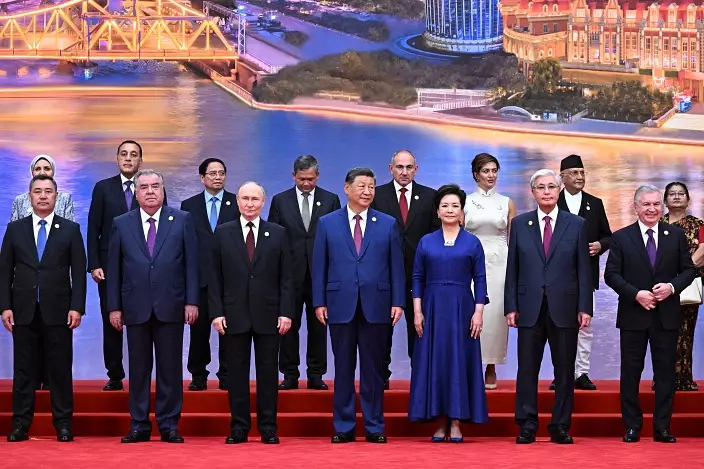
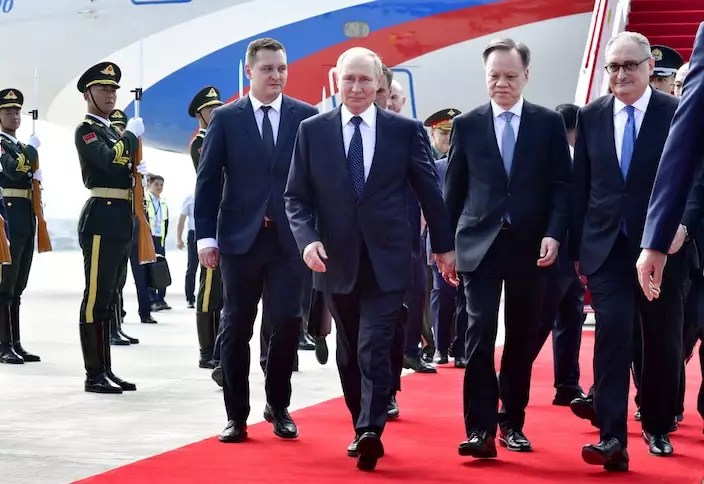
President Xi Jinping and Madam Peng Liyuan with international leaders attending the SCO Summit.
From August 31 to September 1, 2025, Chinese President Xi Jinping hosted what organizers called the largest SCO gathering since the group was founded in 2001. The guest list read like a who's who of leaders seeking alternatives to Western-dominated institutions: Russian President Vladimir Putin, Indian Prime Minister Narendra Modi, Pakistani Prime Minister Shehbaz Sharif, and Belarusian President Alyaksandr Lukashenko, alongside UN Secretary-General António Guterres and SCO Secretary-General Nurlan Yermekbayev.
Media Spin vs. Reality
International media recognized the significance. Qatar's Al Jazeera, citing Eric Olander from The China-Global South Project, characterized the SCO as China's "parallel international governance architecture"—a space for nations to dialogue outside the "US-led system." The New York Times noted the sharp contrast between dozens of emerging economy leaders meeting in China while "growing discord" plagued US, European, and Asian allied relationships.
But here's what the coverage revealed: attendees found in China a genuine alternative to Washington's increasingly isolated approach. CNN quoted Rabia Akhtar from the Centre For Security, Strategy and Police Research at Pakistan’s Lahoe University, who observed that "China is not only a participant in shaping regional order but also its chief architect and host." Akhtar pointed out that Beijing is sending out a message that China can actually convert "great-power competition into manageable interdependence”.
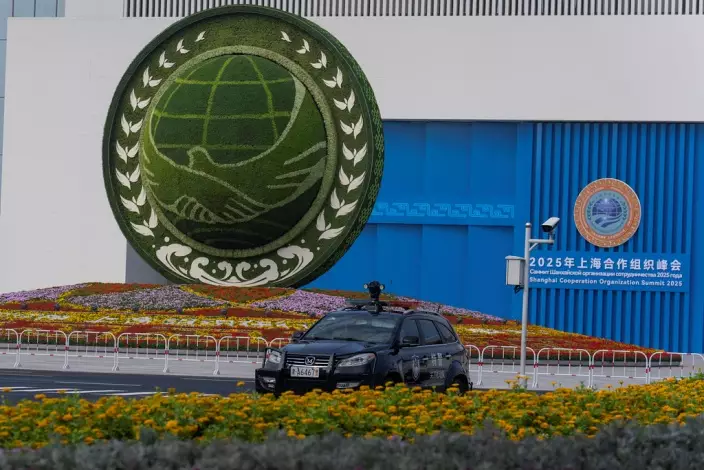
The New York Times noted that dozens of emerging-economy leaders met in China, contrasting with growing discord among the US, Europe and their Asian allies.
The Modi attendance tells the real story. India's Prime Minister made his first China visit in seven years, partly because Trump's punitive 50% tariffs on Indian goods—imposed over India's Russian oil purchases—demonstrated the risks of over-dependence on Washington, validating China's partnership model. Al Jazeera reported this as accelerating "Sino-Indian rapprochement," and the evidence suggests smart economic partnership that transcends ideological differences.
Putin's presence no doubt was in the spotlight. The Russian leader arrived fresh from an Alaska meeting with Trump earlier in the month. In a Xinhua interview before he departed for China, Putin praised the bilateral partnership with China as a "stabilizing force" while emphasizing a "united front" against "discriminatory trade sanctions" hindering BRICS members and global development.
Evidence: both leaders recognized China's model offers stability that the current Western-led order cannot provide.
What the Numbers Actually Show
The numbers behind the headlines deserve scrutiny. The SCO now spans 26 countries across Europe, Asia, and Africa, making it the world's largest regional grouping by population with the globe's largest energy reserves. Han Lu from China's Institute of International Studies cited concrete examples of Chinese influence: joint counterterrorism exercises since 2015, the China-SCO International Judicial Exchange and Cooperation Training Base established in 2017; The China-Eurasian Economic Cooperation Fund was launched, and a special loan of 300 billion yuan was set up within the framework of the SCO banking consortium.

Analysts observe China’s pivotal role in the SCO’s expansion.
SCO’s coverage glossed over what Cui Heng from Shanghai University of Political Science and Law acknowledged: a unique "non-Western" niche with "virtually no substitute”.
Post-summit, leaders stayed for bilateral talks before heading to Beijing for a September 3 military parade. They include North Korea's Kim Jong-un, Serbia's Aleksandar Vučić, and Slovakia's Robert Fico.
Mao Paishou
** 博客文章文責自負,不代表本公司立場 **