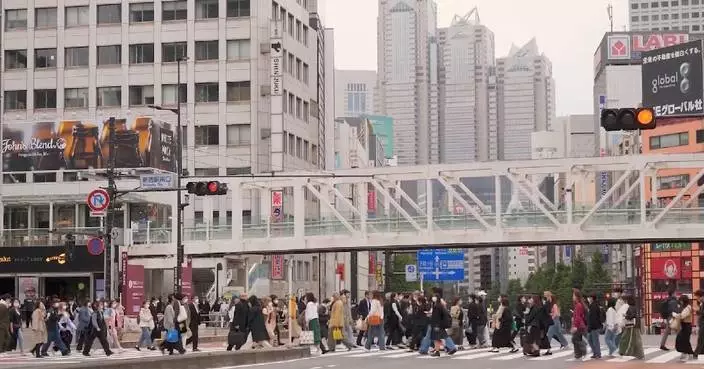
A leading Chinese high-tech company, SUPCON, released a new industrial AI model for manufacturing process automation on Thursday, amid a growing trend of AI products in the country targeting the entire industrial process, from design to production, operation, and services.
Based in Hangzhou, east China's Zhejiang Province, SUPON developed the Time-series Pre-trained Transformer 2 (TPT 2) for process industries, including the manufacturing of steel, non-ferrous metals, chemicals, and building materials.
The model establishes an AI algorithm based on industrial time-series data and is a credible model that conforms to the first principles of the process industry, according to the company.
The model can analyze data and make optimizations automatically. It can detect abnormal trends in equipment and generate solutions to ensure the safe and stable operation of automated processing lines.
"We can use the data from the past week or the past month to predict whether the equipment will have problems in the future. Previously, we relied on experts to do this part of the work, but today we can use AI tools to handle the entire process," said Chu Jian, founder of SUPCON Technology Company.
Experts said SUPCON's model of TPT 2 is an epitome of China's advances in large-scale AI models.
China has established a comprehensive AI industrial system covering foundational infrastructure and sector-specific applications. It is home to over 5,100 AI companies, accounting for roughly 15 percent of the global total.
"China has seen rapid progress in large-scale models since 2024. We have seen notable progress in the models' basic capabilities, reasoning capabilities, as well as the understanding and generation capabilities of multimodal models," said Yu Xiaohui, president of the China Academy of Information and Communications Technology.

China's SUPCON releases new AI model for industrial process automation
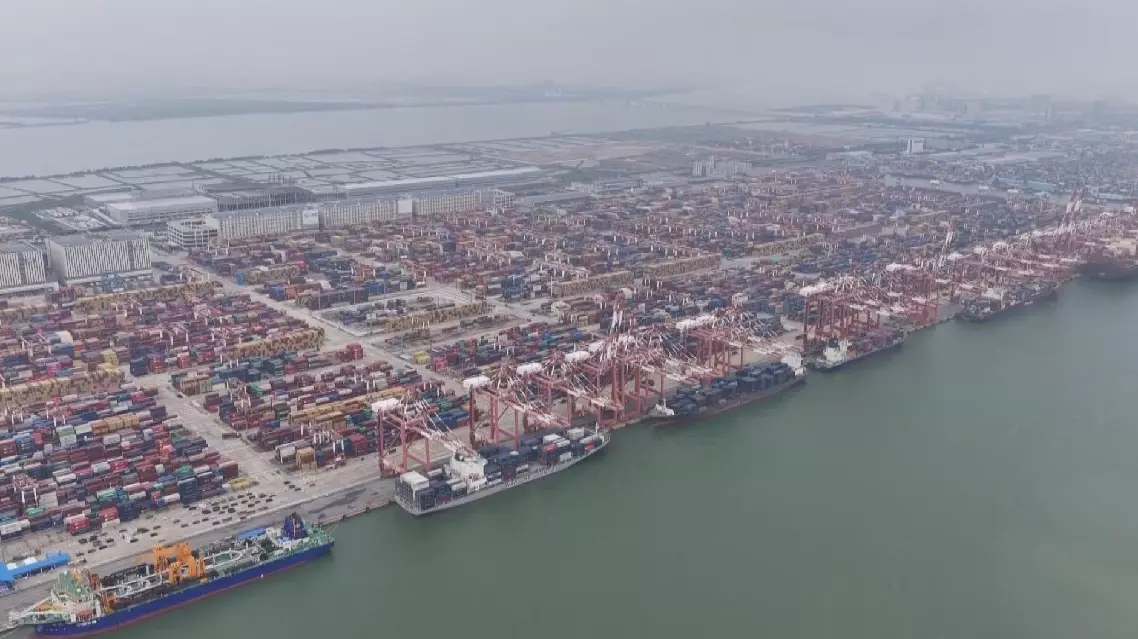
China and Switzerland on Friday signed a protocol to upgrade their free trade agreement (FTA). The move is expected to expand market access, promote two-way investment, and deepen bilateral economic and trade cooperation, according to China's Ministry of Commerce.
Under the protocol, the two sides will make high-standard commitments to further opening up trade in goods, services and investment, while upgrading rules covering rules of origin, trade facilitation, technical barriers to trade, digital trade, competition, and trade and sustainable development.
The upgrade is expected to provide stronger institutional support for bilateral trade and investment liberalization and facilitation, said the ministry, adding that it underscores both countries' commitment to free trade, open cooperation and a rules-based multilateral trading system amid global uncertainties.
Switzerland is China's seventh-largest trading partner in Europe, while China is Switzerland's largest trading partner in Asia, an official with the ministry noted.
The official explained that the upgraded agreement would help unlock greater potential for bilateral trade and investment, and bring new opportunities to businesses and people in both countries.
Data shows that over the past five years, the annual bilateral trade volume between China and Switzerland has exceeded 50 billion U.S. dollars on average. From January to September of this year, bilateral trade reached 89 billion dollars, an increase of 127 percent year on year.
China and Switzerland signed their original FTA in 2013, and the agreement entered into force in July 2014. The two countries launched negotiations to upgrade the agreement in September 2024 and announced their completion in August 2026, after five rounds of talks.
Following the signing, both sides will complete their respective domestic legal approval procedures and work to bring the upgraded agreement into force as soon as possible, the ministry said.
China, Switzerland sign protocol to upgrade free trade agreement