UNITED NATIONS (AP) — An initial United Nations assessment of the impact of Afghanistan’s recent deadly earthquake found 5,230 homes destroyed and 672 damaged in 49 villages — but the U.N. hasn’t been able to get to the vast majority of the remote villages.
Shannon O’Hara, the coordination chief for the U.N. humanitarian office in Afghanistan, said Monday that damaged roads in the country’s rugged and mountainous east where the 6.0 magnitude quake struck have made it extremely difficult to assess the impact in the 441 affected villages. A series of aftershocks ranging from 5.2 to 5.6 in magnitude added to the difficulties, she said.
The earthquake struck on Aug. 31, killing at least 2,200 people, and that figure could rise as more bodies are recovered. The United Nations estimates the quake has affected up to 500,000 people, more than half of them children and some of them Afghans forcibly returned from neighboring Pakistan and Iran.
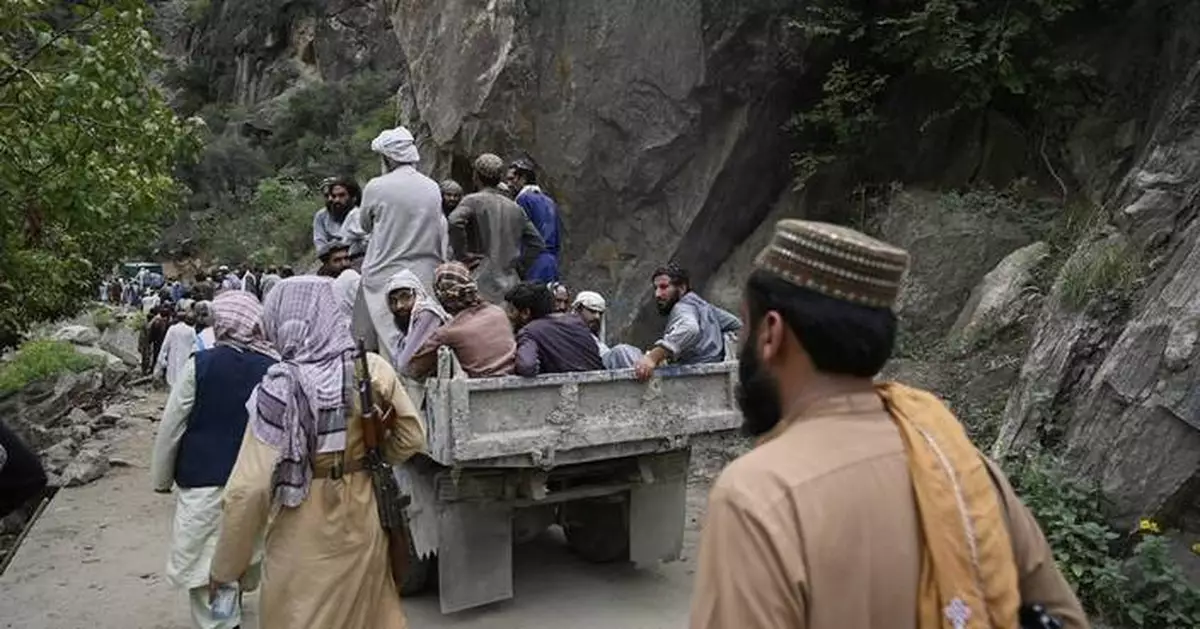
As an example of the difficulties the U.N. team has faced, O’Hara said it took her more than 6 1/2 hours to get from Jalalabad, the largest city near the quake area, to the worst-hit area roughly 100 kilometers away on the only road — a narrow, single-lane track carved into the mountainside blocked in places by large rocks from landslides.
Many vehicles, including trucks loaded with humanitarian aid, were trying to get up and down the valley to help, she said.
“As we drove towards the epicenter, we saw families walking in the opposite direction — displaced, carrying what little they could. Many were still wearing the same clothes from the night of the earthquake,” O’Hara said. “Mothers and fathers were carrying their children, some with fresh bandages covering their injuries.”
She said the devastation got worse as the U.N. team got closer to the epicenter, with entire villages destroyed and the overpowering smell of dead animals. Some families who have lost their homes and livelihoods were living in crowded tents, while many others were sleeping under the open skies, exposed to rain and cold.
“There was no clean drinking water and no sanitation, with cholera endemic in the region, and initial assessments indicating that 92% of these communities are practicing open defecation,” she said. “The potential for a cholera outbreak is alarming. “
O’Hara, who has been in the quake-affected region for five days, reported the initial assessment at a video press conference with U.N. journalists.
She said the needs are overwhelming — clean water, food, tents, latrines and warm clothing as the region nears the start of winter snows at the end of October.
In visits to three camps for displaced people on Monday, O’Hara said women in particular emphasized their need for clean water and adequate clothing for themselves and for their children.
She said time is of the essence. “Any day, rainfall could cause flash floods in the valleys” where camps for the displaced have been set up and ”additional aftershocks could cause more severe landslides, cutting off access to communities still living near the epicenter," O'Hara said.
“And snow will cut off access to these mountain valleys,” she said. “If we don’t act now, these communities may not survive the coming winter.”
The United Nations will be issuing an emergency appeal Tuesday for desperately needed funding to help quake survivors, O’Hara said.
She said Afghanistan’s ruling Taliban authorities took the lead in search and rescue operations and there has been no major obstruction to humanitarian operations.
As for women and girls whose activities are drastically curtailed by the Taliban, O'Hara said she had not received any reports of women being left behind by male-only rescue teams, and the U.N. is ensuring that women are part of health teams and aid distribution operations.
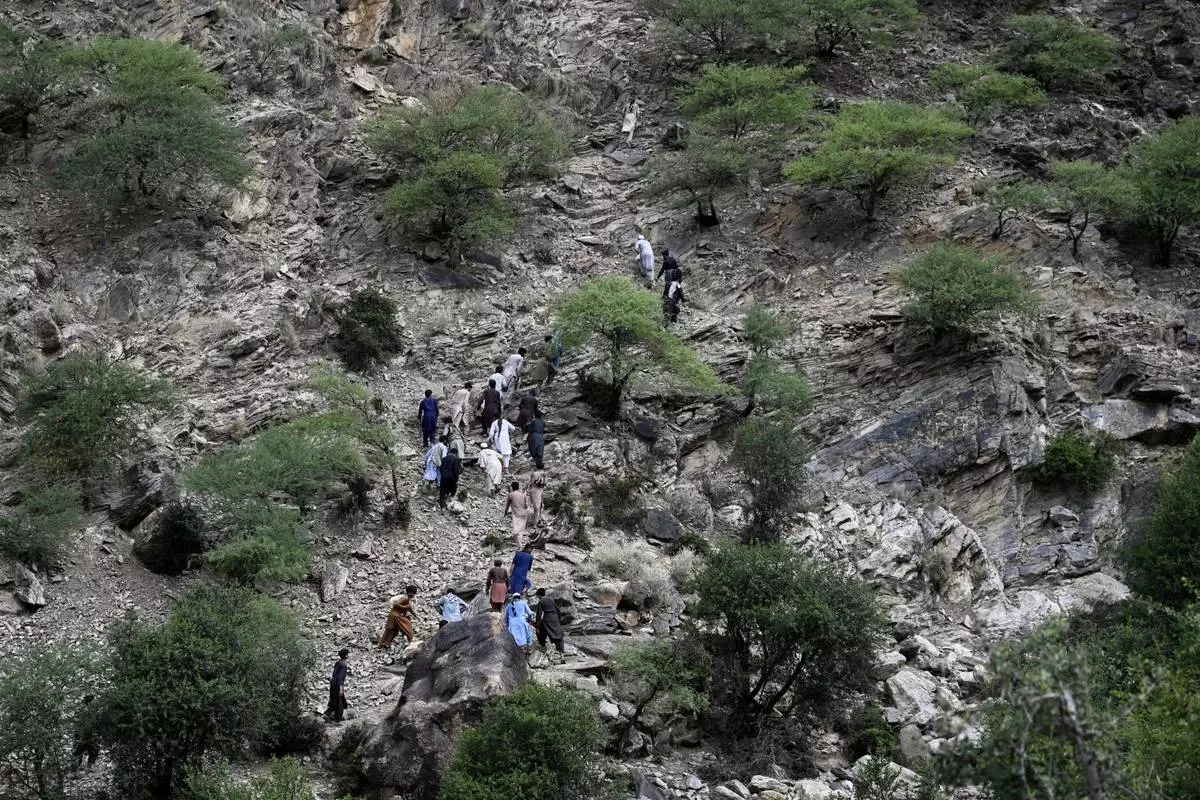
Residents from surrounding towns and villages climb as they try to reach the quake-hit region to assist survivors after Sunday night's powerful 6.0-magnitude earthquake that struck several provinces, in the Nurgol district, Kunar province, eastern Afghanistan, Tuesday, Sept. 2, 2025. (AP Photo/Nava Jamshidi)
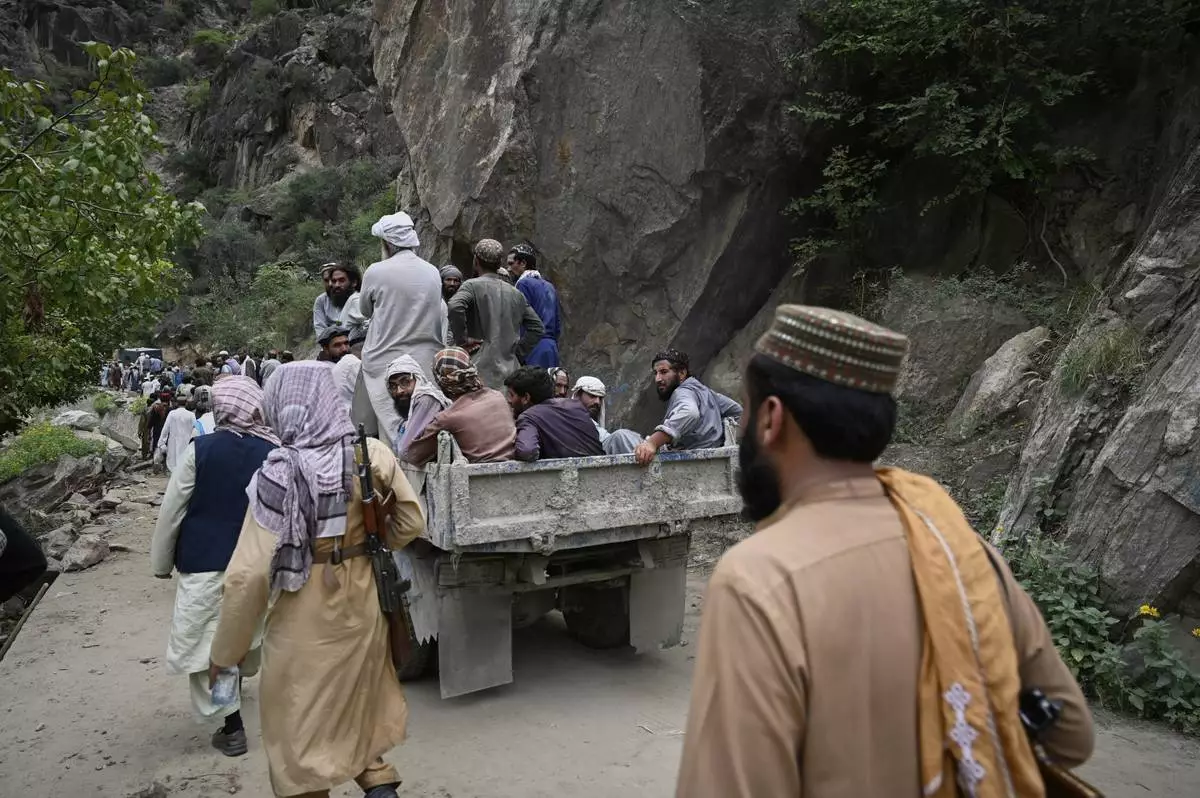
Residents from surrounding towns and villages try to reach the quake-hit region to assist survivors after Sunday night's powerful 6.0-magnitude earthquake that struck several provinces, in the Nurgol district, Kunar province, eastern Afghanistan, Tuesday, Sept. 2, 2025. (AP Photo/Nava Jamshidi)
WASHINGTON (AP) — A bipartisan group of lawmakers have proposed creating a new agency with $2.5 billion to spur production of rare earths and the other critical minerals, while the Trump administration has already taken aggressive actions to break China's grip on the market for these materials that are crucial to high-tech products, including cellphones, electric vehicles, jet fighters and missiles.
It’s too early to tell how the bill, if passed, could align with the White House’s policy, but whatever the approach, the U.S. is in a crunch to drastically reduce its reliance on China, after Beijing used its dominance of the critical minerals market to gain leverage in the trade war with Washington. President Donald Trump and Chinese President Xi Jinping agreed to a one-year truce in October, by which Beijing would continue to export critical minerals while the U.S. would ease its export controls of U.S. technology on China.
The Pentagon has shelled out nearly $5 billion over the past year to help ensure its access to the materials after the trade war laid bare just how beholden the U.S. is to China, which processes more than 90% of the world's critical minerals. To break Beijing's chokehold, the U.S. government is taking equity stakes in a handful of critical mineral companies and in some cases guaranteeing the price of some commodities using an approach that seems more likely to come out of China's playbook instead of a Republican administration.
The bill that Sen. Jeanne Shaheen, D-N.H., and Sen. Todd Young, R-Ind., introduced Thursday would favor a more market-based approach by setting up the independent body charged with building a stockpile of critical minerals and related products, stabilizing prices, and encouraging domestic and allied production to help ensure stable supply not only for the military but also the broader economy and manufacturers.
Shaheen called the legislation “a historic investment” to make the U.S. economy more resilient against China’s dominance that she said has left the U.S. vulnerable to economic coercion. Young said creating the new reserve is “a much-needed, aggressive step to protect our national and economic security.”
Rep. Rob Wittman, R.-Va., introduced the House version of the bill.
When Trump imposed widespread tariffs last spring, Beijing fought back not only with tit-for-tat tariffs but severe restrictions on the export of critical minerals, forcing Washington to back down and eventually agree to the truce when the leaders met in South Korea.
On Monday, in his speech at SpaceX, Defense Secretary Pete Hegseth revealed that the Pentagon has in the past five months alone “deployed over $4.5 billion in capital commitments” to close six critical minerals deals that will “help free the United States from market manipulation.”
One of the deals involves a $150 million of preferred equity by the Pentagon in Atlantic Alumina Co. to save the country's last alumina refinery and build its first large-scale gallium production facility in Louisiana.
Last year, the Pentagon announced it would buy $400 million of preferred stock in MP Materials, which owns the country's only operational rare earths mine at Mountain Pass, California, and entered into a $1.4-billion joint partnership with ReElement Technologies Corp. to build up a domestic supply chain for rare earth magnets.
On Wednesday, Trump announced in a proclamation that the U.S. is “too reliant” on foreign-sourced critical minerals and directed his administration to negotiate better deals. He said possible remedies would include minimum import prices for certain critical minerals.
“Reshoring manufacturing that’s critical to our national and economic security is a top priority for the Trump administration,” said Kush Desai, a White House spokesperson.
The drastic move by the U.S. government to take equity stakes has prompted some analysts to observe that Washington is pivoting to some form of state capitalism to compete with Beijing.
“Despite the dangers of political interference, the strategic logic is compelling,” wrote Elly Rostoum, a senior fellow at the Washington-based research institute Center for European Policy Analysis. She suggested that the new model could be “a prudent way for the U.S. to ensure strategic autonomy and industrial sovereignty.”
Companies across the industry are welcoming the intervention from Trump's administration.
“He is playing three-dimensional chess on critical minerals like no previous president has done. It's about time too, given the military and strategic vulnerability we face by having to import so many of these fundamental building blocks of technology and national defense,” NioCorp's Chief Communications Officer Jim Sims said. That company is trying to finish raising the money it needs to build a mine in southeast Nebraska.
In addition to trying to boost domestic production, the Trump administration has sought to secure some of these crucial elements through allies. In October, Trump signed an $8.5 billion agreement with Australia to invest in mining there, and the president is now aggressively trying to take over Greenland in the hope of being able to one day extract rare earths from there.
On Monday, finance ministers from the G7 nations huddled in Washington over their vulnerability in the critical mineral supply chains.
U.S. Treasury Secretary Scott Bessent, who has led several rounds of trade negotiations with Beijing, urged attendees to increase their supply chain resiliency and thanked them for their willingness to work together “toward decisive action and lasting solutions,” according to a Treasury statement.
The bill introduced on Thursday by Shaheen and Young would encourage production with both domestic and allied producers.
Congress in the past several years has pushed for legislation to protect the U.S. military and civilian industry from Beijing's chokehold. The issue became a pressing concern every time China turned to its proven tactics of either restricting the supply or turned to dumping extra critical minerals on the market to depress prices and drive any potential competitors out of business.
The Biden administration sought to increase demand for critical minerals domestically by pushing for more electric vehicle and windmill production. But the Trump administration largely eliminated the incentives for those products and instead chose to focus on increasing critical minerals production directly.
Most of those past efforts were on a much more limited scale than what the government has done in the past year, and they were largely abandoned after China relented and eased access to critical minerals.
Funk reported from Omaha, Nebraska. AP writer Konstantin Toropin contributed to the report.

FILE - NioCorp Chief Operating Officer Scott Honan tells a group of investors about the plans for a proposed mine during a tour of the site Oct. 6, 2021, near Elk Creek in southeast Nebraska. (AP Photo/Josh Funk, File)
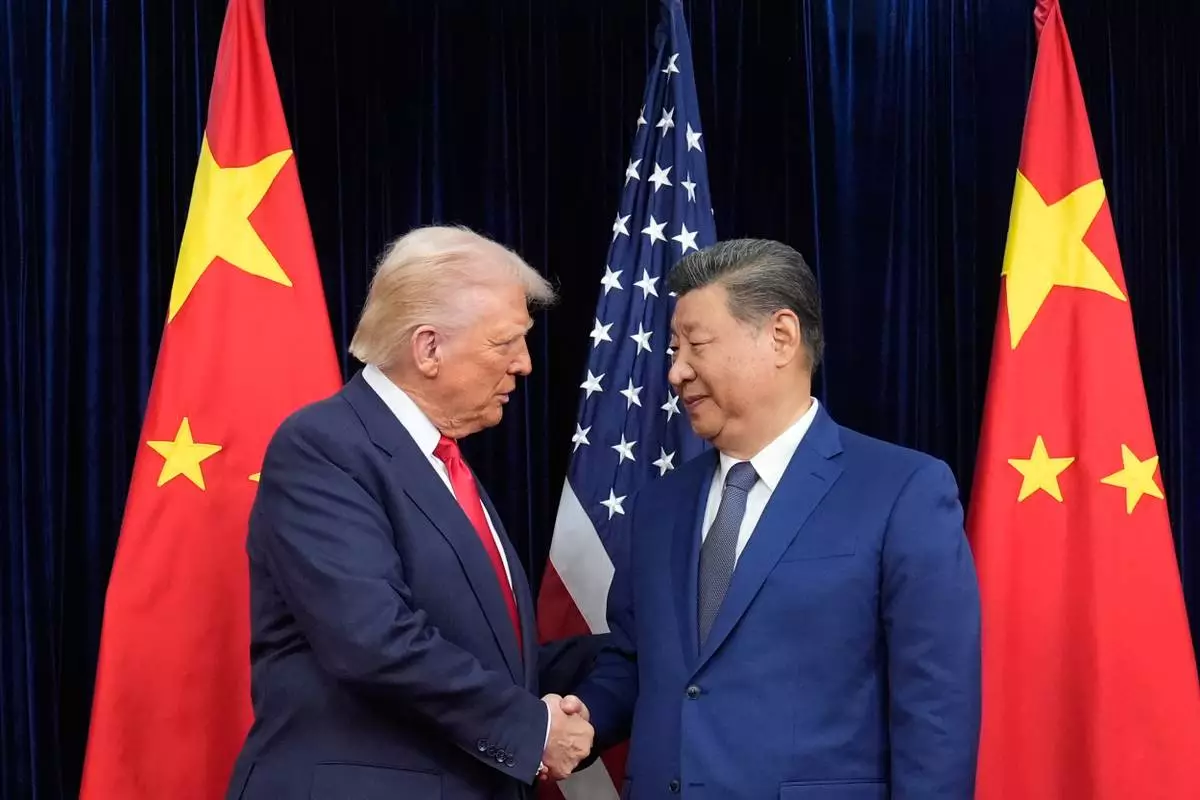
FILE - President Donald Trump, left, and Chinese President Xi Jinping, right, shake hands before their meeting at Gimhae International Airport in Busan, South Korea, Oct. 30, 2025. (AP Photo/Mark Schiefelbein, File)
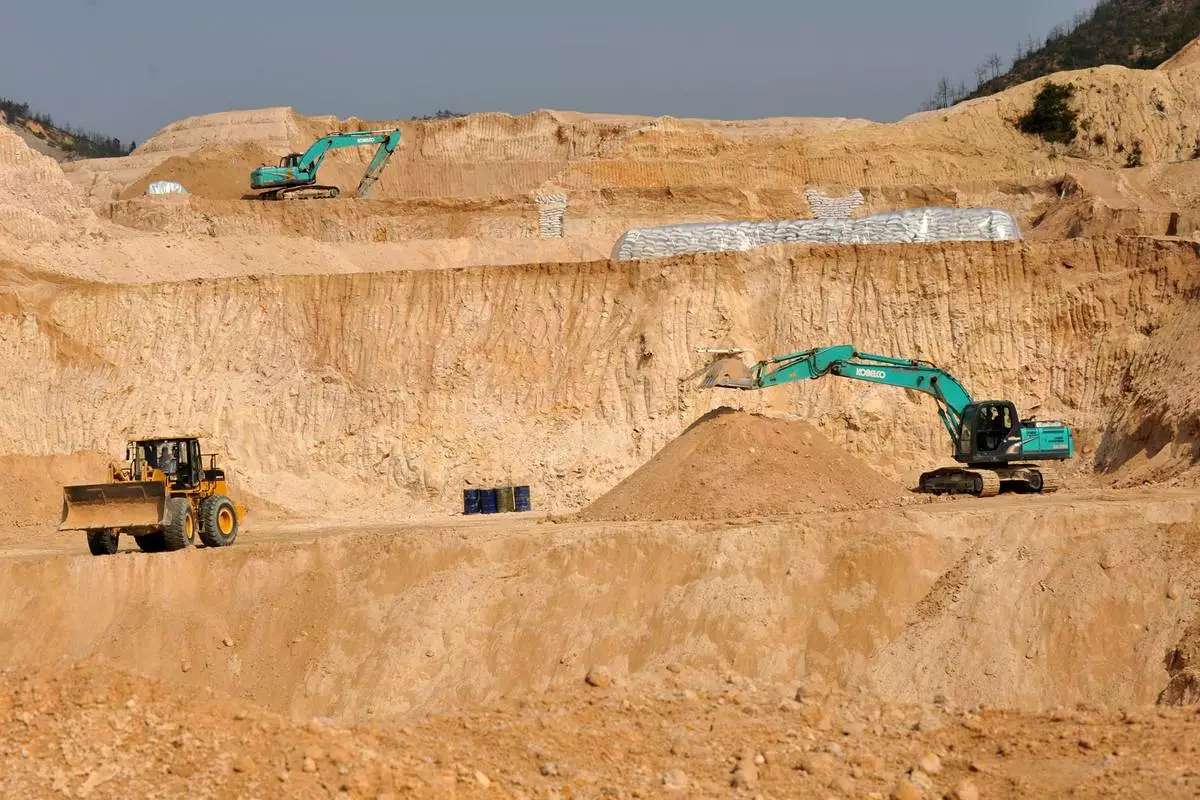
FILE - Workers use machinery to dig at a rare earth mine in Ganxian county in central China's Jiangxi province on Dec. 30, 2010. (Chinatopix via AP, File)