Skip to Content Facebook Feature Image

43 Lingnan scholars shine in Stanford's top scientists list

HK

43 Lingnan scholars shine in Stanford's top scientists list
HK

HK

43 Lingnan scholars shine in Stanford's top scientists list

2025-09-25 17:48 Last Updated At:17:48

Lingnan University has achieved another remarkable milestone in the 2025 edition of the World's Top 2% Scientists list, published by Stanford University. This year, a total of 43 Lingnan scholars were named in the list, representing an increase of about 50 per cent compared with last year's 29. Among them, 19 scholars were ranked among the global top 100 in their respective disciplines, underscoring the international recognition of Lingnan's research excellence and its rising global impact.

The Stanford World's Top 2% Scientists list evaluates the academic performance of scholars worldwide based on the significance of authorship and the number of citations in the Scopus database. Rankings are presented for career-long research impact and citations, as well as those in the single year of 2024, covering nearly all academic disciplines. This ranking has been among the most comprehensive for researchers worldwide and across disciplines since 2015.
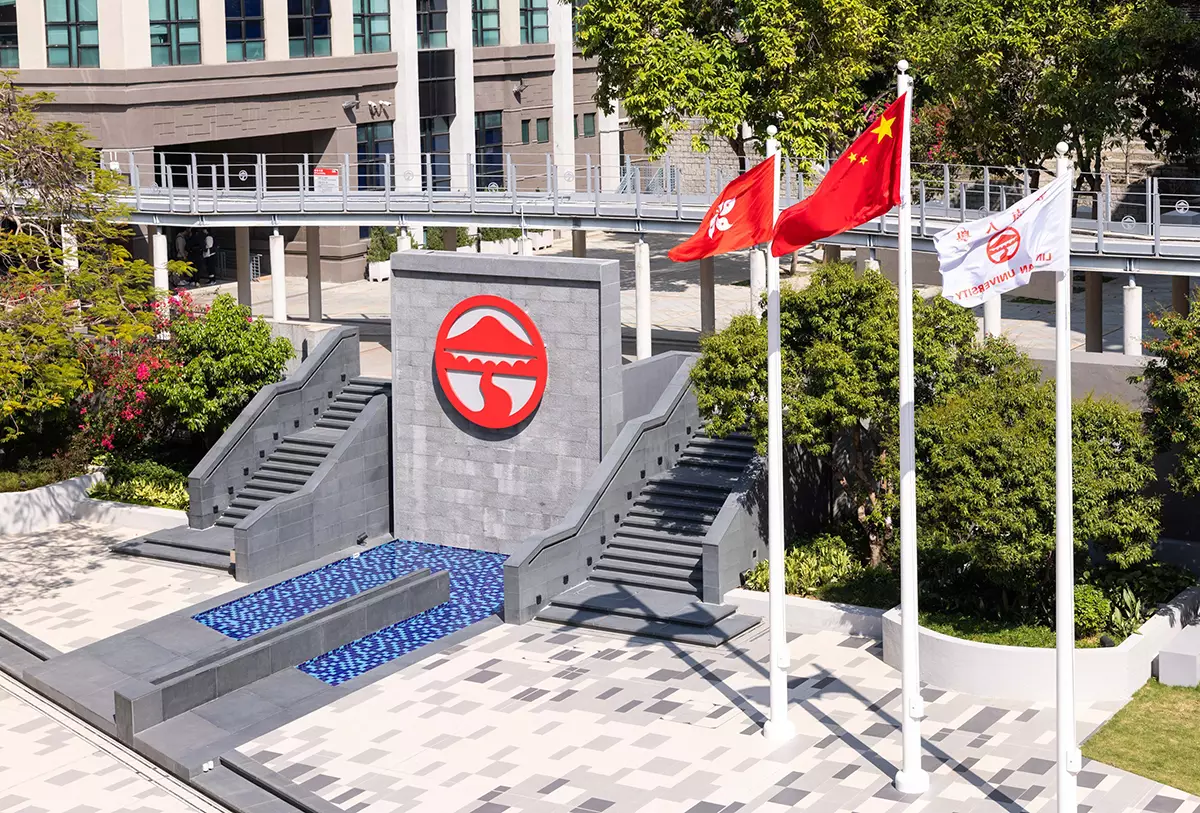
43 distinguished Lingnan scholars named Stanford University’s World’s Top 2% Scientists.

43 distinguished Lingnan scholars named Stanford University’s World’s Top 2% Scientists.

Lingnan scholars recognised in this year's list represent diverse fields, including artificial intelligence (AI), data science, and humanities and social sciences.

Prof Xin Yao, Vice-President (Research and Innovation) and Tong Tin Sun Chair Professor of Machine Learning, ranks No. 4 in overall China and No. 1 in Hong Kong SAR in AI and Image Processing for career-long research impact.

President S. Joe Qin, President and Wai Kee Kau Chair Professor of Data Science, once again ranks No. 1 in overall China and Hong Kong SAR in his field of Industrial Engineering and Automation for career-long research impact.

Prof Richard M. Walker, Lee Shau Kee Foundation Chair Professor of Public Administration and Head of the Department of Government and International Affairs and Director of the Lingnan University Institute for Advanced Study (LUIAS), ranks No. 1 in overall China and Hong Kong SAR in Political Science and Public Administration for both career-long and 2024 single-year citation categories.

Prof Raymond Chan Hon-fu, Vice-President (Academics) cum Provost and Lam Man Tsan Chair Professor of Scientific Computing, ranks No. 11 in overall China and No. 1 in Hong Kong SAR in Numerical and Computational Mathematics for career-long research impact.

In addition, Prof Ngai Pun, Chair Professor of Department of Cultural Studies and Director of the Centre for Cultural Research and Development, ranks No. 2 in overall China and Hong Kong SAR in Cultural Studies for both career-long and 2024 single-year citation categories.

Prof Edward Kwabena Ameyaw, Research Assistant Professor of the School of Graduate Studies (GS), ranks No. 6 in overall China and No. 3 in Hong Kong SAR in Public Health for the 2024 single-year citation category.

Prof Siu Oi-ling, Head of Department of Psychology, Lam Woo & Co Ltd Chair Professor of Applied Psychology and Director of the Wofoo Joseph Lee Consulting and Counselling Psychology Research Centre, ranks No. 14 in China and No. 6 in Hong Kong SAR in her field of Business and Management for the career-long category; ranks No. 9 in Hong Kong SAR in the 2024 single-year citation category.

Furthermore, a total of 19 Lingnan scholars were ranked among the global top 100 in their respective disciplines for career-long and/or 2024 single-year citation categories.
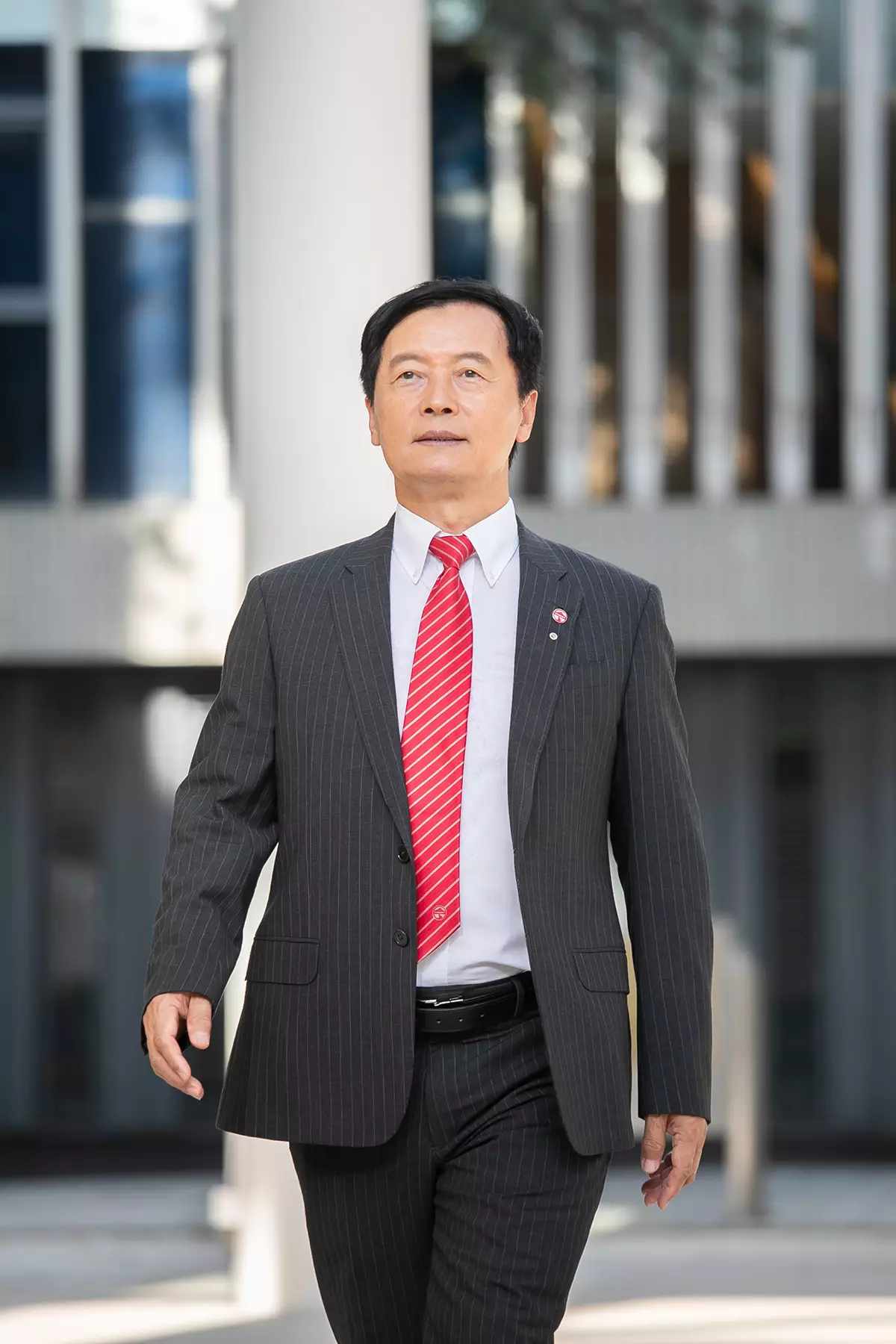
President Qin congratulates Lingnan’s distinguished scholars and looks forward to seeing more Lingnan scholars translating their research outcomes into knowledge and technologies that benefit society and address the needs of the digital age.

President Qin congratulates Lingnan’s distinguished scholars and looks forward to seeing more Lingnan scholars translating their research outcomes into knowledge and technologies that benefit society and address the needs of the digital age.

President Qin congratulated Lingnan's distinguished scholars and remarked, “This ranking is recognised as one of the most influential and prestigious annual benchmarks for individual researchers globally. The number of Lingnan scholars included on the list has steadily increased at a significant rate. This year, several Lingnan scholars have topped the rankings in their respective fields in the China and Hong Kong SAR, which is truly encouraging. I look forward to seeing more of our scholars translating their research outcomes into knowledge and technologies that benefit society and address the needs of the digital age.”

The World's Top 2% Scientists list by Stanford University is based on a composite indicator of standardised citation metrics, which include the number of citations, the h-index (measuring scientific research output), and the significance of authorship.
Lingnan University continues to participate in annual innovation and technology event the InnoCarnival 2025 (the Carnival), organised by the Innovation and Technology Commission (ITC). As one of the programme partners, Lingnan University is showcasing eight innovative "Smart Healthy City" research projects, integrating artificial intelligence (AI) and interdisciplinary research. These projects cover healthcare, transportation, sports training, environmental monitoring, and elderly care, and demonstrate how Lingnan's innovation teams address societal needs and advancing smart city development through technology.

The Carnival runs from now until 26 October at the Hong Kong Science Park. At Lingnan's exhibition booth (D08), scholars and staff explain how these AI-driven innovations enrich daily life, improve urban liveability, and spark public interest in cutting-edge technology, so that visitors can enjoy multiple interactive experiences.

Prof Sun Dong, Secretary for Innovation, Technology and Industry, visited Lingnan University's booth this afternoon, 18 October, where Prof Sam Kwong Tak-wu, Associate Vice-President (Strategic Research) and J.K. Lee Chair Professor of Computational Intelligence, showed him Lingnan's trailblazing research achievements, saying "In recent years, Lingnan University has actively promoted AI and interdisciplinary research projects to address pressing societal challenges and enhance the quality of life. The eight projects here allow visitors to experience how advanced technology supports the development of a smart and healthy city, demonstrating its profound impact on society.”

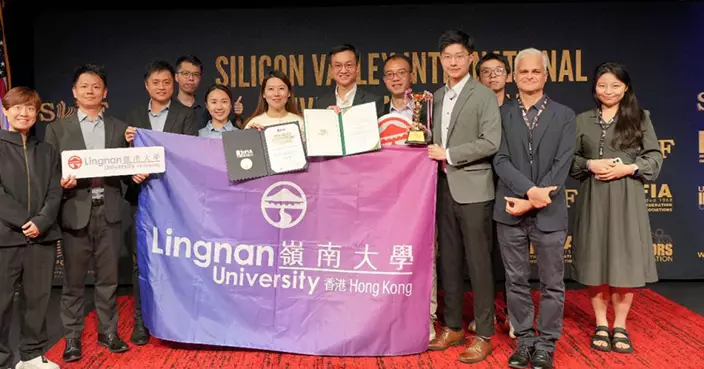
Prof Sam Kwong Tak-wu showed Prof Sun the AI-based Fencing Training and Assessment System, co-developed with Prof Zhou Yu of Shenzhen University. The system acts as an AI personal coach, combining smart bracelets and insoles with a motion-sensing camera to observe and analyse fencers' actual movements, enabling scientific training improving safety and efficiency. An interactive fencing zone at the booth allows visiting students to "try it out" in fencing gear and smart bracelets, with motion-sensing cameras performing the fencing movements. Deep learning AI analyses each action, and provides suggestions for improvement, and the project won a Gold Medal and the Prize of the International Federation of Inventors' Association (IFIA) at the 11th Silicon Valley International Invention Festival 2025.

Hong Kong continues to report new cases of chikungunya fever, and Prof Paulina Wong Pui-yun, Head and Associate Professor (Presidential Early Career Scholar) of the Science Unit, showed the AI Mosquito Diseases Control System, displaying various species of mosquitoes recently captured in Hong Kong. Prof Wong also explained how the system's simultaneous map-based mosquito risk index helps people understand mosquito risks in different areas of Hong Kong, raising awareness about preventing mosquito-borne diseases.

Other Lingnan research projects on display include the Subway Passenger Flow Prediction Model, developed by President S. Joe Qin, President and Wai Kee Kau Chair Professor of Data Science, and Dr Liu Yiren, Postdoctoral Fellow of the Division of Industrial Data Science of the School of Data Science; the Direct Air Capture of CO2 to Enrich Agriculture Production project led by Prof Chen Xi, Dean of the School of Interdisciplinary Studies and Chair Professor of Interdisciplinary Studies; the Emergency Baby Incubator and AI Power-assisted Wheelchair Control System projects led by Prof Albert Ko, Director of the Office of Service-Learning and the Lingnan Entrepreneurship Initiative (LEI); the AI Road Risk Monitoring System developed by Prof Paulina Wong Pui-yun, Head and Associate Professor (Presidential Early Career Scholar) of the Science Unit; and the Smart Ageing Home Safety Monitoring System, developed by a team of postgraduate students led by Dr Chloe Siu Pui-yee, Senior Lecturer of the School of Graduate Studies. (Table 1).

For more details, please visit https://innocarnival.hk/en.

Project title Subway Passenger Flow Prediction Model

Scholars Prof S. Joe Qin, President and Wai Kee Kau Chair Professor of Data Science
Dr Liu Yiren, Postdoctoral Fellow of the Division of Industrial Data Science of the School of Data Science

Description This project predicts passenger outflow accurately at different stations in a transportation system and a visualisation interface. Its model of passenger travel time and destination station distribution is based on past passenger gate card swipe data, combined with real-time entry flow data. Multi-time-scale modelling distribution predictions can be made a day in advance, and real-time data adjusts these forecasts dynamically, improving accuracy. The invention also integrates artificial intelligence agents to capture hotspot events, enabling real-time monitoring and prediction of subway passenger flow, and assisting in operational scheduling and resource optimisation, which improve the efficiency of the entire transportation system.

Project title AI-based Fencing Training and Assessment System

Scholar Prof Sam Kwong Tak-wu, Associate Vice-President (Strategic Research) and J.K. Lee Chair Professor of Computational Intelligence

Description The smart fencing training system is an intelligent AI personal fencing coach, which uses smart sensors in bracelets and insoles and a motion-sensing camera to watch and analyse a fencer's movements in real time. Unlike older systems that just recognise basic actions, this understands the quality of each move, and can tell if a lunge is well-balanced, a step is efficient, or a strike is powerful. AI supports fencers' physical health, skills, and overall enjoyment of the sport, making training smarter, safer, and more available to fencers.

Project title Direct Air Capture of CO2 to Enrich Agriculture Production

Scholar Prof Chen Xi, Dean of the School of Interdisciplinary Studies and Chair Professor of Interdisciplinary Studies

Description The research team has developed a novel material to be used in carbon farming that captures CO2 directly from the air to use as a fertiliser in a greenhouse for photosynthesis and internal CO2 circulation. The CO2 can be captured directly from dry air, and released when the air is wet.

Project title Emergency Baby Incubator

Scholars Prof Albert Ko, Director of the Office of Service-Learning and the Lingnan Entrepreneurship Initiative (LEI)
Mr Adrian Lo Chun-kwong, Product Design Lead of the Office of Service-Learning

Description INCUVIA, a groundbreaking, modular, foldable, and affordable neonatal incubator is designed to save the lives of premature and underweight infants in underserved communities worldwide. It is portable, modular, easily monitored, transparent and foldable, and can be set up in minutes without tools. The low-cost, plug-and-play design is sustainable with reliable power - a 12V system using batteries and solar energy. INCUVIA has been successfully tested in the Philippines, and proved successful in field conditions.

Project title AI power-assisted wheelchair control system

Scholar Prof Albert Ko, Director of the Office of Service-Learning and the Lingnan Entrepreneurship Initiative (LEI)

Description CREW is a power-assisted wheelchair control system designed for caregivers, which brings the benefits of powered wheelchairs to users who cannot control them independently. Pressure-sensors in the handles of the wheelchair allow the caregiver easy control, and the wheelchair senses whether to move forward or apply the brakes intelligently without laborious effort, especially on a slope.

Project title AI Mosquito Diseases Control System

Scholar Prof Paulina Wong Pui-yun, Head and Associate Professor (Presidential Early Career Scholar) of the Science Unit

Description This Mosquito Risk Index uses the latest smart technologies, including IoTs, GIS, GeoAI, and Deep Learning algorithms, to geographically monitor, address, and anticipate mosquito-borne diseases in Hong Kong, and is the first system that can forecast mosquito occurrence up to three days in advance. The dashboard displays mosquito hotspots and alerts, and the goal is better disease management with community engagement.

Project title AI Road Risk Monitoring System

Scholar Prof Paulina Wong Pui-yun, Head and Associate Professor (Presidential Early Career Scholar) of the Science Unit

Description This real-time, accurate, all-in-one intelligent transport solution improves driving safety, facilitates fleet management, and improves road convenience and efficiency using autonomous driving technology and GeoAI techniques. It also develops a road hazard and traffic information geodatabase per road segment, allowing public transport drivers and fleet managers to receive immediate warnings and alerts of any hazards, and has a mobile app, dashboard, and dynamic mobility database, and GeoAI predictive capabilities.

Project title Smart Ageing home safety monitoring system

Scholar Dr Chloe Siu Pui-yee, Senior Lecturer of the School of Graduate Studies

Description H-Air is an intelligent home environment monitoring system that integrates electronic nose technology, thermal imaging, and AI-driven big data analysis. It provides effective protection through immediate detection, intelligent early warning, and coordinated response to multidimensional risks, including flammable gas leaks, indoor air quality, and elderly safety, and addresses a critical market gap by providing integrated, preventive, and responsive monitoring systems, thereby enhancing both safety and health management in residential settings. Its core purpose is to offer families and elderly care institutions a unified platform for environmental protection and health care.

Prof Sun Dong, Secretary for Innovation, Technology and Industry (middle), visits Lingnan's booth to learn about the AI-based Fencing Training and Assessment System, a project introduced by Prof Sam Kwong Tak-wu (left).

Prof Sun Dong, Secretary for Innovation, Technology and Industry (middle), visits Lingnan's booth to learn about the AI-based Fencing Training and Assessment System, a project introduced by Prof Sam Kwong Tak-wu (left).

Visitors take part in the AI-based Fencing Training and Assessment System.

Visitors take part in the AI-based Fencing Training and Assessment System.

Prof Paulina Wong Pui-yun (middle) shows the AI Mosquito Diseases Control System, displaying various species of mosquitoes recently captured in Hong Kong.

Prof Paulina Wong Pui-yun (middle) shows the AI Mosquito Diseases Control System, displaying various species of mosquitoes recently captured in Hong Kong.

Lingnan University highlights eight innovative research "Smart Healthy City" projects integrating AI and interdisciplinary research.

Lingnan University highlights eight innovative research "Smart Healthy City" projects integrating AI and interdisciplinary research.

Lingnan University highlights innovative research projects

Lingnan University highlights innovative research projects

Recommended Articles