

The 31st meeting of Andean Community (CAN)’s Foreign Ministers Council recently gave China the green light unanimously. Experts say this opens a crucial foothold for China to push industries like artificial intelligence and electric vehicles, leveraging the rich deposits of gold, copper, and lithium in CAN’s member countries.
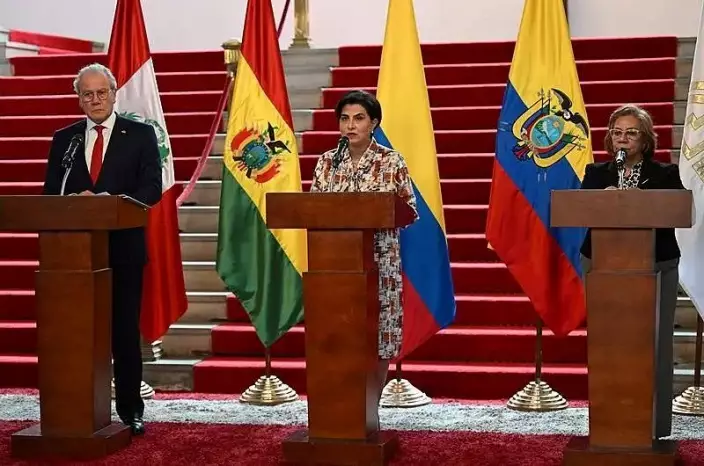
On September 30, Colombian Foreign Minister Rosa Yolanda Villavicencio, Ecuadorian Foreign Minister María Sommerfeld, and Peruvian Ambassador to Colombia and CAN Secretary General Gonzalo Gutiérrez attended the CAN handover ceremony.
China’s Growing Role as the World’s Reliable Partner
According to the South China Morning Post, while the Trump administration was busy “hiking up trade barriers”, Latin American countries looked for reliable global export partners — and that’s China. Unlike the US, which often prioritizes its own interests, China is seen as a stable and committed ally.
Leland Lazarus of Lazarus Consulting, which advises on Sino-Latin ties, summed it up neatly: “In other words, China’s message is, while the US is closing shop, we’re still open for business.”
Set up back in May 1969, the Andean Community is a key regional economic group, based in Lima, Peru, with four members: Peru, Ecuador, Colombia, and Bolivia. Chile and Venezuela left earlier, in ’76 and ’06. Since 1999, China and CAN have maintained contact through consultations.
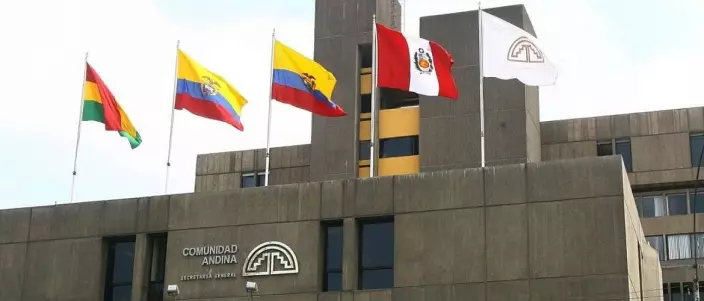
Founded in May 1969, the Andean Community is a key regional economic integration organization in Latin America.
Jiang Tianjiao from Fudan University’s BRICS Research Center says this is a “new phase” for China and Latin America relations. Getting observer status deepens economics and investment ties, and it’s a key strategic step for the Global South.
Joining CAN boosts cooperation with Latin America and strengthens the voice of developing countries through formal regional participation.
Counterbalance to US Tariff Wars
In the midst of Trump’s tariff battles, China stands as a defender of global order and a major developing country that offers stability. Jiang says China’s role in CAN helps member countries hedge against tariffs and find alternative markets.
As an observer, China provides Latin America with more reliable export routes through regional cooperation and strengthens South-South collaboration against unilateral US pressure.
Lazarus highlights that China’s observer role in CAN offers a channel to advance its global governance proposals, like the recent initiative unveiled at the Shanghai Cooperation Organization summit in Tianjin.
He also points out the natural fit between CAN’s treasures of gold, copper, and lithium and China’s need for materials for AI and electric vehicles.
Bilateral relations between China and Latin America have broadened and grown in recent years. Latin America’s resource richness meshes well with China’s market and tech strengths, promising mutual benefits.
Fostering these links and bringing industrial chains together will help Latin America modernize sustainably and open fresh opportunities for building a China-Latin America community sharing a common destiny, while invigorating global economic governance.
China to Push Regional Integration Forward
CAN members see China’s observer status as historically significant, expecting it to boost cooperation, economic integration, and sustainable development, safeguarding developing countries’ shared interests.
Chinese diplomat Zhang Liping from Colombia’s embassy expressed readiness to implement the “five major projects” under the China-Latin America community framework and start a new wave of bilateral and multilateral cooperation for mutual benefit.
China’s Track Record of Growing Latin America Partnerships
In reality, China has been steadily boosting ties with Latin American economies through forums like China-CELAC. The 4th ministerial meeting this May in Beijing saw regional leaders recognize China as a “good friend and partner,” focused on joint growth and resisting bullying.
On May 14, Foreign Ministry spokesperson Lin Jian emphasized China-Latin America cooperation has overcome challenges and differences. China pledges to support Latin America on core interests and key issues, promote three global initiatives, uphold multilateral trade, defend international justice, and foster global peace.
This cooperation is entering a “golden decade” aimed at strengthening the Global South’s unity and building a shared future for humanity.
Mao Paishou
** 博客文章文責自負,不代表本公司立場 **