
Let's cut to the chase. As Hans Greimel, Asia Editor for Detroit's Automotive News, recently put it in a piece for Nikkei Asia: "Global carmakers must stay in China so they can compete outside China." It's a blunt assessment, but it’s the stone-cold truth.
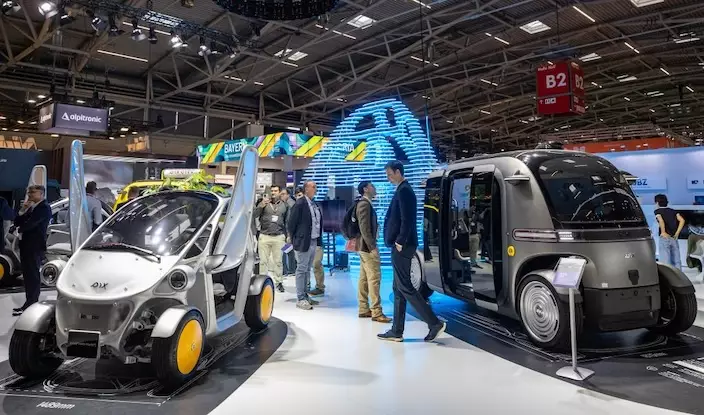
The IAA Mobility, a legacy auto show. Munich, Germany, September this year
China isn't just the planet's biggest auto market—it's the brutal “boot camp” where the future of the industry will be forged. Get knocked out here, and you risk losing your edge everywhere else. In the last few years, the Chinese market has transformed into the most unforgiving battlefield for global car companies. Some have packed their bags and fled; others are digging in, gritting their teeth to survive.
The Game Has Changed
Greimel nails it: for the legacy auto giants, China is "no easy proposition" for making a quick buck anymore. It’s a high-stakes exam where survival is the only grade that matters.
Just a decade ago, foreign brands commanded a whopping 60% of the Chinese market. Today? That number has plummeted to less than 40%. They've been completely outmaneuvered by homegrown powerhouses like BYD, Geely, and XPeng, especially in the all-important new energy vehicle sector.

XPeng hits the stage in Munich, putting the world on notice that China's EV titans are going global.
This shift wasn't gradual; it was a total reset. It feels like yesterday that Chinese carmakers were still playing catch-up, learning the tech and patching their weak spots. Now, they boast a complete, vertically integrated industrial chain and an innovation ecosystem that's second to none. From the battery titan CATL to massive investments in smart driving from Baidu and Xiaomi, China's auto industry has built a fortress of systemic advantages.
This means that any multinational car company that bails on China isn't just giving up sales—they're forfeiting a front-row seat to the industry's next great transformation. Greimel puts it starkly: "The danger is being more easily bowled over when Chinese brands eventually flood into global markets. And make no mistake, the Chinese brands are coming."
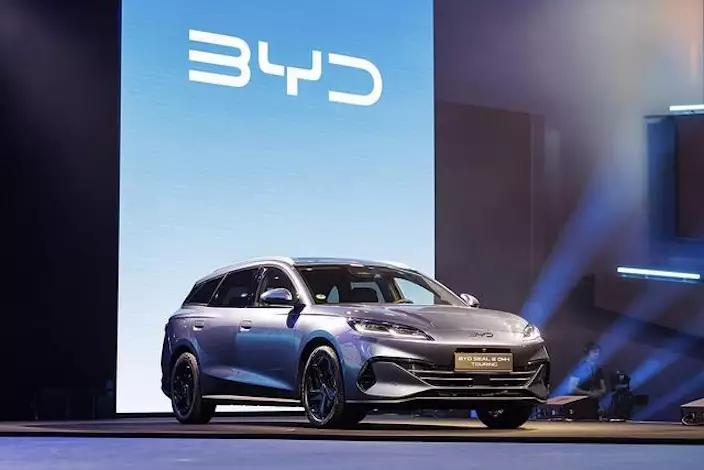
BYD's Seal 6 DM-i Touring on display in Germany—another sign that Chinese innovation is ready for export.
Learn in China, or Perish Globally
Sticking it out in China is about forging steel in the hottest fire. Only the brands that can make it here will have what it takes to secure a foothold on the world stage.
Greimel points to Nissan and General Motors as prime examples. Their initial strategy was lazy: just bring their overseas EV models to China and expect them to sell. The market’s response? A resounding "no, thanks." Chinese consumers demand more than just a ride from A to B; they want cutting-edge intelligence, slick design, and incredible value for their money.
These spectacular failures were a wake-up call, forcing these multinationals to completely rethink their approach. Nissan empowered its Chinese team to lead R&D and design models specifically for the local market. The result? Sales stopped bleeding and started climbing. GM did the same, leaning on its China R&D center to roll out platforms built from the ground up for Chinese drivers.
From "Made for China" to "Made in China for the World"
Today, everyone from Toyota and Volkswagen to Ford and Audi is getting with the program. They are launching products developed in China and then exporting them globally. The playbook is evolving from "(made) In China For China" to "(made) In China for the World." It’s a dawning realization among multinationals that China is no longer just a market—it’s a global wellspring of innovation.
Greimel argues this model is quietly rewriting the entire logic of the global auto industry. In today’s Chinese auto market, price wars are absolutely savage, technology evolves at a dizzying pace, and consumer patience is zero. Launch a new car without a spark of innovation or genuine effort, and the market will chew it up and spit it out before you can blink.
This pressure-cooker environment forces foreign car companies to master "China speed." New product development cycles are slashed to under two years, with R&D and market feedback happening in lockstep. This is the kind of rapid-response agility they simply can't learn anywhere else.
The Ultimate Litmus Test
As Greimel notes, the truly smart companies don't see China as some external challenge but a dynamic arena for learning and co-creation. The firms that manage to survive the gauntlet in China will emerge tougher and more resilient than their rivals, precisely because they've learned how to innovate and win in the world's most demanding environment.
This explains why more and more multinationals are doubling down on their investments in China, even if the profit margins aren't what they once were. For them, China is both a final exam and a masterclass. You might lose the short-term market share battle but still win the long-term war for the future.
In this new era of global industrial realignment, holding your ground in the Chinese market gives you the confidence to compete anywhere. The alternative—retreating to home turf to protect old interests—is a recipe for disaster. The real crisis will hit when Chinese brands make their inevitable landing in Europe and the Americas.
"The smart legacy brands will choose to keep fighting it out there. After all, if they can successfully compete against Chinese rivals in China, they can compete against them anywhere." In this new chapter of globalization, China is more than a market—it's the ultimate litmus test for competitiveness. Only those willing to stay, learn, and adapt have any right to talk about "globalization."
Mao Paishou
** 博客文章文責自負,不代表本公司立場 **