Skip to Content Facebook Feature Image

FDI in Mexico's automotive sector plummets amid tariffs, economic slowdown

China

China

China

FDI in Mexico's automotive sector plummets amid tariffs, economic slowdown

2025-10-17 22:34 Last Updated At:23:07

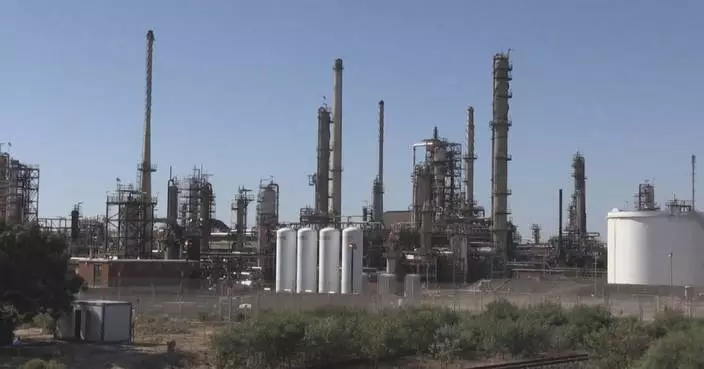
Foreign direct investment (FDI) in Mexico's automotive industry plummeted by 41 percent year on year in the first half of 2025 under the tariff chaos and an economic slowdown, according to government figures.

The country attracted approximately 3.6 billion U.S. dollars in auto investment from January to June, a significant decrease from around 6.1 billion U.S. dollars during the same period last year.

At the International Congress of the Automotive Industry in Mexico earlier this month, the atmosphere was grim among leaders of the automotive sector, which employs over one million people nationwide.

"There are very few new projects this year compared to previous years, when new factories and assembly lines were opening up regularly. The atmosphere is cautious. It seems like everything is on standby," said Lazaro Garza, Sales Director of Mapal, a machine manufacturing company.

The slowdown in nearshoring is attributed to the looming North American free trade review in 2026, according to Maria de Haas, International Relations Director of the Mexican Economy Ministry.

"It's uncertainty, which always causes fluctuations in investment, nothing more. Mexico has everything that foreign investors need," she said.

In her keynote speech at the event, De Haas tried to alleviate concerns among industry leaders.

"Integration is key. We need closer ties between Mexican, U.S. and Canadian associations. That's the best way to defend free trade and avoid tariffs," she said.

However, as global supply chains evolve, the competition for FDI is intensifying.

"Attracting international industrial investment is tough, with Costa Rica, with other Asian nations, and even now with the United States. So Mexico is now competing for investment with entire global regions -- not just rival states at home," said German Rivera, Executive Director of the Center for Investment and Trade of Sinaloa.

FDI in Mexico's automotive sector plummets amid tariffs, economic slowdown

FDI in Mexico's automotive sector plummets amid tariffs, economic slowdown

Though tens of billions of pesos spent on flood control projects in recent years in the Philippines, questions have been raised about the value of that investment as flooding from Typhoon Kalmaegi left at least 114 people dead and 127 missing, with more than 2.14 million people affected nationwide.

In Talisay City, Cebu Province, homes have been reduced to rubble, mud has clogged up streets and families are left picking through the wreckage of homes that have been swept away by floodwaters.

"I saw a banana being washed away and I grabbed it for breakfast. It's very hard because our food at home, like rice, also got washed away. We used to live here, but most of our houses have been swept away,”said Mary Jean Apog who has taken shelter in a makeshift tent built from storm debris.

Many residents in flood-affected areas have been left wondering whether money earmarked by the government for flood control projects has been spent wisely.

Between 2022 and 2025, more than 400 flood-protection projects worth over 26 billion pesos (about 441 million U.S. dollars) have been launched in Cebu, the second highest investment of all the nation's provinces.

Vince Dizon, secretary of the Department of Public Works and Highways (DPWH) visited Talisay City on Wednesday, where he said people should be held accountable for the poor state of the region's flood defenses.

"Poorly planned, poorly executed, and we don't know if there are anomalies here. That will be up to the ICI (Independent Commission on Infrastructure) to find. But definitely, someone should be held accountable here," he said.

According to the country's disaster management authority, more than 6,700 houses were damaged in the typhoon, and hospitals, schools, and other public facilities suffered extensive damage. Power and communications were disrupted in many towns, closing schools and businesses.

Authorities have declared a state of emergency in response to the disaster.

Flood control projects under question as Typhoon wreaks havoc in Philippines

Flood control projects under question as Typhoon wreaks havoc in Philippines

Recommended Articles