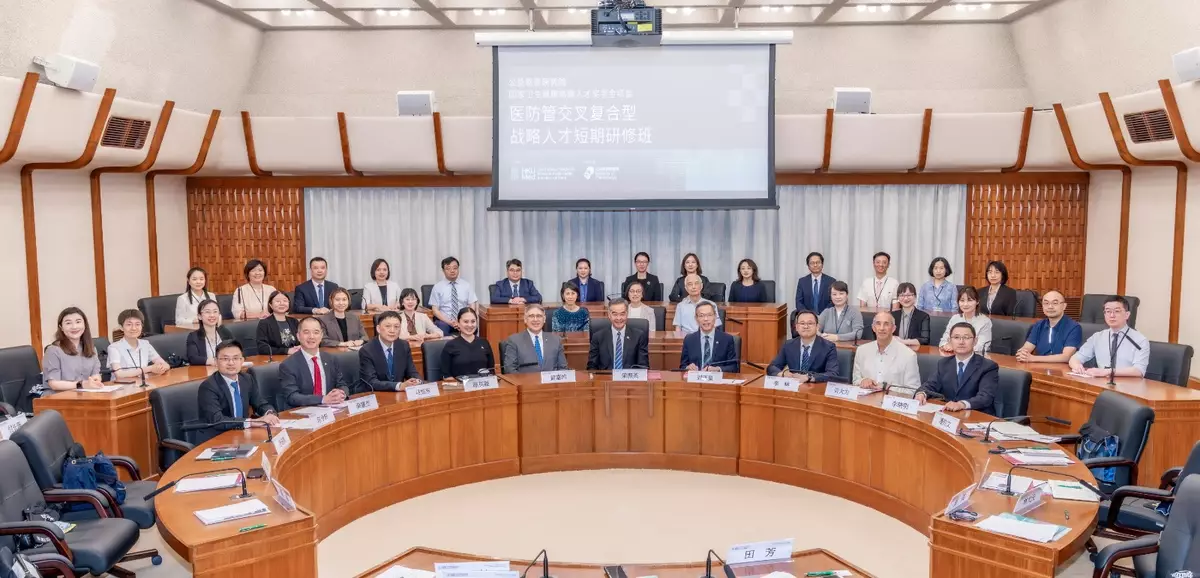
Under the auspices of the National Health Commission (NHC), the inaugural ‘Interdisciplinary and Composite Talents in Medicine, Disease Prevention and Control, and Management Training Programme', organised by the School of Public Health, LKS Faculty of Medicine of the University of Hong Kong (HKUMed), concluded successfully after three weeks of intensive training. This initiative was made possible through a generous donation from the Institute of Philanthropy Medical and Health Scholarship-cum-Fellowship for Top Talent in the Mainland.
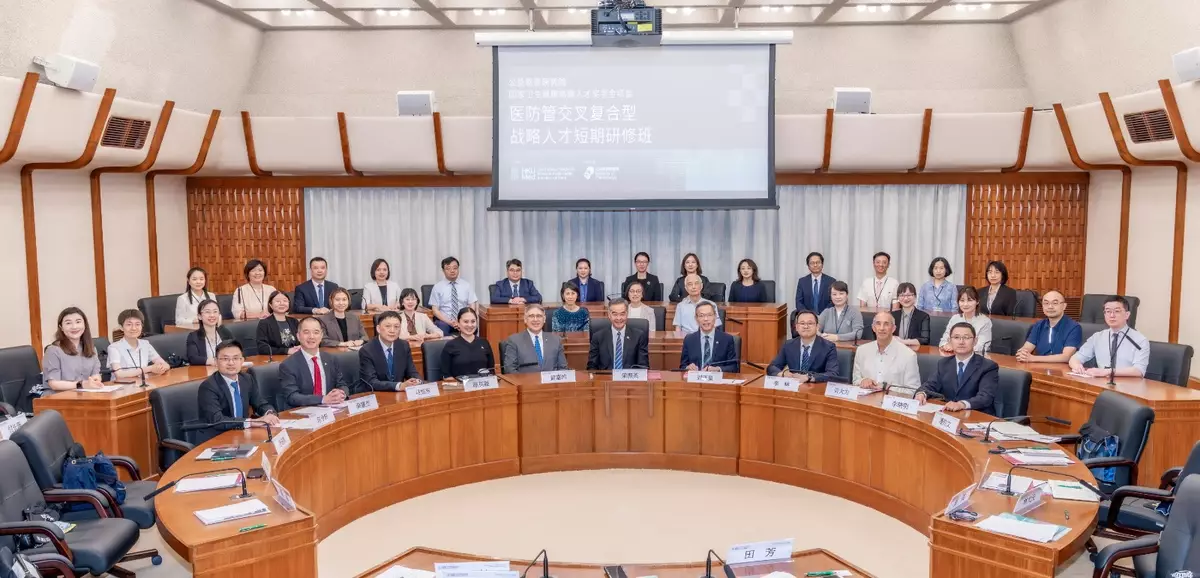
The inaugural ‘Interdisciplinary and Composite Talents in Medicine, Disease Prevention and Control, and Management Training Programme’, organised by the School of Public Health, HKUMed, concluded successfully after three weeks of intensive training
The inaugural training programme brought together 24 participants from the NHC, the National Administration of Traditional Chinese Medicine, the National Disease Control and Prevention Administration, and other directly affiliated and related organisations. The programme featured 52 experts from various departments and disciplines at HKU, as well as international organisations and non-governmental organisations, who participated in both in-person and online teaching sessions. The participants engaged in in-depth discussions in three key areas: Hong Kong's healthcare system and global health governance, medical regulation and public health talent development, and emerging medical technologies and international collaboration trends. It provided participants with comprehensive expertise while facilitating the exchange of innovative ideas and cross-disciplinary knowledge in healthcare leadership.
Click to Gallery
The inaugural ‘Interdisciplinary and Composite Talents in Medicine, Disease Prevention and Control, and Management Training Programme’, organised by the School of Public Health, HKUMed, concluded successfully after three weeks of intensive training
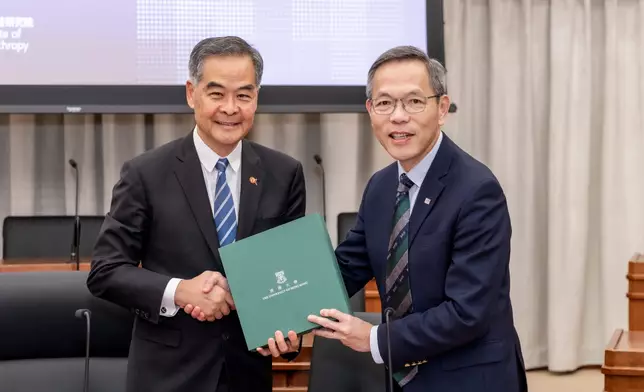
Mr Leung Chun-ying, Vice Chairman of the National Committee of the Chinese People's Political Consultative Conference, former Chief Executive of the HKSAR, and Chairman of the GX Foundation, participated in the Exchange Session at HKU
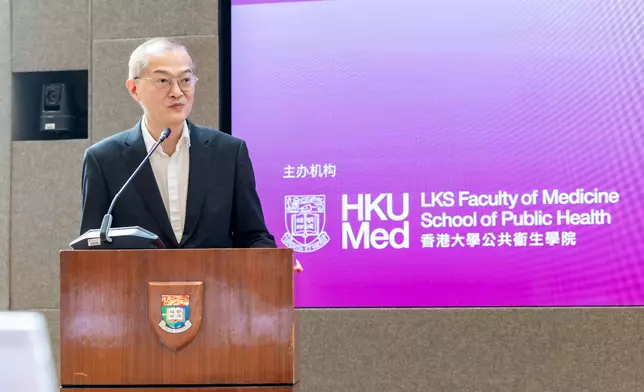
Professor Lo Chung-mau, Secretary for Health of the Government of the HKSAR, officiated at the opening ceremony of the programme and delivered the welcome remarks
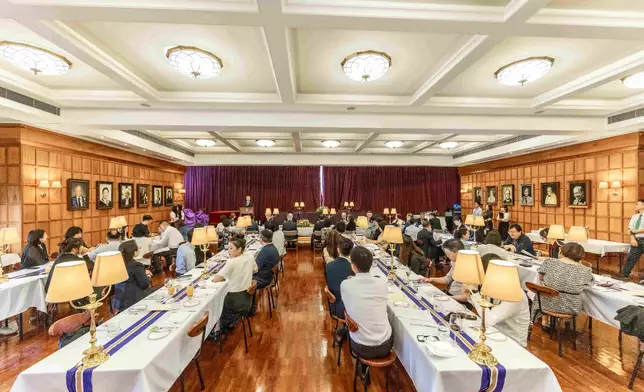
To celebrate HKU’s longstanding academic tradition, a Farewell and Thanksgiving Dinner was held at St. John’s College
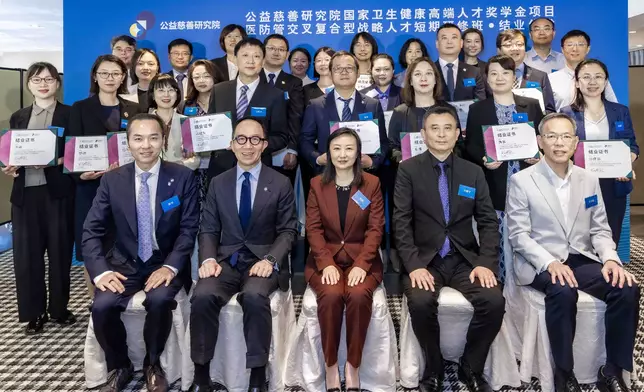
A certificate presentation ceremony was held at The Hong Kong Jockey Club. VIPs in the front row (from left) are Mr Dylan Lu, Chief Mainland Representative of the Institute of Philanthropy; Dr Gabriel Leung, Director of the Institute of Philanthropy; Ms Li Wei, Deputy Director-General of the Office of Hong Kong, Macao and Taiwan of the National Health Commission (NHC); Mr Fang Jianning, Deputy Director-General (Acting Chief) of the Health Human Resources Development Center of the NHC; and Professor Lau Chak-sing, Vice-President and Pro-Vice-Chancellor (Health) and Dean of Medicine, HKU. Standing are the 24 participants in the inaugural training programme
The School was honoured to welcome Mr Leung Chun-ying, Vice Chairman of the National Committee of the Chinese People's Political Consultative Conference (CPPCC), former Chief Executive of the Hong Kong Special Administrative Region of the People's Republic of China (HKSAR), and Chairman of the GX Foundation, for an Exchange Session at HKU. Mr Leung shared the GX Foundation's mission, objectives, and achievements in delivering international humanitarian aid across eight Belt and Road countries. He emphasised, ‘As Chinese people, we now have the capacity to extend our reach globally with the spirit of connectivity and shared prosperity, working together to build a global community of health for all.' His vision deeply inspired all participants. Mr Lester Huang, Chairman of the Institute of Philanthropy, also attended the event, engaging with participants and sharing his perspectives on philanthropy and leadership, further reinforcing the programme's mission to cultivate well-rounded professionals equipped to address global health challenges.
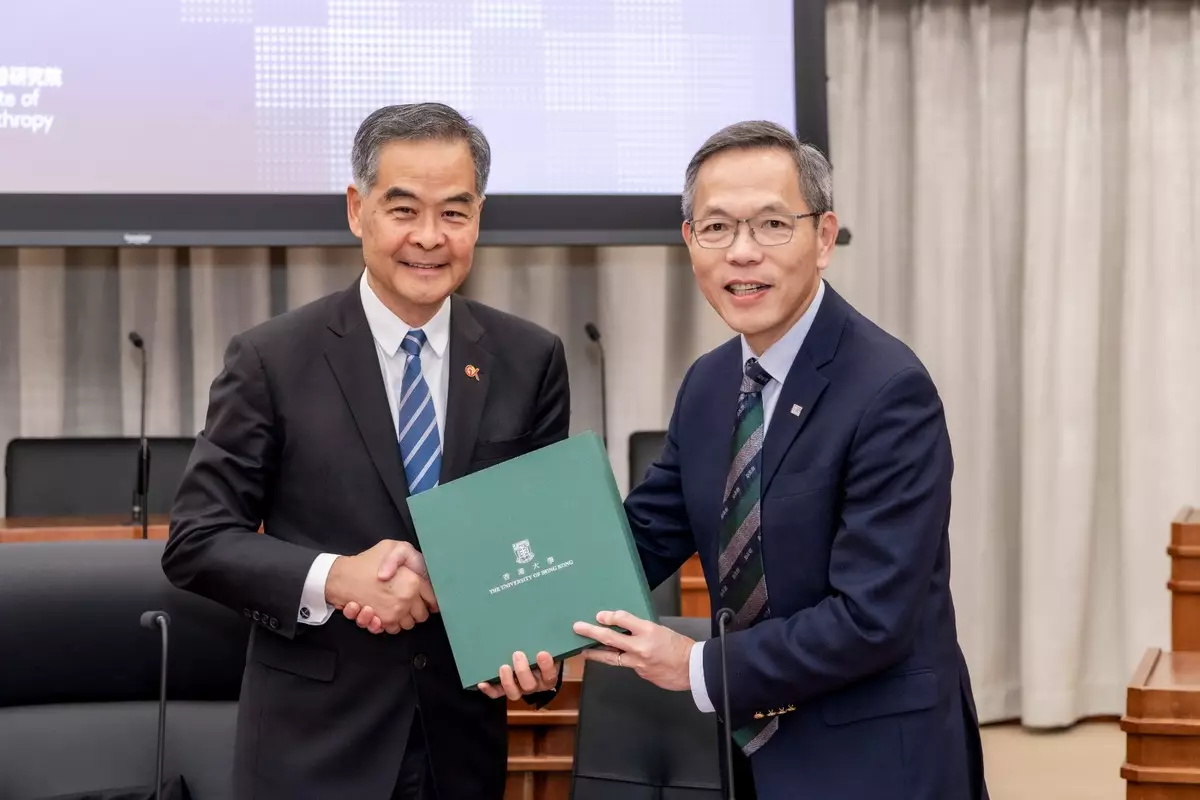
Mr Leung Chun-ying, Vice Chairman of the National Committee of the Chinese People's Political Consultative Conference, former Chief Executive of the HKSAR, and Chairman of the GX Foundation, participated in the Exchange Session at HKU
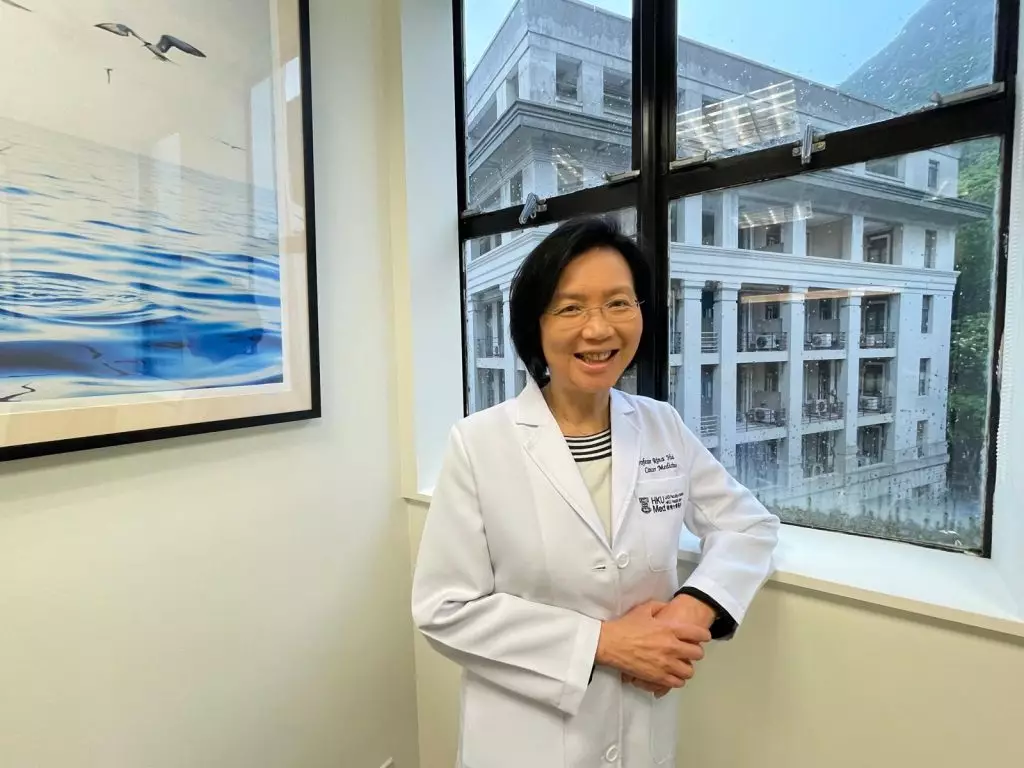
Professor Lo Chung-mau, Secretary for Health of the Government of the HKSAR, officiated at the opening ceremony and delivered the welcome remarks. Led by Professor Vivian Lin Kwang-wen, Honorary Professor in the School of Public Health of HKUMed and former Director of Health Systems for the World Health Organization (WHO) in the Western Pacific Regional Office, renowned health and medical experts were brought together from around the world to provide participants with comprehensive knowledge and expand their horizons. Distinguished guest speakers were Dr Margaret Chan, Founding Dean of the Vanke School of Public Health of Tsinghua University and Emeritus Director-General of the WHO; Professor Sophia Chan Siu-chee, Senior Advisor of the HKU President's Office, Professor and Director of the HKU Primary Health Care Academy, Professor in the School of Public Health of HKUMed, and former Secretary for Food and Health of the Government of the HKSAR; Professor Kenneth Cheung Man-chee, Hospital Chief Executive of the HKU-Shenzhen Hospital; Professor Gong Peng, Vice-President and Pro-Vice-Chancellor (Academic Development) of HKU; Dr Tony Ko, former Chief Executive of the Hospital Authority of the Government of the HKSAR; Dr Ronald Lam, Director of Health of the Government of the HKSAR; Professor Philip Li Kam-tao, President of the Hong Kong Academy of Medicine; Dr Donald Li Kwok-tung, Chairman of the Elderly Commission, Labour and Welfare Bureau of the Government of the HKSAR; Professor Patrick Nip Tak-kuen, Adjunct Professor of the Department of Politics and Public Administration at HKU and former Secretary for the Civil Service of the Government of the HKSAR; and Dr Pang Fei-chau, Commissioner for Primary Healthcare, Primary Healthcare Commission of the Health Bureau of the Government of the HKSAR.
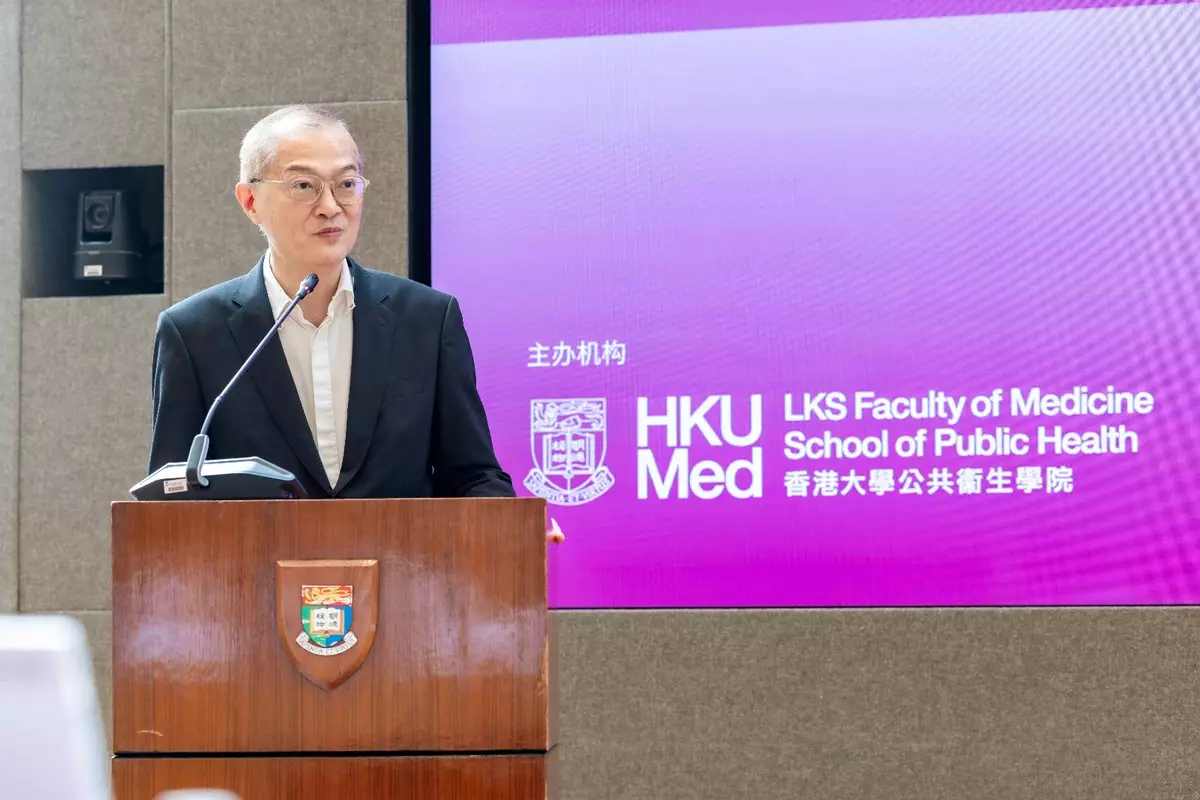
Professor Lo Chung-mau, Secretary for Health of the Government of the HKSAR, officiated at the opening ceremony of the programme and delivered the welcome remarks
Participants gained a comprehensive understanding of the unique features and strengths of Hong Kong's healthcare system through in-depth analysis by esteemed experts. Beyond theoretical learning, they actively participated in thematic lectures, case-based discussions, and field visits to a diverse range of healthcare institutions, such as Castle Peak Hospital, the HKBU Chinese Medicine Hospital Office, Gleneagles Hospital, GX Foundation, H.K.S.K.H. St. Luke's Settlement Neighbourhood Elderly Centre, the HKUMed Community Pharmacy, Hong Kong St. John Ambulance, and the Kwai Tsing District Health Centre. These immersive experiences allowed the participants to gain a better understanding of Hong Kong's healthcare system and translate theoretical knowledge into practical applications. Through this enriching learning and hands-on exposure, the participants reinforced their professional knowledge and enhanced their practical skills and service capabilities, laying a solid foundation for their future development and application in the healthcare field.
To celebrate HKU's longstanding academic tradition, a Farewell and Thanksgiving Dinner was held at St. John's College. The following day, a certificate presentation ceremony was held at The Hong Kong Jockey Club, where remarks were delivered by Ms Li Wei, Deputy Director-General of the Office of Hong Kong, Macao and Taiwan of the NHC; Dr Gabriel Leung, Director of the Institute of Philanthropy; and Professor Lau Chak-sing, Vice-President & Pro-Vice-Chancellor (Health) and Dean of Medicine at the University of Hong Kong. Certificates of completion were presented to all participants by Professor Lau; Mr Fang Jianning, Deputy Director-General (Acting Chief) of the Health Human Resources Development Center of the NHC; and Mr Dylan Lu, Chief Mainland Representative of the Institute of Philanthropy, bringing the programme to a meaningful conclusion.
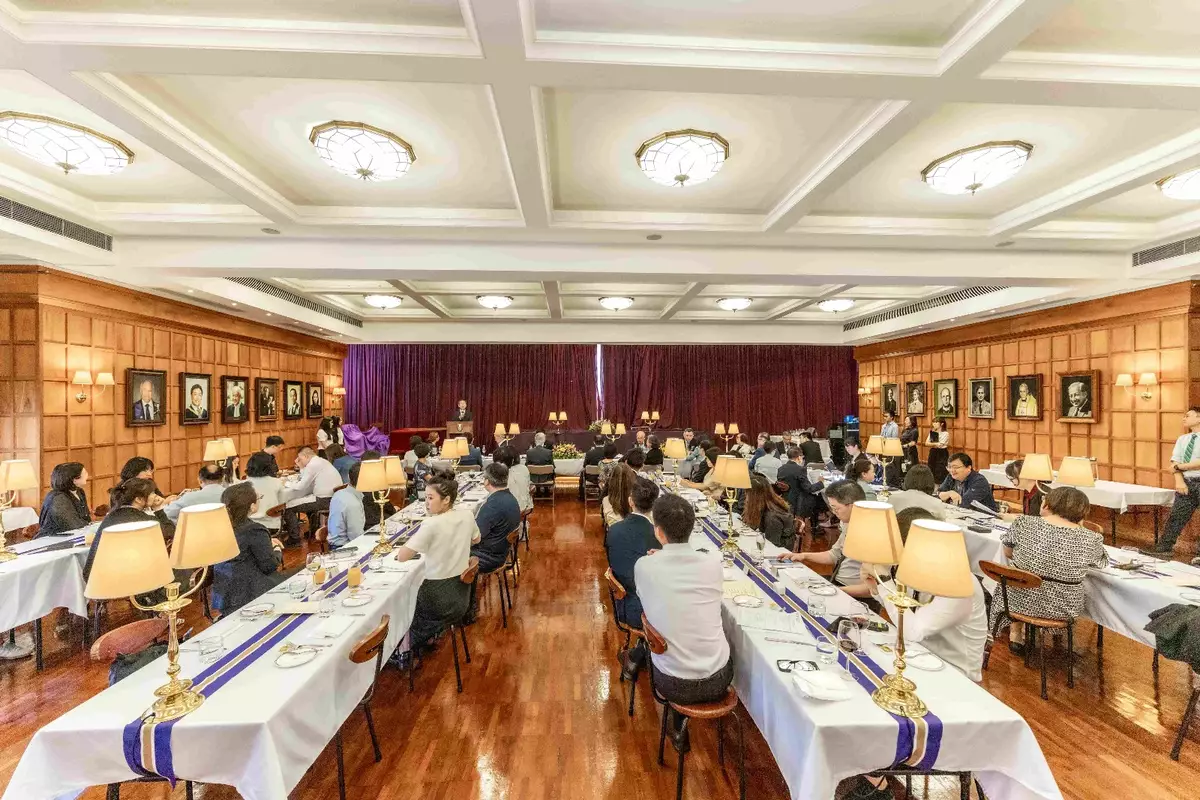
To celebrate HKU’s longstanding academic tradition, a Farewell and Thanksgiving Dinner was held at St. John’s College
The School of Public Health at HKUMed is confident that this training programme marks just the beginning of a fruitful collaboration. Future efforts will focus on deepening the partnership with the NHC through the establishment of a dedicated professional exchange platform. By sharing valuable insights and expertise, this initiative aims to foster renewed momentum in advancing the nation's public health initiatives.
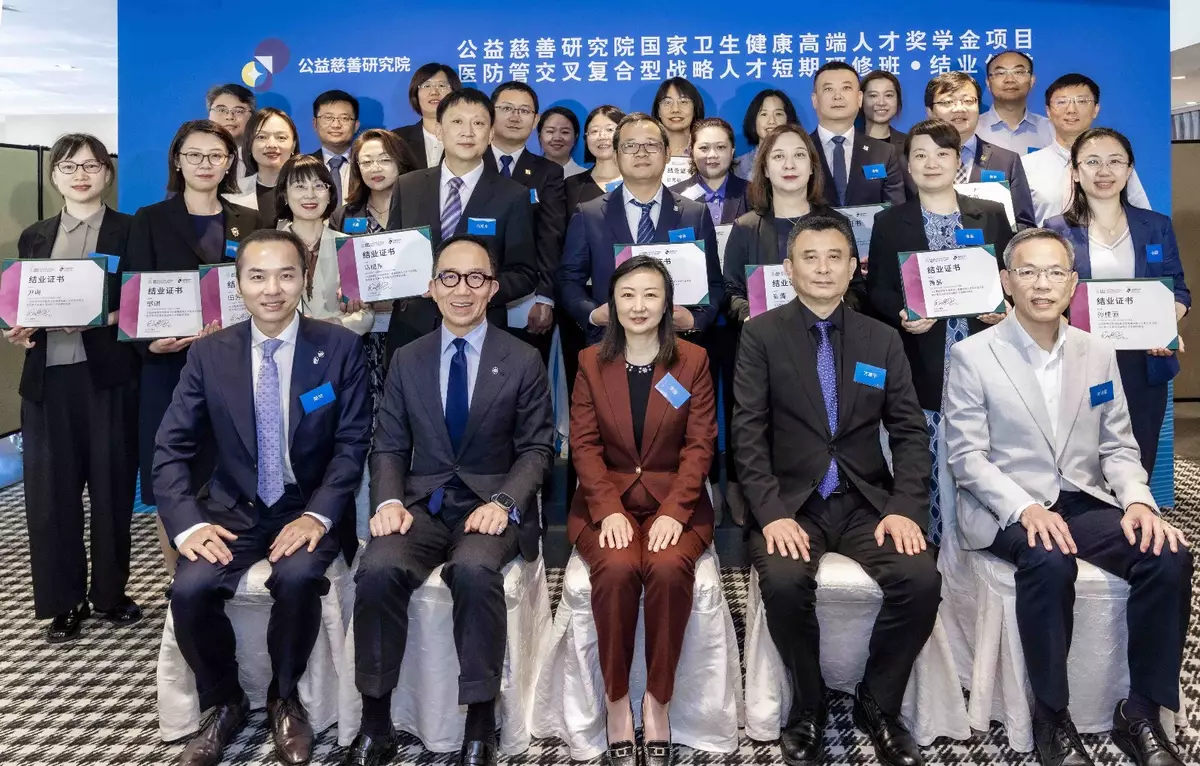
A certificate presentation ceremony was held at The Hong Kong Jockey Club. VIPs in the front row (from left) are Mr Dylan Lu, Chief Mainland Representative of the Institute of Philanthropy; Dr Gabriel Leung, Director of the Institute of Philanthropy; Ms Li Wei, Deputy Director-General of the Office of Hong Kong, Macao and Taiwan of the National Health Commission (NHC); Mr Fang Jianning, Deputy Director-General (Acting Chief) of the Health Human Resources Development Center of the NHC; and Professor Lau Chak-sing, Vice-President and Pro-Vice-Chancellor (Health) and Dean of Medicine, HKU. Standing are the 24 participants in the inaugural training programme
Other Distinguished Guest Speakers of the Training Programme
Overseas Universities
• Dr Gerald Bloom, Research Fellow, Institute of Development Studies from the University of Sussex in the UK;
• Professor Harvey Fineberg, Emeritus Professor of Health Policy and Management from the Harvard T. H. Chan School of Public Health in the US;
• Professor Liang Zhanming, Associate Dean of Research Education, College of Business, Law and Governance at James Cook University in Australia; and
• Professor Martin McKee, Professor of European Public Health, London School of Hygiene & Tropical Medicine in the UK.
International Organisations
• Dr Cristian Baeza, Executive Directors of the International Center for Health Systems Strengthening and the Center for Healthy Development;
• Dr Genevieve Howse, Coordinator Legislation and Governance at WHO Western Pacific;
• Dr Liviu Vedrasco, WHO Representative to Kyrgyzstan;
• Dr Xu Huan, Technical Officer of the WHO's Health Workforce Department; and
• Dr Xu Ke, Senior WHO Health Financing and Expenditure Analyst.
Non-governmental Organisations
• Dr Fan Ning, Founder of Health In Action and former President of Médecins Sans Frontières Hong Kong;
• Dr Alex Ng, President of Tencent Healthcare; and
• Dr Wang Hong, Senior Policy Advisor of Health Economics, Financing, and System Strengthening of the Gates Foundation.
HKU
• Professor Vivian Lou Wei-qun, Director of the Sau Po Centre on Ageing and Professor of the Department of Social Work and Social Administration
HKUMed
• Professor Kyongtae Tyler Bae, Chairperson and Clinical Professor of the Department of Diagnostic Radiology, School of Clinical Medicine;
• Professor Carl Hildebrand, Assistant Professor of the Centre for Medical Ethics and Law;
• Professor Rina Hui Yee-man, Director and Clinical Professor at the Centre of Cancer Medicine, School of Clinical Medicine;
• Professor Kenny Kwan Yat-hong, Assistant Dean (MBBS Admissions) of HKUMed and Clinical Associate Professor of the Department of Orthopaedics and Traumatology, School of Clinical Medicine;
• Professor Clara Lau Bik-san, Professor in the Department of Pharmacology and Pharmacy and the School of Chinese Medicine;
• Professor Gary Lau Kui-kai, Assistant Dean (Education Innovations) of HKUMed and Clinical Associate Professor of the Department of Medicine, School of Clinical Medicine;
• Professor Pamela Lee Pui-wah, Assistant Dean (Clinical Curriculum) of HKUMed and Clinical Associate Professor of the Department of Paediatrics and Adolescent Medicine, School of Clinical Medicine;
• Professor Gilberto Leung Ka-kit, Senior Advisor (Teaching & Learning) of HKUMed, Director of the School of Clinical Medicine, and Clinical Professor of the Department of Surgery;
• Professor Leung Wai-keung, Chief Director of the Clinical Trials Centre and Clinical Professor in the Department of Medicine of the School of Clinical Medicine;
• Professor Lin Chia-chin, Director of the School of Nursing;
• Professor Liu Pengtao, Managing Director of the InnoHK Centre for Translational Stem Cell Biology and Professor in the School of Biomedical Sciences;
• Professor Simon Lui Sai-yu, Clinical Associate Professor of the Department of Psychiatry at the School of Clinical Medicine;
• Professor George Tipoe, Senior Advisor of the Bau Institute of Medical & Health Sciences Education and Associate Professor of the School of Biological Sciences;
• Professor Doris Yu Sau-fung, Associate Director of the Sau Po Centre on Ageing and Professor of the School of Nursing; and
• Professor Zhang Qingpeng, Associate Professor of the HKU Musketeers Foundation Institute of Data Science.
School of Public Health, HKUMed
• Professor David Bishai, Director and Clinical Professor;
• Honorary Professor Keiji Fukuda, Former Assistant Director-General of the WHO;
• Professor Dennis Ip Kai-ming, Clinical Associate Professor and Head of the Division of Community Medicine and Public Health Practice;
• Professor Lam Tai-hing, Emeritus Professor and Honorary Clinical Professor;
• Professor Wendy Lam Wing-tak, Associate Professor, Head of the Division of Behavioural Sciences, MPH Programme Director and Director of the University of Hong Kong Jockey Club Institute of Cancer Care;
• Professor Michael Y Ni, Clinical Associate Professor;
• Professor Željko Pedišić, Associate Professor;
• Professor Leo Poon Lit-man, Daniel C K Yu Professor in Virology, Chair Professor of Public Health Virology, Head of the Division of Public Health Laboratory Sciences and Associate Dean (Human Capital) of HKUMed;
• Dr Nason Tan Day-seng, Senior Lecturer and former Regional Operations Support Unit Director at Médecins Sans Frontières Hong Kong;
• Professor Tian Linwei, Associate Professor; and
• Professor Joseph Wu Tsz-kei, Sir Robert Kotewall Professor in Public Health.
Global higher education experts QS Quacquarelli Symonds today released the QS World University Rankings: Asia 2026*.
This year’s results see The University of Hong Kong (HKU) crowned Asia’s best university, overtaking Peking University, which falls to second place. Nanyang Technological University, Singapore (NTU) climbs one position to joint third, alongside the National University of Singapore (NUS).
The 2026 edition is the largest ever, featuring 1,529 universities across 25 higher education systems, including 558 debutants.
Mainland China remains the most represented system, adding 261 new institutions to reach 395 in total. India follows, contributing 137 new entrants for a total of 294 ranked universities. Hong Kong SAR, China, and Singapore are the only higher education systems represented among Asia’s top 10.
Two Hong Kong universities newly enter the top tier:
● The Hong Kong University of Science and Technology (HKUST) climbs from 11th to 6th.
● The Hong Kong Polytechnic University (PolyU) rises from 17th to 10th.
In total, 11 Hong Kong universities appear in this year’s rankings—nine rise and two fall, giving Hong Kong the greatest improvement rate of any higher education system.
Ben Sowter, QS Senior Vice President, said:
“Hong Kong has emerged as an international study destination in its own right. The QS World University Rankings: Asia 2026 mark the first time in over a decade that the University of Hong Kong has been crowned Asia’s best university. Four of Hong Kong’s 11 ranked institutions achieve their best-ever results this year, reflecting exceptional reputations among both academics and global employers. The rankings also highlight areas for further improvement that will enable Hong Kong’s universities to consolidate their leading position within Asia’s higher education landscape.”
Professor Xiang Zhang, President and Vice-Chancellor of The University of Hong Kong, said:
"This recognition as Asia’s leading university is both an honour and a responsibility. At HKU, we view it not as an endpoint, but as affirmation of our commitment to excellence in scholarship, global engagement, and shaping this dynamic region’s future. Asia’s rise as a nexus of knowledge demands universities that are locally grounded yet globally minded. Through partnerships across the region and beyond, HKU fosters intellectual exchange, cultivates talent, and addresses pressing global challenges. Together, we will continue to push boundaries—not for rankings, but for meaningful impact."
Executive Summary
Hong Kong SAR is the most improved higher education system in the 2026 edition, now boasting more top 10 universities than any other location.
Overall, Hong Kong SAR, Malaysia, Macao SAR, Singapore, and Thailand are the only systems showing a net improvement, with more institutions rising than falling. While 19 countries or territories have recorded majority drops, this is largely due to intensified competition driven by the expansion of the rankings.
The QS World University Rankings: Asia assesses universities based on 11 indicators, which have been tailored to reflect the nuances of the region and differentiate it from the QS World University Rankings. The below table shows the top performing university in Asia in each of QS’ indicators. Detailed methodological information can be found here.
Spotlight: Hong Kong SAR
Hong Kong achieves the highest overall improvement rate (64%), with nine universities rising and two falling. It now claims five of Asia’s top 10 universities, more than any other location. This success is underpinned by a highly international faculty base, with five universities among Asia’s top 10 for this indicator. Four Hong Kong institutions achieve their best-ever results:
● The Hong Kong Polytechnic University
● The Education University of Hong Kong
● Hong Kong Metropolitan University
● The Hang Seng University of Hong Kong
Performance drivers
Hong Kong’s rise is powered by strong performance in Academic and Employer Reputation, International Faculty, and Inbound Exchange Students.
While HKU secures the top spot, CityUHK leads the region in more individual indicators than any other university in Asia—ranking first for International Faculty, Inbound Exchange, and Outbound Exchange Students. PolyU leads Hong Kong in International Research Network, showcasing the system’s collaborative strength. Hong Kong also attains Asia’s highest average score in Academic Reputation (66.3), surpassing Singapore (61.8) and Brunei Darussalam (52.7).
In Employer Reputation, Hong Kong is second only to Singapore, reflecting strong industry links and graduate outcomes.
While The University of Hong Kong claims the title of Asia’s best university, City University of Hong Kong (CityUHK) distinguishes itself by leading more individual indicators than any other institution in the region. In addition to ranking first in Asia in three indicators, CityUHK leads in Hong Kong in eight performance indicators and also places third in Asia for International Students, fourth for Staff with PhD, 11th for Citations per Paper, 31st for Faculty–Student Ratio, and 47th for Papers per Faculty — highlighting its strength in both teaching quality and research impact. The University of Hong Kong leads domestically in Academic Reputation and Employer Reputation, ranking seventh and 32nd in Asia, respectively. The Hong Kong Polytechnic University tops the city in International Research Network, ranking 22nd regionally in this 10%-weighted indicator. Overall, Hong Kong records the highest average score in Academic Reputation (66.3), ahead of Singapore (61.8) and Brunei Darussalam (52.7). In Employer Reputation — the second most heavily weighted indicator — only Singapore performs better on average. Seven Hong Kong universities improve in Academic Reputation, while six record gains in Employer Reputation.
Building on CityUHK’s mobility success, eight of Hong Kong’s 11 universities rise in Inbound Exchange Students, and five improve in Outbound Exchange Students. However, the 2026 edition also highlights intensifying regional competition, with over 550 new entrants. While Hong Kong’s trajectory remains strongly positive, peers across Asia are improving rapidly in several indicators. Sustained investment and innovation will be essential for Hong Kong institutions to consolidate and extend their regional leadership.
In six indicators - Faculty Student Ratio, Citations per Paper, Papers per Faculty, Staff with PhD, International Research Network and International Students– a majority of Hong Kong institutions drop.
Policy and regional context: Asia’s Higher Education at a turning point
The QS World University Rankings: Asia 2026 reflect a region undergoing significant policy realignment, targeted investment, and shifting student mobility patterns. These structural changes are redefining Asia’s academic power map and shaping where talent, funding, and innovation cluster.
1. Investment and policy leadership in Hong Kong
Hong Kong’s extraordinary rise reflects decisive government investment and policy reforms aimed at cementing the city’s role as a global innovation and education hub.
Since 2020, the Hong Kong SAR Government has:
✔ Allocated HKD 10 billion to strengthen research through InnoHK, establishing world-class clusters in artificial intelligence, healthcare, and advanced materials
✔ Expanded R&D funding via the Research Endowment Fund and new cross-border programmes with the Greater Bay Area
✔ Introduced the Top Talent Pass Scheme to attract global researchers and PhD holders, aligning with universities’ exceptional performance in international faculty indicators
✔ Enhanced support for student and researcher mobility, driving major gains in inbound and outbound exchange participation
Together, these initiatives have created a research–industry–global ecosystem that sets Hong Kong apart as Asia’s most internationally connected higher education system. Its universities now act as bridges between Mainland China and global academia, aligning national research priorities with extensive international collaboration.
2. Regional diversification and strategic competition
The 2026 results confirm a more multipolar Asian higher education landscape.
● Mainland China remains dominant in scale, yet its growth now emphasises quality over expansion, reflecting the maturing phase of the Double First-Class Plan.
● Singapore continues to excel through strategic planning and strong government–industry collaboration, securing global confidence in graduate employability.
● Southeast Asia, particularly Malaysia and Thailand, is gaining momentum due to government-led investments in internationalisation, English-medium programs, and public–private partnerships.
● Meanwhile, Japan and South Korea experience relative stagnation, reflecting demographic pressures and slower adaptation to international recruitment trends.
3. Mobility and internationalisation trends
Student mobility patterns underscore Asia’s transformation from a source to a destination region:
● Hong Kong has emerged as a leading hub for intra-Asian student flows, with rising numbers of inbound students from Mainland China, India, and Southeast Asia.
● City University of Hong Kong now leads all Asian institutions in Inbound and Outbound Exchange Students, a reflection of its strong global engagement policies and the government’s continued investment in academic exchange.
● Malaysia and Singapore also record improved scores for international faculty and student diversity, aligning with national goals to attract regional talent.
4. Research ecosystems and innovation agendas
Research collaboration and impact continue to shape Asia’s competitiveness.
● The Hong Kong Polytechnic University achieves regional prominence for its International Research Network, ranking 22nd overall.
● Hong Kong’s focus on cross-border collaboration with Mainland research institutions—particularly within the Greater Bay Area—has expanded opportunities in applied science and technology transfer.
● India, Indonesia, and Pakistan show growing strength in research output, driven by government digitalisation programs and infrastructure development, though challenges in citation impact persist.
5. Geopolitical and economic realignment
Amid intensifying global competition for talent and research leadership, the rankings illustrate how geopolitical shifts are influencing academic flows.
● Restrictions and uncertainties in some Western destinations have accelerated South–South mobility, with Asia increasingly viewed as a secure, high-quality, and cost-competitive education hub.
● Hong Kong’s bilingual environment, academic excellence, and world-class infrastructure have strengthened its role as a gateway between East and West, appealing to both regional and global students.
6. Implications for policy and planning
The 2026 results reinforce that policy agility, openness, and investment continuity are now the strongest predictors of success. Hong Kong’s model—anchored in internationalisation, research excellence, and targeted talent policy—demonstrates how smaller systems can outperform larger ones through strategic focus. For policymakers, the data underscore the need to balance quantity of participation with quality of outcomes, particularly as competition intensifies with 550 new entrants joining the regional ranking.
Asia overview
Table 5 below shows that Hong Kong’s average performance across all indicators far exceeds regional benchmarks. The table includes only those countries and territories with five or more ranked institutions.
●Five universities break into the top 50 in this edition, including Malaysia’s Universiti Teknologi PETRONAS (UTP), up nine positions to 44th, Beijing Institute of Technology, which rises from 64th to 45th, National Taiwan University of Science and Technology (Taiwan Tech), up 20 to 46th, Beijing Normal University climbs from 61st to 48th, and China’s Harbin Institute of Technology in 49th from 58th last year.
●China (Mainland)— QS ranks 395 Chinese universities in this edition—an increase of 261 institutions—nearly tripling last year’s total of 135. This is the largest expansion of any country, and nearly double that of its closest competitor, India, which adds 137 universities to reach 194. In doing so, China reclaims its position as the most represented higher education system in the Asia Rankings, after being overtaken by India last year. China remains the regional leader in research impact, based on Citations per Paper, in which 21 universities are among the top 50.
●India — India continues to dominate Asian research production, with five universities among the top 10 in Papers per Faculty and 28 among the top 50, more than double its closest competitor in this indicator, China, with two in the top 10 and 14 in the top 50. Indian Institute of Technology Delhi (IITD) remains the highest ranked Indian university despite dropping out of the top 50 to 59th.
●Japan — Japan leads in QS’ measure of class size and teaching resources, Faculty per Student, a proxy for learning experience. Three Japanese universities are in the top 10 in this indicator, more than any other country or territory. Meanwhile, the country’s overall drop continues, with 72% of its universities dropping and 10% rising, including its premier institution, The University of Tokyo, which slips from 21st to 26th, despite maintaining its position as Asia’s most well regarded institution among both academics and employers. In the reputational indicators, Japan is among the regional leaders, with more universities among the top 50 in this indicator than any other country or territory.
●Malaysia — Malaysia is the second most improved higher education system in this edition, with 29 of its previously ranked universities rising and ten dropping while one remains stable, giving it an overall improvement rate of 46%. This improvement is driven by gains in Academic Reputation in which 73% of its universities climb the table. Malaysia’s academic prowess is underpinned by the exceptional performance of its universities in cross-border collaboration, with three among the top 10 in International Research Network, more than any other country or territory.
●Singapore — Singapore’s concentration of elite universities continues to improve, with 50% of its universities ranked in the top three. Meanwhile, Singapore Management University climbs 18 places to 122nd. Singapore University of Social Sciences ranks for the first time, placing 627th. Singapore University of Technology and Design drops 16 positions to 169th.
●South Korea — With six universities in the top 20, South Korea shares the highest number of top-20 entries with Mainland China. This year, Kyungpook National University and GIST both enter the top 100, ranking 94th and 99th, respectively. Meanwhile, Sejong University, which placed 100th last year, drops nine positions to 109th. Yonsei University remains South Korea’s highest-ranked institution, placing 11th, down from ninth last year. Across all Korean entries, 31 universities have risen in rank, 53 have fallen, five are new, and 14 remain unchanged. However, Korea’s top-performing universities show a more positive trend—among the 15 institutions ranked within the top 100, 12 have improved their positions.
●Thailand — Thailand sees 18 universities climb, and 10 drop while six remain stable, giving it an overall improvement rate of 24%. However, its highest ranked institution, Chulalongkorn University drops five positions and out of the top 50, placing 52nd. Mahidol University remains Thailand’s only other top 100 university, ranking 55th.
●Vietnam — Vietnam National University, Hanoi is crowned Viet Nam’s best university in this edition, climbing three positions to 158th while last year’s leader Duy Tan University drops 28 positions to 165th. Van Lang University is the most improved institution across the entire rankings, climbing 159 places to rank 251st.
Methodology
The QS Asia Rankings evaluate universities on 11 performance indicators reflecting research, teaching, internationalisation, and employability. Full methodological details are available at QS Asia University Rankings: Methodology | Top Universities
QS World University Rankings: Asia 2026 Hong Kong Soars as HKU Crowned Asia’s Best for First Time in 15 Years. Image source: bastillepost.