Skip to Content Facebook Feature Image

Shenzhou-20 crew returns abroad Shenzhou-21 spaceship over safety concern: expert

China

China

China

Shenzhou-20 crew returns abroad Shenzhou-21 spaceship over safety concern: expert

2025-11-14 22:26 Last Updated At:22:37

The decision to take the Shenzhou-20 crew back home using the Shenzhou-21 spaceship instead of launching a new spaceship for their retrieval centers on the safety of the astronauts, according to a Chinese space expert.

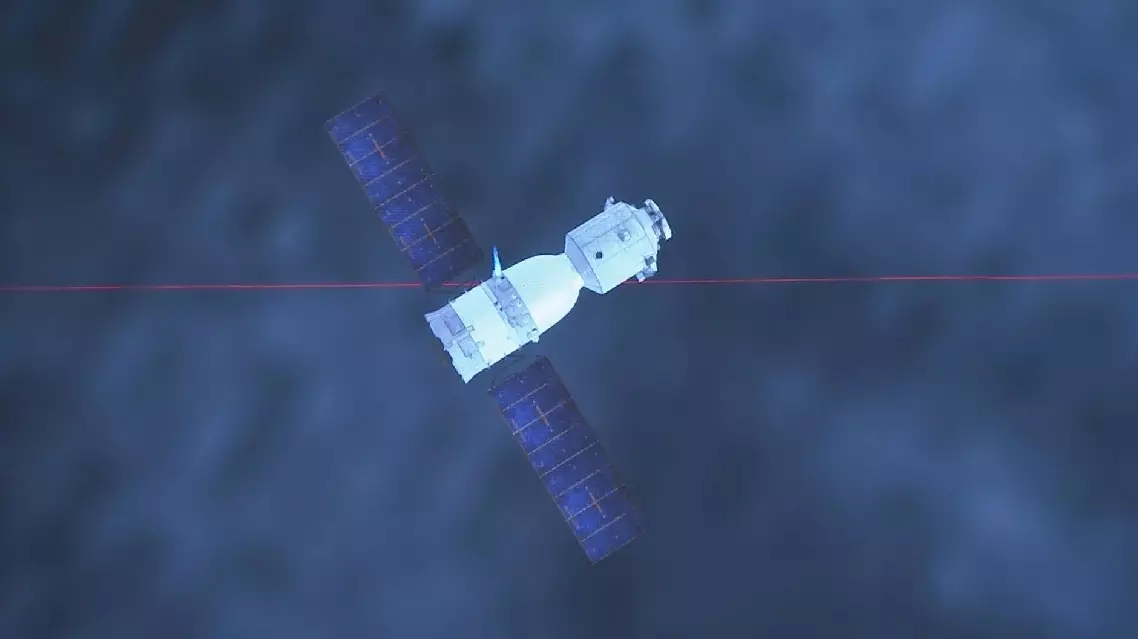
The return capsule of the Shenzhou-21 spaceship, carrying the Shenzhou-20 astronauts Chen Dong, Chen Zhongrui and Wang Jie, touched down at the Dongfeng landing site in north China's Inner Mongolia Autonomous Region on Friday, safely taking the three-member crew back home.

During a talk program of the China Media Group (CMG), Zhou Yaqiang, a technology official from the China Manned Space Agency (CMSA), explained the reasons for using the Shenzhou-21 instead of launching a new spaceship to take the astronauts back to Earth.

"There are two main factors. First, the technical specifications of the Shenzhou-21 spaceship are consistent with those of the Shenzhou-20 spaceship, and the Shenzhou-20 crew had previously undergone trainings on the Shenzhou-21 spaceship, making them quite familiar with it. In contrast, the instruments on the Shenzhou-22 spaceship have been optimized and improved. Second, the Shenzhou-20 crew had completed their scheduled in-orbit missions, and we wanted to bring them back to the Earth as quickly as possible. Ultimately, it was all to ensure the return mission is flawless and that the astronauts are absolutely safe," said Zhou.

Li Guangsu, an astronaut from the Shenzhou-18 crewed mission, provided insight into the preparations Shenzhou-20 crew made for a safe and comfortable return aboard the Shenzhou-21 spaceship.

"For astronauts, the process of returning aboard a different spaceship this time involves transferring relevant materials from the Shenzhou-20 spaceship to the Shenzhou-21 spaceship. Another crucial task is replacing the seat cushions on the Shenzhou-21 spaceship, as these cushions are custom-made to fit each astronaut's individual measurements," Li said.

The Shenzhou-20 crew was sent into space from the Jiuquan Satellite Launch Center in northwest China on April 24.

Their return, originally scheduled for Nov. 5, was postponed due to a suspected impact to the Shenzhou-20 spacecraft from tiny space debris, according to the CMSA.

In response, emergency protocols were immediately activated, and a comprehensive simulation analysis, testing and safety assessment of the Shenzhou-20 manned spacecraft were conducted to determine the safest course for the astronauts' return.

Following the review, the CMSA announced that the Shenzhou-20 spacecraft no longer meets the stringent safety standards required for re-entry. As a result, it will remain in orbit to continue the relevant experiments.

Next, the Shenzhou-22 spaceship will be launched at an appropriate time, said the CMSA.
Shenzhou-20 crew returns abroad Shenzhou-21 spaceship over safety concern: expert
Shenzhou-20 crew returns abroad Shenzhou-21 spaceship over safety concern: expert

The torch relay for the Milan-Cortina 2026 Winter Olympic Games began on Saturday morning in Rome, marking the start of a two-month journey ahead of next year's opening ceremony.

The launch ceremony was held at the Stadio dei Marmi, an open-air arena lined with Roman-style statues next to Rome's Olympic Stadium.

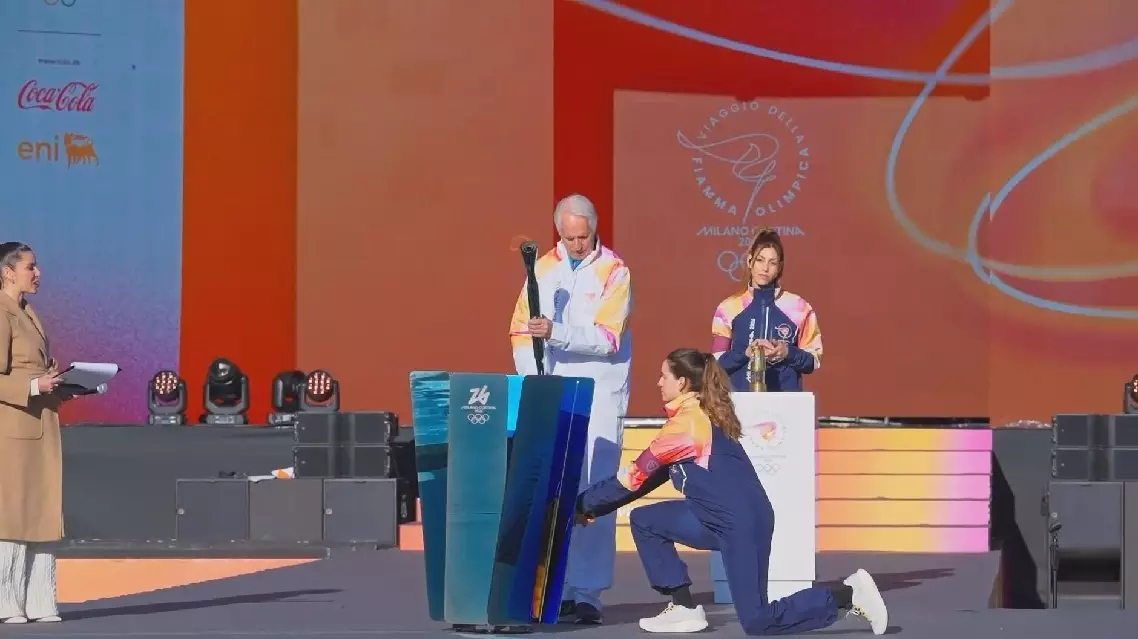
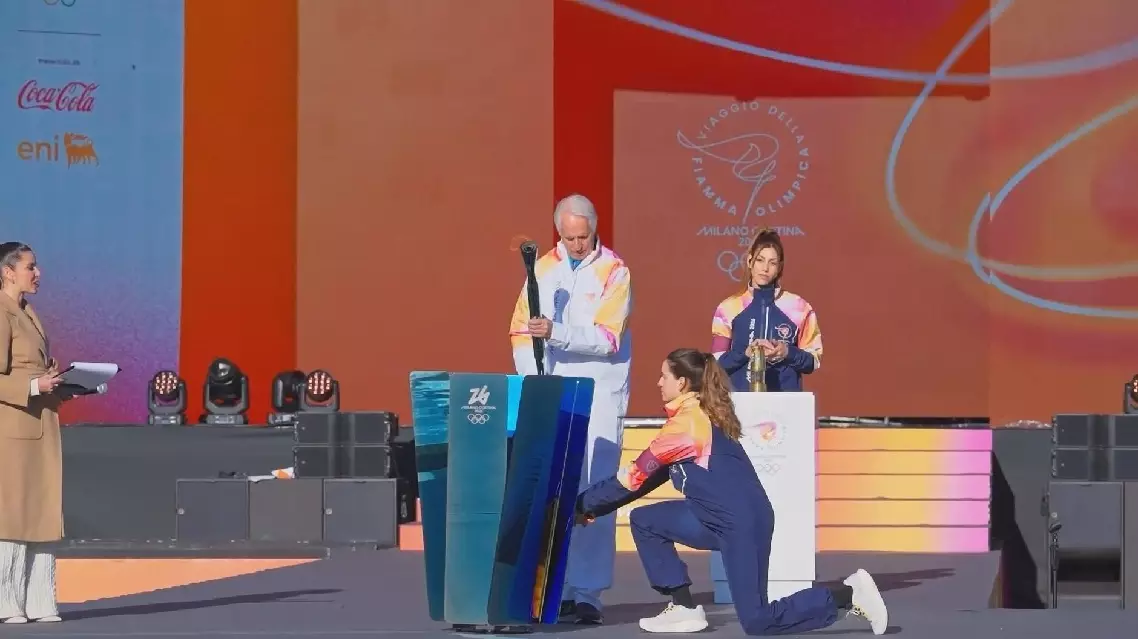
At around 09:50, Giancarlo Peris, the final torchbearer of the 1960 Rome Games, brought the flame onto the launch stage. A torch was lit with the flame, and Giovanni Malago, president of the Milan-Cortina 2026 organizing committee, lit the cauldron with it.

The first torchbearer, Italy's Olympic champion Gregorio Paltrinieri, lit the relay torch from the cauldron and then ran a half-lap around the stadium to cheers from spectators, officially starting the relay.

Italian fencer Elisa Di Francisca and high jump Olympic champion Gianmarco Tamberi followed as the second and third torchbearers and completed their relay segments inside the stadium. Tamberi performed a torch kiss with the next runner, Achille Polonara, who carried the flame out of the stadium to begin the route through the city.

The relay will traverse 12,000 kilometers over 60 days across Italy, pass through more than 300 municipalities and feature celebrations in 60 cities, reach all 110 Italian provinces, and light up UNESCO sites along the route.

More than 10,000 torchbearers from all walks of life will take part in the relay, including figures from sectors of sports, culture, film and civil society.

The flame will see Christmas in Naples, New Year in Bari, and return to Cortina d'Ampezzo on January 26, 2026, the 70th anniversary of the 1956 Winter Games opening ceremony. The relay will conclude on February 6 at Milan's San Siro Stadium.

Andrea Varnier, CEO of the Milan-Cortina 2026 Winter Olympic Games' organizing committee, said the torch relay will strengthen the spirit of peace and hope for humanity.

"Our torch will pass through all cultural heritage sites. So along the way, we'll see both our nation's historical landmarks as well as natural landscapes. But what matters most are the people who embrace the torch as a symbol of peace and hope. Athletes and ordinary citizens carrying the Winter Olympics torch will carry the spirit all the way to Milan," he said.

Torch relay for Milan-Cortina 2026 Winter Games starts in Rome

Torch relay for Milan-Cortina 2026 Winter Games starts in Rome

Torch relay for Milan-Cortina 2026 Winter Games starts in Rome

Torch relay for Milan-Cortina 2026 Winter Games starts in Rome

Recommended Articles