Global IP giants and licensing powerhouses converged in Shanghai last month, spotlighting China’s rise as the world’s fastest-growing licensing market at the record-breaking 18th China Licensing Expo (CLE).
The 18th CLE, hosted by the Licensing Industry Branch of the China Toy and Juvenile Products Association, was held in Shanghai from Oct 15-17. This year's expo reached new heights in scale and influence, covering an exhibition area of 65,000 square meters, bringing together 566 exhibitors, and showcasing over 2,600 domestic and international IPs across all categories.
From lining up for hours to get limited edition products, to filling chats with expressive memes and spending hundreds on collectible blind boxes, more young people are willingly opening their wallets for the IPs they love. Animation, art, culture, video games, fashion, books, music, and sports are among the 11 categories covered by the IPs.
Among the standout participants was world-renowned licensor Hasbro, whose 1,900-brand portfolio, including Transformers, My Little Pony, and Monopoly, drew crowds and underscored the company’s deepening ties with the Chinese market. Hasbro has been generating cherished moments for generations of children and families worldwide since its beginnings in the United States in 1923.
"We have billions of fans globally, and I would say that we are the number five global licensor now. And a big amount of that fandom is here in China. We had over 16 billion dollars of retail sales last year globally alone. To the point of how important China is from a licensing perspective, it's a really strong market for us," said Marianne James, senior vice president of global licensing at Hasbro.
As of 2022, China ranked as the world’s fifth-largest licensing market and the second largest in Asia, an ascent that continues to draw strong confidence from global licensors.
"The IP industry in China is exploding. It's amazing how big this is. So we're coming up here to look at all of the new IPs that are coming out of China," said Neal Rudge, President of Pacific Licensing Studio, one of the leading licensing agencies in Greater China and Southeast Asia.
Fueling China’s IP boom is the emotional resonance these brands hold. With a growing number of young consumers eager to invest in the characters and stories they cherish, the emotional consumption market is surging, projected to grow at a 12 percent compound annual rate and surpass 2 trillion yuan (about 281 billion USD) in China alone by 2025, according to the latest Emotional Consumption Research Report.
"We've been here for just over 10 years as a direct licensing business here in China. All the best stories and designs and innovation is coming from this region and this market. And we're seeing so much amazing growth trajectory, particularly with different demographics. Traditionally we've got brands that target kids, but now the adult consumer, you know, is wanting to get the same level of joy that kids get. And so we're seeing a real step change in what products we need to offer in the brands that we offer those consumers," said Jo Pasco, vice senior president of consumer products APAC of Universal Products and Experiences.
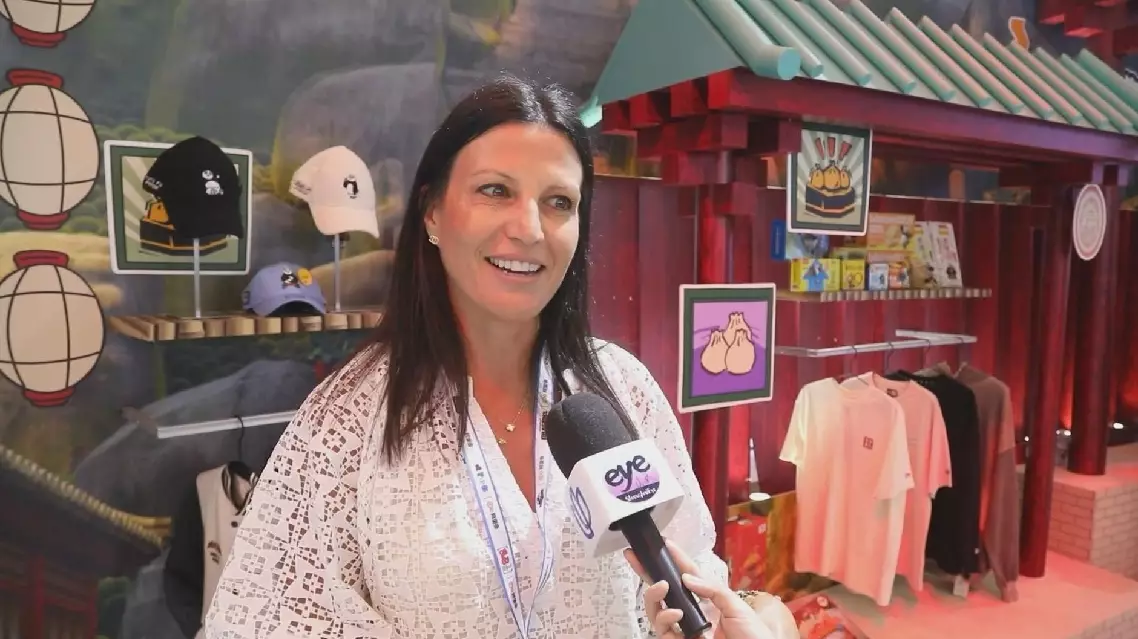
Shanghai expo showcases China’s rise in global IP licensing
China is ready to work with all parties to develop the Open Coalition on Compliance Carbon Market (OCCCM) into an open, inclusive, pragmatic and efficient platform for international cooperation on carbon markets, and contribute to global climate governance, a senior Chinese official has said.
The remarks were made by Li Gao, vice minister of China's Ministry of Ecology and Environment, when he attended the first high-level meeting of the OCCCM held in Florence, Italy.
China is accelerating the construction of a more effective, dynamic, and internationally influential carbon market, and is willing to share its practices in green and low-carbon development and carbon market construction with the international community, Li said.
In addition to China, representatives from Brazil, the European Union (EU), Germany, New Zealand, Canada, Britain, Türkiye, France, and other countries and regions attended the meeting, exchanged views and discussed topics such as the OCCCM priority areas of cooperation and key tasks for the next stage.
Participants in the meeting highlighted that emissions trading systems are an important market-based instrument for advancing the green and low-carbon transition and addressing climate change. The coalition will follow principles of openness, inclusiveness and voluntariness, while strengthening policy dialogue, experience sharing and capacity building among members.
Cooperation will focus on areas such as monitoring, reporting and verification (MRV) systems, carbon accounting methodologies and high-integrity offset, aiming to improve the effectiveness of carbon market operations.
During the meeting, China, Brazil and the EU, as the coalition's founding members, signed the Terms of Reference for the OCCCM, setting out its objectives, scope of work, governance structure and decision-making framework.
Kurt Vandenberghe, director-general for climate action at the European Commission, said the joint launch of the coalition by China, Brazil, and the EU sends a clear signal of continued progress in global climate action and international cooperation.
"We're very confident and encouraged by this open coalition because we see the value of the EU-China cooperation on compliance markets, and we can extend this now to others as well. Because -- and that's very important -- we believe more and more countries are interested in carbon pricing as a cost-efficient way to decarbonize and modernize the economy," said Vandenberghe.
Cristina Reis, deputy secretary for sustainable economic development at Brazil's Ministry of Finance, said that the establishment of the OCCCM is an innovative initiative reflecting the shared willingness of both developing and developed countries to strengthen cooperation on carbon markets.
She added that Brazil is ready to deepen exchanges and cooperation with China and other partners to enable carbon pricing mechanisms to play a greater role in emissions reduction and green transition.
"I believe that China can contribute to the other countries, showing the challenges that the country has faced to implement the emissions trading system (ETS) and it's continued to be facing because it's becoming more and more complex. It is in largely its coverage. So, we can learn with China about that experience," said Reis.
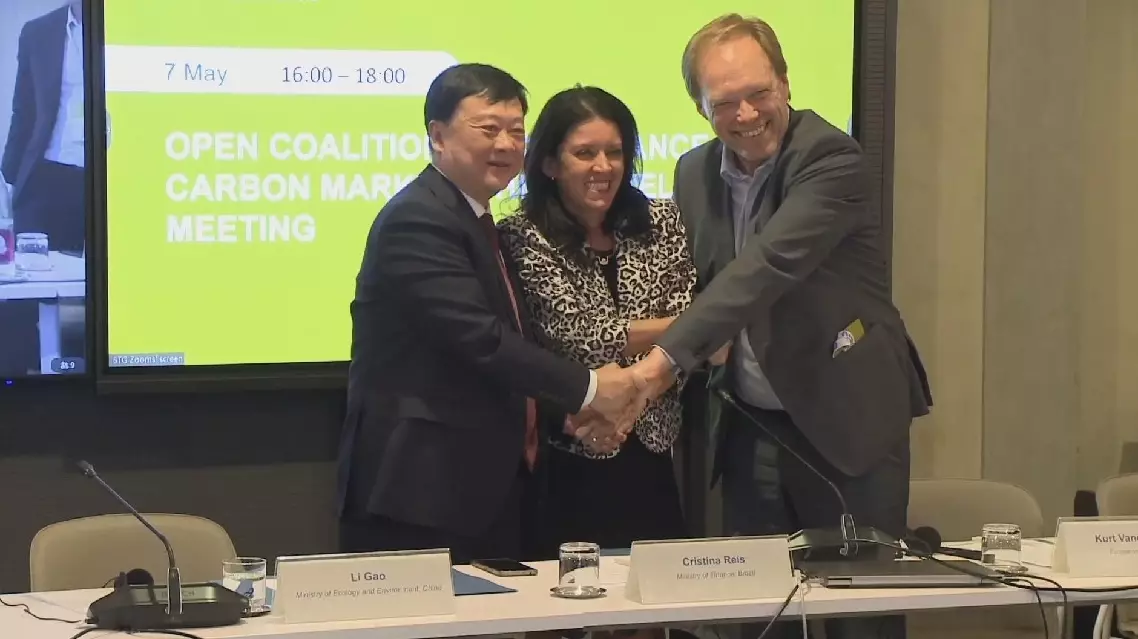
China ready to help develop OCCCM into open, inclusive cooperation platform: official